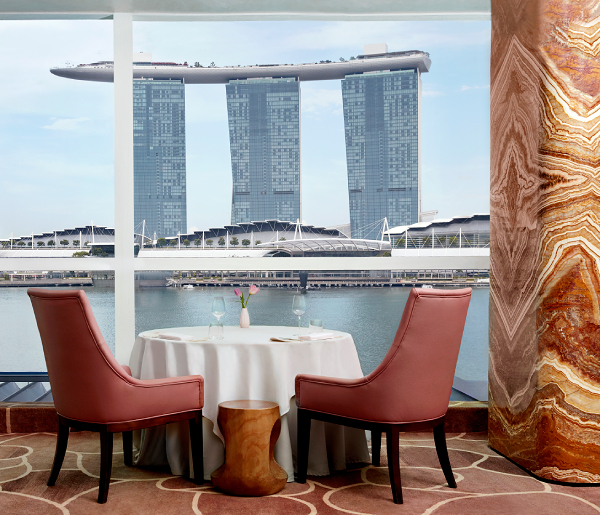
It couldn’t have been more than a minute or so after my arrival at Saint Pierre that Head Chef and owner Emmanuel Stroobant suddenly appeared with a tray of food and greeted me with a warm smile. I’m seated right by the floor-to-ceiling windows overlooking the Marina Bay waterfront, which I am sure is stunning. But I ignore the view temporarily—when a two-Michelin-starred chef comes out of the kitchen to serve you food, you listen.
He unscrews a tin of caviar, the Oscietra variety, and holds it up for all of us to see, parading the glossy little orbs, jam-packed with briny umami. These precious pearls, he explained, are harvested from a farm in Sologne, France, and are exclusive to the restaurant. From the temperature and oxygen levels of the water to the age of the sturgeon at harvest, the conditions are delicately controlled and tweaked to achieve a specific result.
And that result is a yield of caviar that strikes a balance at the cross-section of aged taste and texture. Chef Stroobant illustrates this with pointed hands, moving them towards each other until they meet to form an X. That intersection, where aged taste and texture meet, is what makes excellent caviar.
He then hand-scoops a dollop of it onto a slice of Scottish salmon, which sits on a crêpe spread with crème fraîche underneath. Brininess and savouriness envelop the tongue first, but thereafter you get hits of cream and nuttiness. It served as the perfect starter to tantalise the palate for what was to come.
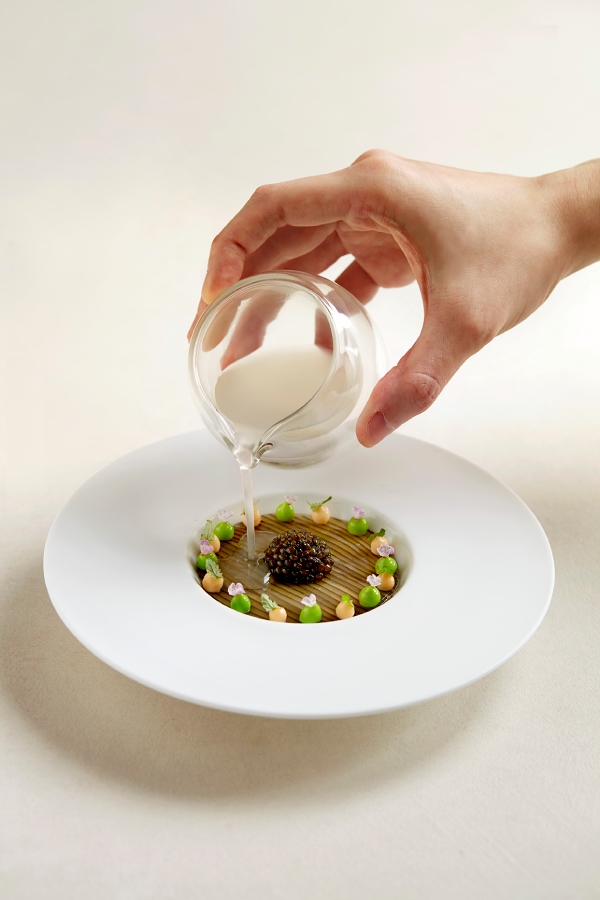
The caviar flourish continued into the next course, this time spooned atop a layer of Rishiri kombu, surrounded by tiny blobs of Hokkaido white corn mousse. The dish is reminiscent of a pond, its elements tied together by a saline broth. But the star here is the shredded hairy crab nestled beneath the kombu, which turned both the corn and the caviar into supporting elements that added sweet and savoury depth to each bite.
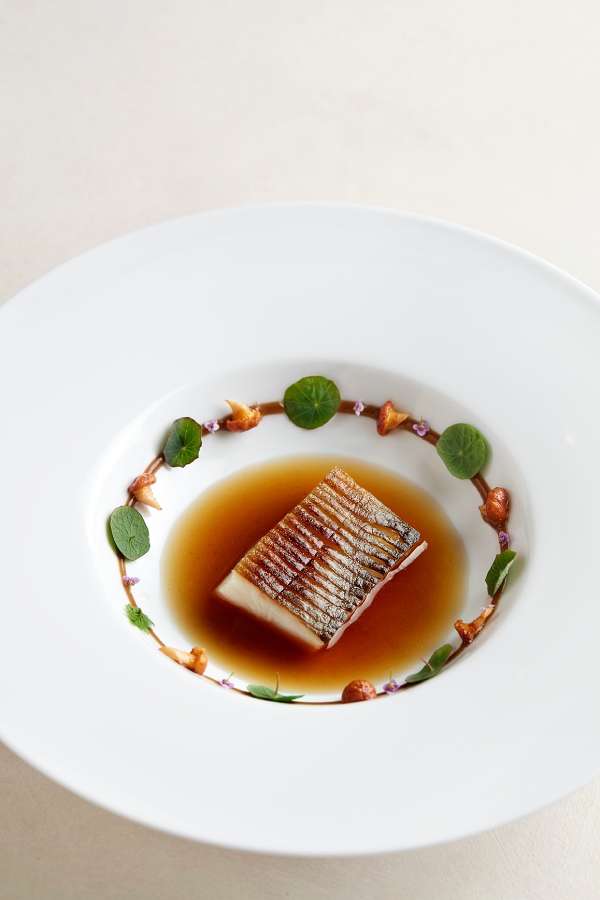
Perhaps the highlight of the meal arrives with the Hyogo Manakatsuo (silver pomfret). Borrowing from Shoukouwa, Chef Stroobant’s other two-Michelin-starred Japanese restaurant, the fish is dry-aged in-house, not only to intensify its flavours but also to yield a firmer bite. When paired with a ring of mushroom gel and a slow-simmered Buddha Jumps Over the Wall broth, this maturation unlocks a complex aroma that a typical fish dish does not possess. It’s also simply a delight to cut into and chew, courtesy of its deliciously crackly, pan-fried skin.
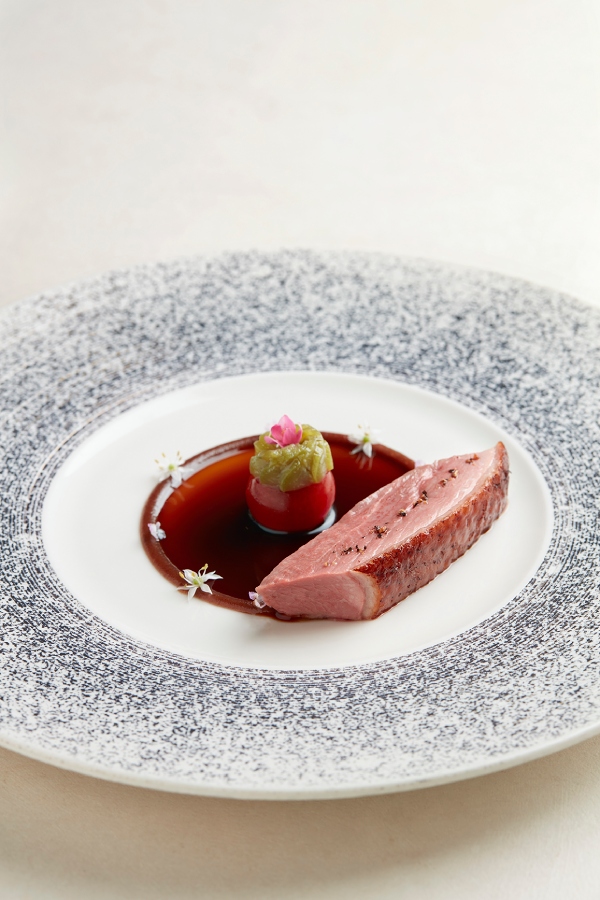
We finally emerge from sea and onto land with the arrival of the Perak duck. Drawing from the soul of Peranakan cooking, the duck is first stuffed and perfumed with green tea stems, then dry-aged to coax out its deepest flavours. It’s subsequently slow-roasted and paired with a perfect French heirloom tomato for brightness, and a buah keluak-scented duck jus for darkness.
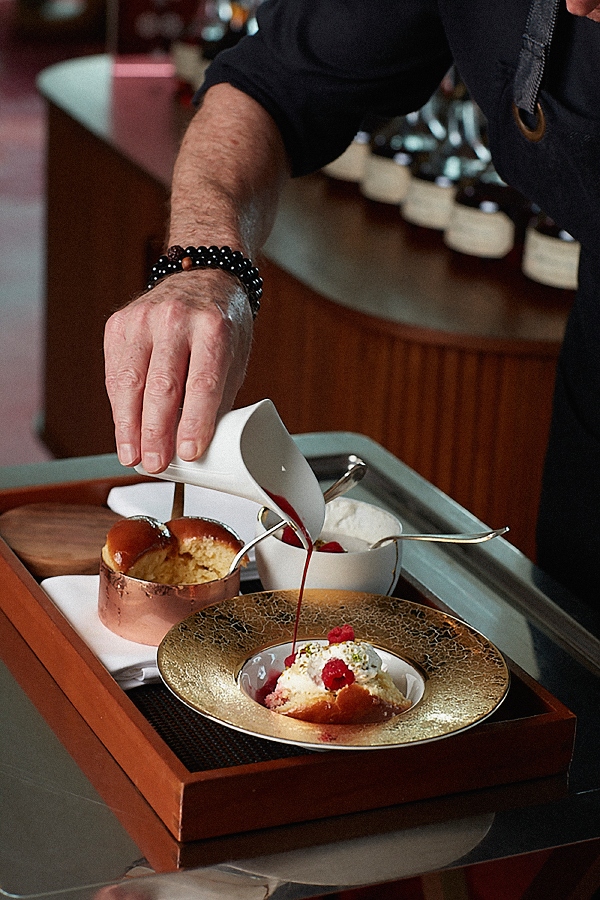
Finally, Chef Stroobant returns to the table one last time to serve us a plate of Tulameen raspberry, which reinterprets the classic Baba au Rhum. A fluffy, brioche-like cake serves as the perfect vessel for soaking up a syrup infused with lemongrass, ginger, vanilla and orange zest. Tulameen raspberries and raspberry consommé round off the dish, giving the meal at large a tart finish.
On our visit, we were treated to the Grand Opulence menu, a seven-course degustation that encapsulates the full expression of Saint Pierre’s latest menu. Crafted by Chef Stroobant with the restaurant’s 25th anniversary in mind, the menu balances new creations with familiar signatures. We’ve focused on the latest additions to its ever-evolving repertoire, but classics such as the delicate Manjimup Marron (crayfish) and supple Akita Abalone remain fixtures this season.
Saint Pierre is also giving its crowd-favourite Pan-Fried Foie Gras more time in the spotlight, with the dish returning as a celebratory centrepiece for the milestone year. One of the restaurant’s earliest signatures, and one that guests still talk about, the foie gras is presented as a generous 300–400g slab before being sliced and served with poached pear and an oxtail consommé. For an additional bump of SGD188, you can experience what remains, in our humble opinion, the best dish on the menu.
If you do end up visiting Saint Pierre, here’s something curious you’ll notice: circles are ubiquitous. Gels often encircle the food, sauces are dotted around the plate, and carefully arranged flowers form circular patterns. As a yoga practitioner, Chef Stroobant is a rather spiritual fellow, to say the least. The Zen circle, otherwise known as ensō, is a reflection of an artist’s mental and spiritual state. In Stroobant’s case, it represents a state of free-flowing, unthinking presence.
Rather than presume to know what these circles mean to him, we’ll let the man explain it himself.
“The circle unfailingly represents my interpretation of life… there will be a beginning, and there will be a close. To ring the circle perfectly calls for unfaltering balance in everything we choose to entrust ourselves with, and when this is accomplished, the magic happens!”
Saint Pierre is located at 1 Fullerton Road, #02-02B, One Fullerton, 049213