Singapore has built a reputation for having one of the most vibrant food scenes not just in Asia, but in the world. In fact, the fine-dining scene here is one of the strongest in the world. By the numbers, Singapore boasts one of the highest concentrations of Michelin-starred restaurants per capita—roughly one for every 114,000 people, placing it seventh in the world.
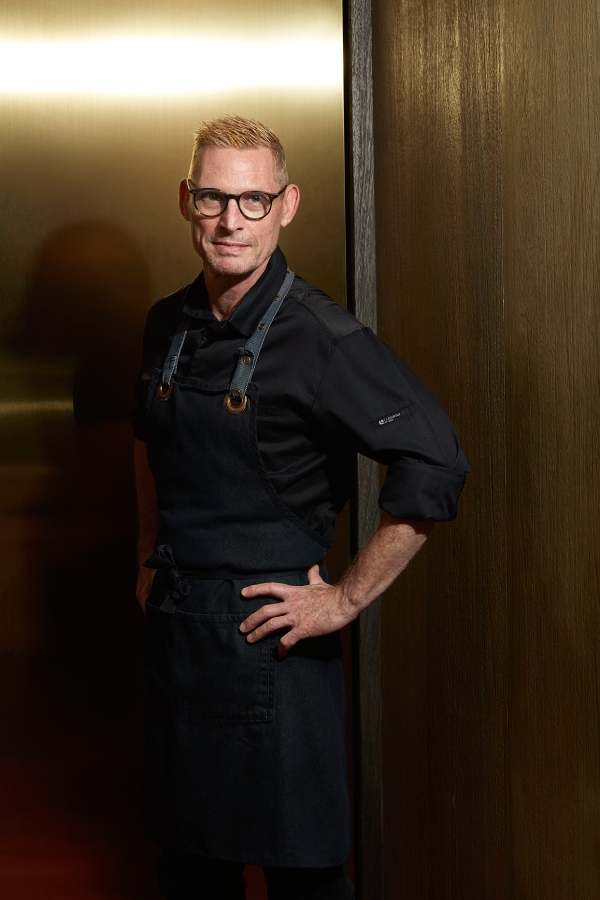
In an environment so saturated with competition, it takes a certain calibre and standard to stand out. To own a restaurant and earn a Michelin star is to swim against the tide. To earn two Michelin stars is to swim against the unforgiving currents of the ocean. To own two restaurants, each having earned two Michelin stars, is to swim against a tsunami. Chef Emmanuel Stroobant is swimming against a tsunami.
Since 2000, he has been the chef-owner of Saint Pierre, a French fine-dining restaurant serving modern French cuisine with Asian influences. Nearly three decades on, the restaurant finds itself holding two Michelin stars, an honour it has maintained since 2019. It’s tucked away on the upper level of One Fullerton, sitting right on the edge of Marina Bay and offering an unobstructed view of the waterfront.
Just 10 steps from Saint Pierre's entrance, tucked even deeper into One Fullerton, lies the entrance to Stroobant's second establishment: Shoukouwa. Opened in 2016, the Japanese sushiya earned two Michelin stars just a few months after launch, cementing its place as one of the earliest success stories in Singapore's fine-dining scene.
To put things into perspective, only seven restaurants in Singapore hold two Michelin stars. Chef Stroobant owns two of those seven, making him the only active chef-owner in Singapore to have achieved this feat. Now that we have a clearer sense of the culinary maestro we’re dealing with, it’s about time we dived into the interview. We sat with the Belgian-born chef at his beloved brainchild, Saint Pierre, right after lunch service.
ESQUIRE SINGAPORE: Your cooking is rooted in classical French training—what made you want to open Shoukouwa?
EMMANUEL STROOBANT: I can't take the credit for Shoukouwa, it’s Edina's [my wife]. The story is we used to be at Sentosa, looking at coming back into the city because Michelin was coming here, and we had this location [One Fullerton]—it used to be a big disco, actually. We had the whole floor, but it was too big. So that's how we decided to look at a second concept within the same space. We didn't want just two-in-one; we needed to separate them completely. She wanted to do a Japanese restaurant, and we'd been talking about it for a while.
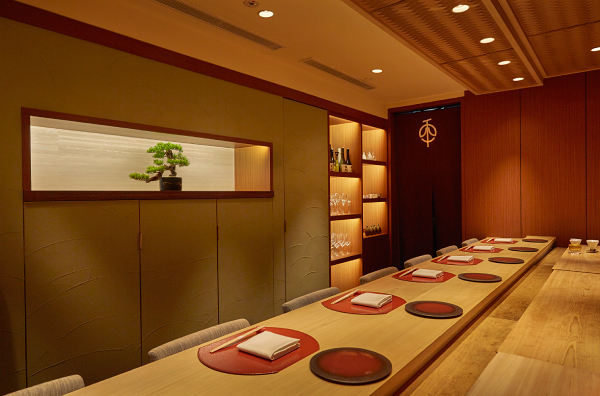
Back in 2016 when we opened, sushi was quite trending, there were only a few players, but there was nothing really established in a classical way. I couldn't find a similar experience in Singapore; they were making it a little more localised. We wanted to create a real, classic Tokyo-style experience.
The idea of doing such a concept was a challenge for me specifically, because I'm not Japanese and I'd never done something like this. That's why I have to give credit to Edina—it was really her baby, she carried it. My involvement today is supporting from a technological point of view—air con, gas, a leak here and there—and procurement, sourcing the ingredients in Japan.
ESQ: How culturally shocking was it opening Shoukouwa?
ES: When we first opened, I thought I knew something about Japanese food because I'm a chef and I'd been playing with rice and vinegars for a while. When we started working with the Japanese chefs, I realised I knew nothing whatsoever. I never thought about different provenance or the mixing of older, starchier rice with new, crunchier rice. I had to re-look at everything like an apprentice from day one.
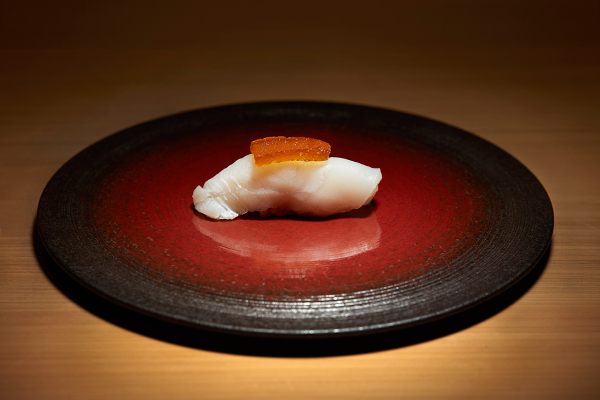
We have a supplier there, for instance, who picks the fish for us. It's a small restaurant, so sometimes they don't need a whole fish, just half. Our guy will pick the side that hasn't been in contact with the ice—because the fillet pressing against the ice essentially gets squeezed and semi-frozen. He makes sure we never get that part.
The chefs made us change the water piping, for instance—it's 32 degrees outside, so when you open the tap, the water running is 30 degrees. They said, "It's cooking the fish." We had to change the piping.
ESQ: Have you picked up anything from the chefs at Shoukouwa and applied it at Saint Pierre?
ES: You're asking an interesting question. The very first time I collaborated with a real three-Michelin-star Japanese chef, he came into my kitchen with a big bag, and I thought it would be all his equipment and ingredients. He opened the bag: white cotton cloths. Every time he picked something up in the kitchen, a pot, anything, he would take a white cotton cloth and wipe it nicely. It was ceremonial. It was beautiful to watch.
Back around 2013–2014, the kitchen at Saint Pierre had music playing quite loudly. Very high energy. So to have somebody come in with this smooth, almost Zen temple attitude—that really changed the way I looked at things. To do things a bit more focused, a bit slower sometimes. Rushing doesn't always give you the results you want. That's something I really take from them.
ESQ: My perception of Michelin-starred kitchens is that they're run almost like the military—very orderly, very intense.
ES: But discipline, respect, and hierarchy don't mean you have to scream at everybody. There's no need for names and going crazy. On top of that, especially in Japan, losing your temper is a sign of weakness—it shows you cannot control your own emotions. That's how they look at it.
It's like driving a car. If the driver loses it, the car goes everywhere. We drive a team—we need to keep a clear mind to be able to lead these guys. I do believe in that.
ESQ: Oh, have you seen The Bear?
ES: I’ve seen some of it.
ESQ: Is it accurate at all?
ES: To a certain extent, it is. But it’s a little passé—it’s something which, during my apprentice days, was correct. I haven’t seen a lot, to be frank, but I remember glimpses of it, and it reminded me of Bernard Loiseau, who always said, "I want my three stars, I have my three stars." He had a personal desire to achieve, and he led his team to achieve with him.
In my case, it's not "I want this"—it's more, "This needs to be done, and here's how we're going to do it together." It's a very different approach.
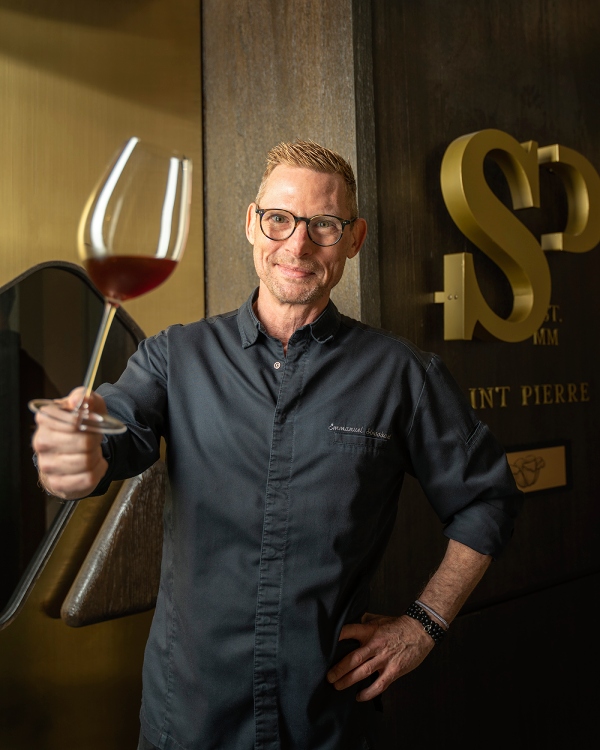
ESQ: You planned to study law and originally took a kitchen job just to fund university. What was the moment you decided this was your life instead?
ES: I come from a very humble background—very humble. During secondary school, I was really interested in criminology, and to do criminology, you need law first. To afford university, it wasn't so much the tuition—it was the lifestyle. The apartment, the living expenses. I didn't have money, so I decided to work during the summer and put money aside.
I ended up at uni, but I could feel it wasn't for me. I used to ride my bike in a T-shirt, jeans, tattoos. The other students were dropped off by mum and dad in Mercedes with little ties. I couldn't connect. I never even finished a term.
Meanwhile, I'd been working as a dishwasher, washing pots in the kitchen. The atmosphere, the respect, the teamwork, the brotherhood were fascinating. One day, my chef said, "If you want to try, we're always shorthanded. Do a bit of salad, help us here and there."
It went from small salads to a bit of sauce to starters. Then he said, "Why don't you join us full-time? This is an apprenticeship." And that's how I ended up in the kitchen.
ESQ: You're a Singaporean citizen now. At what point did Singapore start feeling like home?
ES: Fairly early, actually. We moved here in '99. Singapore was different because it was organised, and everything functioned. There was also something about Singapore that reminded me of home. In Belgium, we have French, Dutch, and German cultures—three completely different backgrounds living together.
I enjoyed that same sense of community here, so much to learn from one another. Everything worked smoothly, we started a business, we had kids—and that's when I said, "Okay, this is home."
I took citizenship in 2014, so it's been 12 years now, and I've never looked back. When I look at the way the world goes, I'm actually quite proud to be Singaporean.
ESQ: Is there a dish that best represents who you are as a chef?
ES: We used to have this dish on the menu—I've taken it off now because the season ended—called the Amela Tomato. I joke about it because I call it a signature dish that's never actually been listed on the menu. We served it between starters and main course: a very simple tomato, one of the best I've ever tried, where we burn the skin. Normally you'd boil tomatoes to peel them, but you lose all the flavour in the water. By burning the skin, you add another layer of flavour. We served it with a galangal consommé and a white miso dressing. Extremely simple—really nothing to it.
That dish represents the restaurant because we've always been ingredient-focused. It's never about hiding the product; it's about taking something of quality and just letting it be what it is.
Earlier in my career, I used to do a lot of combinations—marinating meat, layering second and third ingredients, adding and adding, thinking complexity worked that way. But over the last ten-plus years, I realised that stripping everything away is actually much harder. You need a product and a technique that are perfect, with nothing to hide behind.
ESQ: Where do you draw inspiration when you feel creatively stuck?
ES: Edina. She's my muse. We spend a lot of time together on holiday, evenings, weekends—it's very important to be able to exchange. She's not a chef, so she thinks about food without the blinkers we develop as chefs.
The second thing—and I smile when I say this—is meditation. It's a real big part of my life, that's how I keep the balance. I do an hour a day, no matter what. Even if I come home at 2 a.m., I still do it.
There are times when you're in that space, people call it the zone, where you're completely free of thinking, and things just come together. Like in Ratatouille, where he [Remy] explains the cheese and the grapes. I might be working on a squid and caviar dish, and during meditation, ideas just surface. I keep a piece of paper next to me and write it all down the moment it comes out.
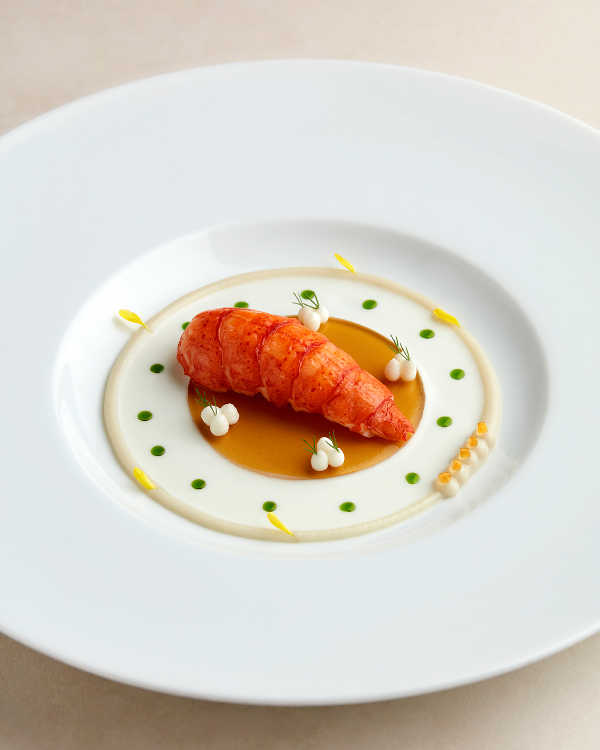
ESQ: You have two Michelin stars—one for Saint Pierre, one for Shoukouwa. How taxing is that on you?
ES: It's a matter of perspective. I don't think it's taxing—it's more pushing. Every single plate pushes us to our limit.
Michelin gives you the opportunity to have that discipline because you're always conscious of maintaining the standard. It's like training for a competition: you train, train, train to show the very best of yourself every time.
On top of that, in my case, I suffer from ADHD quite badly (laughing). That push actually helps me enormously—in terms of leading the team, planning, staying focused.
ESQ: Marco Pierre White famously returned his Michelin stars because he disliked being judged by people he felt knew less than him. What are your thoughts on that?
ES: It's his choice, and while I respect everybody's choices—let me share my personal take. If I finish a dish in the kitchen, I don't think I should be the sole judge of it. Of course, I won't present something I'm not proud of—that's a given. But I want somebody else to tell me: yes or no.
Marco's argument is that the inspectors aren't as good as him, don't know as much as [he does]. Yes, but they're still your clients. They're still the people who need to eat the food. Criticism, in many ways, acts like a mirror—you may not always agree with it, but it reflects how others experience your work. Ignoring it completely risks the chance of stagnation.
Michel Bras and his son Sébastien, around 2018, also asked to be removed from the guide. His approach was different: he wanted a simple family life and didn't want the pressure of possibly losing a star. He decided he'd rather be with his family and cook what he felt like. That's a respectable personal decision.
But here's the thing—Michelin is a guide. You cannot choose to be in or out. It's like a TV programme. If The Bear is playing at 8 p.m. on Channel 5, it's in the guide. You can't say, "I don't want to be listed." You're playing, you're on the guide. That's really the point.
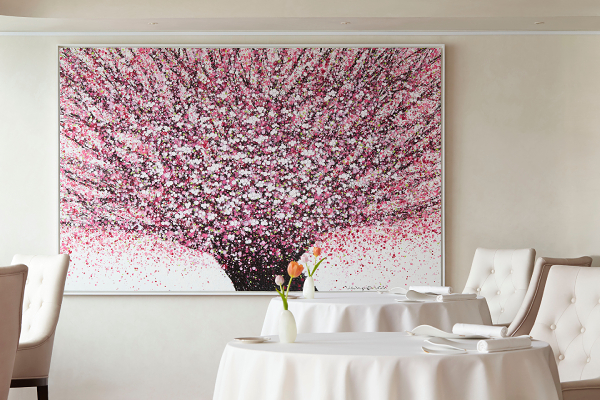
ESQ: You've had some health scares that led you to become a vegetarian. Has that hindered your ability to run the kitchen?
ES: No, I still taste everything. I was a professional chef before I was a vegetarian, and tasting is part of the job. At home, I'll always avoid meat, fish, and eggs when I have the choice, but I'm not super strict.
I've made the switch from quantity to quality. I used to drink a lot—vodka was my choice because it tastes like nothing (laughing). Now I don't drink, but if I did, I'd pick one great bottle of wine and have a glass or two. Same with food: if I sit down for a tasting, I make sure what I'm tasting is the very best I can get my hands on, and I take one considered bite.
ESQ: What are your top three favourite vegetables?
ES: Tomato. It's a vegetable by botanical definition, and it's very personal to me. There are about 10,000 different varieties in the world—it has such an interesting history, how it was picked up, how it travelled to Europe, how it was finally accepted. Tomato gives you a lot of variation in terms of flavour profile—acidic, umami, sweetness—and when it's well balanced, you've got all of those things happening at once.
Mushrooms would be my second pick, because of the versatility. There are so many different mushrooms all over the world. The only sad part is that they're seasonal, so you don't have them all year round. There's so much interesting depth. From a vegetarian perspective, mushrooms give me the flavour profiles I'd otherwise associate with meat.
And then potato (laughing). I'm originally from Belgium, so—French fries, even if they call them that, are from Belgium. I love potatoes. I'll have a masala potato for an Indian breakfast. It's so versatile, it's foundational.
ESQ: Outside of your own restaurants, where have you had your best bite in Singapore?
ES: Home. We're not a big family, but there are eight of us in the house, and I cook quite often—I enjoy it, I like entertaining at home. We're also very fortunate to have two helpers, and one of them is an amazing cook. She loves cooking and can do anything from fried kway teow to laksa.
Otherwise, Samy's would be my favourite. Samy's Curry. The very first time I came to Singapore—it was '97, a rainy Sunday, I had a meeting in Dempsey. I didn't know the area, so we sat down on the terrace. First time in my life I'd seen a banana leaf. I felt like I was in another world. The food is so simple, so tasty. Now we go at least twice a month.
I also like Summer Pavilion. If I had to go Chinese, it’s where I would go.
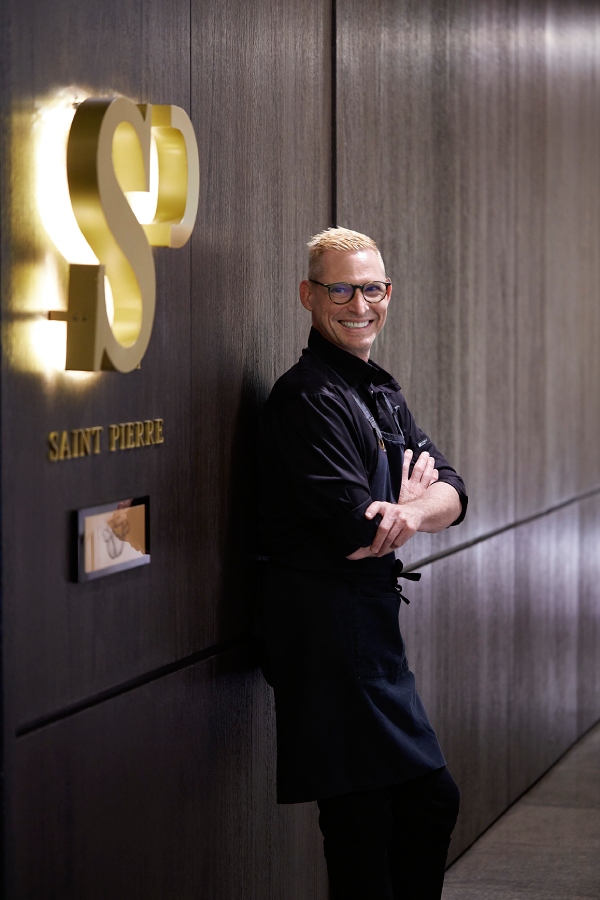
ESQ: Rank the following: texture, taste, and presentation.
ES: Taste first, no question. At the end of the day, texture lifts and helps taste, but taste is the most important. Presentation is very personal.
The tongue gives you more about texture: hot, cold, crunchy, soft, and yes, the basic tastes. But flavour—true flavour—we perceive through the brain, via the retronasal area, from the back of the nose. That's why when you're sick, you can't taste anything. That's why, as a kid, if you didn't want to taste something, you plugged your nose.
Once you understand how flavour actually works, our job as chefs becomes so much more interesting. There are at least four hundred nerves involved in that process. The perception of flavour is essentially limitless.
And then you add the emotional layer—the personal history. We all have emotional backgrounds attached to certain flavours. I go back to…Ratatouille! (laughing) If you can touch someone with a dish and bring them back to a memory, that's magic. The smell goes straight to the brain with no filter, while taste travels through different filters before it gets there. That's physiologically correct, and it's fascinating.
ESQ: Michelin stars are the goal inside the kitchen—what are you chasing outside of it?
ES: Peace. I've come to a point in my life where I love what I do, I really enjoy it. But when the weekend comes, I want to spend time with the children. I'm a chef, but I'm also a husband and a father. Yoga is one of the ways I balance that.
You need a gate between your work and your private life. In my case it's trickier because food is my life, so I can cook great food at home, but I don't need to bring the drama with it. They don't need that stress. So yes, peace.
ESQ: What would you want your final meal to be?
ES: Spaghetti Bolognese. Funny answer for a vegetarian, but if it's the final one, I may as well enjoy it. It's a family thing—my dad used to make it when I was a kid, the simplest pasta, and I've never been able to taste a better recipe than his. He taught me, I learned it, and I still cook it at home quite often.
But honestly, the last meal is not so much about what it would be—it's about who it would be with and how it would feel. I'd rather have a nice meal with my family and the people I love than be in a fancy restaurant with someone I don't enjoy. You could have an amazing McDonald's meal with your best friend, laughing and having a great time, or you could have a beautiful fine dining experience with someone delivering terrible news.
What I'm trying to say is—there is another dimension to food beyond just what's on the plate.
This interview was edited for length and clarity.