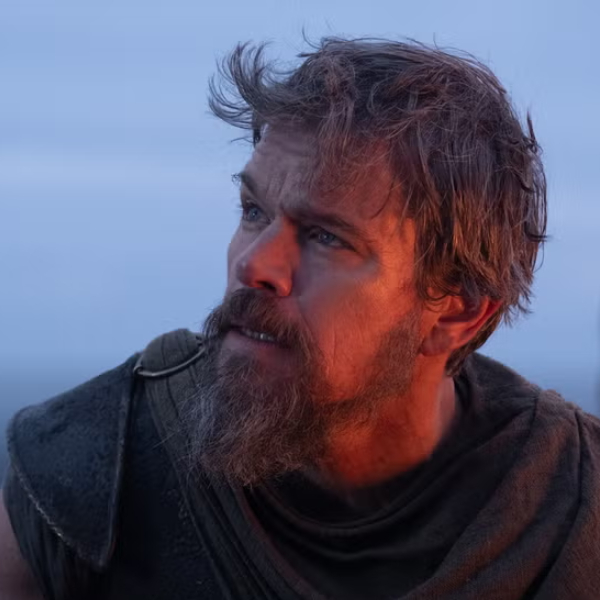
Since it released worldwide a couple of weeks ago, Christopher Nolan's highly-anticipated adaptation of The Odyssey has caused a lot of conversation. Generally, the critical consensus has been overwhelmingly positive: historian and The Rest is History co-host Tom Holland (confusing, we know) called it "by some way the best cinematic adaptation of a Greek myth I have ever seen", and it holds a very strong 94 per cent "Fresh" rating on review site Rotten Tomatoes. The audience score is even higher, proving that Elon Musk's desperate attempts to spark an anti-woke backlash were all for naught.
However, one critic arguably has the opinion that trumps all others: Emily Wilson, the academic whose recent translation of the text took the literary world by storm (and caused some controversy along the way). In an article for the upcoming issue of London Review of Books, which has been published early online, the scholar gave her take on Nolan's adaptation. Safe to say: she is not a fan.
First off, why does Emily Wilson matter? Well, not only was her translation the first to be conducted by a woman, but it was also heralded in academic circles for capturing the poem's musicality through her choice of meter, and for undoing centuries of Christianisation, misogyny and euphemism that had been projected onto translations of the text. Her version has been flying off the shelves since then, and some would argue that it's the definitive modern version of the text. Christopher Nolan himself even referenced Wilson's translation as a key inspiration for his take on the film. To put it simply, she knows what she's talking about.
In the opening paragraph of her review (titled An Uncomplicated Man—a riff on the first line of her own translation), Wilson offers some backhanded praise. She says it's "not boring", deeming it "a family-friendly audiovisual spectacle, like an elaborate Fourth of July fireworks display—and with about the same level of narrative and emotional depth". Yikes.
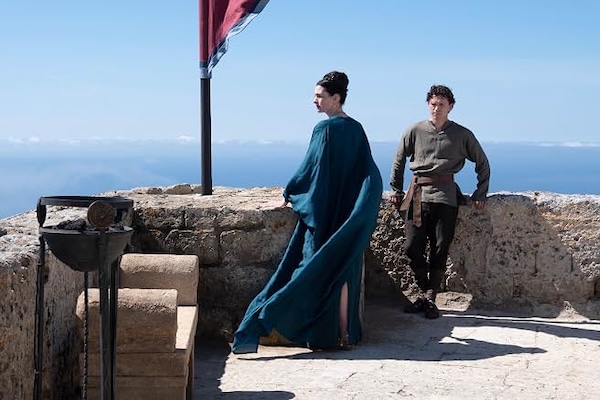
Throughout her piece, the scholar notes that no adaptation should necessarily follow an original exactly (she in fact praises some that radically reinterpret The Odyssey, including Margaret Atwood's Penelopiad, Madeline Miller's Circe and other literary classics that riff off the text, including those of Euripides, John Milton and James Joyce).
She does, however, criticise the film's lack of "restraint" (the defining emotion of Odysseus' journey), the underdevelopment of the rich female characters from the poem, the inadvertently regressive tropes that Nolan's "race-neutral casting" falls into, and the ethically controversial irony of filming it all in an occupied territory (part of the movie was shot in Western Sahara, where there is an ongoing violence against the indigenous Sahrawi population. Wilson points out that using it as a beautiful backdrop for a film redeeming the hero of a territorial war seems to be a major oversight). In one particularly cutting moment, she notes that Nolan cited the first line of her translation, responding: "I would be ashamed to have written any part of this script".
The crux of her criticism, however, revolves around the characterisation of Odysseus: simply put, turning the conniving character into a "reluctant warlord" simply doesn't make sense. "We are not shown that war or killing are bad, only that good men sometimes feel bad about it—a very different point," she explains.
She concludes by writing that it "lacks psychological, emotional, political and ethical depth," that "its narrative structure is gimmicky" and the writing "abysmal". In a slight caveat, she points out that, in the grand scheme of things, a film that serves as a literary adaptation bringing people back into cinemas during the streaming era can only be a good thing.
In fairness, her criticisms align with a lot of arguments that have been made about other films in Nolan's oeuvre. The Dark Knight Rises received some criticism for "whitewashing" the Al Ghul characters, and a number of his films (namely Inception and Oppenheimer) have been accused of flat female characters in male-centric narratives, to name a few.
There's an argument to be made that few directors receive the same level of scrutiny in these areas than Nolan does. In one Reddit thread dedicated to the topic, fans of the filmmaker pointed out that other famous male directors like Spielberg suffer from some of the same issues but don't get the same backlash. On the other hand, is there a mainstream Hollywood director that receives the same level of intellectualised praise? For every person pointing out the flaws in Nolan's films, there are hundreds heralding him as the best thing since sliced bread. What feels so exciting and refreshing about Wilson's take, regardless of whether you agree with her, is to see someone so high-profile with a rock-solid criticism of a filmmaker so often immune from regular critique.