Let’s do a little test, shall we, dear reader? Imagine you’re someone with a working knowledge of watches—someone who can name five brands outside of a Rolex, Cartier, or Seiko. Then again, if you’ve chosen to read this, chances are you already know your way around a dial.
Now, if I asked you to describe the H. Moser & Cie. logo, what would you say? Could you describe it at all? It’s mildly embarrassing for someone who writes about watches to admit this, but I can’t—and odds are, you probably can’t either.
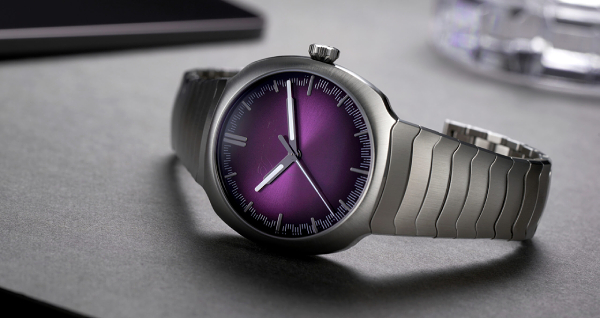
Instead, what comes to mind are the watches themselves. More often than not, they’re the ones with unconventional concepts: the Endeavour Perpetual Moon Concept, for instance, with its Vantablack dial (the darkest man-made substance in the world). Then comes the image of a logo-less fumé dial, with a smoky gradient instantly recognisable even without a name stamped on it. Almost as if the atmosphere itself is the branding.
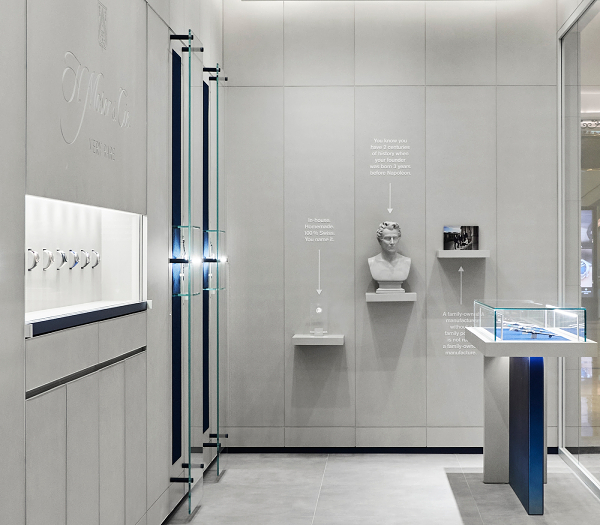
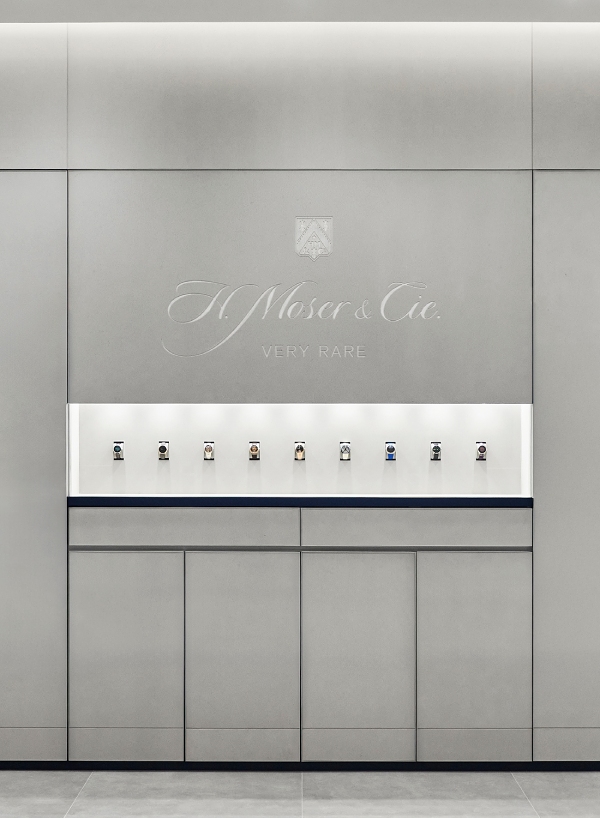
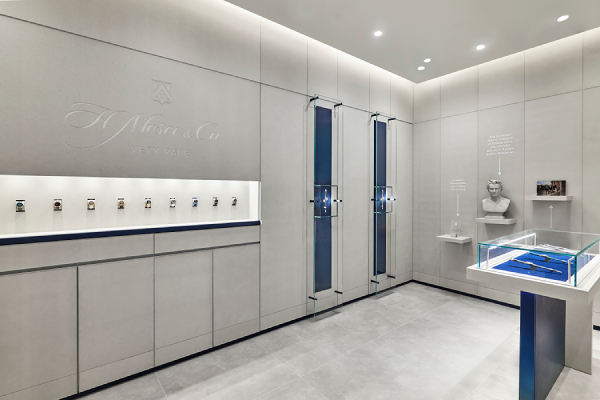
You’d think this lack of instant recognisability would be a problem, but it’s intentionally designed this way. The aim is to maximise individuality in ways that exceed what orthodox brand visibility can provide. And lately, the brand has doubled down on its presence in Singapore, with the opening of its first boutique in Southeast Asia. Located at Raffles City, the space doesn’t follow the rules of a conventional luxury store. Each watch is framed like an artwork in a gallery, set against raw textures and clean architectural lines, all contained within a white, compact space.
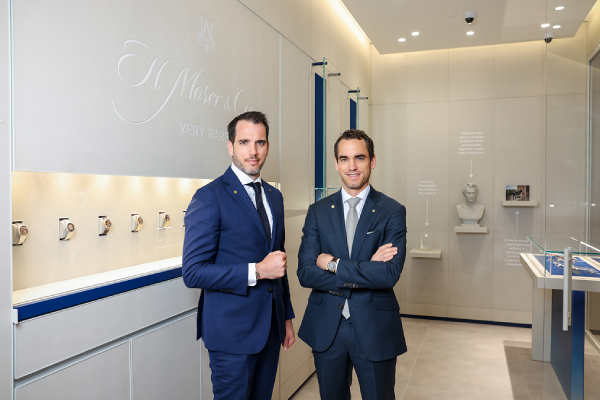
It was here that we sat with Edouard Meylan, CEO of the Maison, and his brother Bertrand Meylan, CEO of parent company MELB Luxe, to talk about the significance of this opening, and what it means to build a brand as unorthodox as H. Moser & Cie.
ESQUIRE SINGAPORE: When I think of unconventional watchmaking, Moser often comes up first. How important is it for the brand to create watches that don’t just provoke thought, but start dialogues?
BERTRAND MEYLAN: It helped us a lot over the last 13–14 years since we took over Moser, especially at a time when we had very limited budgets. Creating pieces with a serious subject behind them—like the Swiss Alp Watch linked to smartwatches, or Swiss Mad Watch linked to the idea of “Swiss Made”—helped us stand for something we truly believed in.
At the same time, it helped us get talked about, be present in the press, create awareness and build brand knowledge. For example, with the Alpine [F1 team] last year, we did something unexpected for a brand like Moser: pairing a mechanical driver’s watch with a digital watch.
It’s always about daring to do things differently, not hesitating to challenge what’s been done in the watch industry. That’s something Moser is known for—being different, sometimes provocative, often innovative. This year, we’ll continue pushing in that direction with products that we hope will surprise the community and beyond.
That said, it’s equally important to focus on our core business: creating long-term pieces like the Perpetual Moon, watches that are here to stay in the collection, alongside more short-term statement pieces that spark conversation and media attention.
ESQ: Right, because my first brush with Moser was through one of those thought-provoking watches—they’re the ones that really catch the eye.
BM: It is quite interesting that even today, when we travel the world, we still meet people who say, “I discovered Moser through this watch or that watch.” They didn’t necessarily buy one at the time, but it sparked their interest.
Then, as they discovered what we really do and the watchmaking history behind the brand, they slowly became addicted to the brand.
ESQ: We’re here at the new Moser boutique in Raffles City, which has been described as “experiential retail”. What sets this space apart from the others?
BM: It’s difficult to compare directly, but this is our—I think, 10th boutique worldwide now? The idea was to create a space that’s very Moser: minimalistic, focused, and intentional.
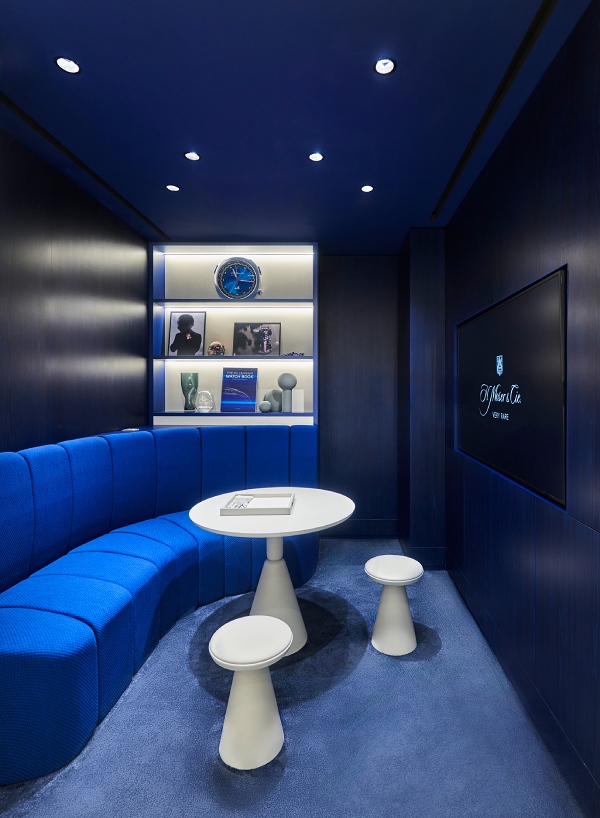
We present the watches a bit like an art gallery, where the product is truly the focus. Along the side displays and the wall at the back, we tell the story of the brand—that we’re a 200-year-old family business, fully in-house. There’s also a VIP area [where we’re seated], so it’s really about representing the brand as authentically as possible through a minimalistic approach, while placing the art at the centre, which is the watches.
ESQ: This is Moser’s first boutique in Singapore. How significant is this opening for you?
BM: Singapore has always been a key market for us. We’ve worked with the Lim [Cortina] family for about 12 years now, almost since we started 13–14 years ago.
Singapore is a global hub for business and travel, but also watch collecting. Opening a boutique here was a necessary step in the brand’s growth, not just for Singapore but for the entire region.
When we opened our first boutique in Hong Kong three years ago, we saw how it gave collectors confidence that the brand was growing. To have a key location, dedicated staff, and the full collection under one roof, it helped strengthen the brand’s presence across Northern Asia.
We believe this boutique will do the same for Singapore and Southeast Asia. It shows that partners like Cortina believe in the future of the brand—and that collectors do too.
ESQ: How would you rate the brand’s current presence in Singapore? Can you quantify it?
BM: Singapore is one of our top five markets globally. The US, Hong Kong, and Switzerland are bigger, and Japan is either just ahead or just behind Singapore—but Singapore is firmly in the top five.
It’s been a key market for us for over 10 years. There’s strong confidence that it can grow even more in the near future, and a boutique like this is one of the key accelerators.
ESQ: In terms of percentages, where are you now and where would you like to be?
BM: I think it's not about percentages, but more about continuing to grow in line with the global brand. Over the next five years, our ambition is for Singapore to at least follow the global growth trend.
If it can do even better, we would be very happy, but it at least needs to be consistent with our worldwide development.
ESQ: Edouard, how do you balance global expansion with Moser’s independent, limited-production exclusivity?
EDOUARD MEYLAN: We’re limited by nature. We’re manufacturers, so we do everything in-house. If we want growth, it means new machines, new people, more space. At the moment, it’s very difficult for us to go beyond 4,000–4,500 watches a year, so we’re actually building a new manufacturing facility now.
From the beginning, we realised the key wasn’t producing more, but creating demand. Before increasing production, we needed more people who actually wanted to buy our watches.
Those “crazy concepts” we discussed earlier weren’t just individual viral moments—we saw them as a way to build a language, a tone of voice, and an identity. Today, people come to us because the brand feels sexy, dynamic, and innovative. Even other brands want to collaborate with us because of that image.
Our obsession is reaching more people, even as an independent niche brand. We constantly ask: which media should we talk to, how do we reach new communities, younger customers, new segments? It’s not about balance—it’s about exceeding demand so production can grow slowly and sustainably.
ESQ: Is breaking out of that scarcity something you’ve ever considered?
EM: Scarcity is relative. Many people consider Patek Philippe extremely scarce, yet they produce far more watches than we do.
What creates scarcity is excess demand. We could make 8,000 watches and still be very rare—as long as there are many more people who want to buy them. It’s not about how much you produce, but how much demand exceeds production.
ESQ: What’s the most unusual idea that you’ve experimented with but never followed through on?
EM: When we work on something that crazy, it usually does come to life—sometimes not exactly in the way we first intended.
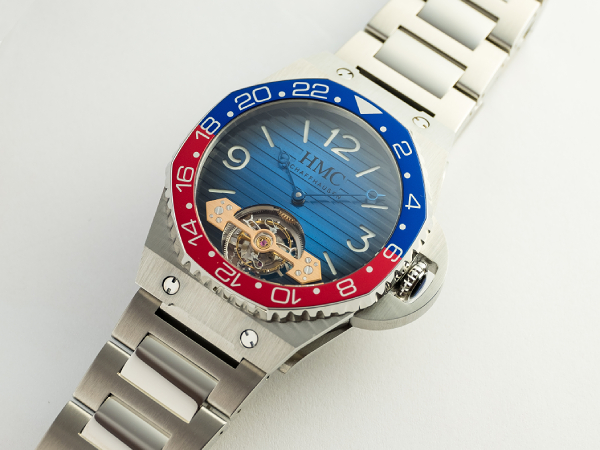
The Swiss Icons Watch was probably the one that, when it came out, wasn’t always understood, but it’s still talked about today. In that sense, it’s not life-changing, but it’s one of the most iconic pieces we’ve made.
ESQ: Since the Meylan family took over during the brand’s most volatile period, was there a moment that truly marked the brand’s renaissance?
EM: For me, it was September 2018, when we launched the Endeavour Perpetual Moon Vantablack. It was familiar, yet completely unexpected. Suddenly, we had requests from all over the world, including very high-profile collectors.
That’s when people really started to understand who we are and what we stand for. Before that, we had spikes of attention from the Swiss Alp watch, but, in 2018, it felt like we broke through a glass ceiling—and then Covid accelerated everything.
BM: I think, as Edouard mentioned, there were a few moments. The Swiss Alp Watch was one, but also when we launched the first Concept watches that had no logo, no indices.
We went around the markets, but all our retailers told us, “Beautiful watches, but all our watches have logos and indexes, we don’t know how to sell something like that.”
So nobody ordered them, until suddenly, a customer in Hong Kong called a retailer asking for one, bought it the same day—and two weeks later, everything was sold out.
That moment showed us that people were ready for something radically different, and it influenced how we redesigned many things afterwards.
ESQ: This one’s for both of you. What’s the working dynamic like between the two of you as brothers?
EM: We have very different responsibilities. Bertrand focuses on subsidiaries, sales, and distribution—he’s much more in the market. I’m mainly at headquarters, overseeing the brand, manufacturing, and creative process.
We discuss everything, but we each lead our respective areas, which makes it easier.
BM: It’s been going well, I can’t complain. I think we manage to complete each other in a certain way, but also have clearly separated roles, so we don’t step on each other’s toes. This simplifies the work and trust we have for each other in making key decisions, which we rarely disagree on.
EM: It's interesting, I think, as a company like ours grows, how more projects are happening in parallel. In the early days, we were involved in every detail and did everything. Now, there are so many parallels in a way that it creates more responsibilities for each other to focus on a key aspect.
I think that’s something that has changed in the last two or three years. 2026 is another level compared to previous years because of so many projects that we even hired external people because we don’t have enough capacity to manage everything.
For many years, I was the marketing director by default. Now, we have one that works with a team of 10 people.
ESQ: Finally, what’s one lesson you’ve learned from watchmaking that you could only learn through experience?
BM: I think it’s more linked to the entrepreneurial journey. What I realised during the early years is that there is always a solution. At the start, I stressed about everything because it felt like life or death. Over time, you realise that even when there’s a problem, you’ll find a way through it.
EM: For me, it’s about making tough decisions earlier. We often take them too late. In the beginning, we had way too many people at Moser for the size of the company, and we spent money we didn’t need to.
Today, I see other brands avoiding hard decisions out of fear—but it never gets easier. It only gets worse.
H. Moser & Cie.'s first boutique in Singapore is located at 252 N Bridge Rd, #01-36B Raffles City Shopping Centre, Singapore 179103