Some people decide who they are early and spend the rest of their life proving it. Adrian Bosshard is not one of those people.
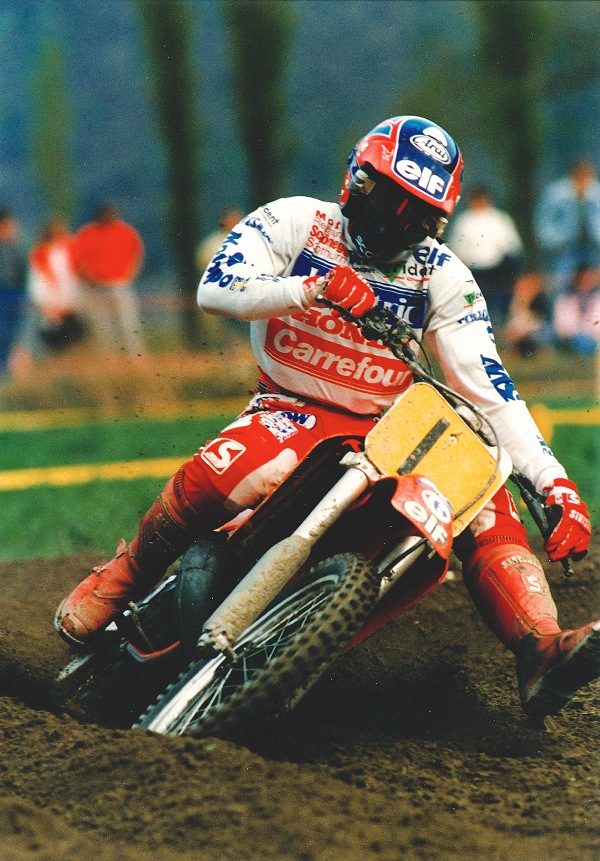
He grew up in Biel, Switzerland—a watchmaking town, as it happens, though that didn't mean much to him when he was younger. What meant more to him was speed—more specifically, speed on two wheels. For nearly twenty years, he raced motorcycles professionally, reaching the top ten in the world championships, winning the Swiss title more than once, braking into corners at 300 kilometres per hour.
Then all of it came to a halt. He was 34 when he decided to walk away from asphalt and rubber, trading his sponsor-studded one-piece motorcycle leather suit for something more formal you’d see in a boardroom instead. The transition was made possible only because of a serendipitous knock from the watch industry. Nearly three decades later, Bosshard sits at the helm of one of watchmaking's most distinctive brands, the pioneer of high-tech ceramic timepieces.
We sat down virtually with Bosshard to discuss Rado's celebration of a significant milestone: the 40th anniversary of the Integral, the watch that in 1986 became the first industrially produced timepiece in high-tech ceramic. And of course, also discussed motorcycles, letting go, and what he currently chases presently now that adrenaline and medals sit firmly in the rearview mirror.
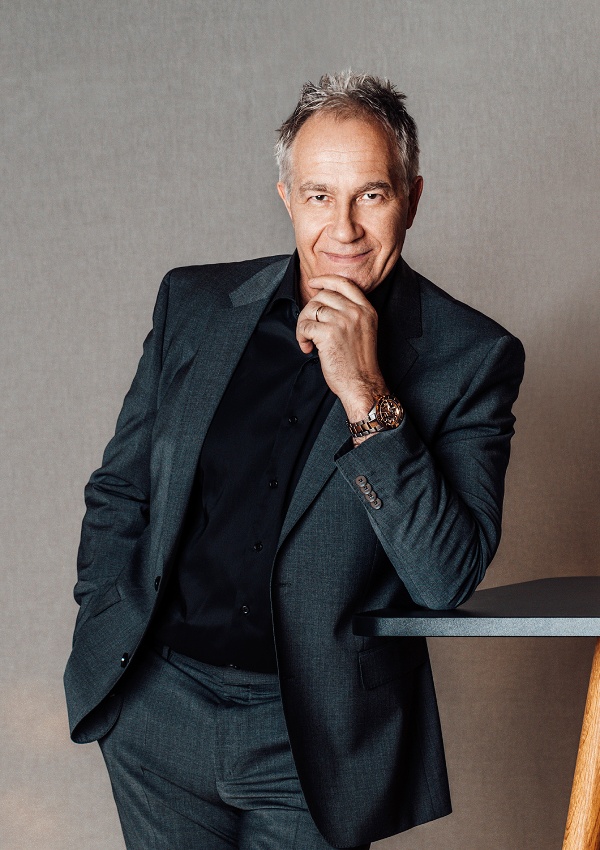
ESQUIRE SINGAPORE: I read that you used to ride your motorcycle to work. Do you still do that?
ADRIAN BOSSHARD: You know, when I was a young man like you, I did motorcycle racing for many years—close to 20 years of my life was only motorbikes and sport. Today, I’m not doing it anymore, because for me the motorbike was not an object to move from A to B. It was a sports object.
My passion was to be on the racing track, to move with the bike as fast as possible around the circuit. That was my satisfaction, my aim. I never used the motorbike to go to work or go on vacation.
ESQ: So you don’t have a motorbike in your personal life?
AB: I had some bikes to drive a bit, but I was never a person who made long distances by bike in traffic. For me, a motorbike is something for the circuit.
When I go to work or travel, I prefer the car. I take the bike only for the racing circuit. In traffic, there’s a risk—I might forget there are cars around and ride too fast.
ESQ: When you stepped away from racing, I heard you were planning to open a motorbike dealership in Biel. What convinced you to pivot into watches when you were approached with a job at Certina?
AB: Yes, you are well informed. My last racing years were 1995–1996, and my sponsor then was Certina, a very sporty brand under the Swatch Group. I was already passionate about watches, but joining that team made me even more fascinated with Swiss watches.
When I stopped racing, my ambition was to open a motorbike store in the canton of Bern. But then the director made me a job offer—to take over a sales district for Certina in the Swiss-French part of Switzerland. I thought, I’m still young, I can learn a lot. I’ll go for two or three years, learn from an international company, then return to motorbikes.
Now it’s 29 and a half years later—I'm still learning, I'm still fascinated by the watch industry, and I’m still here.
Motorbikes were my passion when I was very young. But watches were also my passion, and even more so now. I had the chance to move from one passion to another. When you enjoy what you are doing, why should you change? I’ve never regretted this decision.
ESQ: Did it take much convincing to move from racing into watches?
AB: Not really. As a racer, I always told myself that as long as I can improve, I will continue. But biologically, you cannot do this forever. At 34, I saw it would be difficult to take the next step.
I had achieved Swiss champion titles, top-three places in the European Championship, and top-10 in the World Championship—but I couldn’t go further. So I told myself: racing was beautiful, and I achieved what I could. Now let’s do something else.
At that moment, I had the opportunity to join Certina. Given my passion for watches and the Swatch Group, it was an easy decision.
Of course, it was a tough change—you go from being among the top 10 or 15 motorbike racers in the world to starting again from zero. But I like such challenges. Looking back, I’m convinced I did the right thing.
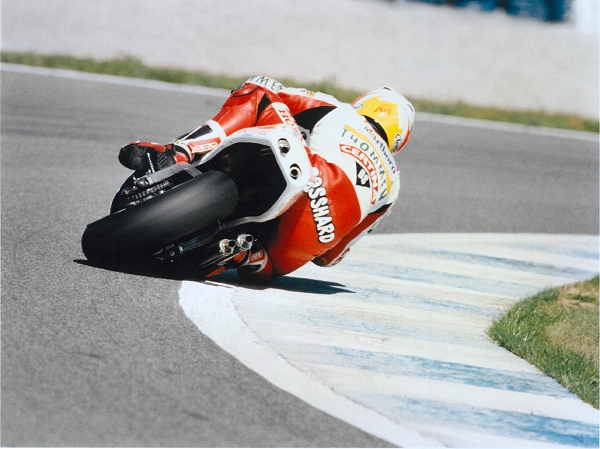
ESQ: Emotionally, that must have been difficult—your whole adult life was spent on the racetrack.
AB: It was a change, but you cannot do a sport like this your whole life. It demands full physical fitness and concentration. At 35, 36, 37, moving towards 40, your body is not the same as it was at 25.
You see this in all sports—tennis, skiing, gymnastics. In motorcycle racing, 34 or 35 is a good age to stop.
I stopped with some broken bones, of course—but fortunately not the head or backbone. I can still walk, run, cycle, ski—not like at 20, but still in shape. It’s definitely a nice achievement after 20 years of racing without any tremendous damage.
ESQ: In your early days in watch sales, was there a moment that confirmed you’d stay for the long run?
AB: I started, and the years ran away like hell. I began in 1996, and after two years, I was promoted to sales manager, then head of sales for Switzerland, then director for the Swiss market. I always had new challenges, new responsibilities.
In 2003, when I was 41, I was promoted to CEO of Certina. That’s when I really felt the trust of the Hayek family and the Swatch Group.
From that moment, it was clear—this would not be short-term. Seven years after starting, I knew I would stay, shape the brand, and commit long-term to this industry.
ESQ: Given your background, did you ever feel out of place in a boardroom?
AB: I must admit, no. When I was a motorcycle racer, I was not someone who was only going on the racetrack to drive the bike. In Switzerland, racing is not as popular or structured as in Spain or Italy, so I was forced to organise everything myself—mechanics, engineers, PR, sponsors.
I was already managing small teams of five to six people, holding meetings, and making decisions. Of course, when you lead a bigger team, it’s different, but the way you act is the same.
For me, it was a change in industry, but not a change in how I make decisions or work with people. I never felt lost or in panic. As a racer, I had to make decisions my whole life—you manage the organisation, you pay the bills, you take responsibility. That part didn’t change.
ESQ: So that self-management translated well?
AB: Absolutely. As a racer, you learn that alone, you can do nothing. You need a good bike, a good engineer, a trusted mechanic—people you can fully trust. At 300 km/h, when you brake into a corner, if you don’t trust that every screw is in the right place, you’ll go crazy. You must trust everything.
So having the right people around you, appreciating them, being close to them, motivating them—this was already normal for me from a young age.
It’s the same in watchmaking. To bring a watch to a store, you need designers, engineers, product managers, marketing, sales, logistics—an entire structure.
As CEO, I give direction and vision—but success depends on the team. In that way, racing and leading a brand are very similar.
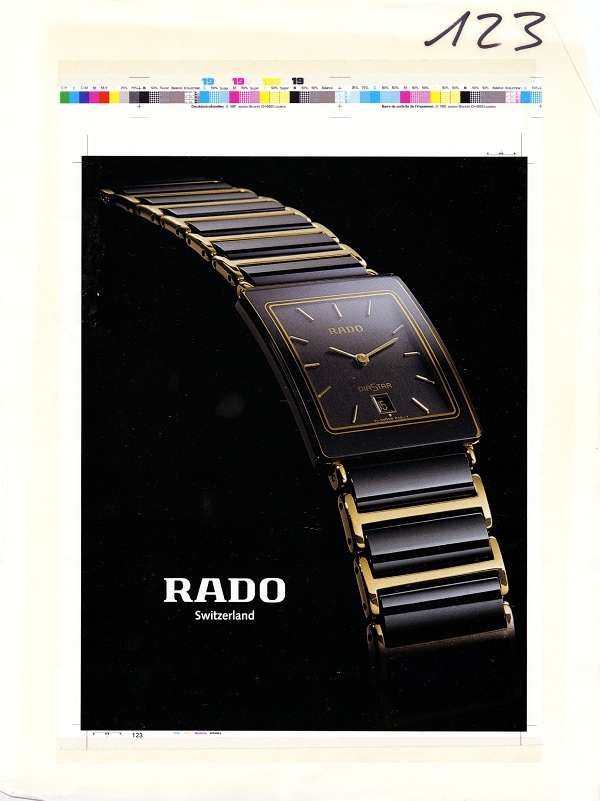
ESQ: Let’s talk about Rado and the Integral. You’ve been at the helm for a few years—how has ceramic evolved under your watch?
AB: I’m in a lucky position—Rado has always been a pioneer in materials. It started in 1962 with the first scratch-resistant timepiece, the DiaStar. Then, in 1986, the first industrial high-tech ceramic watch—the Integral.
When I became CEO in 2020, I inherited a strong team of engineers and R&D specialists. My role was to push further. One key achievement I’m proud of is the 2022 launch of the first DiaStar in Ceramos. It has similar properties to high-tech ceramic—light, scratch-resistant, comfortable—but also very noble.
We also developed new colours in high-tech ceramic, which is very challenging, especially in achieving the exact Pantone tones. And we introduced the Anatom in high-tech ceramic—a model first launched in 1983.
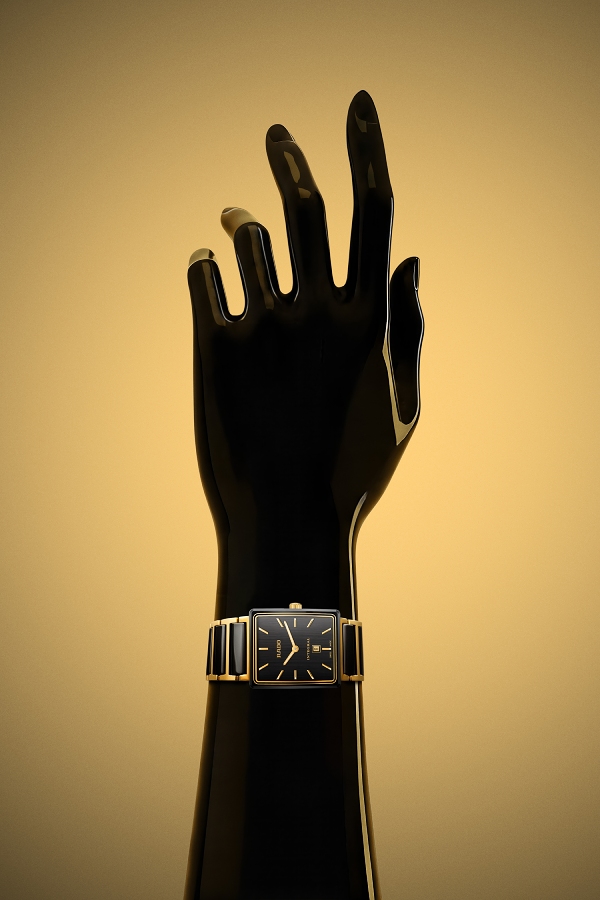
ESQ: Can you talk about the new 40th anniversary Integral? What inspired it?
AB: It was very clear for us: the new Integral must stay true to the original 1986 design codes. The DNA had to remain.
But of course, we use modern technology. The watch is slightly bigger, and it features a very flat quartz movement. It has anti-reflective sapphire glass, so clear that it almost feels like there is no glass. The metallisation is also thinner, making the watch look brighter.
So it is inspired by the 1986 design, but executed with the most modern watchmaking technology—a very contemporary timepiece that still respects its origins.
ESQ: It’s too early to say, but how do you imagine the Integral might look in another 40 years?
AB: Here you are asking too much (laughing). Forty years is very far! What I can say is that the Integral will still exist—it is too important and appreciated to disappear. But how it will look, I don’t know.
We plan in five-year horizons, because high-tech ceramic development alone takes at least three years. I know what it will look like in five years, but I will not tell you. For now, you can enjoy the 2026 model.
ESQ: Success used to be measured by race results. How do you measure it now?
AB: Today, success is customer satisfaction. When customers are happy, when they buy again, that is the most important thing.
Growing sales and market share show that the team is doing the right job. But equally important is team satisfaction. My team must feel fulfilled and enjoy their work.
When you have happy customers and happy employees, shareholder satisfaction comes automatically.
So I no longer measure performance with lap times or podiums, but through the performance of the team and the satisfaction we create.
ESQ: You used to chase adrenaline on the racetrack. What are you chasing now?
AB: It’s similar in a way. The satisfaction comes from gaining market share, opening new stores, and creating experiences for customers.
When you enter a boutique, see the collection, feel the watches, experience the brand—this is where the satisfaction lies. When customers feel the uniqueness of the brand at the point of sale, that is the reward.
Of course, the pure adrenaline of racing—the heartbeat at 200 per minute—that is different. But there is still excitement.
When you overcome a technical challenge, when a product finally works, when everything comes together—that brings its own kind of satisfaction.