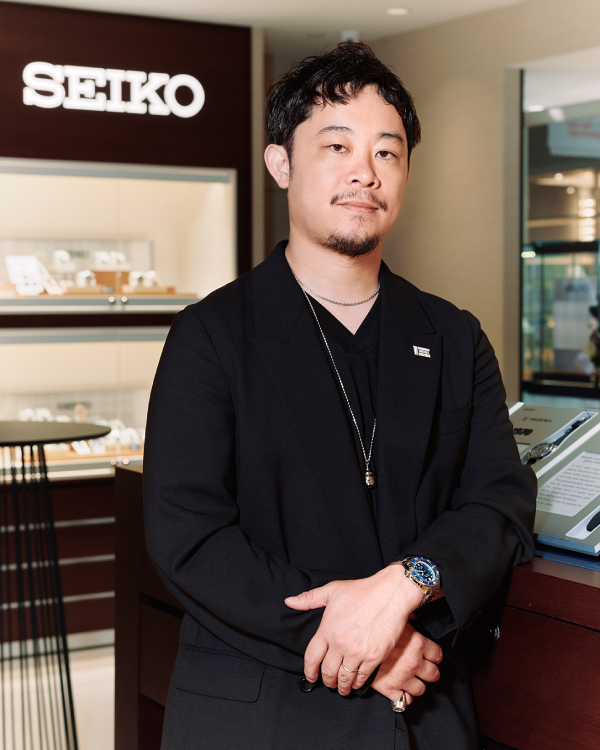
Seiko has no lack of designers in its design team. They’re the ones responsible for the hundreds of individual watch models, each spanning different colours, patterns, shapes, textures, dials and cases. Yet, even in an environment as saturated as this, you’ll be hard-pressed to find a designer with a portfolio more varied and creative than Masanori Kawamura.
Since joining Seiko in 2013, he’s worked on everything from the technical precision of the Astron GPS Solar line to the moody, cocktail-inspired dials of the Presage collection, and even a tongue-in-cheek "hide-and-seek" concept watch dreamed up for Seiko's experimental Power Design Project. But it's his work on Prospex, and specifically the Marinemaster diver's watches, where his design philosophy comes into sharpest focus.
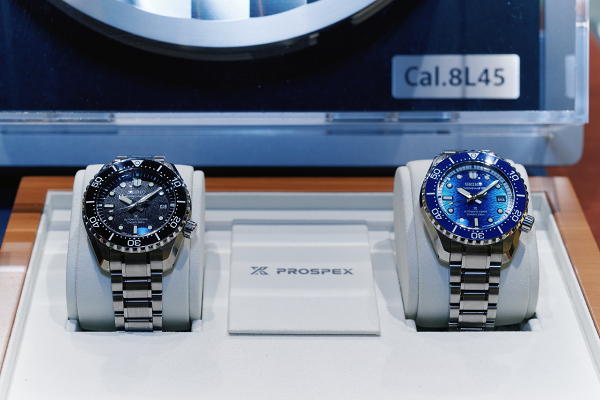
With the HBF002, Kawamura and his team faced a simple, yet familiar challenge for any storied watch line: how do you honour the DNA of a foundational design without simply repackaging nostalgia?
We spoke with Kawamura to learn more about his thought processes behind the watch, his personal design philosophies, and how thirteen years of watch design have reshaped his own relationship with time.
ESQUIRE SINGAPORE: What do you think separates the new Marinemaster from other divers’ watches in the market?
MASANORI KAWAMURA: I believe what sets it apart from other divers’ watches is that it is designed from the outset with professional divers in mind.
Rather than simply enhancing performance [through] specifications, every aspect—from the movement and case construction to the exterior and even the smallest details—has been consistently designed to ensure reliable functionality under extreme conditions.
For example, not only fundamental performance factors such as legibility, operability, and durability are addressed, but also serviceability for long-term use is taken into account, all based on real-world usage scenarios.
As a result, it is not just a high-performance divers’ watch; its defining characteristic lies in the consistency of its overall execution, where structure, form, and precision of craftsmanship are all derived from function.
ESQ: What were some non-negotiables when it came to retaining design elements from the original Marinemaster?
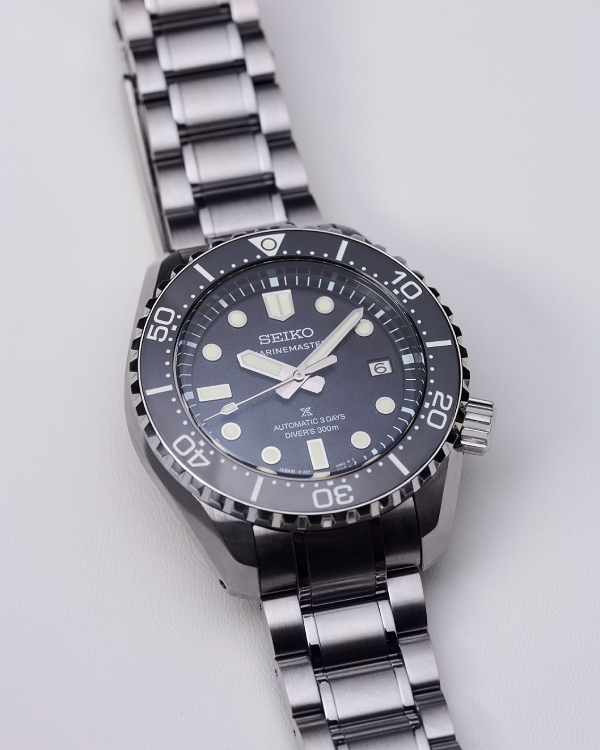
MK: We have inherited elements from the 1968 diver’s watch, such as the shape of the indexes and hands, the crown positioned at 4 o’clock, and the rounded mirror-finished surfaces of the case.
These are not merely stylistic choices—they originate from functional requirements such as legibility, operability, and wearing comfort. I believe that the identity of the Marinemaster series lies in these function-driven forms, and we have preserved that essence.
ESQ: Can you describe a eureka moment you had during the design process?
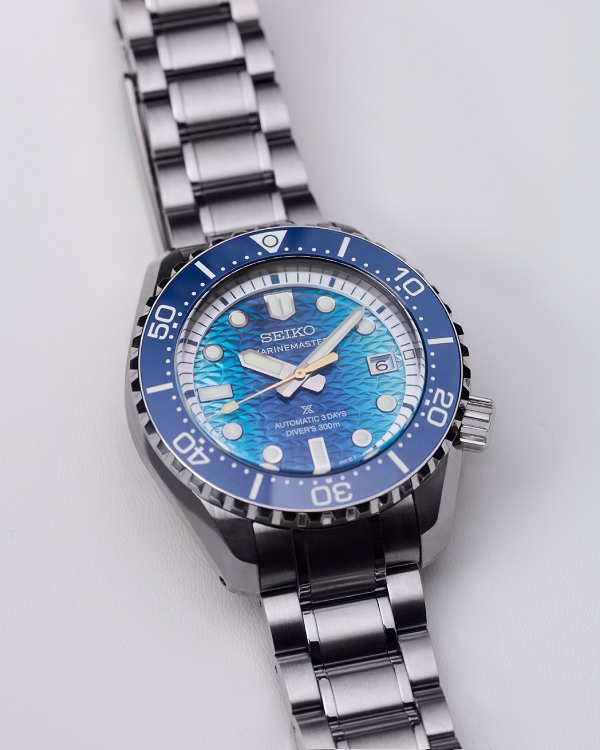
MK: In developing the dial for the HBF002, at the stage of the initial samples, the base and rising edges of the pattern appeared too pronounced depending on how light hit them, resulting in a somewhat unnatural impression.
To address this, we revised the cross-sectional shape of each element from a pentagon to a simpler triangular form.
As a result, reflections and shadows became more controlled, the harmony with the gradient improved, and I feel we were able to achieve a more natural and deeper dial expression aligned with the concept.
ESQ: Utility or design?
MK: We constantly pursue practicality as a professional tool.
For us, design is not decoration—it is something that inevitably emerges from the performance required in extreme environments.
The forms that result from this process are, in themselves, what we consider to be beauty.
ESQ: Does working on a commercial line like the Prospex limit the creative freedom you have?
MK: In Prospex, including divers’ watches, there are many design constraints in terms of safety, legibility, and durability. However, we do not see these as limiting creativity.
As a mass-produced collection, Prospex also involves constraints related to cost and manufacturability, but we consider these conditions to be part of the design premise.
Rather, we believe that by fully engaging with such constraints, new expressions and technological breakthroughs can emerge.
ESQ: You joined Seiko in 2013. How has your design sensibility evolved since then?
MK: When I first joined the company, my focus tended to be on form and visual design.
However, with experience, my perspective has shifted toward the idea that form is determined by function and actual usage environments.
Especially through working on divers’ watches, I’ve come to strongly feel that pursuing elements such as legibility, operability, and durability naturally leads to design.
Today, rather than intentionally adding beauty, I place importance on the beauty that naturally emerges from proportions and details derived from function.
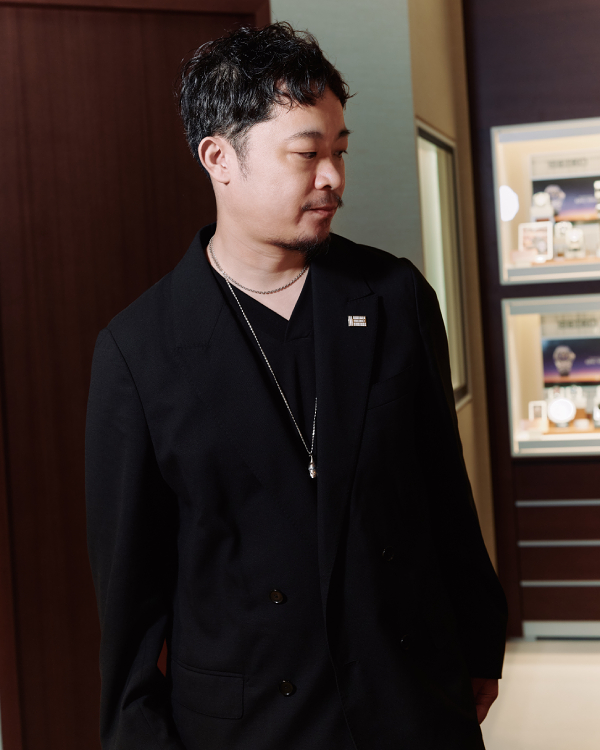
ESQ: Is there a watch you've designed that you're most proud of, and why?
MK: Rather than a sense of pride, I would say a memorable experience for me is the pilot watch I designed in my first year (e.g., SSC347P1).
At that time, I didn’t have much knowledge, and everything felt new, so I just threw myself into the work.
Seeing it displayed at Basel World a year later was a deeply moving experience.
ESQ: Has designing watches changed your personal relationship with time?
MK: I’ve always been the kind of person who likes to keep my watches precisely set, and I think I’ve always been sensitive to time deviations.
Since becoming involved in watch design, I’ve come to see time not just as something to display, but as something to be controlled [with regard to] accuracy and continuity.
At the same time, precisely because I approach time in such a rigorous way, I’ve also started to think more about how time can be enjoyed and used.
This has even led to ideas such as a “hide-and-seek dedicated watch,” as an attempt to propose new ways of engaging with time, beyond viewing watches simply as everyday tools or fashion items.
Photography: Jaya Khidir
Photography Assistant: Shiro Kuan