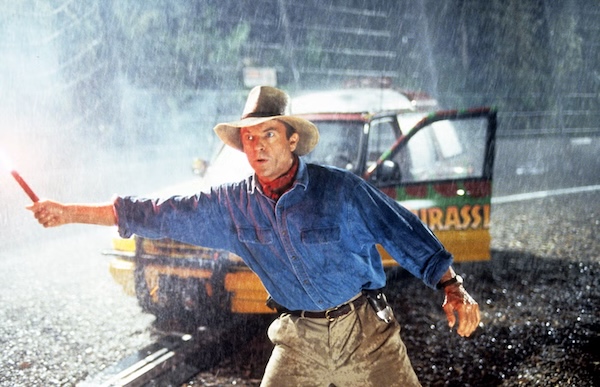
The whole world may remember Sam Neill from the landmark blockbuster Jurassic Park, but there is another performance by the actor, who died at the age of 78, that will chill me forever. This performance of his remains haunting and powerful, even though it debuted almost 40 years ago and is now largely forgotten.
The role was in a 1987 ABC miniseries called Amerika, a cold war alt-history parable about what life in the United States might look like under Soviet rule. Neill played Colonel Andrei Denisov, a KGB apparatchik and administrator of the occupation, who meets one night in the city with a midwestern politician and USSR collaborator named Peter Bradford (played by Robert Ulrich). From Denisov’s balcony, they watch as a mob of young people from an underground punk concert surrounds a police car and sets it on fire.
Denisov looks down with contempt but not surprise. “Your young people, attacking the symbols of power—that they can see,” he purrs. “They resist in ways that make them feel good, not those that actually accomplish anything.”
Bradford shakes his head. “Stupid,” he says.
Here, Neill smiles ever so slightly. “Actually, it’s a control provocation. Our agents stir them up so that we can let them release their frustrations. At the same time, we keep track of them. Give them a scare. Arrest some.” He shrugs.
I think of that scene every time a Twitter or Bluesky mob rears up in a flurry of performative outrage. It hardly matters what the issue is, big or small. The process of changing the world for the better is a slow and painstaking one, requiring sophistication, strategy, and patience. That’s very different from catharsis or virtue signalling. Amerika was concerned with the ways our society grows weak by mistaking displays of emotion for effective activism or resistance.
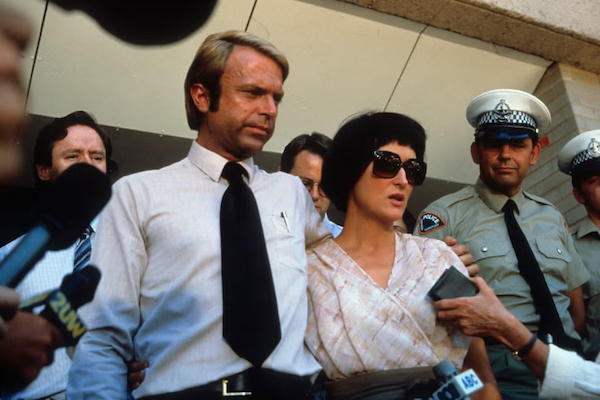
Amerika was controversial in its time for suggesting that the country was growing weak, distracted, and divided. Now it looks like prophecy. Neill is remarkable in it because, despite being the villain, his Denisov is almost grief-stricken by what he sees, like a hunter who realises he’s tracking an already wounded animal. He anchors the red-scare agitprop story in reality by displaying traces of humanity beneath the KGB cold-bloodedness.
This was Sam Neill’s great power: On the surface, he emoted an air of icy confidence, whether it was as the paleontologist Alan Grant in 1992’s Jurassic Park, the suspicious husband who discovers his wife’s unthinkably twisted secrets in 1981’s Possession, the insurance investigator who unwittingly opens a case into cosmic evil in 1994’s In the Mouth of Madness, or that same year as the playfully scandalous painter of nudes in Sirens. He entered these stories with the swagger of someone who knows his shit and isn’t going to be thrown off course.
The joy of watching Neill onscreen was seeing the cracks appear. The sideways glance that betrays his crumbling inner foundation. This is the actor’s version of the steep roller-coaster climb that eventually gives way to the harrowing, head-snapping adrenaline rush. He could play comedic, terrifying, and tragic—whether he was babysitting two rambunctious children who would make a good T. rex snack or pinwheeling into unrestrained madness aboard a deep-space vessel in Event Horizon or playing the bitter and violently abusive husband who discovers his wife’s passionate affair in The Piano.
As his Amerika character would have approved, he chose to focus on what truly mattered.
As the Antichrist himself in 1981’s The Final Conflict, the third film in the Omen series, Neill was not so much the adult embodiment of evil as the grown-up Damien but rather the embodiment of hubris. In the 2016 comedy Hunt for the Wilderpeople, Neill was endearing as the brusque and aloof sort-of-uncle to a juvenile delinquent, and of course the hard exterior gradually wore down as they bonded while stranded in the woods together.
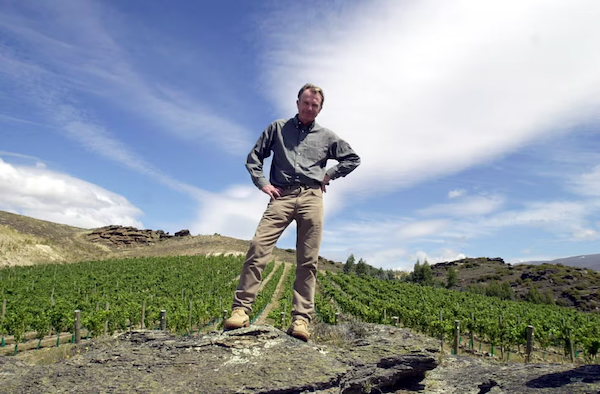
Every character Neill played was unique, but this common thread in his performances is what tethered together a lifetime of work in seemingly every genre imaginable. In real life, the New Zealand performer was not nearly as high-strung as so many of his characters. On Instagram, he was a proper charming oddball, pruning the vines in his winery, tending to his beehives, and posting videos as he argued with birds or flirted with a hog.
When I met him four years ago, reuniting him with original Jurassic Park stars Jeff Goldblum and Laura Dern, he was not the stony-faced dino researcher who shakily removes his glasses when he sees something he can’t believe. He was the one delighting in rattling his old friends with shock humour. Literally, in this case.
“It was the day we fried the kid on the electric fence... ” he said, launching into a story.
“I just love the very delicate way you described that,” interrupted a guffawing Dern. “The day we fried the kid!”
Neill defied politeness, shouting even louder: “We fried that kid on the goddamn fence!”
This was just the setup for him to explain his one regret about the dino classic: his fluctuating accent. While shooting the fence scene, one of the first sequences of principle photography, director Steven Spielberg approached him about his dialogue.
“He said, ‘Hey, Sam, you know the accent we were talking about?’ I said, ‘Yeah, I’ve been working on it for four weeks.’ He said, ‘Don’t worry about it. Just use your own voice.’ I said, ‘That’s great, Steven, thank you so much.’ And then four days later, he came up to me and said, ‘You know that voice you’re using now?’ I said, ‘Yeah, my voice?’ He said, ‘Somewhere in between.’ It’s an actor’s nightmare! So that’s why I get a lot of flak to this day: Sam Neill’s American accent in Jurassic Park was a load of T. rex poo.”
It was not long after our interview, in the midst of promotion for Jurassic World Dominion, that Neill was diagnosed with stage 3 non-Hodgkin lymphoma. Distressed and fearful, he later said on the Today show that he felt the need to “take stock of things.”
“I need to do something, and I thought, Shall I start writing?” he said.
The result was his 2023 memoir Did I Ever Tell You This? which chronicled not only his filmmaking history but also his battle against cancer. In the years that followed, Neill kept posting about his farm life and various screen adventures he had. As his Amerika character would have approved, he chose to focus on what truly mattered.
As Neill said in his Today appearance: “I’m not afraid of dying. What I don’t want to do is to stop living, because I really enjoy living.”