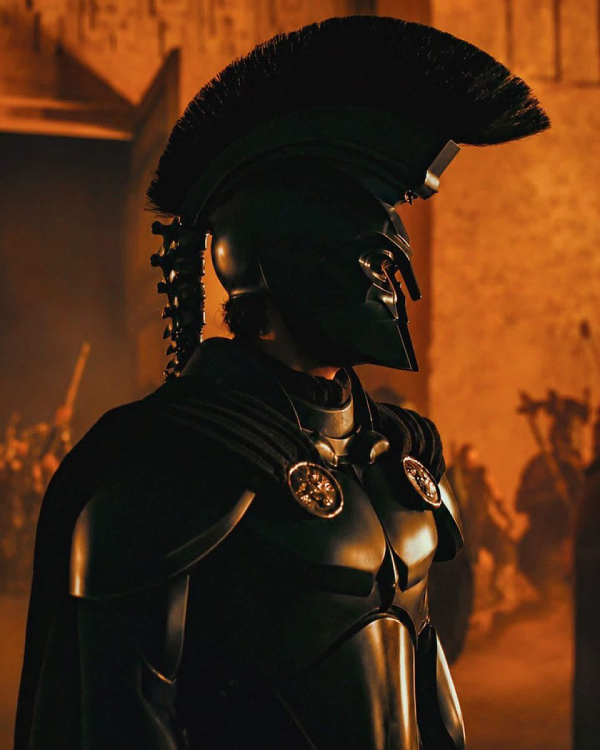
Take a scroll through social media and look up The Odyssey. Amidst the memes and BTS insights into Christopher Nolan's impressive work without CGI, you'll find a flurry of reels and edits glorifying all the aura-farming Agamemnon does in the film.
If you're unfamiliar with the term, we'll let Benny Safdie, who plays the king of Mycenae himself, explain: "It means taking ownership of a room with just your presence."
Admittedly, when the gates of Troy opened, and Agamemnon towered above his soldiers as they charged into the teeth of certain death and destruction, it was pretty badass. It also doesn't help that his armour design is easily one of the best-looking iterations of Mycenaean Greek armour portrayed on screen.
But even though Safdie accomplished his duty of aura-farming, the decision to cast him as Agamemnon was a puzzling one (almost as much as Nolan's decision to rotate Cyclops' eye vertically in a mildly suggestive manner).
Apart from Safdie's towering height of 185cm, there is nothing about the actor slash filmmaker that makes you think he'd be capable of pulling off one of the most powerful rulers in Greek mythology. The character's silent yet intimidating disposition contrasts massively with his usual neurotic indie-film persona.
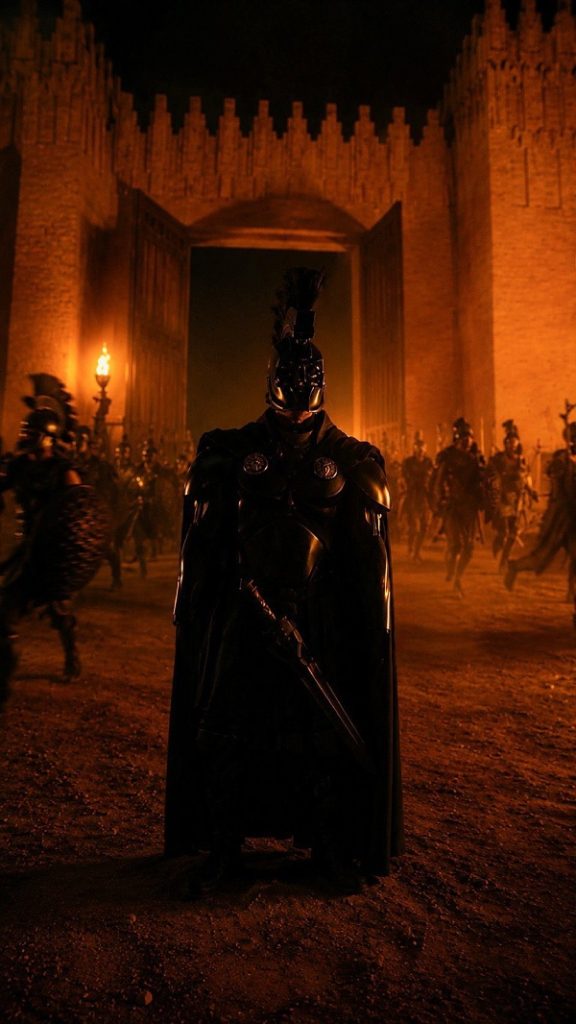
Agamemnon may have stood on the front line at the gates of Troy, but we never see him raise his sword or even lift a finger in combat. He doesn't lead the charge. Instead, he walks behind his men, letting them fight the wars that he waged to satiate his own selfish ambitions.
He sacrifices not only his men, but his eldest daughter, Iphigenia, to the goddess Artemis in order to be granted passage into Troy. Time and time again, we see him cower behind the backs of others, defying the very perception we form from the imposing presence he curates for himself.
It's no coincidence that we never see Safdie's face for most of the film until his demise in the royal bath, when his throat is slit by his wife for the very act that epitomised his cowardice—sacrificing their daughter. When we finally do see his face, it belongs to a scared man, naked, with nothing to hide behind.
Even when we hear his voice as Odysseus summons him in the underworld, we're caught off guard. We're prepared for something deep and vigorous. But what comes out is a voice that is shaky and delicate, nothing as imposing as his stature would suggest.
Not to imply that Safdie is a cowardly loser, but rather, because of his history playing nervous and eccentric characters, his casting serves as a parallel for Agamemnon's depth. Nolan is breaking the fourth wall in a way that feels unprecedented in modern cinema: by drawing from real-life context and applying it to his casting decisions.
Just look at his choice of casting Travis Scott as a bard who sings tales of Odysseus' journey—he is likening ancient oral poetry to modern rap. Similarly, he tries to convey to audiences a message about Agamemnon and false leaders with the casting of Benny Safdie.
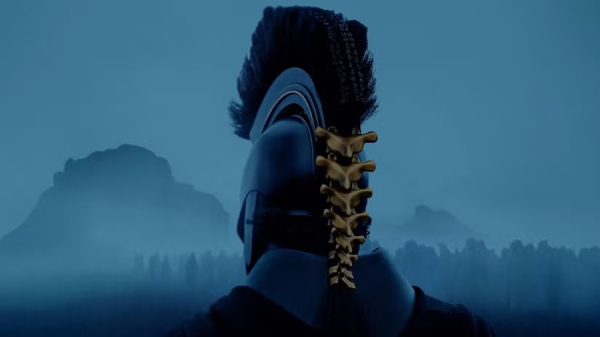
Behind that menacing armour is simply an unscrupulous coward, not a bronzed, chiselled king capable of splitting a log with his bare hands. Try as he might to compensate for his lack of a spine with cool armour and a polished, gold-plated one that hangs off his helmet. But all this, much like his demeanour and aura-farming, is ultimately just for show.