
After five gruelling seasons of yelling over each other, panic attacks, and pans being thrown across the kitchen, The Bear has finally concluded its story—and it ends with the death of Carmy's dreams.
When season four ended, we were left with a bombshell: Carmy (Jeremy Allen White) is not only stepping away from The Bear, but away from the culinary world altogether. This announcement causes Sydney (Ayo Edebiri) and Richie (Ebon Moss-Bachrach) to enter a frenzied spiral, and understandably so. They've been at it together through thick and thin for years, and Carmy's departure came at quite possibly their lowest point.
Nevertheless, the show had to go on; to keep the restaurant running smoothly, the ownership structure had to change. Sydney had to step into her new role as Head Chef, while Richie was added to the official ownership and partnership agreement.
This is where season five picks back up: the trio of characters, each at the precipice of stepping into something new and unknown. The first seven of eight episodes depict this dynamic playing out over the course of a single day. When the characters step into the kitchen for the "final" dinner service, they are also inadvertently stepping into a wrestling match against the unfamiliar.
To pinpoint exactly what this unfamiliarity is, look no further than what Lee (Bob Odenkirk) once told Carmy, which Carmy himself recalls during a conversation with Uncle Jimmy (Oliver Platt) in the final episode.
"To break patterns, you have to break patterns"—the entirety of season five, captured in a single line. We see the trio attempt exactly that, but each of them is at a different stage of the pattern they're trying to break.

Richie is the furthest along in his journey. We've seen him fall in love with hospitality in seasons past. Season five is more of what we already know he's capable of: being a laser-focused front-of-house leader. Through his resourcefulness, he's able to turn over every table on time despite being severely overbooked.
He buys free dessert out of his own pocket, orchestrates kitchen tours, and puts on an impromptu "garden party" for customers to enjoy their desserts. It's a far cry from the cashier who once struggled to find any passion in the work he did, beyond the usual banter with regulars. He's come so far, yet we still see glimpses of him working on himself and his emotions. He listens to self-help audiobooks and touches tables and chairs to ground himself and calm his mind, no matter how stupid he thinks it looks. He's a reminder that the journey is never truly over.
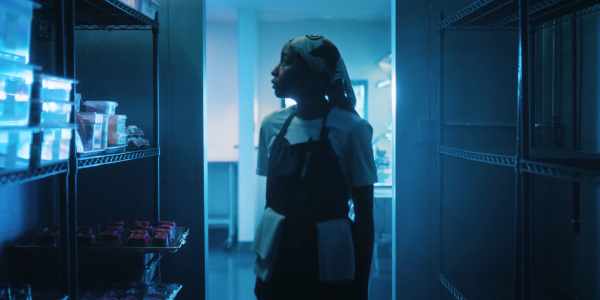
Sydney, on the other hand, has only just begun her process of breaking the cycle. She's in the middle of trying to lead a kitchen in her own way, without yelling or swearing, even when the easiest thing to do would be to give in to emotion. She's constantly reminding her team to lower their volume and to speak without emotion, encouraging them to unlearn the habits their previous leader instilled. She even has to push Carmy to resist the urge to do everything himself. There are, of course, moments when she second-guesses herself—it's her first time leading a kitchen on her own. But the rhythm she is disrupting is more external than internal, and this is evident in the way the kitchen's energy palpably shifts around her.
Both Richie's and Sydney's transformations are contrasted with Carmy's stagnation. Although he has announced his intention to leave, he's still there, a ghost in his own kitchen. He's watching the people around him work with a passion and love for their craft that he's realised he might never truly have possessed himself. He's trying to pass the baton to Sydney, but he's unsure. One moment he's trusting her to take charge; the next, he's jumping back in and returning to old habits.
The scene in which he drops the very last piece of lamb destined for the Michelin inspector's table encapsulates this mental incongruence best. The horror of watching the plate shatter mirrors the death of his culinary dreams and ego. His reaction illustrates just how hard he finds it to let all of it go. But this misfortune is also what helps mark the true beginning of his journey. Carmy has always struggled to let love and support into his life, but in that moment he feels the reassurance of his team. And, for the first time, he truly accepts it.
We see this intersect with his struggle to let go when he decides to let Sydney serve her own dish in what might be the most important order of his entire career. He places his trust in her cola ribs instead of his own creation, and in doing so, marks both the end of one journey and the beginning of another.
Throughout its run, The Bear has offered some of the most nuanced yet layered thematic content on television. It has dived headfirst into ideas of found family, trauma, grief, and the cost of perfection. But to have all of that build towards its ultimate message, the death of dreams, is something we've rarely seen in media before.
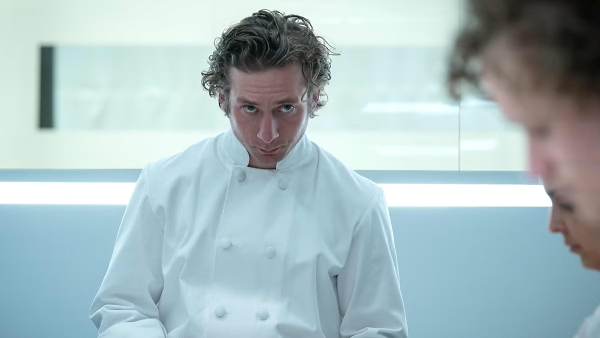
Carmy's pursuit of greatness led him to leave his family for culinary school in Paris, and to move from country to country thereafter. It strained the relationship he had with his family, and with Mikey in particular—a regret he still carries wherever he goes. He's had to endure psychological trauma and abusive mentorship in a kitchen where that sort of treatment was normalised. He was taught that emotional atrophy and isolation were the formula for success, and he internalised this so deeply that it became part of his identity. It went beyond just attaching the title of chef to his sense of self; it seeped into the very fabric of his being, shaping not only how he worked in the kitchen but how he lived outside it and how he related to the people around him.
He has sacrificed time and time again, all in the name of attaining milestones and accolades to propel him closer to his dream. Winning Food & Wine's Best New Chef award at the age of 21 wasn't enough. The James Beard Foundation Award wasn't enough either. Even when he eventually got the Michelin stars he so desperately craved in the final episode, it didn't change anything. None of them resolved the fundamental question of who Carmy is when he isn't cooking.
The Bear's greatest gift is its ability to hold up a mirror, inviting the audience to question their own goals and dreams—to look inwards and examine the reasons behind those ambitions. Are they coming from the right place, with the right intentions? For five seasons, we thought the show was telling us to keep pushing and moving forward. When in fact, it was simply working towards reminding us that sometimes, the harder thing is to stop.