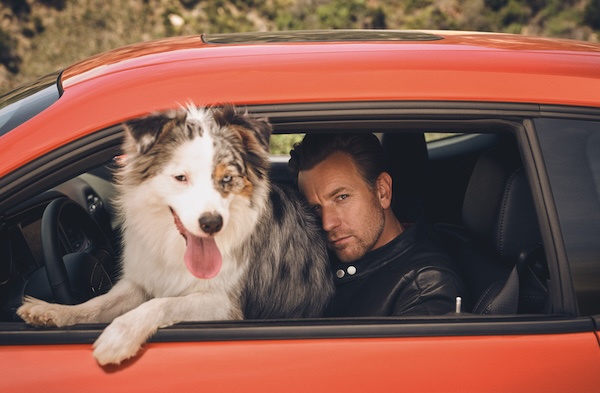
He’s bright-eyed and undaunted. Boundless positivity bridled within a ruddy stature. Spry, but resolute. His gaze is underscored by subtle intensity, until it breaks into a vivid grin.
For an actor who has spanned such a spectrum, the depiction could neatly match any one of his characters. From the heroin-fuelled anti-hero to the hope-filled adventurer, there’s a distinct charm that Ewan McGregor carries into each performance. A spirited portraiture so personal that it’s hard to picture someone else for the role. There’s an intrinsic conviction of the story that he binds himself to; an intertwining of the soul in telling it.
What tale has he not told? A visceral response awakens in us when he expresses his devotion in an arresting Moulin Rouge melody. When he makes the trembling phone call on The Impossible, our hearts shake with him. Yet with such a diversified portfolio, the versatile Scottish actor professes no favourite genre. “I look for scripts that have something particular,” McGregor says, “I like anything that presents a sort of acting challenge.”
This time, one of the biggest talents in Hollywood faces the task of playing an older Danny Torrance in the upcoming Doctor Sleep; the long-awaited movie sequel to Stephen King’s The Shining.
“It’s a tall order to follow such a classic movie and to please both camps of Kubrick and Stephen King fans.” Rightly so, given how the author famously indicated his displeasure in the 1980 film adaptation, while its many hallmark scenes have become a part of pop culture (cue: Shelley Duvall screaming behind the hacked door).
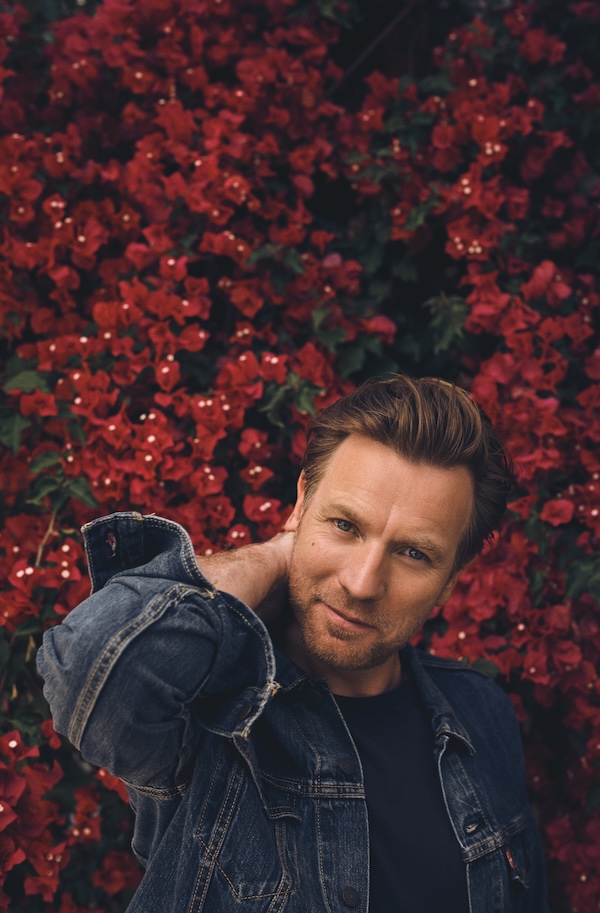
That’s not to say the actor is immune from having a preferred scene like the rest of us (in The Shining, it’s the one at the bar where Jack Torrance sees the bartender in the ballroom). And while Doctor Sleep picks up the narrative almost four decades later, McGregor doesn’t let the pressure get to him. “It’s more in the hands of the director than it is on the actors,” he says, only after praising the script and director Mike Flanagan, “He was shooting a handful of low-budget horror movies that are very good, and Stephen King likes his The Haunting of Hill House on Netflix.”
‘Likes’ is putting it mildly here. King has called the show in verbatim “close to a work of genius” on Twitter. For Doctor Sleep, McGregor explains how Flanagan is influenced by, and uses, Kubrick’s cinematic language whilst still concentrating on the novels. Apart from research and working on the character with Flanagan, there wasn’t much physical or technical preparation for the part in this psychological thriller. And thankfully, no ensuing nightmares as well.
To add to the thrilling news, come next year, Danny Torrance won’t be the only character McGregor is reviving. To the delight of fans and to the relief of the actor, upcoming American subscription service Disney+ has confirmed his reprisal of the beloved Jedi master, Obi-Wan Kenobi. “People have been asking a lot about it over the years, so it’s been frustrating to not be able to talk about it. It was just finding the right direction that we’re happy with. Now we’re at that stage, and it’s going to be really exciting to do.”
McGregor has previously played the character in the Star Wars franchise across three films, so this will mark the second main TV role for him since his award-winning portrayal of the Stussy twins on FX’s Fargo. All news has been vague so far, but his enthusiasm to return to Obi-Wan is apparent.
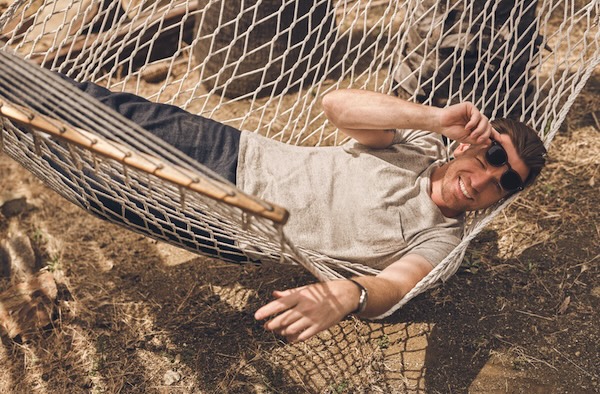
“It’s been a long time. I’m starting to get grey like Alec Guinness was,” he chuckles, “So I can be closer to who I have in my mind when I’m playing it.” And it being streamed as a television series certainly helps. Getting to delve into a character over many hours as opposed to two is a nice change of pace; alluding to a tighter schedule, and actors having to shoot faster and more vigorously, which McGregor favours. “I like working hard all day and coming home exhausted. The pace will suit me more, so it will be good fun.”
In his career trajectory of sequels and prequels, it’s fascinating how the actor has evolved from portrayals of less-than-good intent to respectable figures of wisdom. Dipping his toes, yet again, into the pop culture well, McGregor will star as the antagonist, Black Mask, in DC’s highly anticipated Birds of Prey.
“This guy is very interesting because he’s so narcissistic, spoiled and thin-skinned. It was very fun to play those character flaws.” He describes the fictional crime lord as flamboyant, crazy and above all—one of the most misogynistic characters in the film.
Besides the opportunity to embody the problem in the story, McGregor doesn’t hide his love for the feminist nature of the film. Which, like Wonder Woman, is directed, written and produced by women. “There’s a lot of references there that I really like. Everyday shit that women have to put up with; all the comments and little things that we as blokes don’t really notice,” McGregor effuses. “Things are changing, and we need to change with them.”
These are not just echoed sound bites; some conspicuous expression that precedes virtue over action. It’s no secret McGregor is actively involved in effecting change in the world. In his role as a UNICEF ambassador, he has helped raise awareness for child poverty, child refugees and children affected by HIV and AIDS. It all began a decade and a half ago on his motorbike adventure from London to New York with fellow friend and TV host Charley Boorman on Long Way Round.
“By meeting the kids and, more so, having worked with them, I just really like being there and very much wanted to help them as much as I could the day after,” McGregor recounts of the series. Of all the projects shown, he always had a soft spot for children. Even on their second motorbike crusade, crossing two continents and 18 countries in 85 days, it was vital to the pair to visit the road less travelled in Africa to witness the extent of UNICEF’s efforts.
He met with some children, as young as six and seven, who were abducted, forced to fight as soldiers of a rebel army and participate in civil wars. Many are made to raid their own villages to kill and maim people they know. Needless to say, there’s no going back; their childhood is ripped and cast aside.
McGregor and Boorman were initially deeply saddened by the conflict and suffering until they saw some of the community-based child centres set up by the organisation. The existence of such endeavours to alleviate conditions, however small, roused a glimmer of hope.
On a separate occasion, McGregor travelled by air, boat and foot to some of the most remote areas in Nepal, Congo and India to transport vaccines. Called ‘cold chain missions’ because the vaccinations need to be kept refrigerated at all times, McGregor followed one of the teams on the round-the-clock expeditions to deliver life-saving medication from the warehouse through tropical jungles to these remote communities.
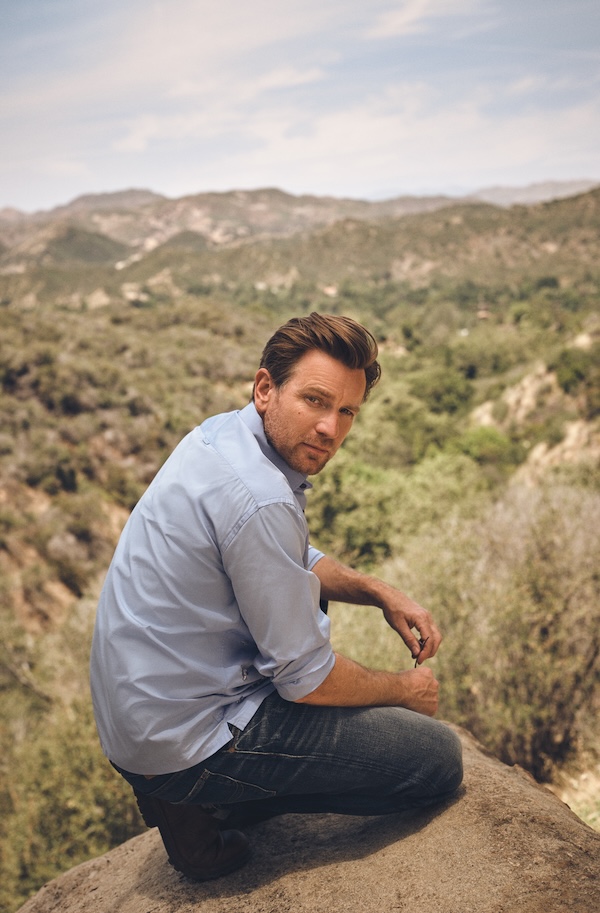
His firsthand account for the Financial Times about his experience in placement camps in Mosul, Iraq is another instance of the actor’s passion for humanitarian aid. “As I walked through the vast crowds, countless people came up to me. Not because they recognised me but because they had to tell someone about their dire situation.”
Coming face-to-face with the people trapped in these circumstances forces you to review the statistics on a page as more than just numbers. You need to come to terms with the harrowing reality of brutal violence that displaced families are experiencing. “Many of the children I’ve met in Iraq have been forced to flee their homes, risking their lives on dangerous journeys and have been exposed to unimaginable horrors,” McGregor tells UNICEF.
It probably accounts for the perspective the actor has on life. The classic sell-on affluence espoused by society is hardly what he aspires to. If anything, it borders on bad taste. “I think it’s a con,” McGregor maintains. “It’s not personal, it does not have any personality.” Luxury, in his definition, would be time and sharing moments with children and those less fortunate.
The sentiment is shared for social media, which McGregor has dabbled in but never really understood the appeal. “You’re trying to create a look of a life, instead of living one. I’m not interested in sharing my life with the world, but with people I love and who love me.” Rather than view the lives of others, McGregor would rather create his own experiences; ones that hold more significance. He definitely feels better off without the use of social media. “You get an hour and a half of your life back instead of looking at pictures of people you don’t care about.”
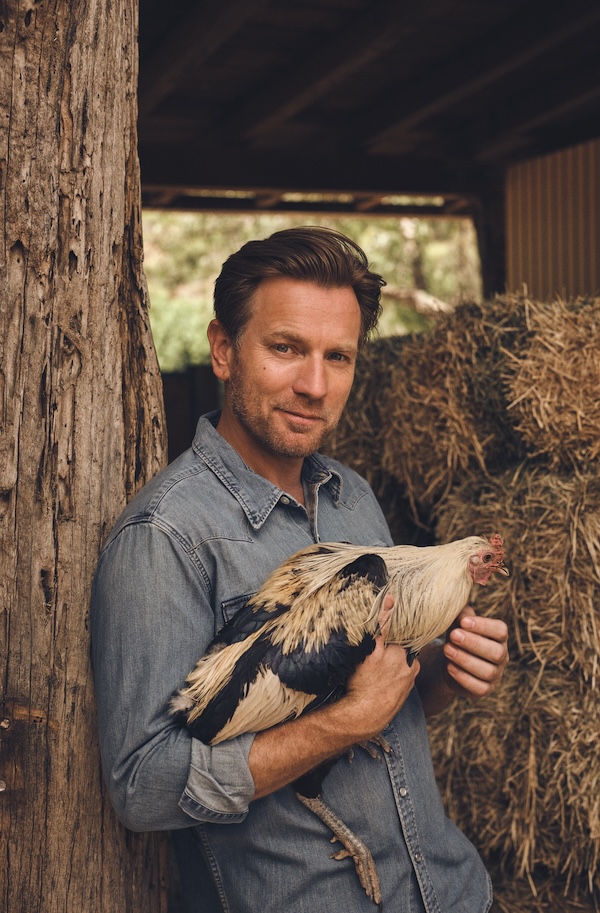
The same applies to the current celebrity culture. Instead of a proper, intellectual exchange, the first thing fans would ask for in a chance meeting is, more often than not, reduced to a selfie. Not that he’s complaining. McGregor has done the same thing with his long-standing hero, Billy Connolly. The ability to elude this era’s heavy phone reliance, and the unavoidable fatigue that comes with its speed, almost becomes a privilege.
“Life is so fast. We’re constantly reachable, and people expect to be replied to immediately. We don’t realise that we’ve lost our rhythm as human beings over time.” Thus, his yen to travel to far-flung places. Or at least, somewhere he can easily access—like Los Angeles.
It’s a place he loves residing in. What’s not to love about LA? The people, the unbridled optimism, the landscape; it’s somewhere he can meet new people, yet also one where he can feel tranquil and be alone in. It sounds a bit odd for a big city, but it’s nothing like London, New York, Rome or Milan.
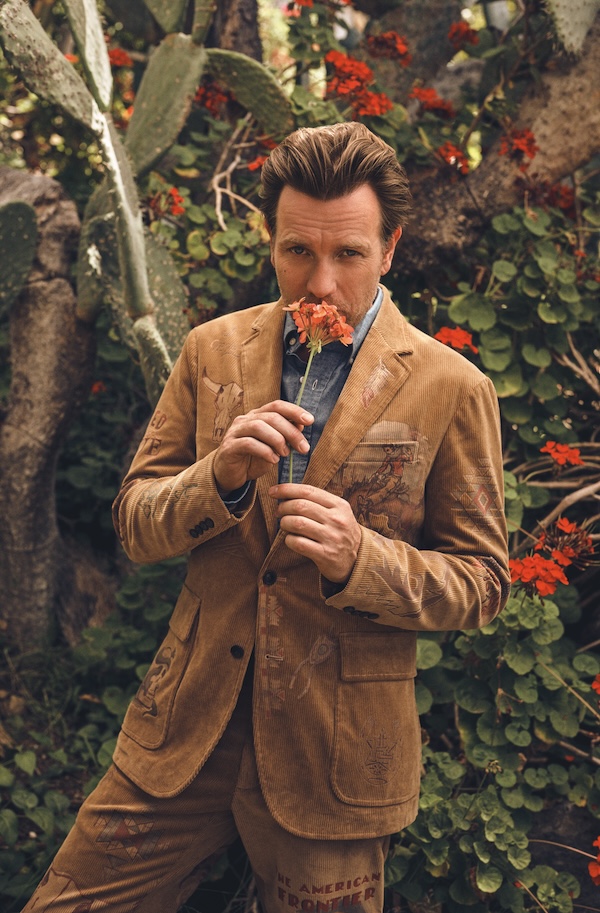
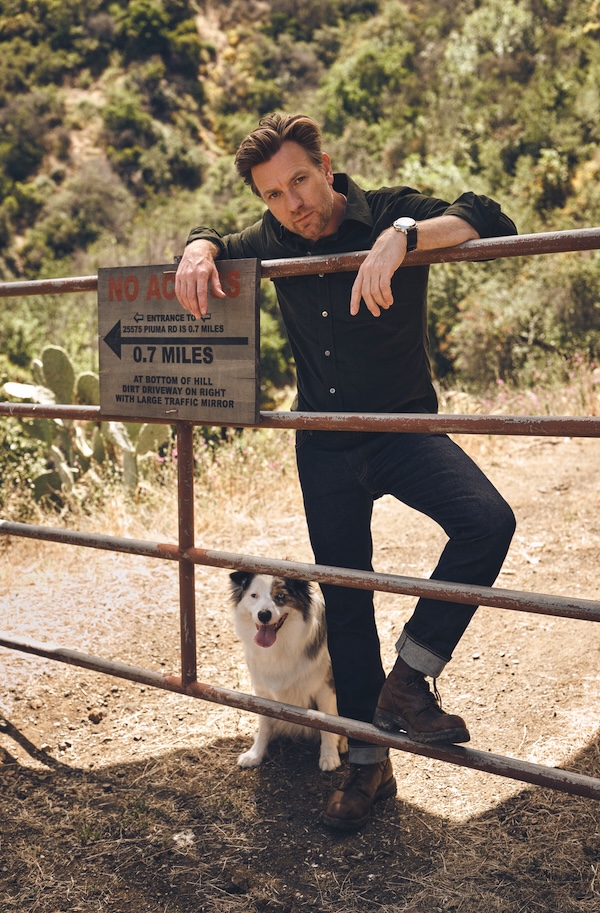
McGregor can’t name anywhere else like LA. “It doesn’t take long to get to somewhere rural, so it’s a great place to live, especially for me as a biker. It’s more important to me, the older I get, to be in the countryside more, surrounded by people. When I was young, all I wanted to do was live the London city life, but I’m totally the reverse now.” On a farm off the outskirts of the City of Angels where the cover shoot occurred, the actor is in his element. In pared-down denim and dusty boots, he’s comfortably feeding horses and holding chickens.
I’d like to think McGregor has his youth completely intact. Sure, there’s a natural maturity that filters its way in, but for someone who has spent decades in the industry, he possesses a joie de vivre that doesn’t wane. His performance is driven by a visible passion and a transparency he conducts himself with. It’s fun to see the veil drop, to watch him react and answer the common questions.
When Stephen Colbert asked how he got into character playing a butler-turned-candelabra, you get a cheeky “months of research” and no qualms at admitting his butchering of Lumière’s French accent. In BBC Radio 1’s Kids Ask Difficult Questions, you have everything from giggles to an enormous, hearty laugh in response to “Is there anything you’re afraid of?” (You have to watch it to get it.)
It begs further asking: does he age? He’s always jovial, but what about his bad days?
“I’m a human being, I have bad days,” McGregor says. This actor with the trademark smile, the hint of a gleam in his eyes; a face that launched a thousand films, this is a man who is as human as anyone else.
Encountering his multifaceted body of work and dedication, a quote comes to mind. In an endearing southern twang and all seriousness, Edward Bloom, whom McGregor played in Big Fish, speaks with a composed tenacity: “Now I may not have much, but I have more determination than any man you’re ever likely to meet.”
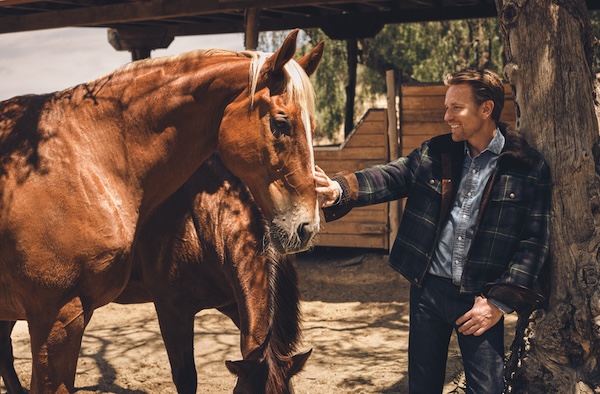
Photographs by Charlie Gray
Styling by Marco Milani
Supplementary interview by Timothy Small