It’s just another high school drama. The Shards, based on Bret Easton Ellis’ novel, which premiered this summer, portrays the cliques, intrigues and anxieties of teens in 1980s Los Angeles. And, naturally, these teens wear Wayfarers and designer blazers. They drive vintage sports cars and live in mansions. It is, no doubt, just like your own experience of school: “a fantasy of extreme privilege, wealth and lack of supervision,” says one of its stars, Igby Rigney.
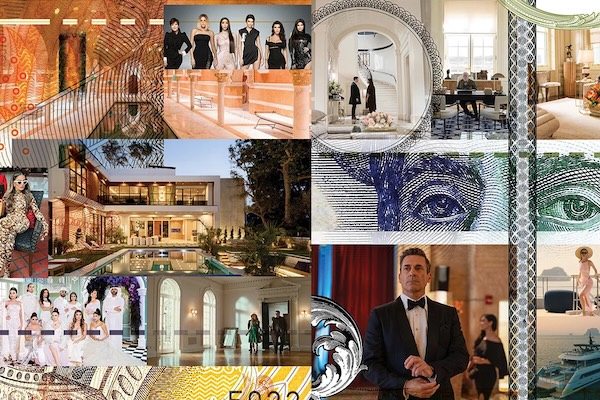
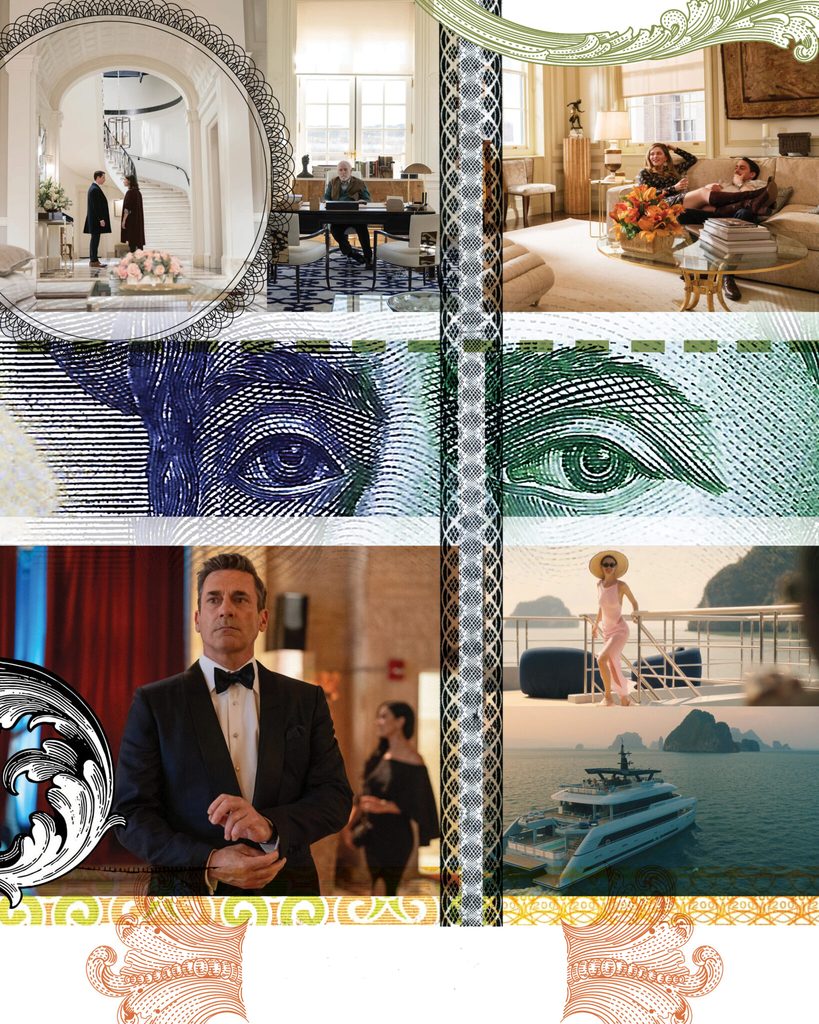
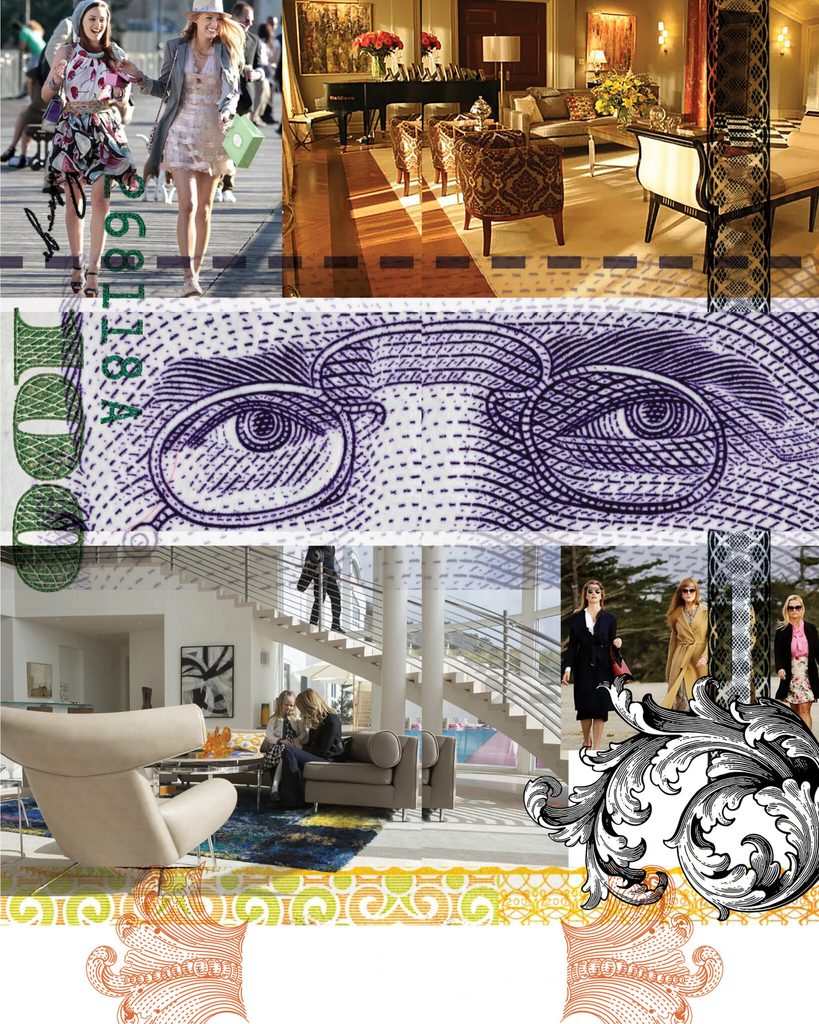
But The Shards is not alone. From Succession to The White Lotus, Gossip Girl to Billions, Big Little Lies to Industry and Your Friends & Neighbours, must-see TV shows—the ones that resonate around pop culture, that are the hot topics around our virtual water coolers—are born of the same ecosystem: the norm is that everyone is filthy rich.
The same goes for the big hits of reality TV over recent years, from The Real Housewives format to The Apprentice and Selling Sunset, Dubai Bling to Keeping Up With The Kardashians—all the way back to the new millennium and the breakthrough launch of MTV Cribs. Could a show be more blatantly titled than Netflix’s Super Rich in Korea?
Nor is a backdrop of big money purely a trope of Luxury TV. Displays of wealth—even if often artificial—now drive a major share of visual social media, especially on platforms the likes of TikTok, or RichTok as it’s been dubbed. Among the few print publications still doing well are those categorised as “lifestyle”. A quick mea culpa: Esquire also exposes its readers to the idea of a consumerist life that requires the kind of money most people don’t have.
This isn’t a new phenomenon. Forty years ago, social commentator Tom Wolfe coined the term “plutography” to capture the then prevailing trend for the publishing business—he cited the US magazine Town & Country—to offer readers a monthly dose of full-colour insight into how the other half lived. The New York Times downplayed, as it might, the meaning behind Wolfe’s coinage, describing it as capturing a demand for writings about the lifestyles of the much, much better off. Rather, Wolfe’s “plutography”, of course, was more a deliberate play on “pornography”, with all that suggests of our baser instincts.
“Watching these kinds of luxury lifestyle reality TV shows holds a mirror to our own interior worlds”
Indeed, Wolfe described plutography as the “great new American vice, the graphic depiction of the acts of the rich”, the true motivation to titillate hidden by an ostensible desire to educate readers on design, or antiques, or fine food. He argued that the restraint of the ‘60s and ‘70s—when it would have been considered bad taste to flaunt your wealth—had broken down.
Back then, indeed, as later as the 1990s, much of the TV available still reflected the lives of Mr And Mrs Average back at them: the familiarity, the shared concerns—often financial—and consolations were all part of its appeal, counterpoised starkly by exceptions the likes of Dallas and Dynasty. Now TV shows reflect the lives of an ever smaller slice of the population. Increasingly, dramas (excluding big hits in, say, crime or sci-fi genres) are set in a comparatively very comfortable world—look back to Frasier, say, or Sex And The City, in which an impoverished writer nonetheless lives in a fantastic townhouse and feeds a fetish for expensive footwear—if not a world of luxury.
“More and more they’re built around not just portrayals of wealth but unobtainable levels of wealth, which feeds into ideas of how the middle-class has been hollowed out,” suggests New York-based financial psychology expert Hanna Horvath. “The problem is how these shows and magazines internally recalibrate how we think about money. They set the baseline for what we think of as normal in terms of consumption, income and so on. And I’d argue that the baseline has crept up as wealth inequality has worsened around the world over recent decades”.
She cites surveys by the likes of Empower Financial Research revealing how Gen Z now believes it needs an annual salary of USD587,000 and a net worth of USD9.5m to be considered successful. As Horvath points out, attaining such is “extremely unlikely”. “All these images of extreme wealth we’re exposed to,” adds Horvath, “feed a pervasive feeling of financial nihilism: ‘if my median income isn’t increasing and I think rich is 10 times that anyway, then what’s the point?’ These images drive discontent and a culture of spending, not saving. People constantly feel this sense of lack.”
That cuts deeper in some cultures more than others: with the United States having staked its identity in capitalism, as Horvath notes, the American Dream is founded on the idea of meritocracy and social mobility—a mobility that has perhaps ceased to function for younger generations today as it did for those before. The challenge is that the American Dream is becoming more a fantasy, and a global one, thanks in no small part to America also being the engine of global entertainment.
We’re all prone to the psychological mechanism that is social comparison too: if we’re in more or less the same social strata as our neighbours and our peer group, we have a stable sense of our place in the world. The problem now is that, with atomisation a growing problem for much of society—thanks to factors the likes of the cost of living, precarious employment, the decline of community organisations, our online bubbles—we spend more time with the Roy family than we do our more humble peers.
For all that, we sometimes form emotionally intense, one-sided para-social relationships with the likes of the Kardashians, we feel like we’re trying to keep up with them in more ways that one. Indeed, one study suggests that the more images of wealth we see in the media, the more we imagine others are wealthier than they actually are.
“Watching these kinds of luxury lifestyle reality TV shows holds a mirror to our own interior worlds,” explains Robert Chandler, a clinical psychologist and managing director of Dubai-based mental health clinic Lighthouse Arabia. “If we have high levels of self-esteem and life satisfaction, then we can watch them with a sense of benign envy—they appeal because we’re seeing people unconstrained by the nine-to-five, who appear to have freedoms most people are denied. It’s a bit like watching a horror film—it’s a way of experiencing an alternative reality, a version of a world that isn’t ours”.
The problem, he stresses, is that those with low life satisfaction watching Luxury TV will respond more with what Chandler calls “malicious envy”. The circular problem here is that you risk even lower life satisfaction if you’re constantly bombarded by the stories of the very rich. There’s also the problem that these stories increasingly seem to permeate our everyday, from the morbid fascination with and sometimes adulation of the habits of “genius” billionaires, to the tabloid voyeurism getting a sneak peek into society weddings, through to newspaper supplements devoted to touting “Luxury Living” to an impoverished middle-class, rather than promoting, say, a more positive “Living Well”.
“It can seem like we’ve reached the point where even films about [purportedly] average people are set in a Manhattan penthouse,” Chandler laughs. “Too much of all this warps our idea of normality, especially when the wealth of the society around you is also real, as it is in a very competitive environment the likes of Dubai, and especially in those societies in which it’s acceptable to brandish that wealth. The trick is to be cognisant of what we’re watching or reading and what that symbolises to us. But we’re all status-seeking animals, and it’s amazing how many people play these games [of oneupmanship] completely unconsciously”.
Luxury TV has a more harmful consequence too. A ground-breaking 2018 study by Rodolfo Leyva, a behavioural-social scientist, now with the University of Birmingham, UK, found that people who regularly watch shows that glamourise wealth are less sympathetic to social causes that help low-income people or people living in poverty. Just one intermittent minute of attention to what Leyva calls “materialistic media messages” cause a significant increase in anti-welfare sentiments.
“The big house, the nice clothes and fast cars, the exotic locations—these representations of wealth reinforce the cultural script for what society values. And the more we’re exposed to them, the more they shape those values, including how we collectively support other people,” says Leyva. “Materialism isn’t just wanting nice things—it shapes how empathetic we are”.
Sure, it’s possible to admire nice things for reasons other than their being expressions of wealth—we might look at a home for its impressive architecture, a watch or car for its engineering. That they’re also markers of wealth too is, says Leyva, not necessarily an issue. “It’s what possessing them means that matters—and the desires to own them have been channelled in a way that comes at a cost to concern for others,” he insists.
Leyva’s idea has been further supported by research published this year concluding that greater exposure to materialistic media messages also reduces one’s perception of income inequality, despite this inequality being at an all-time high. A second piece of research this year suggests a positive overall correlation between social media use and materialism. Small surprise there, given its obsession with labels, baubles and palatial real estate.
But his concern is not just that the tone of Luxury TV, with its effortless consumption, dovetails so neatly with advertisers’ attempt to sell us something: “wealth is both good TV and simultaneously good advertising,” as he puts it, showing us its products in the best light, highlighting the brands we’re told to aspire to. It’s more that people who watch a lot of Luxury TV—follow RichTok or voraciously read the weekend supplements—are rarely, if ever, prompted to ask questions about the systemic factors behind the
world presented.
“We now live with this fundamental idea that people have to keep purchasing or the global economy will just stop,” says Leyva. “Yet generally people aren’t conscious of all this and a lot of our responses are automatic. We see a Lamborghini, for example, and associate it with a luxury lifestyle, and a potentially envious one. These kinds of connections have been hammered into us all since infancy. Commercial media works because it latches onto these very human responses”.
“Consumerism is such a massive issue for society now, not least because so much consumerism is driven by discontent”
“In our individualistic society people tend to think of [their level of wealth] as their problem to deal with,” adds Hanna Horvath—we valourise the rich, make heroes of them, ignoring the advantages they often were handed. “I think this does them a disservice when it fails to recognise it’s part of broader and much bigger social problems that drive people to get into financial trouble”, from betting platforms to inadequate savings tools to get-quick-rich scams. “Consumerism is such a massive issue for society now, not least because so much consumerism is driven by discontent,” she adds.
All of which might make your daily dose of easy viewing after a hard day at work more toxic than at first imagined. So if, unbeknownst to many, it’s making us feel and think worse, what, exactly, do we get out of all this plutography? Is our enjoyment of it as ultimately vacuous as that of pornography?
Certainly there’s probably a degree of schadenfreude involved, especially in times that are economically uncertain for many of us. It’s been argued that we actually watch a lot of Luxury TV to get a healthy reminder that money is, after all, not the route to happiness. Maybe that’s something we all feel instinctively—“when I speak to a lot of my wealthy clients they know that a second Ferrari is not going to make them happier,” as Robert Chandler notes—but wouldn’t mind testing empirically for ourselves all the same.
“These shows presenting wealthy lifestyles also tend to show the weirdnesses that go with them too,” he notes. We watch them simultaneously feeling a tinge of envy and mild disgust. “We see how characters and their families are made dysfunctional by their wealth, how it’s more burden than boon, how even rich people have mundane problems too,” says Chandler. This underpins the human drama that makes the shows worth watching in the first place: it’s yet to be tested whether we’d be quite so interested in a show all about the perfect lives of the rich.
Maybe we would. Social and print media invariably lack this balance, even as we know it’s carefully curated: influencers play-acting at being wealthy, lead actors in a cossie drama in which everything happens pool-side or inside a private jet (hired for the shoot, never leaving the ground). But then so many displays of wealth are performative: thanks to credit and leasing, it can seem that the poorer some people are, the more expensive their sneakers, the newer their car.
“The presentation you give to the world denies your own reality,” as the social critic and self-proclaimed anarchist Chris Hedges puts in the 2018 documentary Generation Wealth. “It’s why I’ve come to look on mass culture and TV in particular as a form of violence because 24 hours a day this fictitious lifestyle we‘re all told we can have fuels a sense of inadequacy”. And yet...
“I think the fact is that displays of wealth get the viewing figures, they get the clicks and the likes, and why that is, I suspect, goes way back before the mass media that’s now pushing it so heavily. It’s because it’s human to be tuned into matters of rank, privilege and hierarchy,” argues Wendy Wyatt, professor of media ethics at the University of St. Thomas, in Minneapolis, US.
“That’s just something modern media has capitalised on, industrialised and super-charged,” she adds. “There’s a feedback loop: commercial media uses it to try to get as big an audience as possible, even if so much of it is speaking to people about a lifestyle they can’t afford. Really, it’s all starting to feel cliched”.
Tom Wolfe might well have agreed: the adulation of wealth is pervasive. “Status is an influence at every level,” he wrote. “We resist the notion that it matters, but it’s true. You can’t escape it”. And perhaps now more than ever.