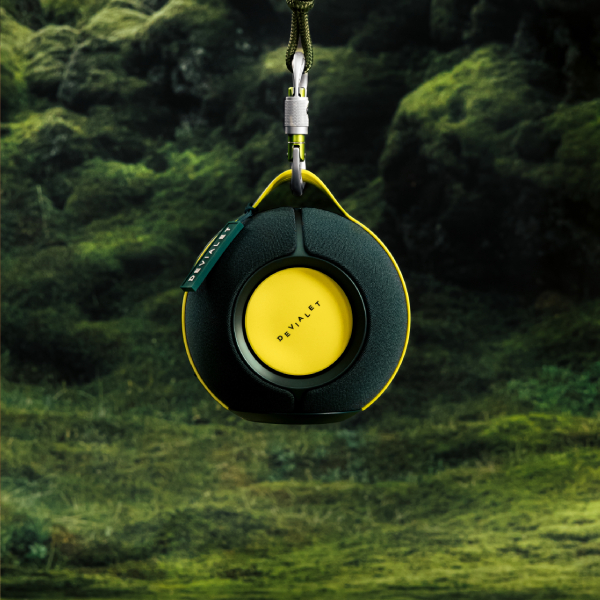
On the success of an Opéra Rouge edition, which paints the otherwise minimalist Devialet Mania in a deep garnet hue, it's no surprise to see the premium audio brand dropping two new colourways with their portable powerhouse. Complete with a matching cocoon carrying case and trinkets, the nature-coded Moss Green and Rose Bloom potentially present as a cash grab.
They're undeniably attractive; perhaps more so than the classic versions when the vibrant highlights key up its charming design. Yet, these bright skins wouldn't necessarily work on other models like the Phantoms. Meaning that as much as exclusivity plays into consumer desire, decisions here are not made on a whim.
APAC General Manager Martin Ku briefly lays out the land of the last couple of years. A huge spike in demand cued by the pandemic: Naturally, when everyone was stuck at home going stir-crazy pimping out their enclave. Then, equally logically, a considerable slowing of the sector when everyone was finally granted the freedom to flee. Now, Ku senses an imminent changing of tide.
After getting a firsthand experience of being blown—or shall we say bass'd—away by the might of Devialet at the APAC flagship boutique, we get into the nitty-gritty of the iconic design, as well as how the market factors in the premium audio industry.
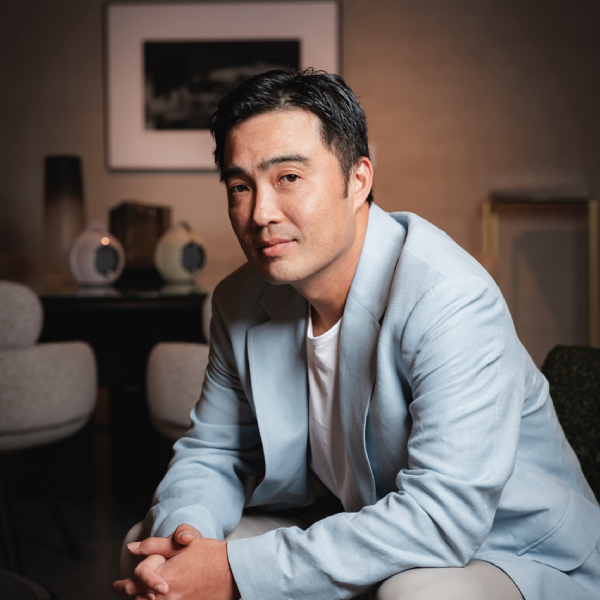
ESQ: Why do you think demand is shifting favourably again?
Martin Ku: I think people are getting more exposed to what's good and what's not so good when it comes to audio. Once you have that exposure, you can't go back. You start to have higher expectations and requirements. The other thing is, I believe when the current stock market money goes back into real estate, which relates to housing and furniture, that will also drive more of the organic demand for premium audio. What's unique about Devialet is its structure, which, like the Phantom, has been around for a long time, actually. Of course, we've been improving and launching new versions, but nobody has been able to do better than the original design to this day.
ESQ: I always wonder, because Devialet is so distinct in how it looks, how its aesthetic balances with the capability of the technology fitting in there.
MK: So, this is actually quite interesting, because a lot of this iconic design comes from a technological need. It was form-complementing function. It took two years to come up with the concept of the sound experience we wanted to provide. From there, because it was so ridiculous—basically a hundred thousand dollar system that has to fit on the bedside table—it then took two more years to figure out how to get that sound into this size.
It was a necessity, in a way. The big bass you hear comes from a subwoofer. Speakers normally have it facing forward. If you were to make a small one, the speaker would be jumping all over the room because it's pushing so much weight. The only way we could resolve that was to put them back-to-back so they cancel each other out. So, that movement has to be really precisely aligned. If you take a glass of champagne and put it on top of the speaker while it's playing heavy bass, it will not move at all. If it does, that means the product will probably blow up.
We also wanted it to be so immersive that you can have one speaker and it would fill up the whole room. A lot of speakers sound off directionally. This shape helps us get the sound to propagate widely without having obstruction from the casing itself. I mean, I'm not the guy who invented it, but looking at all the drawings of iterations more than 10 years ago and to this day, they were right, and it continues to be a dominant audio innovation.
ESQ: What's the strategy if, on one hand, you want to democratise true hi-fi audio, but on the other, the price inevitably targets a specific market?
MK: It's always the sound quality first: What do we want that experience to be? Unfortunately, that usually does cost quite a bit to make it happen. The mission was always to let that experience be understood by as many people as they could. So with different types of product categories, it allows us to play around with different functions. Say a portable speaker; it's still best-in-class, but a little more accessible price-wise.
We're more focused on whatever product category we're producing, we want that to be the best sound experience you can get. We also get to work with some great partners where we do some audio engineering together for their products. Amazing acoustic architecture within the vehicles for Denza; HiSense for TV and projectors. We work with massage chairs and airlines. These are cases to interact with customers and give them a form of Devialet sound experience.
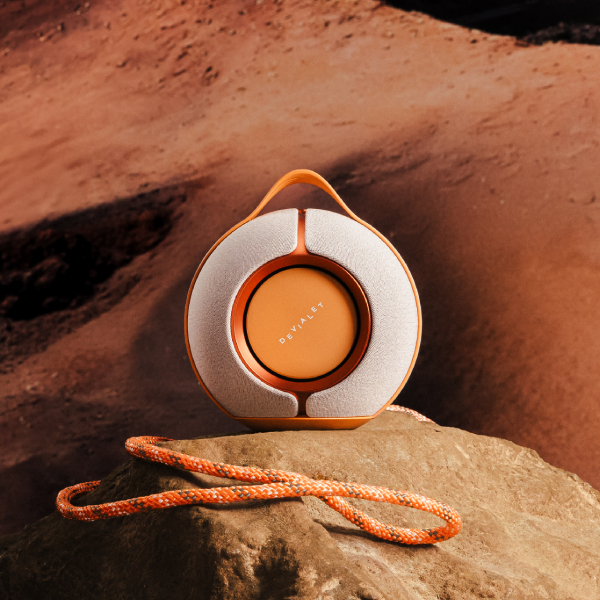
ESQ: Is this the intention with this summer expression? Since it's not a new product, but a limited run which customers really like.
MK: You're right, because product launches take a long time for us when we're trying to achieve best-in-class types of innovations. A completely new product takes up to five years, whereas product iterations like evolutions of an existing line can happen quicker. We brainstorm how we can continue to do better, not with hardware changes, but on the software signal processing side. Those adjustments can be achieved within the year. It all depends on what we're trying to do, but the limited-edition projects with aesthetic updates are still super exciting for us.
ESQ: How do you see the demand from the next generation for luxury audio?
MK: If only I could understand them. I have a daughter and a son, and I have no idea what they're doing [laughs]. I definitely think that younger people have been exposed to so much. So, you have a minimum requirement to deliver good audio. But you also need to surprise them with a memorable audio experience that they'll discern as something unique. I think the biggest demand, though, will lean more on the functionality.
By that I mean super integrated with their own lifestyles of being very much online and on the move. Easy to connect multiple units in surround sound, and having them be able to do different things in different types of environments. Then it is highly customisable as well, in terms of sound, but also aesthetics too. I think, people also don't really know what they need, so we have the responsibility to drive the direction of where this market is going, and that's something Devialet is quite good at.
ESQ: What are some of the differences you see between the Asian and the Western markets?
MK: In Asia, we are the highest seller for the top end of our range, like the limited-edition Opera versions. We see differences in preferences for colours and styles, but when it comes to sound quality, the overall best-selling products are quite similar. For the most part—there are some exceptions—Asian consumers are quite open and react quickly to new things. Whereas sometimes Western countries are slower to believe and try a new brand. They've got brands around for 50, 60 years that they know to be good. They've grown up with Bose or B&O. It's a different sound experience, and it obviously won't be as recognised as Devialet when you look at it.
ESQ: I've seen the imitation models.
MK: Yeah, it's a testament to the brand and to the design. But we are still quite low on the scale of awareness in our minds. We want to be in every household. A Phantom, or at least a Mania. If you have any appreciation for music, you deserve a Devialet at home.
ESQ: You were saying you have the 98s at home. Do you have a favourite from all the different products over the years?
MK: The 98 is relatively small, but the quality of sound it's producing; there's nothing on Earth that can come close to that. So, having two of those in your living room, if you didn't know what you were looking at, you would feel like they were big speakers almost surrounding you because it really fills up the room. That is a pretty incredible engineering masterpiece.
That being said, though, I have a Dione soundbar in my bedroom. When you don't have space in the room, don't want to have wires running around, and didn't plan ahead of time; this is an amazing product that can turn a bedroom into a theatre, but nothing's touching the ground. It's very strong bass, like a wall of sound coming at you, so that's definitely one of my favourites.
The interview has been edited for length and clarity.