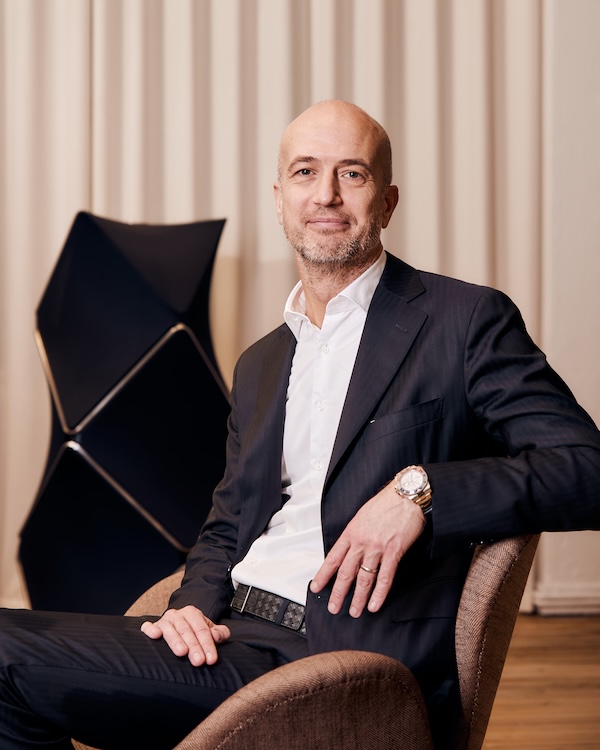
Life can turn on a dime. One moment, you’re a CFO for a storied Danish audio company and the next, you’re the interim CEO, then the COO and the CFO of said company. That was the case for Nikolaj Wendelboe, who was announced as the Chief Operating Officer of Bang & Olufsen.
With his foot firmly in a field that is about numbers—margins, forecasts, arithmetic solvency—and the other in narrative—identity, heritage, and where the company is heading, this new direction for Wendelboe carries both excitement and pressure.
For a brand that spent nearly a century showcasing sound, like design, deserves to be beautiful, it’s worth sitting with what that actually means. Having special dispensation where engineering and sculpture share the same spotlight, what is next for Bang & Olufsen, and how is Wendelboe going to steer it?
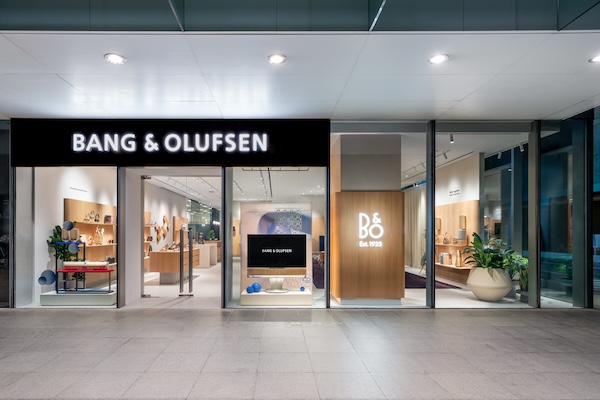
With the weight of continuity on his shoulders, we met Wendleboe at the Bang & Olufsen flagship store in Singapore.
ESQUIRE SINGAPORE: Congrats on the new role.
NIKOLAJ WENDELBOE: Thank you.
ESQ: You were the interim CEO. How was that for you?
NW: It’s been very fun. Busy and fun.
ESQ: Fun?
NW: Fun in a way that I’m very fortunate to have a job where I work with everything, from the product development side of things to sales. As a global company, I get to see most of the world, and the best part is meeting with clients, because you get feedback on how the brand is doing. That’s the privilege of working for this company.
ESQ: What is that one challenging aspect of your last role?
NW: The most challenging aspect right now is to make sure that we reach more clients consistently.
ESQ: How so?
NW: We wanna make sure that all clients get the same brand experience. Whether they shop in this fantastic outlet in Singapore or at an outlet in Paris or in LA. We want the brand to be represented in a truly uniform way globally. I think that is our biggest challenge.
ESQ: Tell us about the outlet in Singapore.
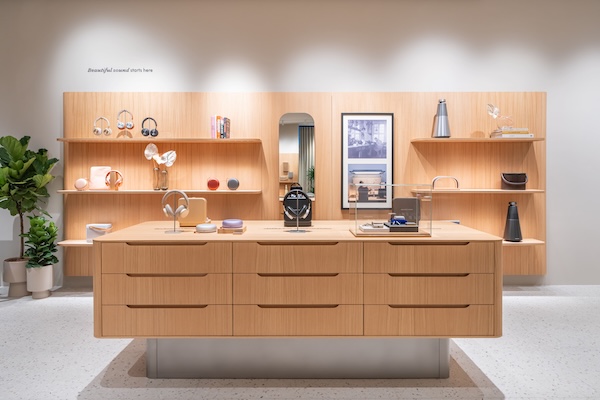
NW: When you enter the average audio store, its shelves are lined with speakers. Ours is a “culture store” concept, where you have sofas, corners that you can sit at. You can hang out here, have a coffee and listen to the music from our speakers.
ESQ: You have other outlets globally. Do each store in different countries also have their own cultural identity as well?
NW: The store layout is the same, but working with the locals, who are the face of the brand, they are the ones who ensure client engagement is uniform across the rest of the world. As mentioned before, that’s one aspect that we should consistently be improving on.
ESQ: Bang & Olufsen celebrated its 100 years. What do you think the next 100 years will be like?
NW: In 1925, our founders, Peter Bang and Svend Olufsen, had a vision to create only the best audio system and to persistently find new ways to advance the technology. That’s their vision for the company, and that’s what we’re doing today.
ESQ: What are some examples of your tech?
NW: There are many innovations with our acoustic technology. We [expanded on] active room compensation, where the speaker reads the space, and calibrates it to fill it with the best possible sound, [no matter where the speaker is placed].
We also have an attribute program, where you can design your own products with your own colours. So we are pushing the boundaries in everything we do. That’s also why we have a store concept like this now, very different from any other audio store that you’ve been in.
ESQ: Do you think people can hear the difference in a B&O product to justify the cost of it?
NW: For sure, I’m convinced they can. We have examples of new clients who wrote to us about their first B&O product, because they get so emotional about how they listen to music differently about how the clarity of the sound lets them pick up small details that they couldn’t hear before.
ESQ: A lot of brands collaborate with artists and designers, and oftentimes, it feels like a cash grab. How does Bang & Olufsen not fall into that same trap?
NW: For collaborations that we have done, it’s not about one brand picking on another, but rather, it’s about both brands doing things together. It’s mutual. You need to work with a partner that kinda lifts each other up in a collaboration, and achieve something that you can’t do on your own... that’s what a good collaboration is supposed to do.
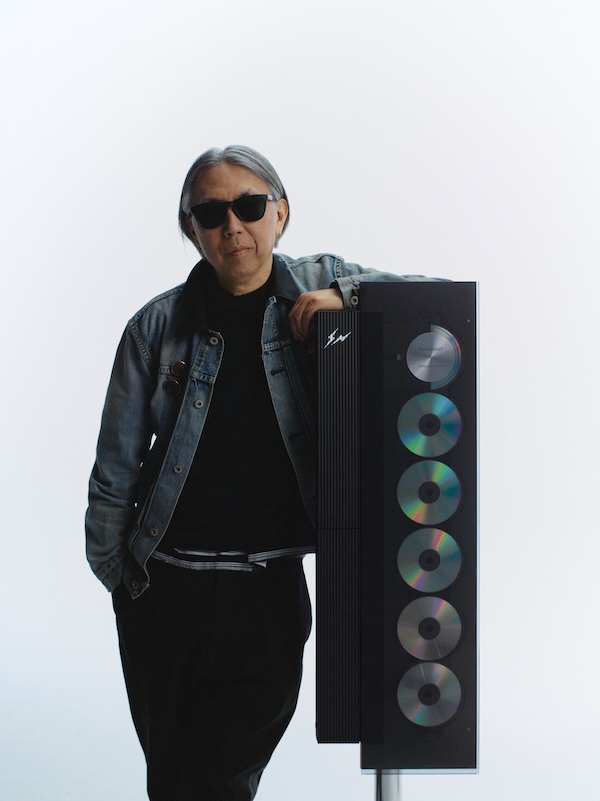
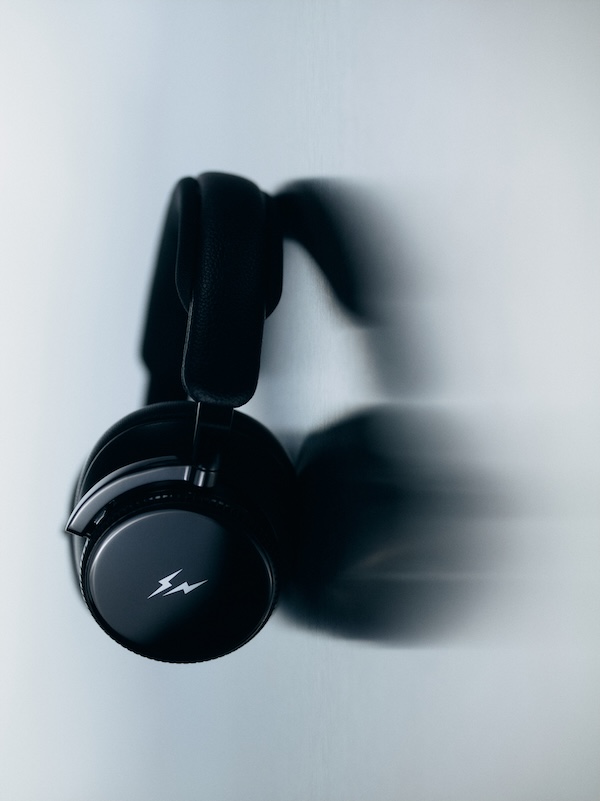
The fragment collaboration is one such example. Design is at the core of it. What [Hiroshi Fujiwara] is doing and what we are doing, there’s a cultural relevance, a synchronicity where our values align. This is what we look for when it comes to collaborations.
ESQ: What we like about this collaboration between you and Hiroshi is that it pushes Bang & Olufsen beyond what they usually do, like the polish for the ear cups of the H100. Hiroshi wanted a certain kind of black that reflects his fragment logo, but you don’t do that kind of finish. So, you did some R&D on it to figure out how to get that “piano black” look without affecting the haptics.
NW: Yeah. What happens in many collaborations is the discussion to see what is possible. If it’s doable, we can achieve that with enough time, but sometimes, the timeline doesn’t allow for that kind of experimentation, so we have to find other ways of solving the problem.
For this collaboration, Hiroshi wanted that hand-polished “piano black” colour, and we said, “Okay, let’s, let’s try and see if we can get it done” and we did. So, now we have discovered a new technique to bring about that particular finish on future products.
ESQ: Has music streaming changed your production?
NW: Oh, yeah. Immensely. The way you consume music today is so different from the way it was 30 years ago. Before streaming, you would listen to a vinyl, or CD. With vinyls, you had to listen to the entire album, and in order of the track listing. Now with streaming, you have a group of people, who put their favourite songs in a playlist, or some source their music primarily through their phone. We, of course, need to adapt our products to this new landscape. To be able to cater for connectivity with the phone.
ESQ: Which brings us to this next question: because you’re dealing with the next generation of consumers, how do you invest in a new customer base a decade before they can afford your product?
NW: Luxury is many things. One can view luxury as something that’s expensive, but luxury can also be seen as aspirational. So, you have clients who buy a luxurious product occasionally. I think, if you look at the world, there are 340 million luxury buyers who’d buy an expensive item once in a while. It’s not like they’d necessarily have a home filled with luxury goods.
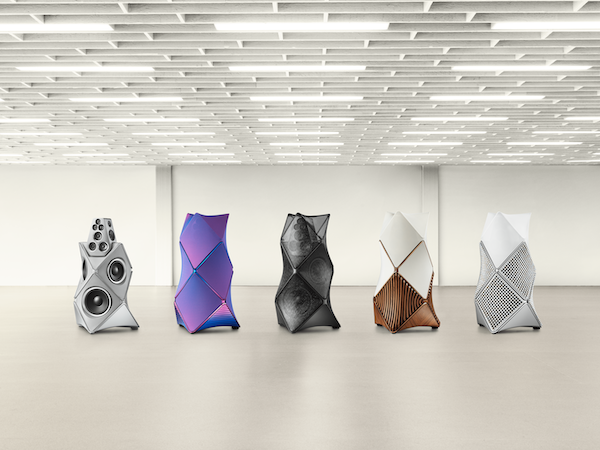
With that in mind, we have clients who’d buy one of our headphones, or our earbuds, or our smaller speakers. We want to make products for them so that we can stay in contact with them as they progress through their life. When they are ready to buy a bigger speaker, that’s when we are here for them.
But luxury isn’t the same as being exclusive. Exclusivity could mean refinement; it’s elevated, therefore it’s also expensive. Certain exclusivity means that you can exclude people, and that’s not what we want to do. For me, luxury needs to embrace everything and everyone. Come to our store. We would love to give you a demo of what we have, because that’s how people build a connection with the brand. Sure, our products have certain price points, and there are some items that are affordable, without compromising on the design and the technicality.
ESQ: What is it that one thing at B&O that you won’t compromise on?
NW: Quality is where we would never compromise. That’s very, very important. We can compromise sometimes on the materials or the shape, in order to achieve that highest standard of quality.
For instance, if you design a speaker, you want to make it very slim, but then it’d be difficult to get the acoustics to sound good, because you can’t fit in the appropriate drivers in such a slim form factor.
ESQ: What’s something that you would always go back to listen to?
NW: I like a lot of different music—everything from pop to classical to rock. I am, however, fundamentally into rock; I’m a rock guy. My youth was Metallica, Guns N Roses, Soundgarden, and Pearl Jam... this is where my heart lies, if I had to choose.
ESQ: Do you play any instruments?
NW: Unfortunately not. No, I don’t have that talent, but I enjoy attending concerts. The last big concert I attended was in Copenhagen to watch Metallica. Toto was another concert I went to. They are not very rock n’ roll, but they are good at what they do, and I like that.
[Editor's note: the interview was conducted during when Wendelboe was the interim CEO of the company in June. The news of his role to COO was announced yesterday. The article has been amended to reflect this.]