Dr Adrian Nixon wants you to think about swinging a bucket of water around you, on the end of some rope, so the water stays in the bucket and stays there as long as you keep rotating. Now, he says, put that idea on a planetary scale: you are now an anchor on Earth—ideally on or near the equator, maybe on an ocean-going vessel or platform.
The bucket is some counterweight in space—an asteroid, satellite or space station—at the right distance from Earth, in geostationary orbit, held tautly stable by a combination of the planet’s gravitational pull and the centrifugal forces of its rotation. And between them is a 36,000km-long rope strong enough to bear its own hundreds of tons of weight. Now, put some kind of cable car that can slowly make its way up and down that rope.
“Fringe engineering like this idea attracts a lot of real science and a lot of people who, frankly, make things up,” says Nixon, a technology consultant and board member on the International Space Elevator Consortium—a scientific group established 20 years ago and which has since become a repository for all the serious thinking on the topic. “Rocket people[especially] tell you the idea of a space elevator is fantasy. And it wasn’t that long ago that it was. But that’s changing fast. It’s going to happen.”
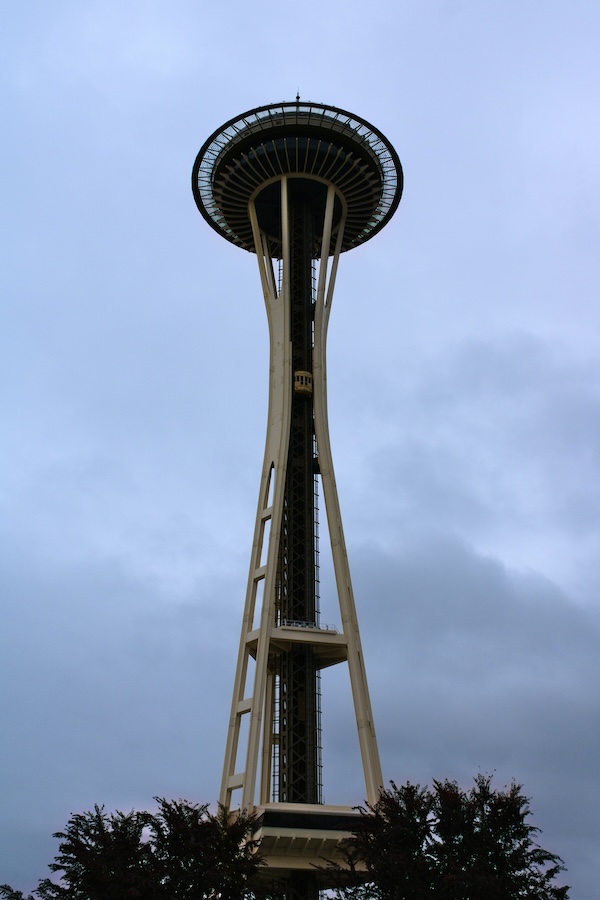
Nixon would be the first to admit that people will have heard that before. After all, the idea of some direct and physical link between Earth and space is not a new one. A “sky ladder”, as he called it, was first proposed back in 1895 by the genius Russian rocket scientist Konstantin Tsiolkovsky, who died 90 years ago this year and was inspired by seeing the building of the Eiffel Tower, which would then be the tallest structure in the world. In1959, another Russian engineer, Yuri Artsutanov, proposed something much closer to the space elevator idea as it’s recognised today.
In the 1960s, American scientists proposed a “sky hook”. And naturally, science fiction has just loved the idea: Arthur C Clarke—of 2001: A Space Odyssey fame—first explored the idea in his novel The Fountains of Paradise (1979). Yet over the last two decades, interest has, as it were, taken off. National space agencies have pondered space elevators, some conducting exploratory experiments in orbit.
And multiple start-ups have made various serious proposals for how one might work, planning and costing out the engineering in detail, some stimulated by the prize money being offered by the likes of the Space Elevator Challenge and, established earlier this year, the World Space Elevator Competition. All the same, still no lift to the stars... But this may be about to change.
If the only seemingly insurmountable engineering challenge stopping a space elevator from becoming a reality has been—as NASA concluded in its feasibility study at the turn of the millennium—the development of a material suitable for the tether, which needs to be some 50 times stronger than steel, we could well be on the brink of developing just that.
Many materials have been considered—from quartz to Kevlar, boron nitride nanotubes to diamond nano threads—and there was a time when the answer would seem to lie with carbon nanotubes, though making that at useful lengths has proven intractable and, thanks to its chemical properties, it seems to be subject to a form of fraying under stress that likely rules it out.
Now the hope lies with graphene—a super-light, incredibly strong, honeycombed lattice one carbon atom deep—not least because it would appear to offer multiple industries almost endless potential benefits, such that its study has already benefited from a huge amount of investment. Indeed, a space elevator may in time prove the least of the advantages stemming from some Graphene Revolution.
It’s only recently that we’re coming to appreciate just what a wonder material graphene is—“a flexible, conductive ribbon as thin as clingfilm that’s over 200 times stronger than steel and which has the highest melting point of anything we’ve found,” says Nixon, enthusing as perhaps only an industrial chemist might. Indeed, there was a time when scientific theory suggested single-molecule-deep layers of graphene couldn’t be produced, so nobody tried.
And then that it couldn’t be produced as a single, continuous piece at scale—but thanks to efforts by the Graphene Engineering Innovation Centre in Manchester, UK, the Massachusetts Institute of Technology, US, and the South Korean tech giant LG, various manufacturing processes have been developed that enable this graphene material to now be made at a rate of some two metres per minute and at lengths of 1km.
That’s a long way from the thousands of kilometres of the stuff that would be needed, and the speed and quality of production isn’t there yet. But Nixon insists, we’re on our way.“This is one of those situations where if you crack one problem, just a generation later you have the product,” believes Isaac Arthur, the science educator and president of the American National Space Society. “It’s like developing the microchip, and then 20 years later you have their first home computers. I think, say, 10 years after we’re able to produce a 1km length [of graphene at tether quality],we’ll see building start on the first space elevator”.
Handling the weather could be a factor, as well as radiation, temperature extremes and constant bombardment from small particles in space. There may be geo-political questions of a space elevator’s location, ownership and public safety. There’s a need to work out how the tether might be deployed and then constantly maintained. It would be a gargantuan engineering project of considerable cost, but by one estimate only around the USD10bn cost of launching the James Webb Space Telescope, by another around USD18bn, less than NASA’s annual budget.
But why do it at all? Because rocket launches area dangerous, polluting, violent, infrequent, massively energy-intensive and expensive way of breaking free of Earth’s gravitational pull, but also because they’re inefficient in terms of getting people (not many)or stuff (not much) into space. Thanks to the new space race—driven by the private enterprise of Elon Musk’s SpaceX and Jeff Bezos’s Blue Origin—and the development of reusable rockets, prices are falling.
A space elevator would be much slower—taking days and not minutes to deliver its cargo to space—but could deliver many tons at a time, and on a continuous, round-the-clock and affordable basis. As Nixon stresses, “a space elevator wouldn’t make rockets redundant, because they’re still right forgetting small amounts into space fast. But what we need is more like a goods lift, able to get huge amounts into space more slowly, but also stuff from space back to Earth safely, with a controlled descent.
A space elevator not only solves the up problem but the down problem”. And, as Arthur points out, the first thing you deliver to space with your space elevator is the parts for a second space elevator. He envisages not one but potentially thousands around the world. “Afterall, space elevators are made of carbon. It’s coal, it’s dirt-cheap and in theory cheaper to make a mile of tether than lay a mile of highway,” he says. “I can see national space agencies having the first space elevators, but soon after every country having one, or having connections to one”.
With access to space so much easier and cheaper, it will, many believe, prove transformational in our relationship to space. Build a space elevator, and space habitation, exploration, manufacturing, and tourism will follow, together with the exploitation of space-based metals, such as platinum-based metals or isotopes, like helium-3.
A space elevator could enable the affordable construction of a giant space-based solar array, which could help provide consistent and free energy to us here on Earth. It would make humankind a genuinely spacefaring species, without the many thousands of rocket launches that would otherwise be required every year.
“Most people grasp that their smartphones, for example, depend for their operation on satellites but don’t really grasp how a space elevator, if they’ve even heard of it, could change the world,” says Mordy Friedman, CEO of space elevator company Etheria Space and of the World Space Elevator Competition and, being still in his 20s, well-placed to see this actually happen. “Space only scales when we have a physical connection to it. By reducing the cost of access to space and giving us access to its resources[by some measures worth many trillions of dollars],it would raise the quality of life on Earth”.
“If we’re going to develop a space economy, then you have to be able to bring a lot of stuff up and down from space. That [with current technology] would cost billions, and governments and private companies are not going to pay for that. But if you’re able to bring back, say, trillions in space minerals using a space elevator, then it quickly pays [for itself],” argues Steven Griggs, president of Space Railway, a space elevator development company that also proposes using the slingshot effect to launch spacecraft off of our “bucket and rope”, and even the creation of extra-long tethers that could produce the kind of velocities to allow them to escape our solar system.
“If we’re serious about going to space, we have to get serious about making it happen. And rockets can’t do that. We have to make space elevators work, because the only other option is something out of Star Trek,” he reckons. Certainly, there are challenges, he concedes—managing the thermal output of powering a space elevator with electricity, for example. “I may bedrinking my own Kool Aid, but I don’t worry about that kind of [detail],” he says.
“It’s really all about that tether, and while people are very enamoured with graphene, I don’t care if the material is compacted bunny turds if it has the right properties [strength to weight ratio, scalability, affordability] to make it work. Look at the numbers 30 years ago, and the idea of a space elevator was a no. And until recently, it was still no. But look at the numbers now and it’s doable, man”.
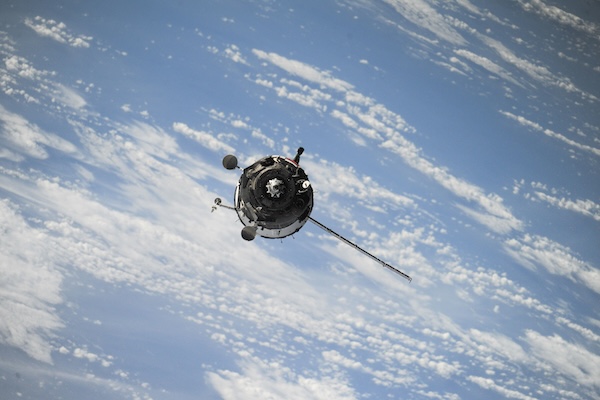
Graphene is incredibly strong—“if an aircraft hit the tether, it’s the aircraft that would be cut in half,” as Arthur notes—but, nonetheless, could a space elevator be built that could withstand the impact of a piece of junk moving at 12,000mph? The tether, somehow snapping near ground-level, would only see it flyoff into space—“which is, admittedly, bad for any people on it,” says Nixon—and, if snapping near the counterweight, gravity would gradually bring the tether back to Earth.
It wouldn’t cause the huge devastation depicted in series one of Foundation, he says. Michael Laine founded the LiftPort Group back in 2003 and developed the first detailed proposal fora space elevator. Twenty-two years on, he’s maybe a little jaded at the lack of progress and wonders whether the rapid advances in heavy-lifting rocket technology may even make the idea redundant.
“I still believe in the math, the science and the engineering of space elevators,” he says. “But once pushed up against the economic realities, I become a little sceptical”. This is why, after a period of dormancy, LiftPort is rebooting this year with a twist on the space elevator idea.
A space elevator based on the Moon, its tether reaching all the way back to the edge of Earth’s atmosphere. This may do nothing for the problem of getting stuff into space from Earth, but there is much in its favour, not least that, on paper, it’s feasible now in the way that an Earth-based space elevator isn’t, yet.
Thanks to a lunar elevator being held in place by the Moon’s lower gravity, the tether need not be so strong—there are multiple suitable materials available today; the Moon is tidally-locked to the Earth; there’s no worrying debris in orbit around it; and, with NASA’s Artemis II mission, plans for us to go back to the Moon—or around it at least—there’s a lunar buzz again.
Much as a space elevator would make getting stuff into space much easier, a lunar elevator would make getting stuff to and onto the Moon much easier, allowing for the development of the first lunar colonies and industries. There are other benefits too: the tether would cross the Lagrange point—the sweet-spot between Earth and the Moon where the irrespective gravitational forces effectively cancel each other out. Being able to work at this point in space would be a boon to scientific experimentation, to telescopes, to deep space mission launches.
“Look, along with asteroid mining, space stations, space-based solar power, the space elevator is among the cult subjects of the space community. Some say it’s lunatic, but we’re going to own that,” Laine laughs.
“Arthur C Clarke once said that we’ll build the space elevator 50 years after everyone stops laughing at the idea. Well, everyone stopped laughing 20 years ago. The idea of the space elevator has moved out of science fiction and into science. I just want to get on with building what we could actually build right now. A space elevator from Earth can come later."