
It is testament to just how quickly the landscape of ideas can change. Anyone used to the traditional hierarchical structure for business—employees being told what to do by managers and being paid to do it—might be confused by events in the publishing industry post-Covid. At major English language publisher Picador, complaints from staff that the novelist Kate Clanchy used incorrect terminology about children of colour saw the company halt distribution of all her books. More famously, younger staff at Hatchette refused to work on the novels of JK Rowling because they disagreed with her views on transgender issues. On this occasion, management, it said, would side with free speech. It later cancelled Woody Allen’s autobiography after a staff rebellion.
It is perhaps surprising that publishing, historically a place to explore opinions and beliefs, might be so sensitive to challenges from the woke, or the liberal, depending on your choice of terminology. But it’s not just publishing: similar instances of activist employees seeking to mould what social justice issues their employers publicly stand for—assuming they should stand for any at all, beyond business-related issues of wages, employment rights, working conditions, and so on—have since happened around the world, in banking, retail and hospitality sectors. When Jason Fried, the CEO of project management company 37Signals/Basecamp, issued a staff memo in 2021 curbing what he saw as divisive “societal and political discussions at work”, a wave of employees simply quit, forcing him to apologise. Many fellow CEOs applauded his stance. His critics were louder.
Indeed, while Gen Z and late Millennials, especially, increasingly look to the brands they buy to have a position on social justice issues—90 per cent of Gen Z-ers say they’d favour a product with a social or environmental benefit, according to one study—they have a similar mindset when it comes to their bosses. Business needs to be ‘on the right side of history’, as the somewhat debate-killing line has it. As Gabe Kennedy, co-founder of US supplements company Plant People, notes, when “you talk to older people, they’re like, ’dude, we sell tomato sauce, we don’t sell politics’. [But] then you have younger people being like ‘these are political tomatoes. This is political tomato sauce’”.
According to Dr Naeema Pasha of the Henley Business School, UK, it’s part of a broad, post-pandemic change of thinking regarding what businesses are for. “What we’re seeing now are two competing philosophies,” she explains. “On the one hand is the idea of a shared purpose. Not seeing companies as islands but part of wider society—so why should employees have to leave what they regard as their morals at the door, especially having been encouraged to bring their ‘whole selves’ to work? And on the other is the idea that the relationship between employer and employee is contractual—the employer as a legal entity seeking profit, and employees go along to do a job and get paid for it”.
And not just get paid. Tom Basile, adjunct professor of media strategy at Fordham University, New York, argued that Gen Z only experienced the work culture as being one rich in the perks—gyms, informal offices and dress codes, free snacks, social events, remote working and the like—that have been important in attracting talent. “But they’ve also warped the employee’s sense of who’s really in charge,” he suggests.
Then, there is the changing nature of politics. The idea of business taking a political position is not a new one: many were central to the boycotts that helped drive change in the apartheid society of South Africa decades ago, for example. Recent years saw the workplace turn its attention to corporate social responsibility, then sustainability, and more recently activism: Amazon has spoken out about abortion, McDonald’s the Russian war in Ukraine. According to a 2023 Gallup poll, a majority of Americans now think businesses should take a stance on current events.
That notion, Pasha argues, has supercharged both the depth and rapidity with which social justice ideas have become embedded as received wisdom—from “black lives matter” to climate change—and through social media, becoming a much more powerful medium by which individuals can speak up about and organise around these more visible issues.
“On the one hand is the idea of a shared purpose. Not seeing companies as islands but part of wider society—so why should employees have to leave what they regard as their morals at the door, especially having been encouraged to bring their ‘whole selves’ to work?”
-Dr Naeema Pasha
of the Henley Business School
Pasha further points out that Gen Z, like all generations before, is shaped not just by the political but the social, technological, economic and other influences specific to its times—and, she says, unable to buy property, or build a pension, and facing a higher level of uncertainty and societal upheaval, Gen Z is looking for safety. Not for nothing did rates of employee activism in the US climb in line with the first Trump administration.
“There’s the sense that trust has been broken—in governments around the world, in some institutions—so we’re looking for trust elsewhere, and we know that larger corporations especially do have influence [to shape society],” she explains. “[This younger generation] wants the reassurance that they are progressing [as individuals], coupled with a reassurance that their employer is making a progressive impact on society too.”
Clearly there’s likely to be a problem of optics when companies say they support a certain social issue but that is not reflected in their own practices: as Nadine Walter, professor of international marketing at Pforzheim University, Germany, points out, you can’t be Nike backing Colin Kaepernick—the NFL player who in 2016 “took the knee” at considerable cost to his sports career—and not have a good percentage of black employees on your board. But, says Pasha, there’s also “the challenge not just to wing it but to know when to speak out and on what—because [social justice politics] are constantly shifting. It’s all so complex now and difficult—and it should be,” she suggests.
Perhaps business has also brought this difficult situation on itself. While many brands have, over recent years, no doubt been sincere in their willingness to put their profile and money behind a cause, others have been accused of performative “woke-washing”—essentially jumping on a social justice bandwagon as another form of marketing. Not for nothing was Gillette mocked for its Me Too-inspired campaign against toxic masculinity, while pushing a very narrow idea of masculinity itself; or the women’s clothing brand Lululemon, which made USD490m during the pandemic, for its “Resisting Capitalism” workshops.
“One can still argue that a [social issue] campaign from a company is nonetheless doing something positive by exposing more people to the topic,” says Walter. “But of course, companies also do it because they want to enhance their brand perception, stand apart from their competitors, and also make themselves more attractive to their employees”.

A 2024 Harvard Business Review found that two-thirds of Gen Z workers surveyed, and half across the board, report as being likely to change jobs if they could have a company that speaks out in support of issues that are important to them. But that was two years ago, and reflects a sentiment that might be more apposite during times of buoyant labour markets, when fewer available candidates meant they had greater freedom to choose where they worked. While there are obviously variations between nations (and legal variations between jurisdictions, too), economies are not as strong. In other words, employers are calling the shots again.
Over the last year, both Google and Microsoft, for instance, fired staffers for on-site protests against the Israeli military; other tech companies introduced clauses promising customer fulfilment of contracts won’t be disrupted by employee activism. With the benefit of hindsight, Jason Fried has since said it was one of the best decisions he’d ever made. “We’re just focused on the work, which is what work should be,” he has said. Even Patagonia, long admired for its external messaging on the environment, announced that it is “sticking to our knitting”. It has not been drawn into other politicised debates.
Indeed, according to a study that Mohamed Abdalla, assistant professor at the University of Alberta, published this year, there remains a small percentage of employees—the most vocal—who are willing to get fired in defence of a cause, depending on the cause, but also now a silent majority that tends to be “somewhat conscious [of social justice issues] but which isn’t willing to lose their job over it,” as he puts it.
“Arguably, the C-suite is nearly always politically misaligned from the workers—it’s an eternal conflict inherent to employment. And I think this conflict will continue to happen,” he adds. “The question is how hard employers will crack down on it, how ruthless they will be in the metaphorical execution of workers [who are disruptive]. The status quo is still a political position, but the discussion of wider views may become less prevalent and the workplace more sterile as a result”.
Or, one might counter, more stable. Abdalla argues that employees might well have always been wise to temper expectations of their employers with some realism. It’s one thing to hope that Google, with its “don’t be evil” mantra, will behave one way, and quite another to expect the same of, say, a defence contractor like Lockheed Martin.
“Before activist employees were riding the wave. But now the boss is back. And if employees are still fighting the fight, that’s because they work at companies that are fighting the fight.”
-Francisco Guzman, professor of marketing at the University of North Texas
But the political scientist Yascha Mounk, author of The Identity Trap, made the case that employee-led social justice pressure often comes from a vocal minority that seeks to shape a company culture in which speaking out against certain causes risks ostracism or demotion. There’s the assumption that all causes are equally on “the right side of history”. Issues like racism and gender inequality, which, broadly, most people would oppose, but also trans rights and Gaza, which are far more divisive. Since not all consumers will agree on such topics, that may not be good for business either.
Furthermore, there’s a feeling—research by Francisco Guzman, professor of marketing at the University of North Texas, suggests—that people, both conservative and “liberal”, are growing tired of recent times’ intensely socio-political environment. They perhaps feel they have bigger, more domestic fish to fry, or perhaps feel the changing winds of politics.
“I think many people are just exhausted both by all the polarisation—the feeling that we used to be able to have certain conversations and now can’t—and the sense of perma-crisis we now live with,” says Guzman. “Before activist employees were riding the wave. But now the boss is back. And if employees are still fighting the fight, that’s because they work at companies that are fighting the fight”.
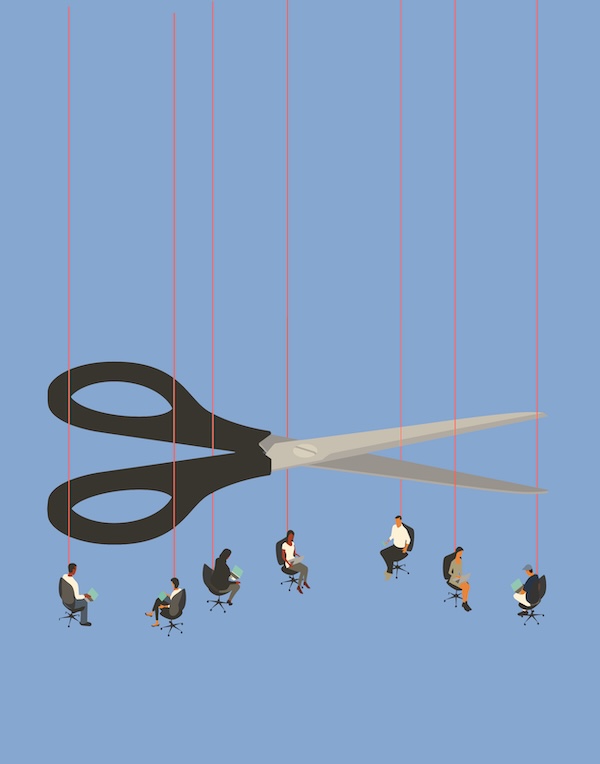
Nadine Walter agrees. “I think the moment for employee activism has passed, especially in regard to those topics that have just become too controversial, too emotionally charged for companies to risk alienating their customers now,” she says. “It’s an illusion for employees to think they can get the majority of staff behind a controversial topic”. Typically, now when companies do voice support for some issue—and most simply don’t, she stresses—it’s for a more neutral one. Now, when a company is activist, it’s either very much part of its brand already, or it’s being driven from the top.
“The fact is that the pendulum has swung. Would my daughter take a job with a company she didn’t respect? No. But would she leave one that didn’t speak out on values she cared about? Probably not now,” concedes Kate Bullinger, CEO of business consultancy United Minds, who adds that she sees more of its clients looking to return to the “nuts and bolts” of business again—shifting away from the post-Covid touchy-feely years of focusing on people and back towards the need to make business work in the face of tough markets, tariffs, and the like.
This isn’t to say the cause-minded corporation is over. Pendulums, after all, tend to swing back. As Guzman underscores, today’s younger generations might on occasion be sidelined by contentious, hot-button topics, but they also care—maybe more than previous generations—about topics at the core of a fair and safe society; those which, ironically, in the future might include the economic fallout now keeping them more subdued. “It matters to them to get to the right place to be able to address these big issues,” he says. “My feeling is that they’re quieter now but not defeated”.
“Right or wrong, people are still looking more to companies to take positions [on social justice issues, if not always geo-political ones]. CEOs will find it hard to get away from that,” says Bullinger, not least with Gen Z making up a quarter of the workforce, at least in the US, and pushing towards one-fifth in Singapore. “Bosses face a hard balancing act in addressing [these issues] because many took the job not expecting to have to make those kinds of decisions. And increasingly companies will need to listen actively—to make employees feel heard—and be transparent in their response.
“But there’s also the growing understanding that if you go [to] the public at large, there are often widely different, more nuanced views [on all social political topics]. It’s just not as clear-cut as workplace activism sometimes suggests. There’s the sense too that companies have to be able to get on and run their business”.