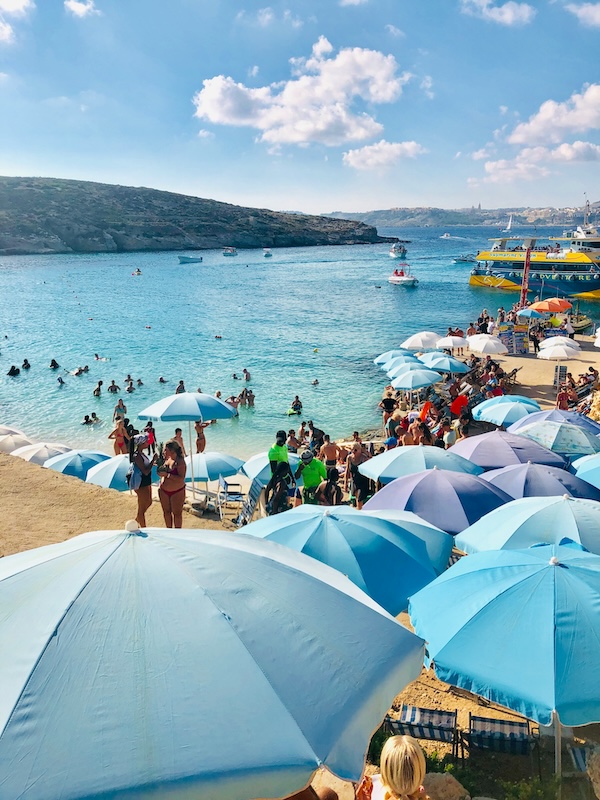
It is not strange to check the weather app before we leave the house. I love it when a cloudy day is forecast, as I can leave as I am. However, whether it’s a downpour or sun, I’ll need to pack an umbrella. I’ll walk along the streets covered with a parasol, and depending on the intensity of the outside rays, I might even throw on a hat and long sleeves too.
I’m one of those people who need to sit in the shade on the beach, and recently it feels like that desire’s mutual. Shade is cool these days (literally), and I often find that I’m trying to beat the crowd when it comes to snagging a nice shaded spot. My summertime nightmare: roasting in the sun for hours and going Peking Duck red.
I haven’t had a sunburn for well over a decade. There was a time, though, that I did enjoy sunbathing. When I travelled the east coast of Australia and the islands of Indonesia, I would splash in the sea and soak up plenty of warm rays on their pristine beaches. I felt ‘healthy’ coming back home with a tan. Where I’m from, tans are quite fashionable, a sign of vitality. Now I see tans are a sign of injury. Your skin cells produce melanin in a panicked attempt to shield your DNA from further damage after you’ve already done some.
Ultraviolet light doesn’t just tan you. It breaks down collagen and triggers mutations that can eventually become skin cancers. It also ages skin faster than almost anything else you do to your body short of smoking. Dermatologists have a name for this: photoageing. It’s responsible for the overwhelming majority of the wrinkles, sagging, and leathery texture attributed to getting older. Sun exposure very clearly does serious damage long term.
A little bit of sun is good for you, of course. Our bodies need UVB to make vitamin D, but there’s a huge gap between the 10 or so minutes it takes to top up your vitamin D and the two hours some people spend lying flat on a towel getting a holiday glow. One is a biological requirement, and the other a choice (usually not a very well-informed one!).
It’s impossible to stay in the shade the entire day, especially if you intend on pool time. I arm myself for those moments by applying water-resistant sun serum with a very high SPF 50+. I’ll massage it onto my face and body, with extra coverage across the chest and neck, my most sensitive exposed parts. It took me a bit of trial and error to find Miamo suncare, which was developed by pharmacists and focuses on science instead of celebrity endorsements (sorry, BTS Jimin!). With this more clinical regimen, I’ve never been burnt, even when hopping in and out of the pool all day long, sans reapplication. Then again, it’s 20 minutes max per stretch before I run back to the shade. Not today, sun, not today.
I even wear sun protection on cloudy days. The sun doesn’t switch off just because you can’t see it. Monsoon season in Asia is a good example: the sky can be grey and heaving with rain, but the harmful UVA rays are still getting through that cloud cover, same as they’ll get through a car windscreen or an office window. You can get meaningfully sun-damaged sitting by a window on an overcast day. It sounds far-fetched, but ask a dermatologist to show you a scan of a taxi driver’s face, and you’ll be shocked. The sun doesn’t need to be visible to be doing its destruction.
I know I sound like someone who’d bring a tent to a picnic, which is fair enough. But shade-seeking isn’t the fussy option, or at least it’s stopped feeling that way to me. It’s just my version of enjoying the outdoors. You don’t have to be shade-obsessive like me, with umbrellas and expensive sun serums in your backpack. You just need to remember that when the tan fades, the damage doesn’t. In 20 or so years from now, the version of you that spent August under a tree with sunscreen on will look better than the version that spent it getting a “healthy tan”. And I know I’d rather have healthy skin at 50 than a tan I don’t even remember getting in 2026.