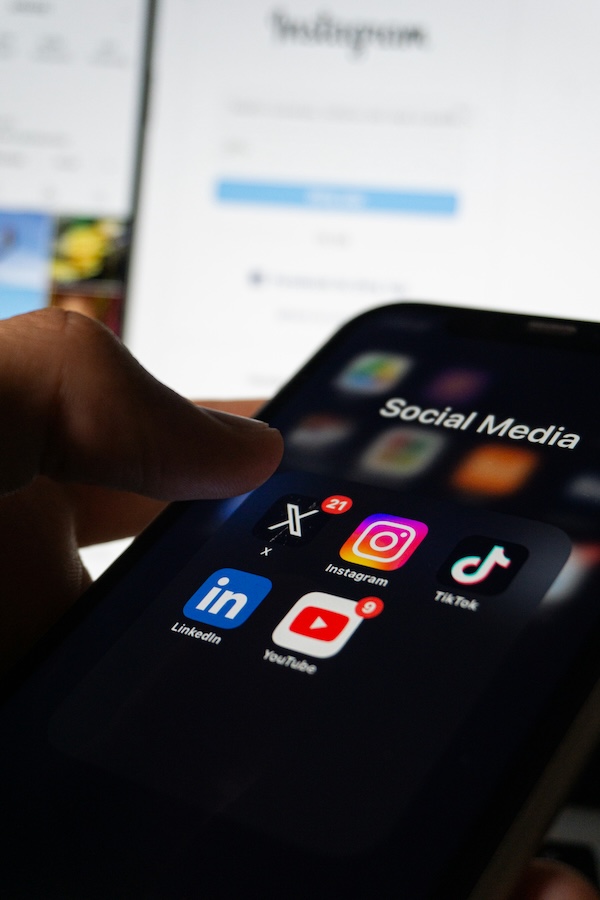
After completing my nightly YouTube-before-bedtime routine, I switch between Instagram and TikTok, stumbling across numerous posts and videos with clickbait-y captions. I recalled the videos having discourse on the ongoing genocides, AI's potential social impact, such as the safety concerns of deepfakes and the more recent coverage of the Cornell Case. So many of these short-form posts seem to have skewed viewpoints, and often the commenters under the post are unanimous in agreeing with the points being made.
While I appreciate the global outrage over human rights violations, I wonder how often these statements are actually credible because the delivery of some of them is questionably exaggerated. There seems to be a rise in virtue signalling and pseudo-intellectualism among content creators across social platforms we all know—TikTok, Instagram and X; but what is alarming are the yes-men, taking every word for gospel.
Essentially, pseudo-intellectualism refers to the performance of being knowledgeable and having depth to impress rather than pursuing genuine learning and truth-seeking. This is commonly observed in Jubilee's "Versus 1" debates. As for the moral posturing, the public would display certain moral or political values to possess a good self-image, without taking real action to demonstrate said values. For example, people raving online about their full support for domestic-violence survivors and speaking out against it only to be following Chris Brown.
In the past, there used to be public debates where opposing philosophical ideas were being discussed and rebutted between individuals known as public intellectuals. Their work usually had to be substantially written, published independently or in magazines. This indicates that public intellectuals have done the field-work of conducting extensive, credible research and academic work, quintessentially being educated. For example, French philosopher Michel Foucault was renowned for his expansion on panopticism, and the 1971 debate with another philosopher and linguist, Noam Chomsky, on human nature.
The modern iteration of public intellectuals would be influencers or podcasters. Perhaps the middle ground of the past's intellectual discussions and today's short-form content of influencers would be TED Talks, where the occasional debates and topics discussed at hand still hold weight and are culturally impactful. Regarding the think pieces from influencers today, the delivery and presentation of their ideas have adapted to the current digital algorithms, where they incentivise shock value and provocation. Thus, there has been a clear pattern where a positive reinforcement loop is created, and extremism gets sensationalised and rewarded for it. The cadence of these influencers is usually more emotionally driven, and complex ideas have now turned into shallow, watered-down short-form content that feeds into confirmation bias.
When complex topics are repackaged to exclude nuance and credible information, this gives rise to a sea of misinformation and the spread of potentially harmful ideologies. Additionally, the push toward increased use of AI is a factor in the rise of misinformation, and points toward more detrimental consequences even when initially presented otherwise. Yes, we may be able to summarise an email or document, which is helpful in time-based environments. But what about academic contexts? Students used to be required to read and analyse texts, and come up with their own string of sentences for their thesis. Now, many at a university level are using AI as writing assistants for their dissertation papers and even as decision-making tools. Global reading and literacy rates have declined; hence the decreased ability to comprehend topics that require deep, critical thinking.
This is unsurprising, as there is a worrying phenomenon among social media users being unable to consider opposing viewpoints. Take it from me, a Gen Z devoted to doomscrolling through the occasional brainrot and its comment sections (all in the name of anthropology). When defending a viewpoint, some write a whole paragraph, even citing statistics and studies, to defend and back up their arguments. Only for it to be refuted with "not reading all that" or a personal anecdote somehow also speaking for others. Or the source being a link to an influencer's TikTok. This leads to my discussion on virtue signalling, initially a positive act, if unchecked, leads to empty promises and deception. Again, being an avid viewer on TikTok, I have come across exposé-style slides of screenshots where people comment unprompted, unhinged things about someone, only to be called out for reposting self-righteous posts, implying that they align with those values.
When self-affirming virtual signallers with performative pretentious wisdom are able to monetise their content, it is no wonder they are increasing in numbers. But how do we bring back culturally significant work? I can only hope, but these are my proposals: going analogue, not interacting with clickbait or flagging slop by clicking "not interested", and developing a craft or a niche.
Go analogue by visiting museums; study or read about an art movement or historical time period that interests you, and watch and read the classics. This places emphasis on literacy and critical-thinking skills by investing the time to understand various perspectives. Avoiding clickbait means less reach and viewership for the creator, hence demonetisation and the decline in these sorts of baseless content, because there's no more motivation to spread misinformation.
Lastly, getting a new hobby would mean less time being spent online and actually cultivating a new skill or habit, and if it allows, meeting new people and making potential friends. Refining a craft would not automatically mean having to participate in public debates or writing manuals about it, but it would mean being well-versed in the skill-of-choice, rather than just talking about it online.