We all make assumptions.
For example, you’d think that Cat Street in Tokyo, Japan, is named so because of its thriving community of cats. But instead of felines roaming the sidewalks or lazing on window sills, all you find is a 1km stretch of numerous flagship stores, cafes, hidden general stores.
You’d also assume that because Cat Street connect Harajuku and Shibuya, the area would teem with elbow-to-elbow tourist traffic, but it’s a more understated atmosphere. Relaxed even. It’s fitting, though: Cat Street was built over a diverted underground estuary, and there’s nothing ataractic like a traipse along a river.
And yet, our mood was anything but relaxed.
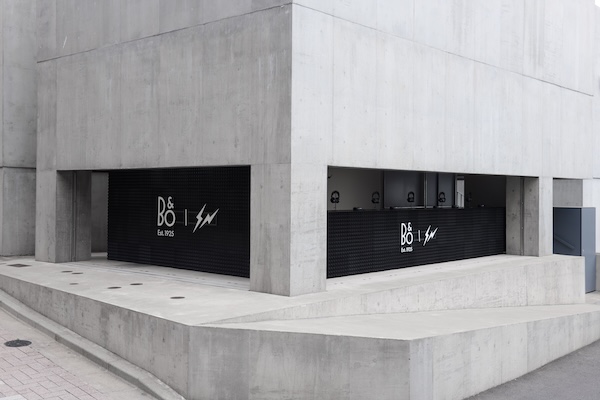
We were running late because we assumed that the journey to StandBy, an installation space at Cat Street, would be smooth sailing. Waylaid by traffic and disoriented by an unfamiliar topography, we reached our location 30 minutes after our scheduled interview time.
Our interviewee is Hiroshi Fujiwara. Often revered as Japan's godfather of streetwear, Fujiwara is the pioneer of the Ura-Harajuku generation.
When we arrived, there was a modest crowd at StandBy. And outside stood Fujiwara, arms crossed and inscrutable. Were it not for his signature silver hair and dark sunglasses, he would have blended in with the rest of the chic black-garbed hoi polloi.
His attire looks deliberately unstudied: a long-sleeved black sweater over a white shirt, black trousers that stack at his ankles; Fujiwara carries a backpack. Also black.
We apologise profusely for the lateness. If Fujiwara was annoyed, he didn’t show it. Instead, he acquiesces to being interviewed while he waits for his ride.
“Getz/Gilberto is understated elegance. Instead of showy solos, Stan Getz and Brazilian guitarist/vocalist João Gilberto give each other space, with Getz's tenor sax drifting effortlessly over Gilberto's hushed guitar. The result is a cosy, intimate feel, which puts listeners in the heart of a live show. Getz/Gilberto won Grammy Awards in 1965 for Album of the Year, Best Jazz Instrumental Album, and Record of the Year. It remains one of the most celebrated and best-selling jazz albums in history and made bossa nova a household word outside of Brazil.”
These days, collaboration is a dispiriting way of making a quick buck.
Collaborations often result in a half-ass gesture of a brand slapping its logo on their partner’s product. It’s a quid pro quo; a shortcut to scratching each other’s back, but eschewing understanding why there was an itch to begin with.
More often than nought, collaborations can feel inauthentic. Not in this case with Bang & Olufsen and Hiroshi Fujiwara's creative agency, fragment design. There may be fragment design’s signature twin lightning bolts and wordmark on B&O's products, but that association runs deeper. Like, decades-deep.
As a musician, designer, and tastemaker, Fujiwara has lived with Bang & Olufsen since the 1990s.
“The first product that I bought? My friend told me about Bang & Olufsen; It was a CD [player] which opened like this.” Fujiwara holds out his hands, palm-out, and moves them apart. “That was kind of sensational for me.”
Fujiwara was probably talking about the Beocenter 2500. Designed by David Lewis, the player broke away from traditional flat audio components. It had a flat, vertical standing shape with two tinted glass covers that slide open when you pass your hands in front of them. Released alongside the Beolab 2500 loudspeakers, the Beocenter 2500 was Bang & Olufsen's first active speakers featuring built-in amplifiers.
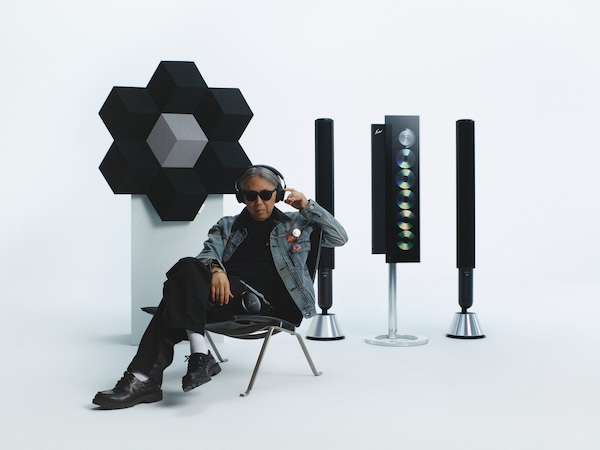
Years later, Fujiwara would get his shot at reimagining four of B&O's products: the Beoplay H100; Beosound A1; Beosystem 9000c; and Beosound Shape.
“This stunning 2024 debut album by the Indonesian trio from Surabaya, Indonesia, blends vintage 1960s and 70s soul with jazz, exotica, and subtle Southeast Asian influences. Natassya Sianturi's vocals glide between English and Indonesian, while Sinatrya Dharaka's crooning guitar and Tommy Satwick's weighty drums set the stage of heartbreak and love found in equal measure. Fujiwara is a fan of Thee Marloes and regularly featured the band's music on his J-WAVE radio program, JUN THE CULTURE, and in his music selections.”
Before his move to Tokyo, Fujiwara hailed from the coastal town of Ise. As a teen, he fell in love with punk culture and flew to London to meet Malcolm McLaren. The enfant terrible pointed Fujiwara towards New York and Fujiwara discovered hip-hop while it was still an underground scene. He bought records nobody in Japan had heard of and started spinning them in Tokyo clubs.
In 1990, Fujiwara launched GOODENOUGH, his first label. Three years later, having helped Jun Takahashi and NIGO launch the iconic store NOWHERE, which birthed streetwear giants like UNDERCOVER and A Bathing Ape. He also gave Neighborhood founder Shinsuke Takizawa his first industry job.
Fujiwara would create fragment design. Instead of creating his own clothing line from scratch, Fujiwara wanted fragment design to work with established labels and recontextualise them, by applying Fujiwara's creative stamp and iconic logo. His list of collaborators include Nike; Casio; Starbucks; Stüssy; SACAI; and most recently, Bang & Olufsen.
“This collaboration has been a long-time dream of mine,” Fujiwara says. “Since building my home around Bang & Olufsen’s integrated home sound system in the 1990s, the brand has been my first choice for audio. This collaboration feels like a meaningful continuation for our journey together.”
In another interview, Fujiwara elaborated that the best kind of collaboration is about “having conversations.” Both parties share what they want and meet somewhere in the middle.
“When Motown's golden boy stopped singing about love and started looking at the real issues of the time—Vietnam, police brutality, the environment—this is the concept record that critics hailed as “one of the greatest albums of all time”. ‘Mercy Mercy Me’ and ‘Inner City Blues’ still land exactly as hard as they did 50-odd years ago.”
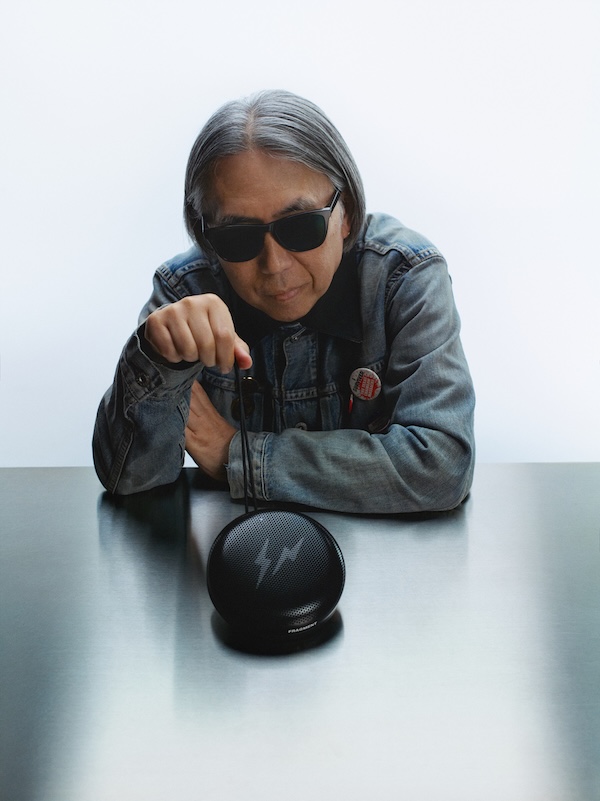
The common thread through all four products of the collaboration line is fragment design's trademark monochrome black or "piano black", as Fujiwara calls it.
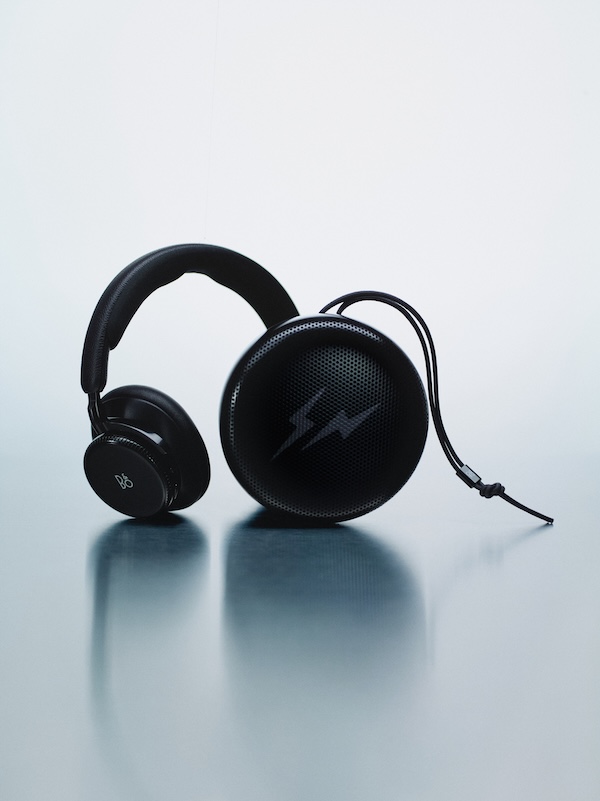
“This colour is kinda like plain black, or like satin black,” Fujiwara elaborates. “But I like the [term] ‘piano black’. This is what I asked them to do.”
But what kind of process was used to achieve that effect? Is it something similar to hikaru dorodango (the Japanese art of mud polishing)?
“No, I'm not sure. I just asked them to get that piano black, and they said, Okay, we will try that. It is difficult.”
He wasn’t kidding about that. For the first time in Bang & Olufsen’s history, they had to figure out a way to create a glossy aluminium casing. A highly specialised anodisation and hand-polishing process was applied to the Beoplay H100 earcups to achieve a "liquid-like, high-gloss finish". Kresten Bjørn Krab-Bjerre, Bang & Olufsen’s senior director of design, adds that “this meticulous approach brings fragment’s signature black to life through a finish only achievable by hand.” Usually reserved for its top-of-the-line speakers, this marks the first time this process is applied on a portable product.
At the time of the interview, the Beoplay H100 fragment Edition debuted at a dedicated pop-up at Isetan Shinjuku, before it opened for sale to the public worldwide.
"Officially sanctioned by the Jackson estate, Fujiwara and former MELON member, Masayuki Kudo aka K.U.D.O. gave MJ and Jackson 5 classics a reggae-tinged, dub-leaning rework. Tracks like 'I'll Be There' and 'Never Can Say Goodbye' feel less like a trip down memory lane, and more like a late-night reinterpretation."
Somewhere in a small Danish town called Struer, with a population roughly the size of a large condo, sits the headquarters of a company that convinced the entire world that a speaker could also be a piece of art that you'd want in your living room. Founded by Peter Bang, and Svend Olufsen, the pair started building radios in the attic of the Olufsen family's manor house. The company’s first real commercial hit was the B&O Eliminator, a radio that plugged straight into the mains instead of relying on batteries.
A year after World War II, B&O would release the Beocord 84U, Europe's first wire-recorder and the progenitor of the open-reel tape recorder, followed by the Grand Prix 48CH in 1948. Bang and Olufsen ran the company on the idea that gadgets can look good. In 1978, Bang & Olufsen was inducted into New York's Museum of Modern Art.
Several innovations and years later, Bang & Olufsen is proof that two engineers in an attic can build a hundred-year-old company. Sound and vision are intertwined. Everyone else eventually caught on, but B&O happened to be there a century early.
Fujiwara has lived through the different mediums of how music was recorded. Does he think that vinyl is better than a CD? Fujiwara scoffs at the notion. “That, I don't really believe. Digital can produce pretty good sound as well.”
He misses the era of CDs, which explains his involvement with the Beosystem 9000C. Interpreted from the 1996 six-disc CD player system, it’s paired with Beolab 28 loudspeakers and a Beoremote One, the Beosystem 9000C combines matte black surfaces with glossy natural aluminium. The upright case has a display that features up to six CDs at a time. A super-fast, motorised glass panel automatically swaps CDs and returns them to their original position after play. Like the other collaboration devices, the Beosystem 9000C comes with both collaborators’ marks integrated on the CD clamper and speaker stand.
“Released in 1995 on Echo, this marks the moment when Fujiwara steps fully into dub territory. Comprising of six tracks, this half-hour album is bass-heavy with echo-drenched instrumentals with titles like ‘Universal Dub’ and ‘Crystal Dub’”.
Does Fujiwara listen to music when he works? Yes. It’s a playlist, something that his Spotify app will recommend, or that he’ll search for, mood withstanding.
So, what are the six albums you’d play?
His brows knitted, and he leaned in like he was hearing a secret.
I mean, what albums would you play on your Beosystem 9000C?
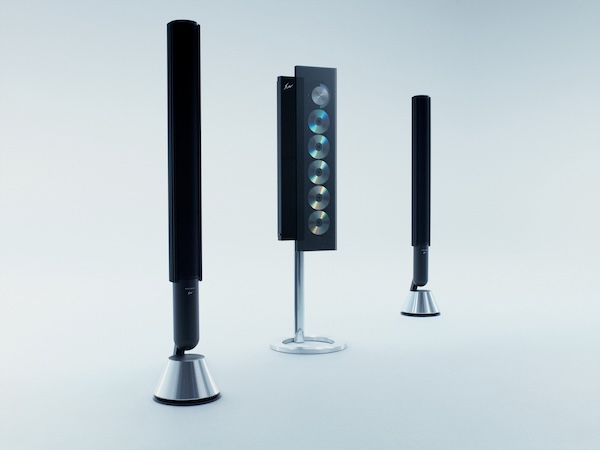
“Ah. You can check it there.” Fujiwara points towards the gathering inside StandBy. We see a few headphone-encased heads bopping. There’s a circle of people around the familiar silhouette of the Beosystem 9000C.
Someone sidles up to Fujiwara, whispers in his ear. Our interview is coming to a close.
“Vini Reilly built this thing on a four-track in his bedroom, and somehow it still holds up as one of Factory Records' quiet masterpieces. This album is a reverb-soaked guitar, with no vocals to speak of. Not a single note is wasted. This reissue tacks on a fistful of early singles and rarities, turning a tight 41 minutes into something closer to a portrait of a guy figuring out exactly what kind of record he wanted to make, and did.”
“He has to rush off”, his minder said. We waved off the excuse. No worries, we replied. We never expected Fujiwara to entertain us for this long. There was no reason given as to why he had to bounce in the middle of the evening’s event.
Fujiwara travels often. He meets with people (something he considers important) and reveals that his next album will come out next year.
“I don’t see myself taking a break”, Fujiwara says, taking his first few steps towards the road. “Luckily, I have a lot of things to do. Things that I enjoy.”
He has many things in the pipeline: a book about the history of record stores in Shibuya; more fragment design collabs and projects like ComplexCon (fragment design and Playboi Carti serve as official artistic directors of the festival).
And with that, an unassuming Fujiwara, disappears into the slow-moving crowd of Cat Street.