I’m at the age (unfortunate or not, it’s something I’ve yet to determine) where I find myself at times retreating from the constant barrage of new one-hit wonders with made-for-TikTok singles lasting barely three minutes. I’d hide in the comforts of the music of my youth; I’m currently obsessed with the latest release by The Veronicas that was dropped a week ago at the time of writing. It’s a brand new live, in-studio recording of the duo’s 2007 single “Untouched” for Australian radio station Triple J. It’s been more than a decade since I’ve actively listened to the song, and this new version sounds better than the original and with a better production mix.
Nostalgia is powerful—it’s an indisputable fact. In contrast to today, things back then were relatively slower. We’re so constantly connected now that the options in music, fashion, visual entertainment and the like, are seemingly limitless. But that also means that with such unprecedented access, we hardly take the time to pay complete attention to the things we consume or even be critical of them. Think about it, when was the last time you were able to memorise the entirety of a song without actually trying to? Or remember what happened in the previous season of an online-streaming series?
In fashion, it would be incorrect to say that nostalgia is having its moment in the sun. Yes, look through the swathe of Spring/Summer 2026 collections currently in boutiques and online, and you’d notice familiar silhouettes that harken back to the 1960s, with elements that date far beyond. Yet, it’s not something entirely new. If there’s anything consistent about fashion, it’s that there’s a constant referencing of the past. But the best, is to do it differently to create something new.
“Nostalgia is a very complicated subject for me,” said Miuccia Prada in an interview once. “I’m attracted by nostalgia, but I refuse it intellectually,” she explained. “It interests me to be modern, and so I refuse nostalgia, but still I have it. So you see contradictions and oppositions are maybe what makes the work contemporary, because nowadays we are all composed of opposites.” The juxtaposition of the old with something drastically unexpected has been a longtime Prada trope. The past rarely arrives intact at Prada and increasingly so since Raf Simons became a co-creative director of the brand. Nostalgia is dissected and reassembled into varying kinds of fragmented memories. You’d just as easily find 1950s tailoring spliced with industrial Prada nylon as you would bourgeois uniforms disrupted by awkward proportions. There’s a constant tension of elegance of the past with the laid-back nonchalance of the present that results in new menswear creations, or at the very least, none had thought of before.
“It interests me to be modern, and so I refuse nostalgia, but still I have it. So you see contradictions and oppositions are maybe what makes the work contemporary, because nowadays we are all composed of opposites.”
—Miuccia Prada
At Saint Laurent, Anthony Vaccarello has steadily been refining his menswear aesthetic for the House, one that’s rooted in the mythos of Yves Saint Laurent himself. When Vaccarello shifted the focus to slim silhouettes balanced with sharp shoulders and injected with a certain undercurrent of fluid softness beginning with the Winter 2023 menswear collection, people started taking notice. It was then that he managed to completely shed the image built by his predecessor and made Saint Laurent truly his own. The collections have since been referential—true to the spirit of the House’s founder and his penchant for impressive tailoring—yet imbued with refreshing nuances and styling devices resulting in some of fashion’s most noteworthy pieces in the past decade. Crisp white shirting designed with exaggerated bow collars, knee-high leather biker boots, and ties made cool again, there hasn’t been short of anything fresh under the often low-lighting of its runway shows.
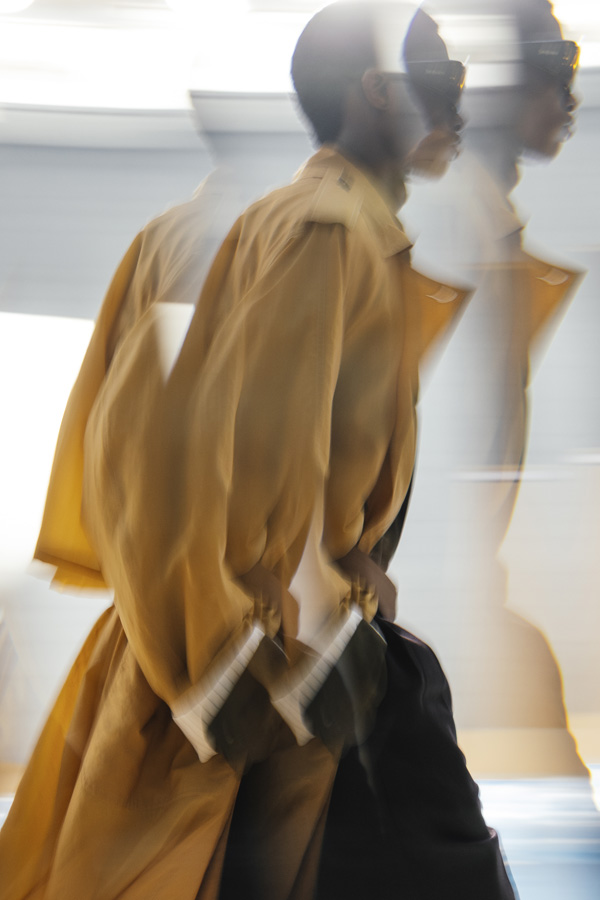
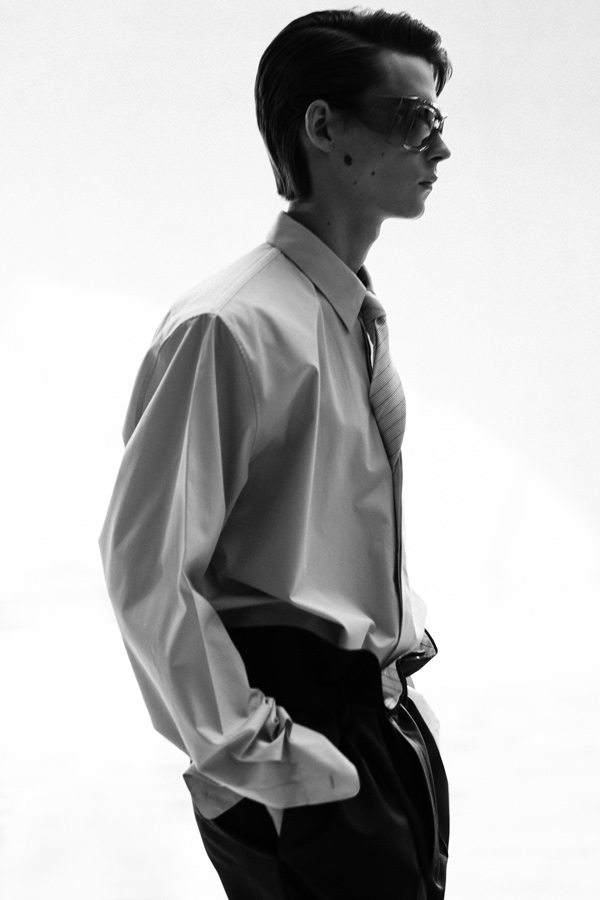
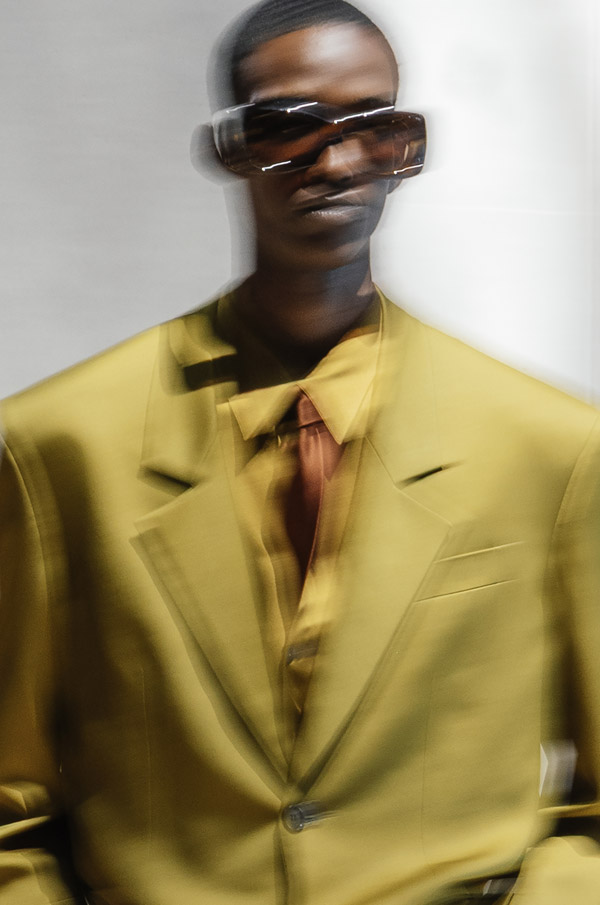
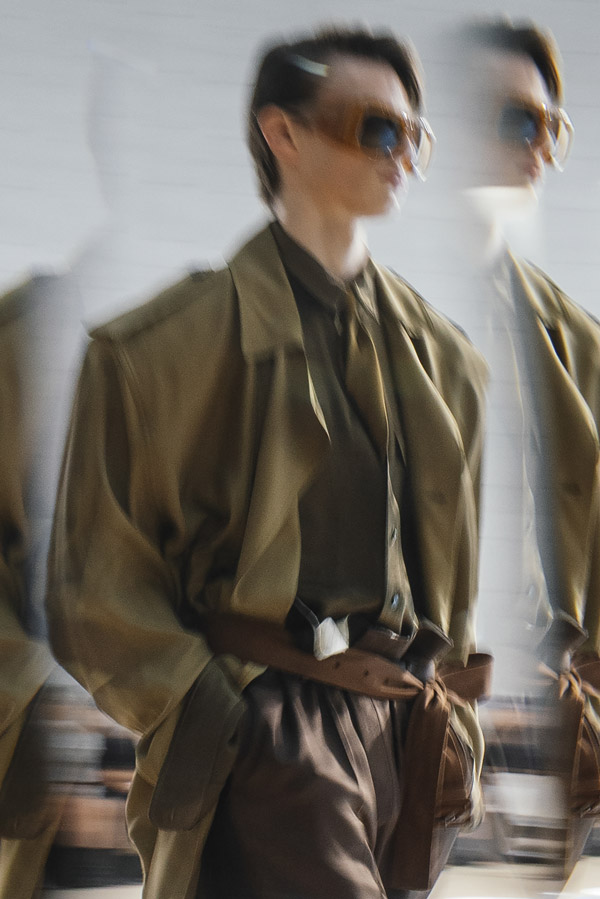
One could say that looking back is almost necessary when designing for a fashion house with a storied legacy. Much like Saint Laurent, such is the case for a house like Dior. Former Dior Men artistic director Kim Jones referred to the House’s couture sensibilities in crafting his menswear vision, adopting the softness of couture-like draping and materials into suiting as well as sportier renditions. Current creative director Jonathan Anderson, too, is on a constant hunt for Dior archives to be made anew, and in a way that’s different from previous ones. Couture dresses (Dior is a couture house after all) inform the designs of a number of pieces, recontextualising them into contemporary versions of the originals. The Delft bermuda shorts, for example, resemble the Delft dress in silhouette but differ in execution and function. Who would have figured that a couture dress from the 1940s could be recut into a pair of attention-grabbing bermudas? It may not be for everyone, yet it exemplifies that there’s always newness to be found in the archives with a little bit of unbridled ingenuity.
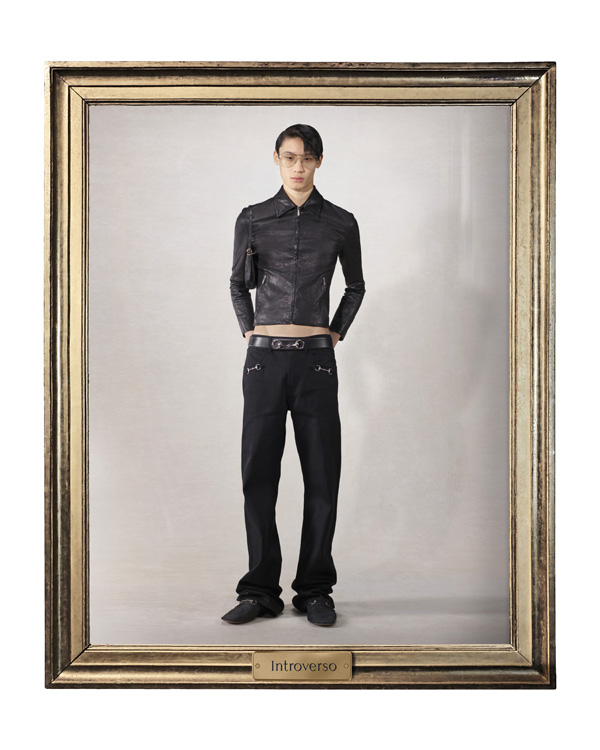
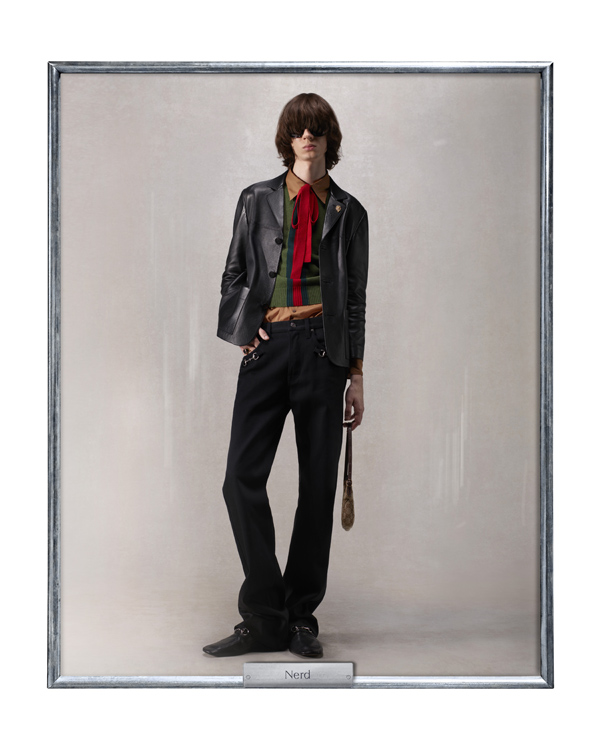
Season after season, the runway reveals that menswear has a fascination with archetypes. In some ways, it simplifies the thought process of crafting a look and essentially makes the idea of fashion and style less daunting. The businessman, the artist, the rebel—these figures have always existed in menswear, and, of course, there’s a certain comfort in knowing that wearing a biker jacket instantly exudes a kind of devil- may-care attitude.
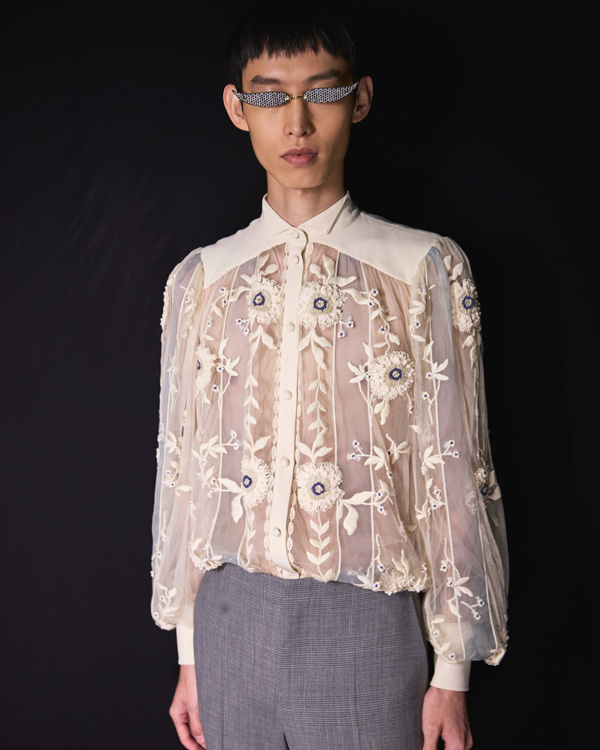
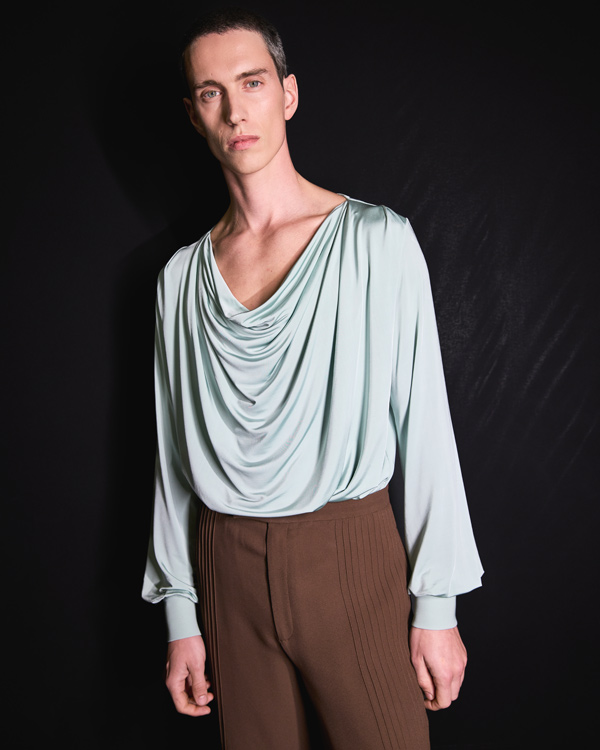
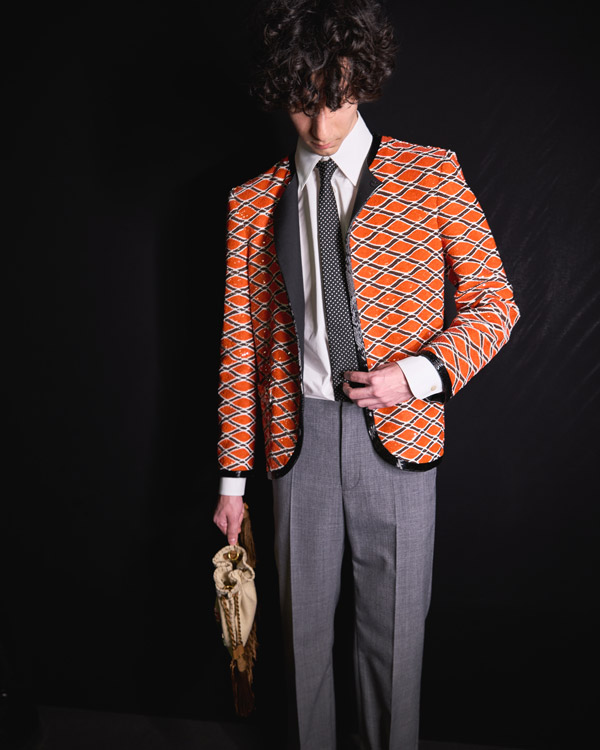
However, nostalgia isn’t inherently conservative; in many cases, it’s the opposite. As designers look back, they often are able to dismantle the perceived constraints of masculinity. Let’s face it, men back in the day had less restrictive ideas about what it means to dress masculine. Seventies-style silk shirts, flared trousers, and a certain unapologetic sensuality remind us that masculinity has always been more fluid than we remember. These moments in history when men dressed with a kind of flamboyance that would feel radical today, have been most compellingly reclaimed by the likes of Alessandro Michele, S.S.DALEY’s Steven Stokey-Daley, Pierpaolo Piccioli and more. By bringing these elements back, designers are not just indulging in mere retro aesthetics; they’re expanding the possibilities of how men can dress now.
In the broader scheme of things, there’s a risk to always looking back. One tends not to innovate when the past is always a key point of reference. And soon, the creative well dries up and everything begins to look the same again. It’s like beating a dead horse—the same decades, the same silhouettes and the same cultural touchpoints get repeated. If multiple successive collections look like it could very well sit in the same era of a past creative director, would those be considered as paying homage, or referential, or simply reductive? There always needs to be new angles and narratives on how the past is being engaged.
The most interesting expressions of nostalgia are not those that replicate the past exactly, but those that reinterpret it. The late Virgil Abloh’s design ethos of tweaking a design by three to five per cent to remix something already in existence as a way of creating something new can be applied here. Looking back shouldn’t be a recreation because one might as well be wearing a costume.
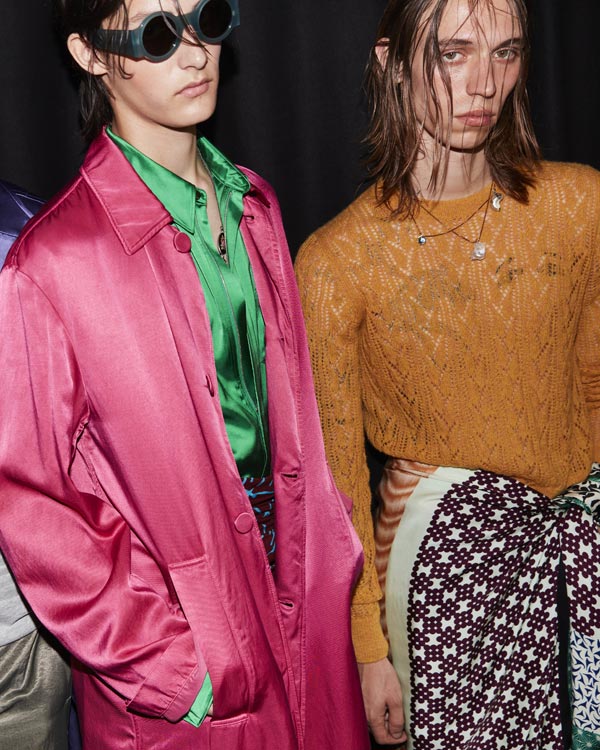
The past is never truly gone. It lingers behind in the fabrics and silhouettes that have stood the test of time and have become part of the craft that is fashion. Like most forms of art, the past in fashion is not fixed. It can always be reshaped and reinterpreted for a new generation to discover. Newness in fashion is a matter of perspective—look at something through a different context and in a broader viewpoint, and you’d find a future formed by the past. And perhaps, rediscovering that old gem you forgot you loved.