When The Projector drew its shutters late last year, it left the local film scene disheartened—more than usual. People banded together, coalesced, voiced their frustrations, signed petitions—anything to keep one of Singapore’s leading creative spaces alive. Thankfully, the drought didn’t last long. The recent arrival of Filmhouse offered some reprieve, but it laid bare just how sheer the fabric is that keeps the arts in Singapore stitched together.
So imagine our relief when news broke of a local director whose debut not only screened at prestigious festivals in Toronto and Busan, but also earned a nomination for Best New Director at the Golden Horse Awards. In fact, the film has already picked up three awards at Pingyao—Best Actress for Ranice Tay, alongside the Youth Jury Award and the Cinephilia Critics Award.
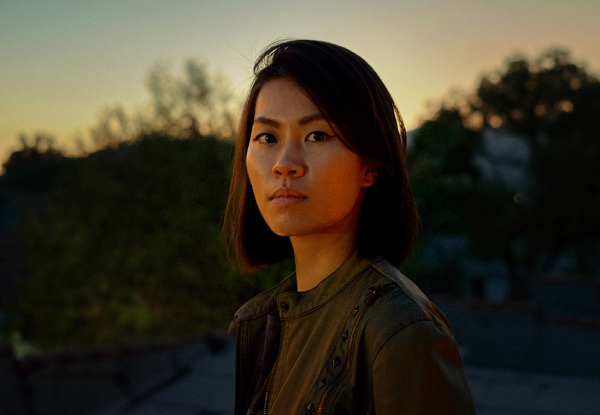
“I actually don’t like coming to the CBD,” Tan Siyou says, seated across from me on a small stool. The whooshing sounds of passing buses and cars felt like they would never stop. We had wanted to conduct the interview somewhere with significance tied to her story, but those places no longer exist. So we settled for a café a block away from my office.
Curious in the moment, I asked her what was wrong with the CBD. Though, in hindsight, I probably didn’t have to, because the answer was quite obvious.
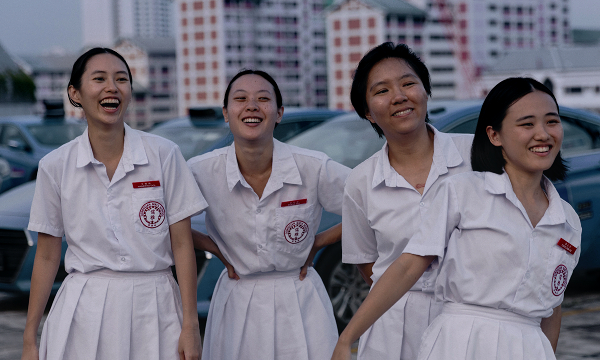
Amoeba, Tan’s directorial debut, follows four students at an elite girls’ school, each aching for freedom within the rigid social structures that hem them in. Through micro-acts of rebellion—triad mimicry, small, reckless shenanigans—they push against a culture that demands conformity. But as differences in class and ambition surface, the fault lines in their friendship begin to show, testing the limits of their loyalty.
Although she has spent the past 14 years in Los Angeles chasing the directorial dreams she first formed as a teenager, Tan presents herself as she is. There are no veils blanketing her face. Her actions and accent, mannerisms and demeanour carry no trace of this distance spent away from home.
But where is home, exactly? Can she still consider a place she hasn’t lived in for the entirety of adulthood, home? We didn’t want to assume, so we asked her as such.
ESQUIRE SINGAPORE: Do you consider Los Angeles home, or is Singapore always home?
TAN SIYOU: It’s a very existential question that I think about all the time.
Moving to a different place is very complex, and it’s different for everyone. Some people integrate very deeply. I would say I’m somewhat integrated, but I don’t consider America home, even though I’ve been there for a long time.
I have friends there, good friends. But my formative years were in Singapore. My family is here. Most of my friends are here. I still consider Singapore home. It’s just a home that is sometimes hard to live in.
The things I care about are Singapore things—Singapore society, Singapore stories, Singapore concerns. So emotionally, I think Singapore is home.
But I will say that in the US, I feel I can be more myself. In Singapore, I often feel judged. I feel like I have to hide parts of myself. Overseas, you can be yourself—but it can also be lonely.
The loneliness comes from the fact that people don’t really understand Singapore. It's so small that many people don’t know anything about it. People know French culture, American culture, Chinese culture—but Singapore is often just seen as “Asian.”
ESQ: What was the first film that ignited your love for cinema?
TSY: When I was growing up, I didn’t watch a lot of films or even TV shows because my mother was very strict with me. So the usual teenage things I saw with friends—like Final Destination—just felt like movies. They didn’t spark anything.
I remember that after JC, I went to see a documentary by Tan Pin Pin. I think it was at The Arts House, though I can’t remember exactly. Something about it ignited something in me.
Before that, movies felt very foreign. Like they were about other people, and I was just watching escapism. But that documentary made me think that our reality could also be investigated through film. She was there to talk about the film, and something about the experience felt intellectually invigorating.
ESQ: What was the documentary about?
TSY: I don’t remember. My memory isn’t very good. [laughs] But I remember the feeling. Something sparked. It was about the feeling, not just the plot.
ESQ: What is a theme that intrigues you most right now?
TSY: The effect of colonialisation on people—how memory and history shape us.
In Singapore, I think there’s a certain amnesia. We don’t want to remember certain things. We prefer to chase something else. Our colonial past is traumatic, but it has also been shaped and cherry-picked to fit certain narratives. What interests me is how narratives, myths, and stories shape individuals—and how we might resist them.
So the themes I’m drawn to are history, memory, and the individual within a landscape. But it’s not just cerebral. I’m also interested in interpersonal relationships, desire, love—because those are the things that drive humans.
What are the things that shape us? That we cannot see?
ESQ: On a lighter note—what’s your favourite guilty pleasure film?
TSY: I think guilty pleasures I mostly watch are on planes, because I’ve been flying a lot recently.
I realised I’ve watched Monsters, Inc. several times. The first time I watched it, I loved it. Then I stopped for about 15 years, and now, I’m watching it again. I really love those characters... these little freaks, I love them so much.
ESQ: Are you still friends with the people who inspired you to make Amoeba?
TSY: Yes, I am. There’s a group of friends who were the starting point of the inspiration, and I’m still close with them. One of them lives in LA, and I cook for her every birthday. My best friend is still in Singapore, too.
Along the way, many other people also inspired the characters—friends from different countries, even my siblings. When writing characters, you draw from many people.
I’m still very close with friends from secondary school. Maybe it’s the oppressive environment, but we really banded together and many of us are still friends.
But adult friendships change shape. Some people you grow apart from, some you grow closer to. That’s something I’ve had to learn and accept. Things can’t stay exactly the same as they were in secondary school.
ESQ: How did you grapple with drawing from and showcasing the “ugly” aspects of real friends when writing the characters?
TSY: That’s a good question. I tend to see my friends through very positive, maybe even rose-tinted glasses. I don’t think they’re evil.
In my 20s, I was angrier. I had moments where I felt frustrated with people who bought into the system. But over time, through writing the script, I emotionally accepted that we are all individuals who choose our own paths. Before that, I wrote them more as projections of what I wanted them to be. But when I wrote them as real people—with their own desires and dreams—they became more truthful. Once I understood that, they became full characters with agency.
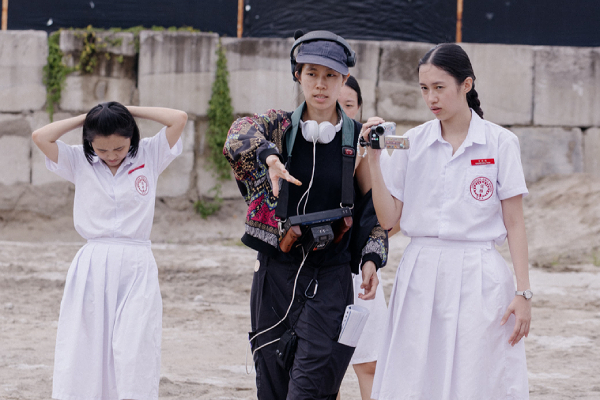
ESQ: Can you speak on the leap you took, leaving your stable job to pursue directing?
TSY: I’m still struggling with it.
ESQ: But you’re a full-time director, right?
TSY: I am, but what does that mean? Who pays me?
Being an independent director is a bit like a duck on water. On the surface, you're swimming calmly, but underneath, your legs are kicking very fast. I do a lot of part-time and freelance work to pay the bills, some related to film, some not. I try not to see that as a negative. It’s exposure to life.
I’ve always liked working. When I was young, I worked in cafés, sold ice cream, did wedding banquets—typical F&B work. I actually enjoy those experiences because they let you observe human nature.
But leaving a full-time job is scary. A stable paycheck gives psychological safety. It makes you feel secure. Through this experience, I developed more empathy for friends in Singapore who feel unhappy in their jobs but can’t leave. Before, I used to think, “Just leave la.” Now I understand it’s very frightening. Financial stability is precious.
ESQ: What was your job before leaving?
TSY: I worked at a production company that made documentaries, music videos, and commercials.
ESQ: Did that kind of creative work detract from your personal endeavours?
TSY: Yes, definitely. At some point, I asked myself: why did I leave my family, my friends, and the comfort of Singapore to come here and do this and to be abused at work?
That’s not what I was here for.
That’s when I began writing a short film script again and applied for the AFI Directing Workshop for Women and started my filmmaking path.
ESQ: I think many creatives relate to that: they wonder whether they should work on their creative endeavours on the side, or leave their full-time job to fully pursue them.
TSY: That was the question I had for years. I figured I could have my full-time job, then on the weekends I’d write. But on the weekends, I’m very tired. I’m drained from the week.
And it was hard to negotiate something with my boss, which made me realise at the end of the day, I am just a number on a spreadsheet. If I were too expensive, they’d cut me. I realised the cold, hard truth of capitalism. I was like oh, okay lor.
ESQ: How did it feel confronting memories from your childhood while writing the film?
TSY: It was like an excavation, which was a bit painful. Writing forced me to dig into memories I had suppressed. For a long time, it felt like parts of my childhood were just blank because I tried not to remember them.
For many years, I believed the narrative that I was “bad” or “disobedient.” But through writing the film I realised it was partly a matter of perception. I was seen that way, but maybe I wasn’t bad. I was struggling.
The thing about friendship is that [it’s never one thing across many years]. We’re still friends, but what I once saw as a dissolution of friendship actually wasn’t that. We never truly broke apart—we just stopped seeing each other 24/7.
The shattering of that “together forever” dream was something I had to investigate. Why was I so sad about it? What was it about me that wanted that kind of eternity?
But real life doesn’t have eternity. We all die. Relationships break. Things change. Emotionally, I had to face that.
ESQ: Were any scenes in the film lifted directly from your memories?
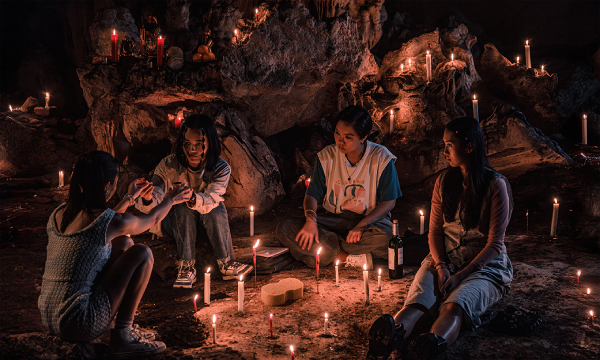
TSY: Yes. The ghost in my bedroom… that part is real. One night, I was chatting with friends online on IRC (Internet Relay Chat) and ICQ till very late. Around 3am I heard the radio volume changing on its own. Then the room got very cold and I felt something sit on me while I was [in bed]. I was terrified.
ESQ: Did you scream? You just let them sit on you?
TSY: I just let them sit on me. I froze completely, like an animal pretending to be dead. I thought I might die [laughing].
The next day I told my mother and she said there was no such thing in the house. That was quite typical—authority figures in my life often erased uncomfortable things.
But when I told my friends, some gave me Buddhist sutras, others offered me Catholic prayer cards. They really tried to help, so I was very touched la.
Over time, the ghost just… existed in the room, and we became like roommates. Strangely, that experience made me more sensitive to the invisible things—feelings, atmospheres, things you cannot see.
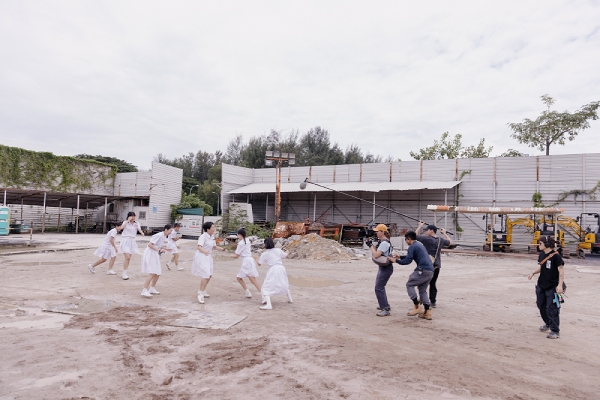
ESQ: As a first-time feature director, did you struggle with self-doubt?
TSY: Of course. Directing is a strange job because people expect you to have all the answers, but sometimes you don’t. Early on I also wondered: why does anyone need to watch this film? Why is this story relevant?
That came from a personal insecurity, but also from a wider Singaporean insecurity. I think as a nation we sometimes feel our stories are insignificant but Singapore has done incredible things as a small country. Why do we constantly tell ourselves that we're weak or vulnerable?
Over time, I realised people connect with universal themes—friendship, growing up, the formative years of life. And our country’s uniqueness can actually be interesting to others. So yes, self-doubt will always exist. But I try to rely on instinct rather than overthinking.
ESQ: What’s the worst review you could imagine receiving?
TSY: Honestly, anyone who takes the time to write a review already means the film provoked something. I think reviews are actually a mirror to the person who wrote them. It reveals something about them.
I actually don’t read the reviews, but the ones I would not like to receive are if the audience completeley misunderstands my intention, which is to investigate what it means to grow up in Singapore, and how society shapes individuals.
But even then, maybe the film just isn’t for them. Some people like char kway teow, some people like chicken rice. You can’t force everyone to like the same thing.
ESQ: Oh, you haven’t read the reviews on Letterboxd yet?
TSY: No [smiling]. I’d like to be an ostrich for now.
ESQ: What’s the best review you’ve received?
TSY: One very memorable moment happened in Tokyo. After a screening, people were lining up to talk. A very shy girl came up to me and said she had always felt like an amoeba in school—withdrawn, invisible—and she had never seen a film express that feeling before. She said the film captured something she had felt her whole life.
That meant a lot to me. Because if someone from another country can recognise themselves in that feeling, then maybe the story really does resonate.
ESQ: What feeling are you chasing as a filmmaker?
TSY: I think that is the question. I think I’m chasing feelings.
When making Amoeba, I thought I was chasing melancholy, rebellion, maybe anger. But through the process I realised I was chasing a kind of pure joy that had been lost in my life, which I found again through the film. This pure feeling of joy, free pure joy, recklessness, and abandon.
Amoeba is now screening at Filmhouse.