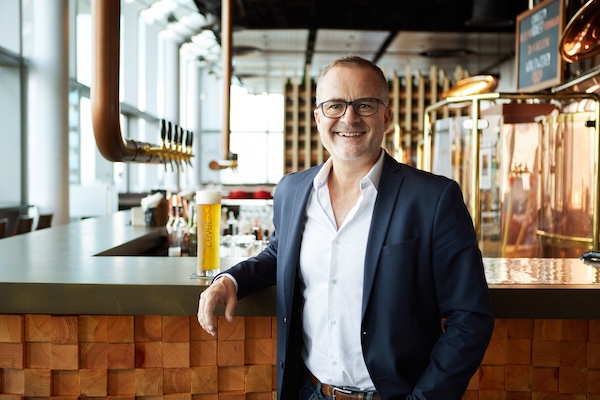
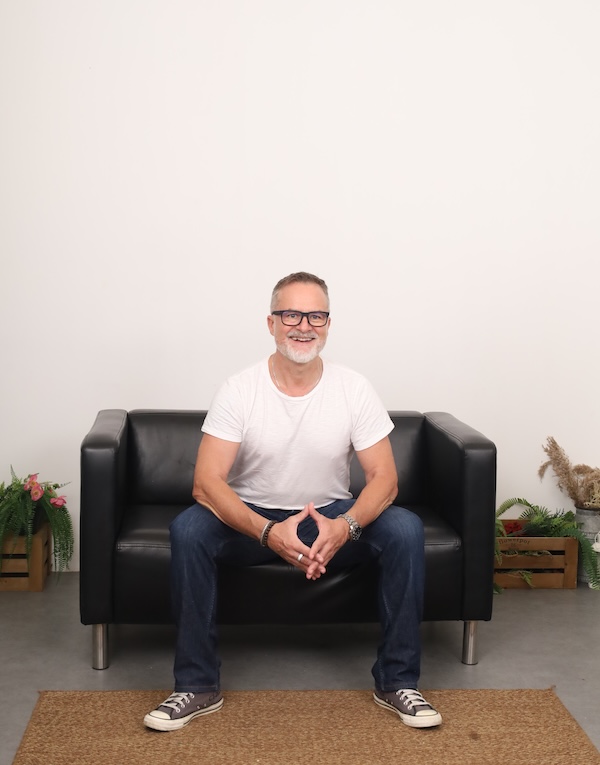
Dr Martin Bém isn’t the sort of figure you’d immediately picture running the world’s highest urban microbrewery. Yet as founder and managing director of the Ponte Group, the driving force behind LeVeL33, he has spent the last 15 years transforming a daring idea into one of Singapore’s most memorable dining experiences.
We met at LeVeL33, beers in hand, to retrace that journey. From an unproven concept in a little-known neighbourhood to a Guinness World Record-holder, Bém reflects on challenges, breakthroughs, and the vision that continues to guide the brewery upwards.
ESQUIRE SINGAPORE: What was the original idea behind combining a microbrewery with a rooftop dining experience?
DR MARTIN BÉM: I arrived in Singapore in 1999 as the original director for San Pellegrino. After some time, I decided to leave, keen to remain in Asia and start my own business. I began working with European brands to introduce them to the region, one of the biggest being Paulaner beer from Munich. That’s how I became rooted in the beer industry. And then, my first restaurant concept was launched, a Bavarian-style German restaurant called Brotzeit.
I’ve always loved beer, but also appreciate good wine and food. Most craft beer places serve pub grub with little or no wine choice, so I wanted an upmarket microbrewery combining all three. While scouting for a location, I toured the city with a real estate agent and came across the model of the Marina Bay Financial Centre. I asked about the penthouse, and they said they were looking for a unique F&B concept for the space. I told them, “I think I can help.” We submitted our proposal through the tender process. It was ambitious; no one had ever built a microbrewery on the 33rd floor, complete with private dining rooms and multiple zones. Yet we won. At that point, I still didn’t know how we’d get the brewery up there, but I thought, where there’s a will, there’s a way, and we made it happen.
ESQ: You mentioned that you love beer. Was there a particular moment when you first fell in love with it, or did it happen gradually over the years?
MB: I’m originally from Vienna, Austria. The Czech Republic, Austria and Germany probably have the highest beer consumption per person, so you just grow up with beer and very good beer at that. Plus, a lot of Austria has crystal-clear water from the Alps, which makes the beer even better. Naturally, you develop a taste for it from a young age. Over time, I also got into unfiltered beers, like Zwickl [Kellerbier], which are fresh and full-flavoured. These have become more popular as the big commercial beer brands dominate the mainstream market.
ESQ: LeVeL33 is often called the world’s highest urban microbrewery. How important was that positioning in shaping the brand?
MB: From the start, the brewery was always meant to be central to the design. The tanks greet you as you walk in, and the whole space revolves around them. I wanted a restaurant that’s approachable but still close to fine dining, with a multi-zone concept. There’s a private dining room, main dining area, another dining space, and an outdoor terrace for a more casual vibe. We can even clear the inner area for cocktail functions and networking events. It’s not just a brewery, restaurant, wine bar, or lounge; it’s all of these, which makes it versatile and appealing to a broad range of guests.
ESQ: What were the biggest hurdles in bringing the LeVeL33 concept to life?
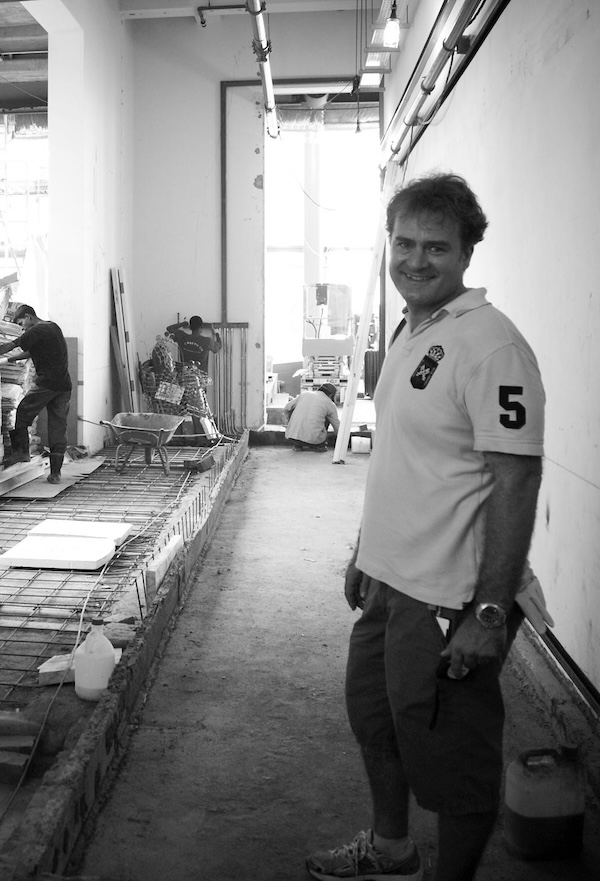
MB: The first major challenge was simply getting the brewery in place. The equipment was far too big for the service lift, and at one stage, we even looked into using a helicopter. In the end, we had to build a crane on the site itself, bringing it up in pieces and even removing part of the façade—the window front—so the arm could extend out. Everything was then lifted 150 metres from the street and carefully arranged on the balcony in the right order for assembly. It was quite the operation, and kudos to the landlord, too, for agreeing to bring eight tonnes of equipment up beside a glass front spanning 34 stores.
The second challenge was that in 2010, Marina Bay Sands and the Financial Centre weren’t open yet, so we were the first tenants in a completely new area. Few people knew the location, and our side entrance didn’t help. Over time, though, once guests experienced the view and the concept, we gradually built a steady base of regulars.
ESQ: How do you keep the dining and brewing experience fresh for both locals and international visitors?
MB: We’ve managed to build a strong base of regulars, both expats and locals. Just yesterday at lunch, I noticed only two Westerners in the other dining area, so it’s clearly not just an expat spot. On weekends, guests come from across Singapore. The location is stunning, of course, but that alone isn’t enough; you need the right concept to match it. People say the three rules of a successful restaurant are “location, location, location,” but I believe it’s having the right concept and place together.
Normally, you’d expect a restaurant on the ground floor, visible to traffic. Ours is tucked away, and guests have to seek it out, but once they arrive, the concept works. Having different zones for different occasions helps, and price matters too. In today’s tougher economy, value for money is key, especially for locals. Tourists may visit once for the view, but true strength lies in building a loyal local base.
ESQ: Having a world record didn’t hurt either.
MB: Being the highest brewery in a building and holding a Guinness World Record is a great hook to draw people in. It makes people think, “We’ve got to see this place.” But after that, you have to keep things fresh; we usually change the menu twice a year to check what’s selling and what’s not. Since Covid, we’ve expanded the wine list and added a mixologist, as cocktails have become increasingly popular, especially with the younger crowd—like people from the tech companies. So it’s about constantly tweaking what we offer, keeping an eye on the details, and maintaining the restaurant itself. In a fast-moving city like Singapore, where people see trends from around the world and new concepts appear all the time, you can’t afford to sit back.
ESQ: How did you feel when you first received the world record? Was there any pressure?
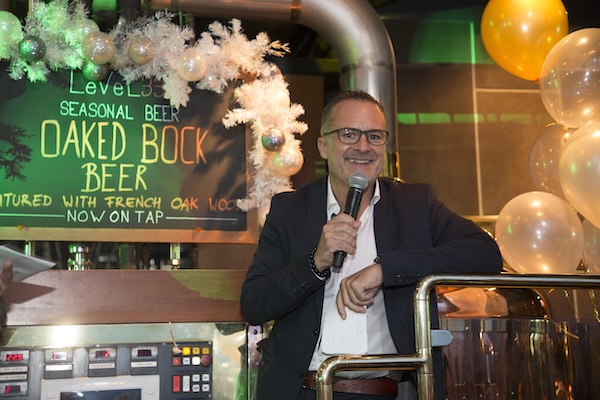
MB: No pressure at all. While we always knew we were the highest brewery, getting the official Guinness certification is a nice milestone, especially as we celebrate 15 years. And especially now, with F&B in Singapore being a little shaky, to put it mildly, having another unique selling point to add to the mix for promoting the business and catching the attention of the media and online platforms is very helpful.
ESQ: You said the F&B scene in Singapore feels a bit shaky right now. Do you worry about where things might be heading?
MB: Fear? I would say no. I’ve been in Singapore since 1999, always involved in F&B either as a supplier or as an operator, and I honestly can’t remember the economic environment ever feeling this shaky for restaurants and the wider industry. We’ve always tried to evolve and stay current with what works and what doesn’t. Still, if there’s a serious economic downturn, it will be challenging for everyone. Unfortunately, the signs aren’t very positive, with trade wars, tariffs, and the big shifts in technology, including AI. But I believe the personal experience will only grow in importance, which gives us the strength to weather the storms that seem to be on the horizon.
ESQ: What do you look for when bringing new people into the team?
MB: What I’ve learnt is that, apart from certain roles like brewmaster, attitude matters far more than experience. You need to enjoy what you’re doing, enjoy working with people, and enjoy giving guests a good time. That’s really our motto. If you have that, the rest can be taught. We’re not brain surgeons, after all. Of course, some jobs require technical skills, especially in the kitchen, but even there, we’ve had people start out as food runners or stewards and work their way up to junior chefs by growing into the role. With the right attitude, you can go a long way.
ESQ: Could you share one part of the process that the public might not be aware of when you curate the experience?
MB: I once mentioned this to a journalist from BT Lifestyle. A simple example is the placement of our host desk. It used to be right at the entrance beside the lift, so guests were greeted immediately and shown in. We timed the difference with a stopwatch, comparing the desk at the lift with its current position. On average, it saved around 40 seconds per trip. That may not sound like much, but with roughly 400 guests a day, it quickly added up to a significant amount of unnecessary walking for the hosts and longer waiting times for the guests.
There was also another, subtler effect. When the desk was by the lift, guests would rush straight to their table or the balcony, often passing the brewery tanks without a second glance. Now that the desk is set back about 25 metres, guests naturally pause, observe the tanks, and absorb the space. The same principle applies to back-of-house operations. For instance, when supplier receipts arrive, chefs simply photograph them, and our AI platform scans and uploads the data directly into the accounting system. It still needs a check, but it eliminates tedious manual entry.
Other details are more architectural. The raised floor ensures that guests seated inside can still enjoy the view, even when others stand outside. Mirrors are positioned so that from any seat you can catch a glimpse of the bay. Individually, these details might go unnoticed, but together they create the feeling of being truly well looked after. As Howard Schultz once said, “retail is detail,” and I wholeheartedly believe it.
ESQ: How important is sustainability in LeVeL33’s operations, from brewing to food sourcing?
MB: For me, sustainability is incredibly important, and I think it matters to all of us. That said, I do feel a little concerned because with everything happening globally, it has slipped further down the priority list compared with a year or two ago. I grew up with sustainability in Austria, where decades ago we already separated waste at school. Arriving in Singapore, I was shocked that nothing was sorted, not even batteries.
Most of our tables are made from reclaimed Singapore African mahogany, and the aim is to eventually use it across the whole venue, though that will take time. We work with local artisan carpenter Arthur Zaaro, who sources wood from national parks when trees are cleared and repurposes it into furniture. We’ve also partnered with local suppliers to reduce our impact. In our first year alone, we cut electricity usage in the kitchen by 23 per cent by installing sensors that automatically switch exhausts on and off. Ingredients are sourced as locally as possible: our green leaves come from greenhouses in Lim Chu Kang and Kranji, and spent grains from the brewery are reused in bread, pasta, and even for ageing meat.
Sustainability is also part of the story we share with guests. Rather than presenting it as a polarising label, we make it personal. We explain that the tuna is line-caught or the beef is pasture-raised, which sparks curiosity. Recently, we upgraded our air-conditioning with sensors that regulate temperature and humidity, reducing energy use while keeping guests comfortable. We are currently working towards B Corp certification, which would make us Singapore’s first restaurant to achieve it. For me, it’s about more than business; it matters to our staff, particularly those with children, who worry about the world their kids will inherit.
ESQ: You wear many hats as an owner, MD and entrepreneur. What does a typical day actually look like for you?
MB: No two days are the same, and that’s what I enjoy about this industry. Running a business like this means handling everything from HR and logistics to marketing and guest issues, often unpredictably. I usually spend part of three days a week at the office in Delta House and visit the venue around four times a week, depending on events or dinner service. Each day is different, and that variety is what makes it enjoyable.
ESQ: What’s the most valuable lesson you’ve learnt as a business owner?
MB: One principle I hold firmly to is the importance of staying curious and committed to learning. I’ve run this venue for 15 years and opened my first restaurant 20 years ago, yet the process of discovery never really ends. I often remind my team—though I can’t recall where I first heard it—that the cleaner should always choose the broom. The bartender knows his craft better than I do, the brewer understands the kettles inside out, and the steward knows the most efficient way to keep the facilities spotless. Respecting their expertise and learning from those who work hands-on each day is vital. I’m also part of the Entrepreneurs’ Organisation, a global network focused on growth. In recent years, I’ve taken courses in design thinking at INSEAD, nutrition science at Cornell and Stanford, and a green economy certificate at SMU—possibly more that I’m forgetting.
Equally important is the ability to step back from your own ideas. If something isn’t working, you must accept it. Feedback in our industry is immediate: change a menu item, pricing, service style, or workflow, and guests respond straight away. While staff in Asia may hesitate to give negative feedback, it is essential. Maintaining strong relationships with stakeholders—suppliers, landlords, and partners—has also been vital, especially during Covid, when those partnerships made the difference between survival and closure.
ESQ: Outside of work, what brings you joy?
MB: I keep active with quite a bit of exercise and sport. I go to the gym two or three times a week, cycle, and play some tennis. A few years ago, I even completed a half Ironman, and I still swim regularly. Outside of that, I enjoy reading every day, usually business books or biographies, though I’ll turn to a thriller in the evenings to unwind. I think I get that from my mum. And travel is another passion; it keeps me curious and often sparks fresh ideas.
ESQ: What’s your favourite beer from LeVeL33’s lineup?
MB: It depends on the occasion, but I usually go for a lager or an IPA rather than a stout or wheat beer. Our lager is the best-seller; it’s super refreshing and easy to drink. I also like IPAs, particularly with food, as their slight bitterness pairs nicely with dishes like fish.
This interview was edited for length and clarity.