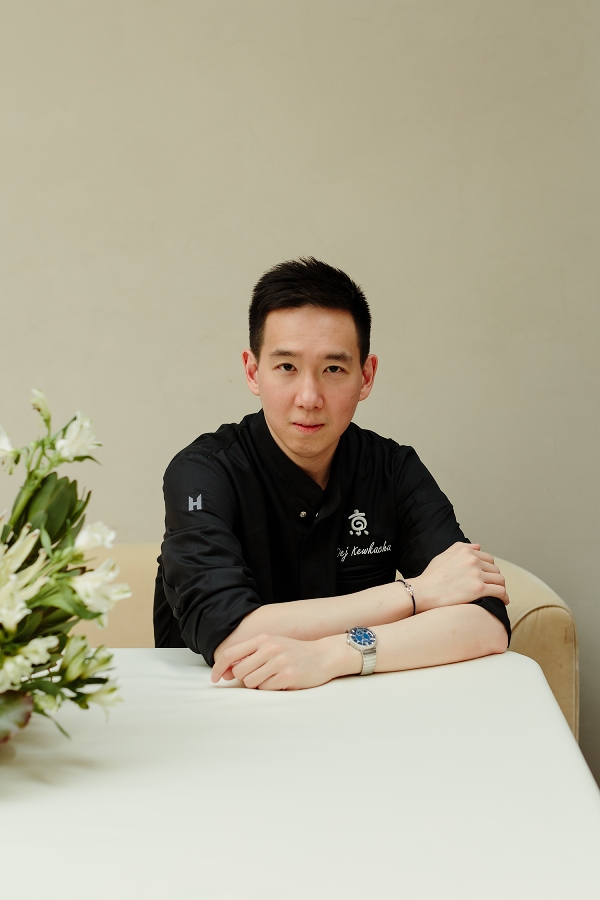
There aren’t many pastry chefs in the history of pastry chefs who have done what Dej Kewkacha has managed to do. Since beginning his journey at 22, he’s built over 50 outlets in Thailand under seven dessert and café brands—including Thailand’s most popular dessert café chain, Kyo Roll En. Weed out your faceless corporate entities and franchised giants, and what remains at the top is one man: the most successful individual pastry chef in Thailand.
You might think he’s a sharp restaurateur, a clever entrepreneur—but the truth is, he’s simply a very good pâtissier. In 2023, La Liste, the French global guide that ranks and recommends the world’s best places to eat, named him the "Best Pastry Chef Talent". Earlier this year, Asia’s 50 Best crowned him "Asia's Best Pastry Chef", the first Thai to hold that title. Here’s the kicker, though—all this, and he’s supposedly self-taught.
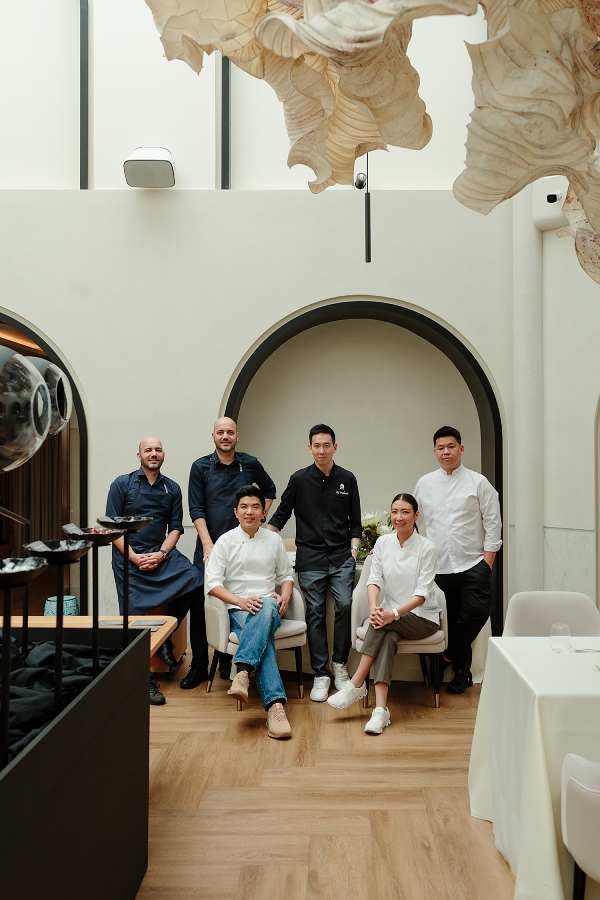
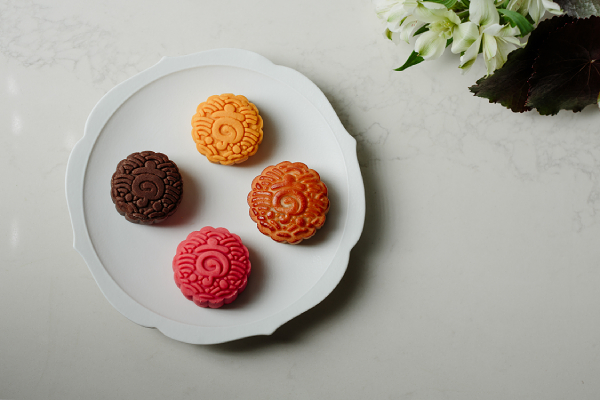
And so, as we precede the Mid-Autumn festival, we found ourselves at Restaurant Born sitting down to speak with the man, who surprisingly has a Singaporean accent due to a childhood stint in the country. It was also here where he presented an exquisite four-hands mooncake collection by Chef Thomas & Mathias Sühring (Sühring), Chef Zor Tan (Born), Chef Ton (Le Du), and Chef Pam (Potong).
ESQUIRE SINGAPORE: What was the process of Asia's 50 Best choosing you as Asia's Best Pastry Chef? How did they even choose you?
DEJ KEWKACHA: There are different regions—Asia’s 50 Best, World’s 50 Best, Latin America’s 50 Best. For Asia, it’s split into about 10 regions, each led by a chairperson for places like Southeast Asia, Hong Kong, Japan, etc. Each chairperson selects anonymous voters—chefs, media, foodies—who cast their votes. I heard there are about 300 panellists in total. Deloitte comes in to handle the voting to ensure fairness and integrity.
ESQ: What does this title mean to you?
DK: Honestly, I was surprised because I’m one of the few chefs who came from a casual background. Most chefs do fine dining first, then casual. I started 18 years ago selling SGD2 ice cream. I had studied statistics, but I wanted to do something different from my family’s tourism business. I’ve always loved food, so I went my own way. Now, from simple ice cream, we’ve grown into fine dining projects, like the Louis Vuitton restaurant where I was head pastry chef for the group.
ESQ: With this spotlight on you, does it inspire you to achieve more, or do you feel intimidated?
DK: We always want to achieve more, but intimidated—no. I’ve been in the industry for 18 years, and I didn’t chase this award. Being the first Thai to win it means I can be a role model for Thai chefs. Thailand has a rich culture of desserts beyond mango sticky rice, and I want to give it more exposure.
ESQ: You’re often referred to as a self-taught chef. How was that learning journey like?
DK: I wouldn’t say self-taught exactly, I just loved to create things as a beginner. I don’t have a sweet tooth, to be very honest. So, my desserts are often vegetable-based, with spices and unusual combinations. Without formal schooling, I had to experiment a lot. It’s harder, but it also opens you to different approaches and techniques. Without learning anything, you’re open and not limited in your mind.
ESQ: Where did you learn your recipes?
DK: I started as a foodie in the UK, eating a lot and refining my palate. My family is very serious about food—my dad only eats good food—so that trained my palate from a young age. From there, it was trial and error.
ESQ: Without formal training, have you struggled with impostor syndrome?
DK: A lot. As a pastry chef, we’re often neglected, to be honest. For example, in a 10-course menu, we only get to control two courses. We’re like the spare parts of the kitchen, the supporting cast to savoury chefs. But we’re actually really important, because the last bite a customer eats is dessert. So it’s our responsibility to make it memorable.
ESQ: What makes a good mooncake?
DK: Mooncakes have been around for centuries, but I think it’s about making what customers want. I also learned to make mooncakes based on what I want to eat. My mooncakes, for example, are more like tarts—with crusts instead of the traditional Hong Kong style. I’m not saying the traditional ones aren’t good; it’s just another approach. Using fresh, high-quality ingredients in the filling also makes them feel like specially crafted mooncakes.
ESQ: What pairs well with mooncakes?
DK: Tea, for sure. Especially hot tea, because mooncakes are dry.
ESQ: You’re known for your limitless approach to desserts. What’s the furthest you’ve gone in experimentation?
DK: Tonight, for example, I’m doing a tasting menu of five to seven courses of savoury sweets. We have a taco with Sabura Ebi combined with a milk chocolate ganache, and at the bottom, we have a caramel fish sauce. The goal is to give you the mouthfeel of a savoury spice using dessert-making techniques.
ESQ: What do you hope someone feels when they first bite into the new mooncake collection?
DK: I hope they think, “This is something different.”