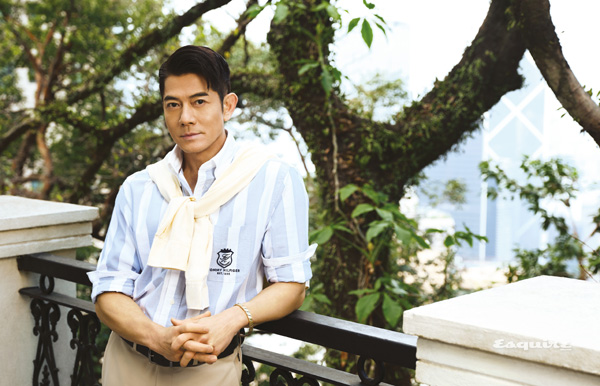
From the electrifying pulse of the stage to the ever-shifting personas he inhabits on screen, Aaron Kwok Fu Shing—Hong Kong’s eternal Heavenly King—has spent four decades redefining performance at its highest level. Now, as the new global ambassador for Tommy Hilfiger, he steps into a different kind of spotlight, one where the most radical role he takes on is simply being himself.
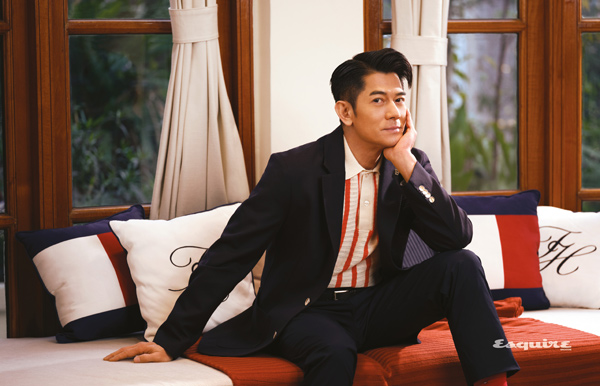
In the hushed calm of Hong Kong’s Mid-Levels, sunlight pours through floor-to-ceiling windows, falling softly on the contemporary canvases lining the walls of the Wei Gallery. Kwok has traded his crystal-encrusted concert armour for a sharp yet effortless tailored look of Tommy Hilfiger’s classic Americana—a relaxed style that blends effortlessly with the artistic ambience of the space.
This is his latest transformation: the return to the everyday.
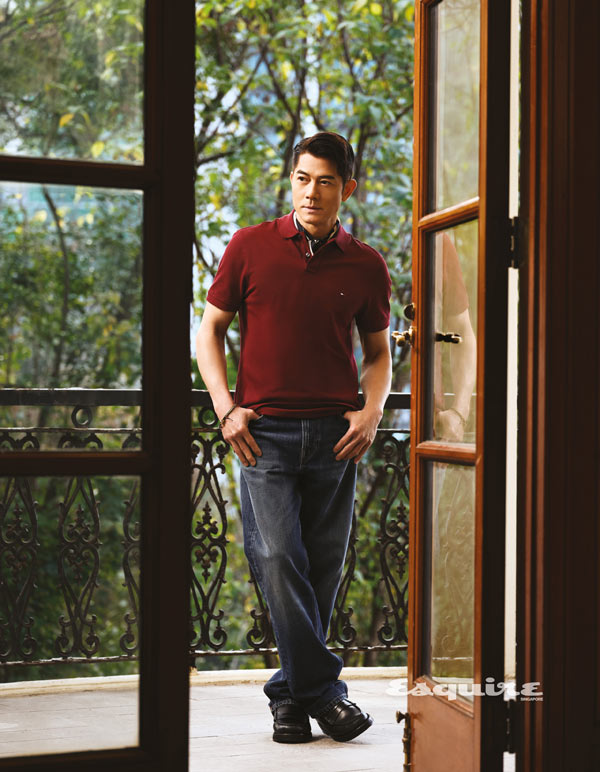
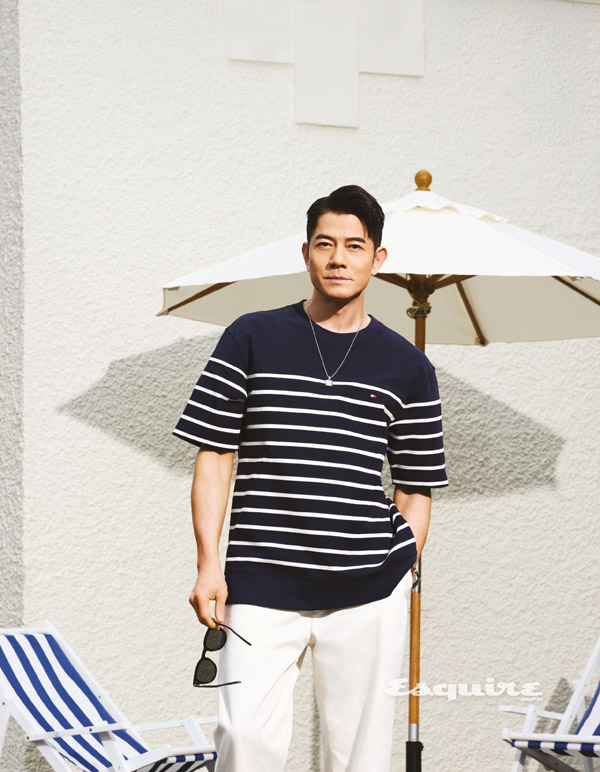
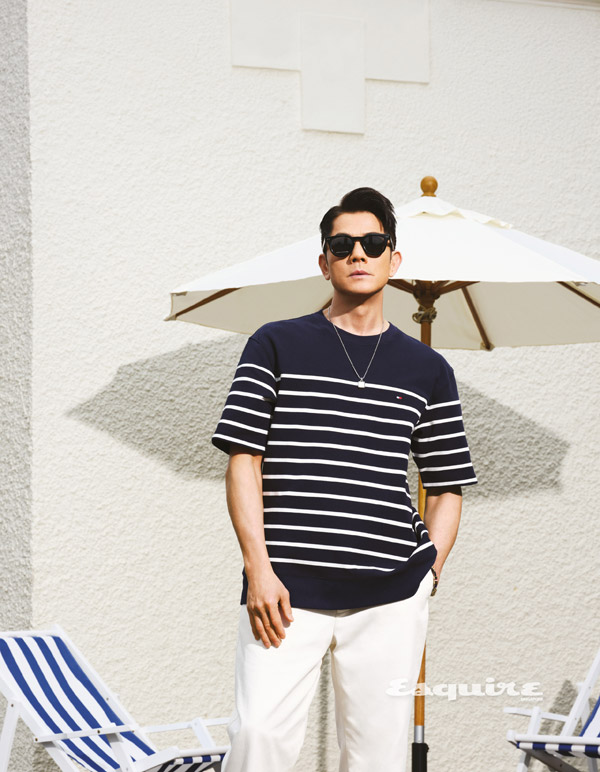
“Working with Tommy Hilfiger is exciting—not just professionally but as an alignment of lifestyles,” he says, his tone warm, unguarded. On stage, he chases spectacle; off stage, he gravitates toward restraint. “When I perform, I dress glamorously for impact. But when I’m being myself, I prefer casual. And casual isn’t careless—it’s quality with intention. The materials and style of Tommy Hilfiger reflect exactly where I am in life right now.”
For Kwok, this “casual American style” is felt as much as it is worn. “I’m extremely particular about fabric," Kwok explains. “Tommy Hilfiger’s material choices elevate their casual pieces, so even with a relaxed cut, the natural aesthetics come through. Dressing becomes a real pleasure.” He pauses, then adds, “Can clothing express where you are in life? Absolutely. And that’s something I value deeply now.”
Leaning back into a white sofa, he lets the thought settle. “After the intensity of work, when I wind down for a meal with my family or spend time with my daughters, what I need is exactly this comfort—something gentle.”
This ease may well be the truest version of Kwok: one he has come to embrace in recent years through the art of slow living. It is also, perhaps, the most fitting embodiment of his role as the new face of Tommy Hilfiger.
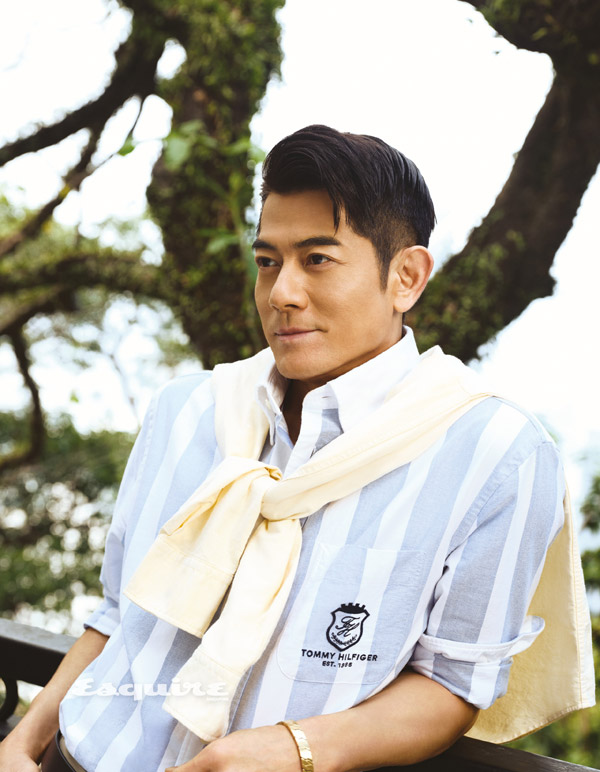
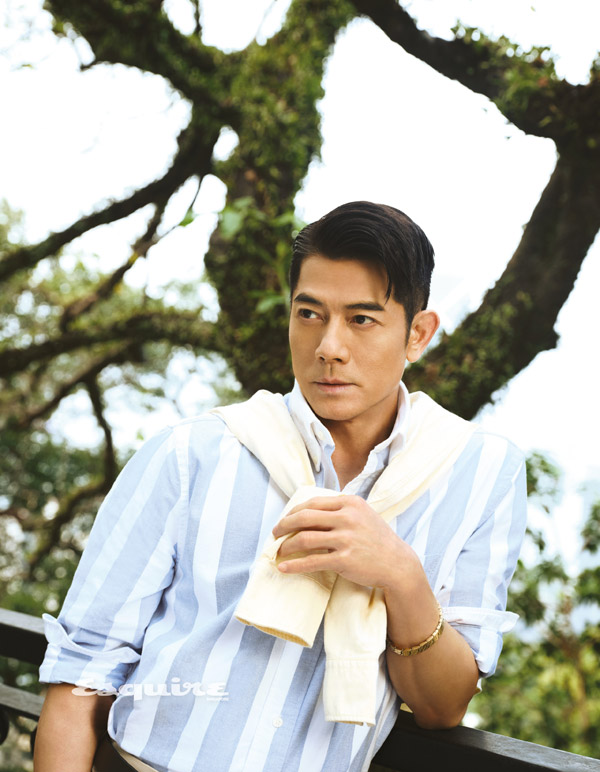
A few years ago, when this writer first met Kwok, he had just begun exploring calligraphy and painting. What started as a casual interest has since become the bedrock of his inner life. During the shoot, his eyes take on the quiet intensity of a creator as he speaks about the art form.
“For me, calligraphy and painting are creation on another level. In film or music, I need stage lights and a team—that’s collective art. But calligraphy is a solitary act. It doesn’t demand flash. I enjoy that solitude.”
A faint smile appears. “I used to love sports cars. I loved speed, adrenaline, the thrill of acceleration. But now? I love starting my mornings with a cup of coffee, sitting quietly, looking at paintings, practising calligraphy, and listening to music. In those moments, I understand what it means to be at ease. I can spend an entire day like that—this is something I didn’t even expect of myself.”
Has he considered developing a signature style?
“Every artist hopes to create something inimitable,” he says. “But that comes from work—from discipline and from emotional clarity.”
He no longer follows his teacher’s brushstrokes so closely but draws from lived experience. “I write from instinct. Like acting or dancing, it’s about expressing the emotion of the moment. I’m not chasing mastery; I’m asking whether I feel fulfilled when I set the brush down.”
This pursuit of “simplicity with substance”—simple but not simplistic—mirrors his approach in clothing: not flamboyance or complexity, but detail and depth.
Married to Chinese model and social media influencer Moka Fang, the father of three has, in recent years, come to embrace a life shaped by equilibrium. The relentless pace of his early career has given way to something more measured and deliberate.
What remains unchanged is his physical discipline and a physique that has remained flawless for a decade. His secret is not some esoteric diet, but the highest form of self-discipline.
“Routine is everything,” he says matter-of-factly. “Diet, rest, exercise and all of them in moderation. Before, life had a single focus. Now, with my wife and three precious daughters, I’ve learned balance. When I work, I give it a 100 per cent. When I unwind, I am fully present with my family.”
Even fatigue, he notes, is reframed. “It’s not laziness; it's adjustment. Exercise is essential, like breathing. During concert seasons, I push harder. Afterwards, I recover through diet and rest. Maybe I’ll take three days off, then get back to it. It’s a cycle and keeps you ready for whatever comes next.”
There is perhaps a deeper philosophy at play: strength not as a constant force, but as knowing when to advance and when to ease off—when to push, when to pause and turn inward, towards what matters most.
Even at the summit of his career, Kwok’s creative fire for performance burns strong.
In music, he’s planning a collaboration with an American choreographer, seeking new textures in movement. He is also considering a hands-on role in composition and lyric-writing, expanding what defines the “Aaron Kwok style”. On screen, his commitment to never repeating himself borders on the obsessive.
“I just signed on to a new film, Lao Zi,” he says, a flicker of excitement breaking through. “It’s a light fantasy piece. I play a father, but also a son. There’s a soul-swapping dynamic with Wang Bojie that creates these wonderfully absurd, layered moments: in the first half, I play the father; later, I inhabit the ‘son’ in a completely different register. It’s a fascinating, massive challenge, this psychological and identity shift.”
When it comes to choosing a script, only one criterion guides his choices: novelty. “I don’t want to play roles I’ve already done before, unless it’s a sequel or the script offers a major breakthrough. I want to explore more diverse scripts and acting styles, to dig deeper into the inner worlds of different kinds of characters.”
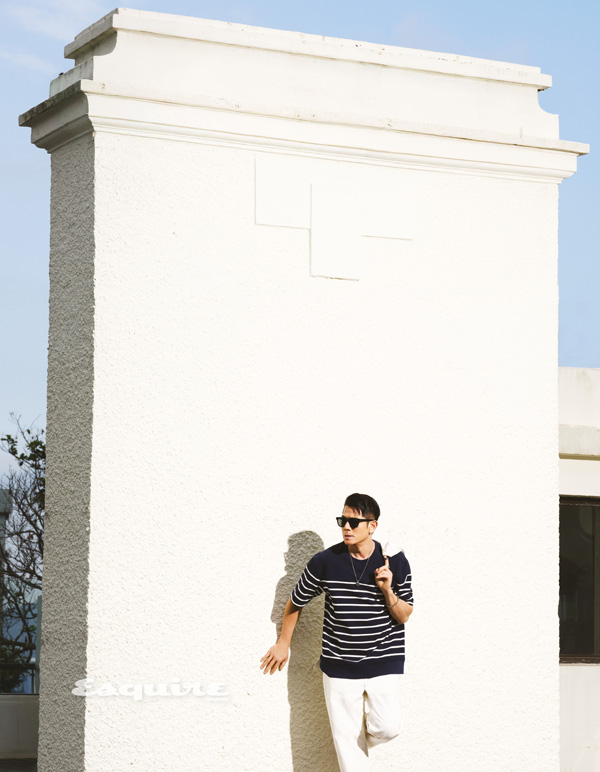
As the shoot draws to a close, Kwok, dressed in Tommy Hilfiger’s enduring classics, rests gently against the wall. In that moment, he carried two things at once: the unmistakable presence of a Heavenly King and a serene, understated ease.
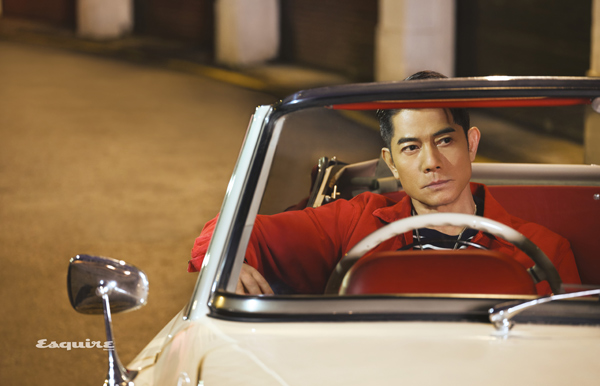
“This," he says, is "my favourite version of myself.”
Not just because he has carved out creative freedom in his career, but because he has found something rarer: a sense of inner peace, and a life filled with warmth.
It’s this quiet confidence—this ability to be fully present—that captures the timeless, generation-spanning charm at the heart of Tommy Hilfiger.
Photography: Kaon
Creative Direction and Styling: Paddy Chan, and Edward Chung
Image Direction: Man Lim Chung
Hair: Ian Wong at II HAIR & NAIL
Makeup: Terry Yu
Props and Set Design: Pinky816
Art Design: Harris, Ryan, and Cyrus
Photography Assistants: Szeto, Kai, Scottie, Alan, and Derek
Animation: Joan Tai
Translation: Tan Pin Yen