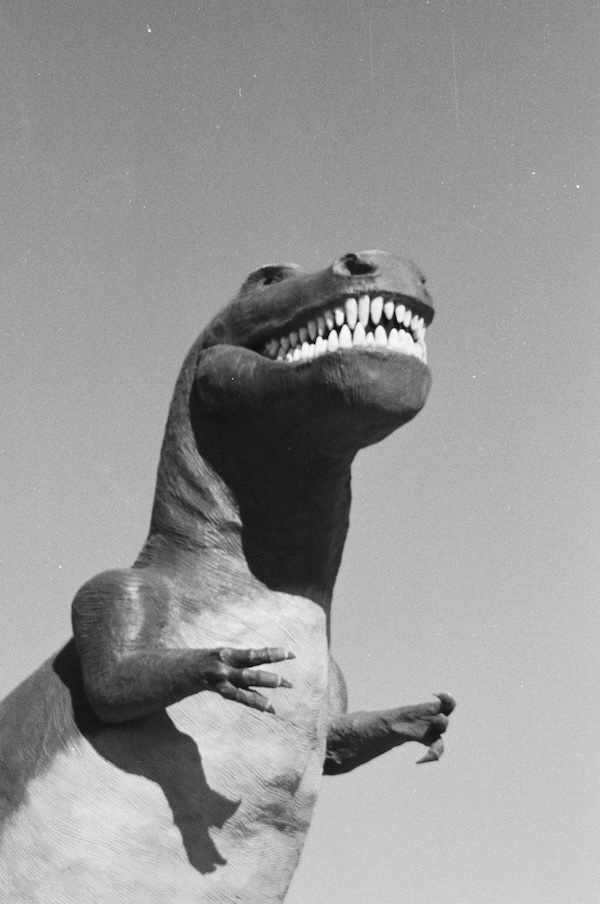
Back in 1993 a team of scientists extracted 65-million-year-old DNA from blood inside prehistoric mosquitoes that were fossilised in amber. They sequenced the genome, used frog DNA to fill in any missing or damaged genetic sequences and incubated the embryos in artificial eggs. The result? Terrified visitors to a theme park get to be chased by a hungry Tyrannosaurus Rex.
That, you’ll recognise, is the gist of Jurassic Park. It’s fiction, but might well be on its way to becoming fact, though probably without the theme park. “Most might think being associated with Jurassic Park is a curse for us, but actually that film helped educate a whole generation about this thing called DNA and how it could be manipulated,” says Ben Lamm, your normal jeans-and-T-shirt kind of billionaire—he sold a series of software, gaming and AI start-ups—and now co-founder of the Dallas-based Colossal Biosciences. And what is this five-year-old, self-described “Harvard meets MTV” operation working on? Bringing back extinct species and, through doing so, helping others on the brink survive.
In fact, it claims to have already done so, most spectacularly in bringing back dire wolves—for yet more pop cultural resonance, they’re the big white ones in Game of Thrones, last seen in real life wandering the plains of North America 10,000 years ago. More recently it has created the world’s first woolly mouse, cute but more importantly a stepping stone to its first woolly mammoth by late 2028. The company also has its sights on the Steller’s sea cow, a whale-sized manatee, and the poster child of extinct species, the Dodo... as in the phrase “as dead as a dodo”, but maybe not for long.
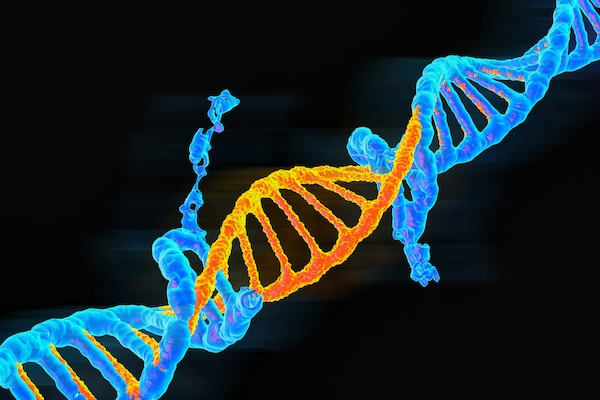
How it does so is highly complex—it involves not cloning, which requires living cells, but using advanced gene-editing methods to splice “core genes” of an extinct animal into the genome of its closest living relative, resulting in a hybrid or proxy species engineered to possess the extinct animals key physical traits and ecological behaviours. “We’re about re-building extinct species for today,” says Lamm.
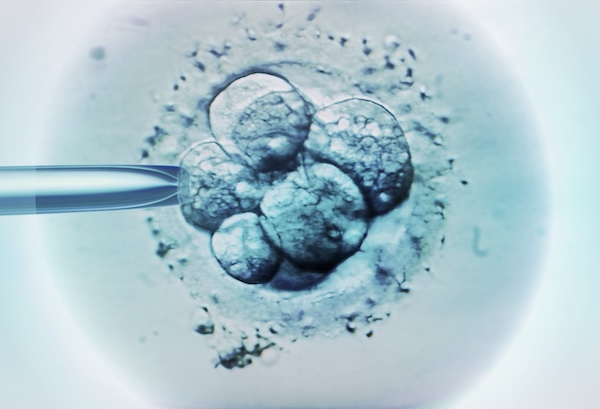
So Colossal gets busy with ancient DNA analysis—recovering it from historic specimens or fossils—identifying the right animal to act as a genetic template, using what’s called multiplex gene editing to replace standard traits with extinct ones—cold tolerance, for example—transferring the nucleus into an enucleated egg and then growing it.
Learning how to do all this has seen Colossal develop a lot of proprietary tech it’s been able to sell on the side to fund its de-extinction efforts, which is just as well, because, remarkably, all the tech it has developed towards that has been made open source. That’s in the hope it will find other applications in, say, agriculture, medicine or improved xenotransplantation—that’s greater organ compatibility between humans and pigs.
“Obviously Jurassic Park had somewhat different motivations to us,” stresses Lamm, “but it got a lot right. The fact is that we face a huge bio-diversity crisis—the cascade effects of bio-diversity loss are more important than climate change, even though it gets much less attention, even though both sides of the political divide recognise that a world with less bio-diversity is very bad, in a way you can’t get agreement over climate change”.
Of course, Lamm isn’t obtuse enough to realise that like Spielberg before him, that the very idea of de-extinction gets the sci-fi juices flowing. It’s “interesting, exciting and changing the conversation around conservation,” he says. That’s important not just to help get the message out there, but to drive investment, particularly from those high-profile names who further get the message out there. The ocean adventurer Victor Vescovo has invested, so too Taylor Swift’s beau Tom Brady and, of course, Game of Thrones’ creator George RR Martin. According to Lamm, the Lord of the Rings director Peter Jackson told him that, unlike jet packs and flying cars, “this was the first time in his life that he felt the future he was promised [as a child] could actually happen”.
So dinosaurs may yet rule the Earth again! Although, truth be told, nobody’s planning to bring back T-Rex. After all, there isn’t the genetic information available for many extinct species, most assuredly including our toothsome friend. That said, even George Church, Colossal’s co-founder, professor at Harvard and MIT and basically the granddaddy of synthetic biology—he invented the first genomic sequencing method, which helped drive the Human Genome Project, as well as multiplex gene editing—is taken aback by the pace of progress. Sure, he’d like to see easier multiplex editing and ways to synthesise the genome and the development of some kind of artificial womb. There are just so many technical challenges left.
“But why seek to bring these species back at all? Nobody is talking about theme parks, though the potential benefits to tourism are obvious. In part it’s simply in the spirit of scientific enquiry. Weirdly, wonderfully, the southern-gastric-brooding frog could convert its stomach into a womb, and when its young were ready to emerge, it would vomit little froglets.“
“But the technology is really advancing at an extraordinary, exponential rate, doubling in potential every year,” he enthuses. “I’ve seen things [come to pass] that have been called impossible and arriving decades ahead of others’ expectations. And AI is only going to speed things up more. In many cases there hasn’t been a good reason to develop the tech until now because there hasn’t been a clear need. But now there is.”
Certainly Colossal is not alone in such efforts. There’s a University of Melbourne project, for example, to revive the thylacine, aka the Tasmanian tiger, which went extinct in 1936. Michael Archer, professor of palaeontology at the University of New South Wales, has been spearheading The Lazarus Project—if ever there was a name for Michael Crichton’s next novel, there it is—another de-extinction initiative in Australia, primarily focused around the southern-gastric-brooding frog, which went extinct in 1983 shortly after its discovery. For this he’s using genetic engineering and what’s called somatic cell nuclear transfer, extracting genetic material from preserved extinct species and implanting it into the eggs of living, closely related surrogate species—cloning, in fewer words.
But why seek to bring these species back at all? Nobody is talking about theme parks, though the potential benefits to tourism are obvious. In part it’s simply in the spirit of scientific enquiry. Weirdly, wonderfully, the southern-gastric-brooding frog could convert its stomach into a womb, and when its young were ready to emerge, it would vomit little froglets. “Everything about its reproductive system is mind-boggling,” says Archer—so, who knows, understanding it might have positive repercussions for our own reproductive health.
“But while de-extinction is, broadly, another strategy for maximising bio-diversity, with other specific species it’s because they have a demonstrative ecological importance,” he adds. “Pull all the grey wolves from Yellowstone Park [as happened in 1926] and you find the ecology collapses, so you have to put them all back again [in 1995]. The loss of the thylacine has had similar effects. The critical idea of de-extinction to me is recognising which parts we need to act on”.
While bringing back the woolly mammoth may or may not make any sense—perhaps it could help restore the grasslands long lost to Siberia, which in turn might help tackle climate change—it would at least have what Archer calls the “you’ve got to be kidding me factor” that would help many to get beyond their scepticism over the whole idea of de-extinction.
But unquestionably not everyone in the scientific world is on the same page with the idea at all. And, according to Lamm, “most media just sells the doom and gloom story”. Arguments include whether what Colossal is doing is even really de-extinction, so much as creating animals similar to but different from the extinct ones they reference—are Colossal’s dire wolves really dire wolves or ersatz, designer versions, and, if the latter, does it matter if they perform the same ecological function anyway?
“We don’t necessarily want to bring back exact copies,” suggests Church. “An exact copy of a mammoth, for example, wouldn’t be resistant to the strain of herpes that’s killing off Asian elephants today. In fact, we might need to change [a de-extincted species] so it was resistant to illness or suited to a changed climate to prevent it going extinct again”. And that’s especially the case if the original causes of extinction aren’t addressed as well of course.
There are questions about the money; wouldn’t what Lamm and co are spending on their science be better spent directly on conventional conservation efforts? And then where, should an animal—that woolly mammoth, for example—be brought back from extinction, could it be put when its habitat and food sources may be long gone too? Then, to build a sustainable population—another counter-argument goes—you’d have to work from a very small, invariably incestuous, gene pool, with all the genetic risks that comes with that, though Colossal argues that the genetic diversity that allows for sustained inter-breedable populations is already baked into its processes.
“The fact is species go extinct all the time—thousands every year—and that’s the way of evolution,” argues Arthur Caplan, professor of bioethics at the New York University Grossman School of Medicine. “To reverse that process is unnatural—it’s trying to bring back species that should have gone extinct, because they weren’t up to the challenge of competitors. Even if technical challenges could be addressed I think you’d just end up with a few animals in a zoo, or open to poaching—and neither proposition is good for the animals”.
Don’t get him wrong: Caplan is not all about animal welfare as an end in its own right in all cases. “It depends on the species—if we could get rid of the malaria-bearing mosquito, then goodbye,” he says. “Yet this talk of de-extinction may be attention-grabbing, and may bring in investors, but it’s too distorted. Partly I think this is about human guilt, a need to right a perceived wrong—we’re more aware of nature’s presence now, our impact on it and are more concerned about protecting it. But we also have a slightly Disney-fied idea of nature too. It’s not as nice as we might think”.
But not, Archer contends, is it as self-regulating as we might think either, as comforting a notion as that is. We need, he suggests, to think of species extinction (which, while they occur daily, are happening at an accelerated rate thanks to human impact ) as taking a leg away from a stool. “And with each leg gone ecological stability gets more fragile,” he says. “Sometimes that causes cascades of further extinctions downstream, some of which we may take decades to appreciate. Sure, when species are lost in a natural way they [eventually] tend to be replaced by others that do their job better or in different ways. But that’s when they’re lost without human impact”.
“Even if you’re atheistic it’s possible to believe that humans shouldn’t have the power to do certain things. Though, speaking for myself, I think humans should take full advantage of the powers we have, while being constantly reflective about those powers, adaptive in the way they’re regulated and so on, in the way we have all sorts of agreements to limit, say, nuclear weapons.”
- Robin Alta Charo, professor of law and bioethics at the University of Wisconsin
But, he suggests—and Caplan agrees—this new genetic technology need not, and should not, be limited to bringing back the dead, so much as to conserve species very close to extinction, like the Northern white rhino or, increasingly, both African and Asian elephants, or tigers, or some species of shark, from which genetic material could be taken. This is also part of Colossal’s plan, even if this can seem overwhelmed by all the Jurassic Park-style hoopla. “For me de-extinction and conservation go hand in hand,” says Lamm.
Indeed, when discussing the matter with ecologists, Archer has found that their main concern is often that the technology will set back conventional conversation: why bother with that, when there’s this gene-wrangling tool box that can be pulled out any time to just bring a species back? “But I think we’ll find that the tech will prove enormously important to conserving species still with us,” he says.
Besides which “conservation needs a good rallying cry right now,” adds Church. “Not the ‘everything is going to die, it’s just a question of when’ one, so much as the idea that maybe we can bring a species back if it does die out”. That’s not to rely on the tech. But having a bio-bank of every keystone species would be to provide “a more encouraging narrative”.
It’s not just ecologists that need convincing though. As Archer puts it, “there are a lot of neo-phobes out there who think all this is the work of the devil”. These are, he suggests, the same people who objected to IVF when it was first introduced. Regardless of the scientific community’s debate on whether this genetic tech is in the utility of de-extinction or conservation, carrying the broad public—and hence governments and regulators— may yet prove tricky. “After all,” says Church, “we’re all anti-tech until the proven benefits outweigh the risks. I’m anti-tech by that definition. Society changes but there always needs to be a strong proof of no harm”.
Clearly any genetic manipulation has a complex ethical dimension, while society has a track record of particularly intense squeamishness about anything related to it. That’s from eugenics—naturally, enough, one might suggest—to GMO foods, “a squeamishness that exists even in the scientific community to some extent,” suggests Robin Alta Charo, professor of law and bioethics at the University of Wisconsin, and who has acted as an ethics advisor to Colossal.
In large part, she suggests, this is because the scientific community has done a bad job at countering the dominant idea that “genetics are determinative in all situations, that genes are destiny”, when in fact they’re subject to interaction with the environment. There’s also, she says, “a misperception about the power of genes that invites concern at any kind of manipulation, the idea that it’s unpredictable and so dangerous”.
Genetic manipulation in human reproduction butts up against religious issues, while in foods it brings up questions of what’s natural or unnatural—though we also manipulate foods in ways, the likes of hybridisation, which are far less predictable than through genetics. And, as Charo points out, we tend to be just fine with genetic manipulation if it has a curative role in medicine, as it does. Then there’s also the big picture religious concern that any kind of genetic manipulation is “playing God”, exemplary of human overreach. Yet this position even varies between faiths: Judaism, for example, views its deity as somewhat distant, leaving humankind with the obligation to repair the world as best it can. Lamm too believes “we should take pride in the stewardship of the planet”.
“Even if you’re atheistic it’s possible to believe that humans shouldn’t have the power to do certain things,” says Charo, “though, speaking for myself, I think humans should take full advantage of the powers we have, while being constantly reflective about those powers, adaptive in the way they’re regulated and so on, in the way we have all sorts of agreements to limit, say, nuclear weapons. But we should also accept that we can’t [use those powers] without making mistakes and that you’ll still get rogue outliers”.
She cites the highly controversial work of Chinese biophysicist He Jiankui, who in 2018 claimed to have genetically edited human embryos which were then brought to term—to universal condemnation by the scientific community and in violation of Chinese biomedical regulations. And while he proposes it more as a thought experiment, Caplan argues that if you de-extinct animals, what’s to stop the de-extinction of archaic human species, the likes of Neanderthals? “The point is that the time to think about that possibility is now, not when it becomes possible,” he says. “Because we would do it—out of curiosity, or hype or arrogance”.
“The lack of humility before nature here staggers me. Genetic power is the most awesome force the world has ever seen yet you wield it like a kid who’s found his dad’s gun. Your scientists were so preoccupied with whether or not they could that they didn’t stop to think if they should”. That’s Ian Malcolm, as played by Jeff Goldblum, objecting to Jurassic Park in the movie—and many will think his point stands. Like real scientists in this field, or challenging it, he even draws the distinction between using technology to conserve a species almost driven to extinction by “deforestation or the building of a dam” and reviving one that, as he puts it, “had their shot” and was selected for extinction by nature. Life, it seems, really does imitate art.
“But, you know,” laughs Lamm, “I do often find myself having to remind people that Jurassic Park is a movie and a dystopian movie at that”. Colossal’s ending, he insists, will be very different.