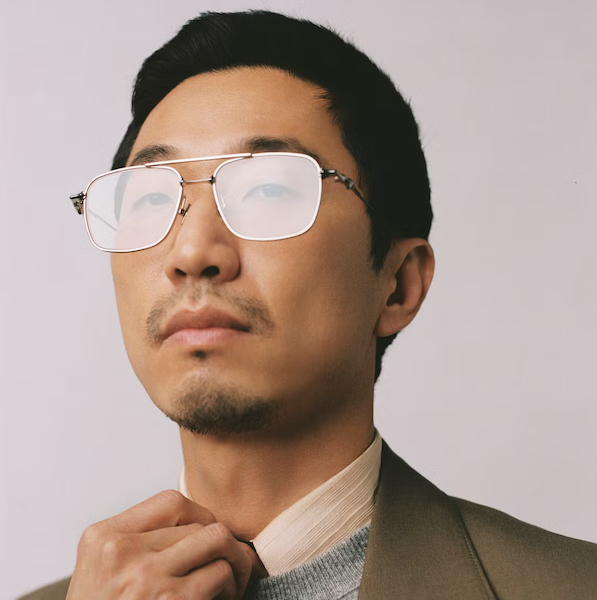
Lee Sung Jin thinks about cycles. The Beef creator knows how life loves to give us different flavours of the same problem, over and over again, even when we think we've figured it all out. How every generation faces similar challenges—no matter how said generations love to punch up and down to another era—because money, family, and work always tend to get in the way of a happy life. And if, along the way, you happen to find a shred of peace? Well, another cycle is right around the corner.
So is there any hope of breaking the cycle of cycles—or a way to pause it all? For Lee, there's hope in the eyes of his one-year-old daughter, who was born in the middle of shooting Beef season 2."Time stops when you're with your kid," Lee tells me over Zoom, about a month before Beef's return to Netflix. "This season of Beef is so much about cycles and this eternal trap of samsara that we're all in. And you look at your kid, and there's hope, you know?"
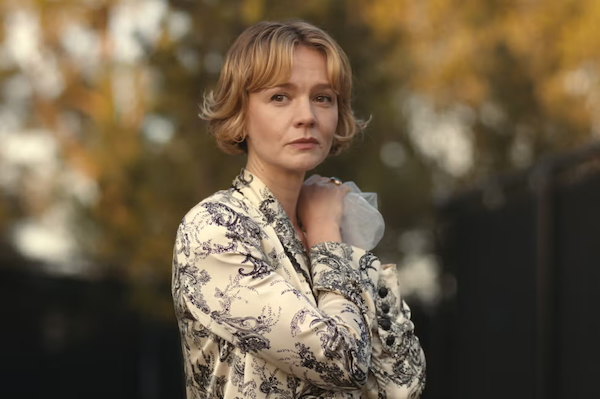
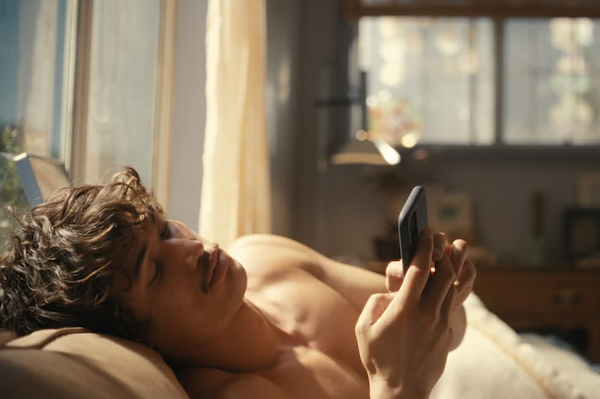
Life, death, samsara—it's all fair game for Lee. The 44-year-old screenwriter and director, who made his name in Hollywood with writing credits on comedies like Dave and Tuca and Bertie, has now graduated to cowriting Marvel's upcoming X-Men film. But he announced himself as a preeminent social satirist in season 1 of his 2023 Netflix anthology series. It starred Ali Wong and Steven Yeun as two road ragers who forge an improbable connection, which found him hoisting trophies on countless awards-show stages in 2024. Last week, Beef returned with a fresh story and all-new beefers, played by Oscar Isaac, Carey Mulligan, Cailee Spaeny, and Charles Melton. This season follows two sets of couples—country-club dwellers Josh (Isaac) and Lindsay (Mulligan), as well as broke Gen Zers Austin (Melton) and Ashley (Spaeny)—who beef when the younger pair accidentally catch their older counterparts nearly coming to blows in their home.
He manages to give audiences the best depiction of modern love in recent memory, showing how a crumbling Gen Z relationship isn't all that different from an elder-millennial husband and wife polishing their prenup. That would've been enough to fill season 2's eight episodes with plenty to talk about with your significant other, but Lee layers on some good old-fashioned shots at our capitalism-soaked lives for good measure—i.e., whether you're working at a bougie country club or trying to make it as a fitness instructor, cash rules everything around you. Add an existential crisis (or four) to the mix and—speaking of cycles—Lee once again has the best TV show of the year.
"The American dream is slowly evaporating," Lee says. "No one in power seems to care. So while members of country clubs can live in their own bubble, you got this millennial and Gen Z couple that are just scrapping so hard to just even get a little bit of that bag. It comes at the cost of their relationships and their morals. At this point, with where the world's at, I don't even think you can point fingers at the individual anymore. You do have to take a look at what we've created."
Below, Lee and I spiral down his superb second season of Beef, from why Hot Chip is the perfect band to soundtrack an existential crisis to why everyone—even you—is a scam artist right now. This conversation has been edited and condensed for clarity—and includes spoilers for season 2's ending.
ESQUIRE: I need to know why Hot Chip is the millennial midlife-crisis band.
LEE SUNG JIN: I've gone to so many music festivals as an elder millennial over the years, and Hot Chip has soundtracked so many amazing moments in my life. We talked to LCD Soundsystem—we talked to some bigger indie electronic bands. Hot Chip is in the sweet spot of having banger after banger, but they're not as well-known as they should be. It felt like the perfect bull's-eye of a band that Troy could call and have them show up within 24 hours, while also being some of the best indie dance music I've ever heard.
It's so funny, because you're right—Passion Pit is a little too mainstream, but Animal Collective is too obscure for people.
Yeah, exactly. Oscar [Isaac] and I had so much fun bonding over music this season, because in an early draft, his character originally was actually more into acoustic folk and covers. It was originally the Lumineers that showed up. I had this whole scene written around "Ho Hey," which was so funny to me. I had all these needle drops that I wanted to use. Do you remember the acoustic cover of Outkast? "Hey Ya." But then talking to Oscar, we realised he already did that in one of the best Coen brothers movies [Inside Llewyn Davis]. So I was like, "Okay, we can't see you with an acoustic guitar."
It's not all that fun getting to an age where more TV creators have your references and they're all bull's-eyes.
One of the Beef writers I've worked with over two seasons, and I produced his movie Lurker—Alex Russell—we always talked about The Sopranos needle drops. Why did they make us feel this way? And why did David Chase choose these songs? And then Alex was like, "That song is just like Hot Chip to you." David Chase was younger making The Sopranos, and he was just pulling his deep-cut Hot Chip songs.
At the core, for Beef, I'm always almost taking an aim at myself.
Tell me a little bit about how you landed on season 2's story.
I was in my neighbourhood and there was—as Josh says in the show—a heated debate from a house that caused a stir in my neighbourhood. What I found fascinating was all the differing reactions from my neighbours, and also my peers and writers. It really felt like the younger couples were just very much in the vein of Oh my, you should call the police. And older neighbours and couples were all just like, "It's a Wednesday night." I thought that was so funny. And then also it made me reflect about my own life.
I remember the hubris of me as a 26-year-old writer on his first show, looking at older writers and their relationships and being like, "Oh, I, I'd never stay at work past 6pm. This person must hate going home. I'd never do that." Cut to me at 3am on the Beef postproduction. So I thought, Okay, that's something. I've seen shows and movies talk about marriage—solely about one couple—but I haven't seen four Russian nesting dolls of couples that cover the four seasons of marriage and relationships.
I want to talk about Austin first—you show a lot of restraint with his character, showing that he's working through childhood trauma, and yet you don't fully go there.
Thank you for calling out the restraint. That was a big debate. Fun fact: We actually shot a scene where he is on the phone with his mother. And you see his scars from being hit as a child. And it stayed there for a while. I ended up ultimately cutting it because of exactly what you're saying.
You say a lot this season about what leads us to our romantic partners—and how it's so often the wrong person.
For us, the writers and my collaborators in the cast, this show is born out of so much sharing and confessionals. Not just for everyone's individual lives but from people's families, their relatives, and their best friends. There [are] all these truths that everyone's vomiting into this pot. My job is to keep those truths very sacred, but then try to melt them down and not copy-paste them into the show, but distil it into the root of why they felt that way and what interpersonal dynamics led to that feeling. We spent so much time talking about so many people's real lives. It makes me feel glad that we spent the time making sure that the underneath felt authentic.
For me, at least, the underneath felt like the entire point of this season.
That's something that Oscar said a lot on set. There's one interview during Frankenstein where he was talking about how it's really hard for him to go from Guillermo [Del Toro]'s operatic dialogue to then, like, in Oscar's words, the stupid minutiae of Beef. And what Oscar often said was that the show isn't really about the words. It's really not even about what's happening. It's about what's in between those spaces and what's underneath all of that.
It does require a lot of trust amongst the collaborators to be like, I'm saying these things, and they're so dumb. But I need to trust that underneath there is this wave that is pushing us towards the thing that we all talked about and agreed on. It takes a group trust. One person starts to distrust, and the whole thing falls apart. I'm very lucky to have a cast and crew that fully trusted the whole way.
Did you feel like you were, in a broad sense, taking aim at modern love?
At the core, for Beef, I'm always almost taking an aim at myself. I see a little bit of me in all the characters. And something that I talk a lot about with the cast is this sort of Jungian shadow self that Beef resides in. That is probably why I dive so hard into this show, because it is really important to sort of exercise your shadow instead of ignoring and repressing it. You almost have to look at it dead in the eyes and then accept it. You gotta hug your shadow. And so a lot of this stuff is just taking aim at my own shadow.
It all resides under this umbrella of capitalism that cannot be ignored in this day and age. We didn't want to come at it directly, because then it gets a little preachy. As a group of humans, we have yet to find anything that works well: socialism, communism, capitalism. They all have their pros and cons. … I do want to show how this system that we're all under is directly affecting even the microscopic ways we interact with each other.
It's funny you say that, because I remember thinking that midway through the season: He understands that everybody's scamming right now.
It's these little pieces of dialogue in both seasons that are literally just me venting to the room and a writer just grabs it. In season 1, it's when Ali Wong's character is talking to her husband in the gallery of chairs and she's like, "Who's gonna buy Amy something?" That's literally a rant that I did and just replaced Amy with Sonny. This season it was Josh being like, "Everybody's scamming!"
More so than season 1, there's an existential-crisis vibe to season 2. Could you talk about that a little bit?
When you're covering like four seasons of life through a show, time and death [are] almost like an invisible main character. I certainly feel that in real life—I cannot believe my daughter is turning one... For me, that's what makes Beef special. We go a little deeper into that spiritual space.
Originally, our season 2 finale did not have that final shot. That was a reshoot. Originally, as scripted, it was after Chairwoman Park [gave] her long monologue about how, even though she's a billionaire, she's filled with regret and basically became her mother. And then she put her head on the grave, and we had ants crawling over her face. She gave such a great performance, but we were just like, Something about this doesn't feel right, and I'm not sure why. It wasn't ending with one of our four main perspective characters. And then it felt like the show was saying, "Life sucks." That's not really how I want to express myself. And so I was racking my brain trying to think of a simple way to add a deeper spiritual angle to this finale.
On my phone, I just have so many saved paintings of samsara with the god of death holding it. I always look at it for inspiration, just creatively. I thought, What if we actually literally visually did that? And everyone thought I was crazy at first. It came together literally in less than a week. And I've had that Phoenix song as the final needle drop since before I even wrote a single word. I can't imagine the season without it.
This might be dangerous territory, but what were you trying to say about younger generations in Austin and Ashley's story? We've seen consistently horrible portrayals of Gen Z on TV. You do something really smart by making them fight about what everyone fights about: family, money, kids.
I really wanted to make sure that Ashley and Austin, that when we meet them you feel that their hearts are in the right place. We really wanted to make sure that this Gen Z couple felt real. Sometimes with Gen Z portrayals written by older people, you're painting with very broad strokes, and you forget the human side of them. And so I really wanted to understand their characters and how they talked. And so a lot of it was just me spending a lot of time with Cailee and Charles and having four-hour conversations and just typing down little ways they spoke. If you lead with the character first, then that's how you capture the essence of these younger characters.
Past Beef, is there anything you'd like to do that you haven't done yet?
The next big thing that's up for me is I'm writing and directing a film with Steven Yeun attached. It's like There Will Be Blood meets The Informant meets Tarkovsky's Stalker. That's something that I've never done before is [to] do my own thing in film. I can't wait to be partnered up with Steven again. That'll be my next passion project.
That's awesome.
I just want to do everything. I want to do more producing. I loved working with Alex Russell on Lurker. I'd love to do two more things like that. Ultimately, in terms of my writing and directing. I want to focus on original ideas, and this movie will really be the next one.
Do you have more Beef in you?
I mean, never say never. When I finished season 1, I thought, Okay, we're probably not going to do a season 2. And I didn't really want to at the time either. Right now, I'm in a similar space where I'm very tired. Being in the Beef world is, as you can imagine with the topic matter, it's very mentally exhausting. But you never know. It just all depends on, if real life surprises me again and inspires me to write something that I'm passionate about.