
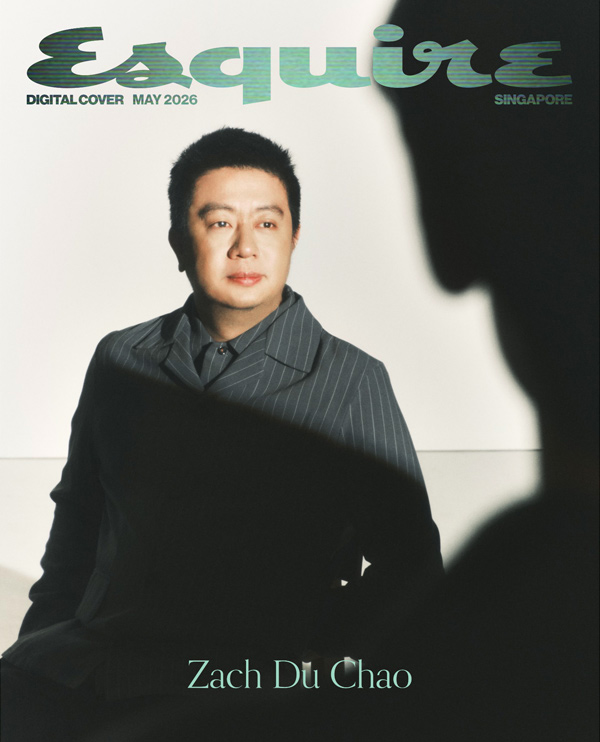
Probably somewhere at the intersection of culture, education, and international collaboration is where you'll find the Beijing-based businessman. If he wasn't involved in his current trade, that is. The strategic advisor to Singapore-based venture capital firm Felicity Ventures has always been fascinated by how ideas move across borders.
In another life, he could imagine himself deep in cultural diplomacy or nurturing emerging creative talent, particularly in Asia. At its core, the aspiration taps into the potential of how societies imagine the future.
It's not a science-fiction future we're talking about. Through his work in philanthropy and relevant interactions with affluent families, Du Chao increasingly found himself looking beyond traditional asset classes. Besides how his portfolio can reflect who he is and what he believes in, it came down to what was the future he wanted to help shape.
"For me personally, impact investing was a natural evolution from philanthropy," the 37-year-old writes over email, "Charity can help solve immediate problems, but investment has the ability to create long-term innovations that continue generating positive impact far into the future."
Impact investing is not primarily about maximising profit at all costs. Yet neither is it solely charitable cause. The goal is simple: find a sustainable balance where financial returns and societal progress reinforce one another.
Often, "returns" on such investments cannot be measured purely through quarterly numbers. For long-term value for humanity, lofty as it sounds, Du Chao presents the prospects of profit in his own words.
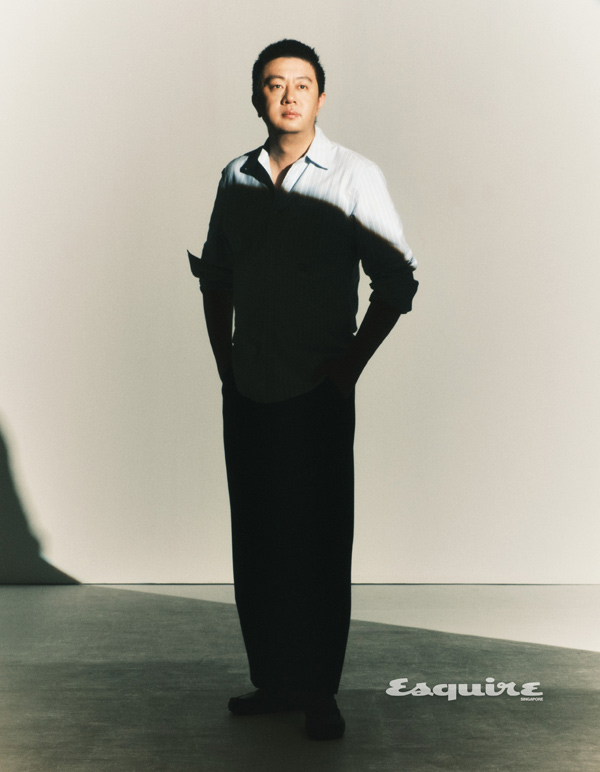
ESQUIRE SINGAPORE: What’s a misconception people often have about the job that you’d like to set straight?
ZACH DU CHAO: People sometimes assume philanthropy or impact investing is easy because, at first glance, it may seem like all you need to do is give money away! In reality, it can be even more challenging than traditional investing. You are not simply evaluating financial models. You are constantly thinking about long-term sustainability, human behaviour, regulation, technological shifts, and how industries may evolve over time.
Impact investing, much like philanthropy, requires deep research, professional discipline, strategic thinking, and difficult decision-making. You need to balance financial sustainability with long-term societal outcomes. If it were easy, institutions like the Gates Foundation would not be hiring so many highly capable people!
ESQ: Felicity Ventures is a very young firm. What makes its vision distinct from other VC players in Singapore and Asia?
ZDC: Because we are a young firm ourselves, we can take a more open-minded approach toward young entrepreneurs. Imagine if Elon Musk had pitched the idea of SpaceX in his early days—many established venture capital firms might simply have dismissed it. We believe transformative ideas sometimes require patience, conviction, and the willingness to think beyond conventional frameworks.
We are not a large institution like the Gates Foundation or KKR, but unlike those large players, we can stay patient and closely engaged with founders. Building meaningful companies takes time, especially when entrepreneurs are trying to solve difficult long-term problems. We see our role not simply as investors evaluating founders, but as long-term partners helping to navigate challenging journeys and supporting through difficult periods to achieve the best possible outcomes.
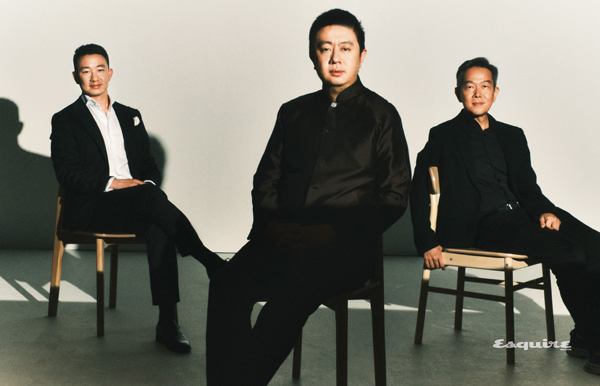
We’re a young firm, but my partners bring a wealth of experience across investing, strategy, law, and entrepreneurship. Jung Kyu Kim trained at Harvard and McKinsey before entering private equity and venture capital. He has long advocated the idea that finance can be a force for positive social and environmental impact.
My other partner, Christopher Yan, studied law at the University of Sydney and management at Imperial College London before founding a precision medicine startup and later launching his own Singapore-based family office, Lightstar Capital.
ESQ: What are some sectors that embody the kind of impact Felicity Ventures wants to champion?
ZDC: At Felicity we do not see “impact” and “profit” as contradictory. Some of the most compelling opportunities today sit precisely at the intersection of commercial scalability and long-term societal relevance. Our investments focus on transformative sectors such as clean energy and sustainable food systems—areas where positive impact and strong financial performance can reinforce one another.
For example, my partner Jung Kyu currently serves on the board of H3 Dynamics, a pioneer in hydrogen-electric aviation now based in France, as well as E Green Global, a Korean agricultural biotechnology company addressing global food security. We are now exploring a Singapore-based battery venture that could offer a safer and cleaner alternative to lithium batteries, as well as a Swedish enzyme technology company whose innovations could support healthier food.
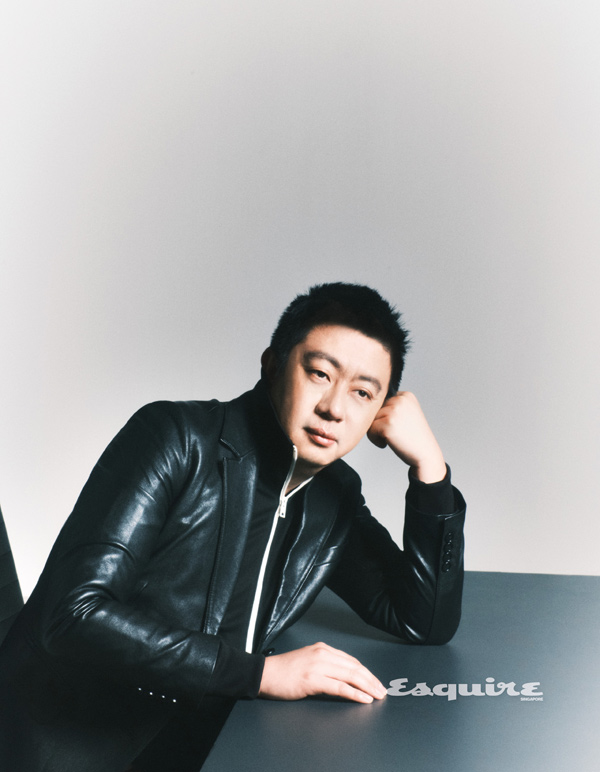
ESQ: You’ve once mentioned how the ripple effect in the field of philanthropy is transformative; and that meaningful change is the collective work of many. How can the rest of us who are not in your position look to contribute?
ZDC: Not everyone needs to start a foundation or invest in venture capital to make a difference. What matters is having the willingness to contribute and work together professionally toward a shared goal. For example, when there is an earthquake, not everyone needs to be an emergency responder. Some people help raise funds, others organise logistics, deliver food, water, and medicine, or coordinate resources behind the scenes. Every role matters. What matters is motivation from the heart.
The more people who carry that mindset, the more powerful the ripple effect becomes. Different people contribute in different ways. Some may become politicians, entrepreneurs, engineers, educators, or artists. But when people use their abilities to improve society, they influence one another in ways they may never fully realise. Positive change is rarely the work of a single individual—it usually comes from networks of people moving in the same direction over time.
ESQ: What is something you would want to see improve in impact investing?
ZDC: I would like to see more nuance in how we measure impact. It is not a one-dimensional exercise, and not everything can or should be reduced to a simple ESG scorecard. As Elon Musk once tweeted, “Exxon is rated top ten in the world for environment, social & governance (ESG), by S&P 500, while Tesla didn’t make the list.” Measuring impact is not always straightforward.
We should also be careful not to overburden young impact-driven companies with excessive short-term targets and endless data requests. Some entrepreneurs are trying to solve incredibly difficult long-term problems, and they need space to grow, experiment, and evolve.
At the same time, impact investing should remain authentic. Sometimes people use it more as branding or marketing language than as a genuine long-term commitment. Investors need to go deeper, spend time understanding founders and communities, and genuinely care about the outcomes they are trying to create.
ESQ: What do you consider your greatest professional milestones in this space so far?
ZDC: When I was younger, I was focused on entering the highest levels of philanthropy and cultural institutions. Over the years, I became involved with organisations such as The Metropolitan Museum of Art, the Forbidden City, and the Philadelphia Orchestra. As an Asian, becoming part of those circles was meaningful to me. But over time, my perspective evolved. Working with UNICEF China and supporting children shaped how I think about impact. What matters most now is not prestige, but impact.
Today, I increasingly enjoy contributing to initiatives where I can create tangible outcomes, even if the institutions are relatively young. For example, I am currently exploring ways to support the University of the Arts Singapore with the goal of fostering Asian talent within the fashion and creative industries.
ESQ: What is a personal goal outside your career you work towards?
ZDC: I constantly try to broaden my horizons by meeting new people and exploring different worlds. That curiosity is what first drew me into art and fashion. While I deeply appreciate the heritage of Western luxury—and have had the privilege of knowing members of families such as Arnault and Zegna—I am equally passionate about discovering and supporting young entrepreneurs and creative talents.
It was also this curiosity that eventually brought me into impact investing. Today, I feel fortunate to bring together different parts of my background — philanthropy, culture, international networks, and investing — through my work with Felicity Ventures alongside Jung Kyu Kim and Christopher Yan. We all come from very different worlds, but that diversity of experience allows us to approach impact investing from a broader perspective.
Interview has been edited for length and clarity.
Photography: Shawn Paul Tan
Creative Direction: Asri Jasman
Styling: Felix Woei
Grooming: Kenneth Chia using NARS and KEVIN.MURPHY
Photography Assistant: Chay Wei Kang
Styling Assistant: Shaf Amis'aabudin