
A half-hearted, albeit explosive exploration of the cost of ambition.
“I have a purpose. You don't. If you think that's some kind of blessing, it's not. It puts me at a huge life disadvantage. It means I have an obligation to see a very specific thing through. And with obligation comes sacrifice, okay?” - Marty Mauser, to the mother of his unborn child.
This piece of dialogue is essentially a distillation of Marty Supreme in sum. Loosely based on the eccentric American table tennis legend Marty Mauser, the film traces the story of one man’s ascention to the very top of the ping pong world.
We’re taken—no, grabbed by the collar—as we’re dragged through the chaotic journey of Timothée Chalamet’s Marty towards certain greatness. After losing the money he had saved to fund a trip to compete in the World Championship in Japan, desperation sets in. He had wagered everything—his hopes, dreams, debt, reputation—on not just making it to the tournament, but winning it. Of which, he has supreme confidence in doing. In his mind, all he needs to do is get to Japan, and the trophy is his. He steals and lies, manipulates the vulnerable and exploits his loved ones. When it comes to reaching his ambition, everything pales in comparison.
The film itself is structured like a ping-pong rally: Marty gets served a problem, Marty resolves it. Marty gets served two problems, Marty returns two problems. The viewing experience folds onto itself as one, messy, feverish ball of anxiety. If you’ve followed Josh Safdie’s filmography (i.e. Good Time & Uncut Gems), you’ll know exactly what to expect here.
Because of this chaos, there are quite a few loose ends that are left dangling. How did the failed business venture of orange ping-pong balls printed with the words “Marty Supreme” push the story forward, other than serve as a striking marketing scheme? But interestingly, loose ends work in favour of a film like this. It’s sloppy, careless and feels rushed—but that’s exactly Marty’s character. In this sense, the shape of the film mirrors its tone, characters, and psyche, thereby engulfing the audience completely in its world.
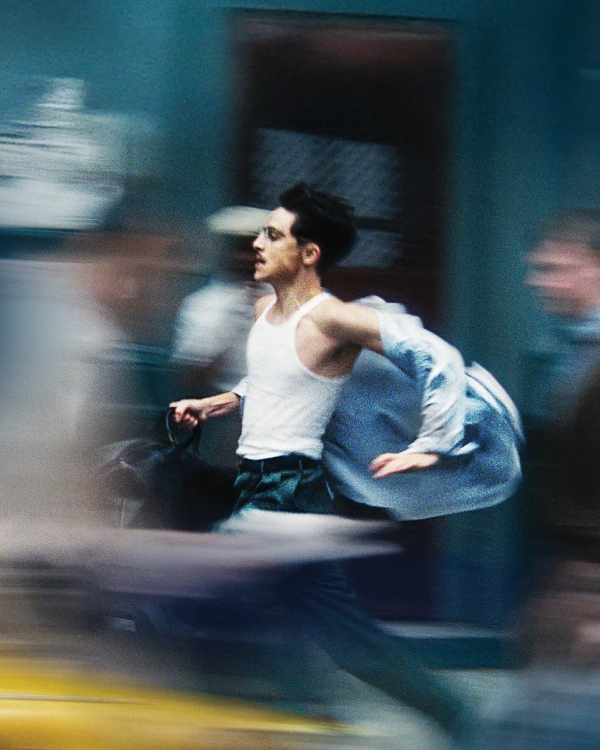
Blow after blow, we see how Marty can’t seem to catch a break, and although these setbacks push him to claw forward through increasingly despicable acts, we remain oddly connected to his experience. His decisions are indefensible, but in some warped manner, we rationalise them anyway and root for him.
We see this harmonise at its crescendo when he plays the final match against Endo in the exhibition game. The longer the game goes on, the less room Marty has to make a mistake. Pressures bloom; anxieties suffocate. Each thwack of the ping pong feels violent yet preciously fragile. This sensation forces visions of every sacrifice and betrayal to flash across your mind. Every atom in his being forms the desperation in Chalamet’s body language, and it’s screaming, “LOSING IS NOT AN OPTION”.
Amidst all the current public distaste surrounding him, we still have to give Chalamet his flowers. He manages to nail that slightly annoying, fast-talking charisma of a New York protagonist that gives serious flashbacks to a young Pacino.
When he finally sheds this hyper-masculine persona in the last scene at the maternity ward and weeps, it’s as if the entire film comes to a sudden halt. Behind those tears, there’s shock and wonder, but also regret and hope. He’d just beaten the world champion, yet he remains the same man he had been his whole life. There is no applause nor recognition, just a moment of temporary catharsis regressed into a memory. As he stands under the antiseptic luminescence of the hospital light, he finally sees the foolishness of his prideful, selfish ambition. His greatest accomplishment was never about how well he could sling ping-pong balls. It was creating those pair of eyes that are unabashedly staring right back at him.
Or so we thought.
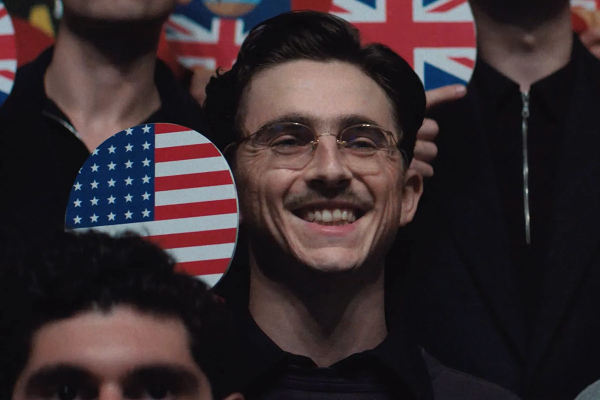
I’m all for open endings. In fact, most of my favourite films have ambiguous endings that leave room for interpretation. But I had some problems when it came to Marty Supreme’s.
At its core, Marty Supreme is a film whose central theme deals with ambition. When viewers leave the cinema, they are left to ponder what the ending could mean. But no matter how you slice it, there can only be one of two answers to the following question: Is the film criticising over-ambition, or celebrating it?
Enamoured by Chalamet’s acting in the moment, I saw the ending as beautifully set up and read that the film was, in fact, a fairly assured critique of over-ambition.
But after sitting with it for a few days, I came to a different conclusion. Despite all the despicable acts committed by Marty against his loved ones; lying and manipulating his way to greatness, there are no consequences to this behaviour. In fact, he comes away accomplishing every goal he set out to achieve. His wife is safe even after being shot, and he even manages to worm a plump baby out of this whole situation.

Without any punishment or repercussions for Marty’s mistakes, can the film really function as a cautionary tale? No matter how poignant the ending of Marty Supreme is, and how complex it gestures with its ambiguity, it comes up short and half-hearted. It tries to withhold from any easy answers, but in doing so, ends up hedging with the message it’s trying to convey.
As a result, it risks having the entire thesis of the movie being stripped away and bastardised by individuals to fit their own narratives. See Patrick Bateman from American Psycho being the modern face of the very group of men it’s trying to criticise. A true critique would, and should, take a clearer stance.
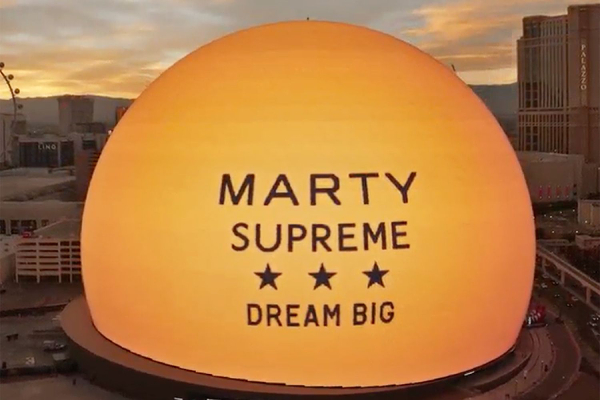
It becomes clear that the film isn’t looking to challenge ambition at all when you see its marketing campaign spearheaded by Chalamet. The catchphrase “DREAM BIG” sprawled across childhood pictures of successful athletes. Ping-pong balls, blimps and even the Las Vegas arena Sphere plastered with its catch phrase. The answers to the film are decided, and handed to the audience even before setting foot into the theatre.
Without that layer of spatial complexity that gives discourse room to thrive, Marty Supreme just becomes a flat, one-dimensional film with a cute ending. Just like every other film churned out by Hollywood, it tells the story of an ambitious, white, heterosexual man’s arduous climb to the top.
In time, it might fade into the annals of history as a film remembered more for its marketing and failed Oscar campaign, rather than the impact it left on the world.
But the true mark of its failure will come the day a community of men references the film to analogise their sigma male grindset hustle on social media. They’ll announce that they’re in their “Marty Supreme era”, as they toil upwards endlessly, chasing fleeting signals of wealth and social recognition by any means necessary to fill the void that they can never seem to satiate. But wait… I think that’s the message the film is trying to convey!
We also did not like the inclusion of Kevin O’Leary.
Pay attention to how the film's chaotic back-and-forth structure, riddled with loose ends, serves the story in immersing its audience.
Marty Supreme is now out in theatres.