When the plane landed, we started clapping.
Prior, the flight felt long, and sleep came as quickly as it left. I was seated by the aisle with an empty seat to my right, and another passenger by the window. Given the duration of the flight, it's inevitable that we would engaged in small talk. Her name is Dorjee Tso, a co-founder of Umami Condiments, and she was flying back, along with 10 other entrepreneurs, from a market mission to enter Singapore's agri-food scene. When I revealed that it was my first time to Bhutan, she smiled warmly, saying that it'd be an experience like none other.
When the plane came to a stop on the runway, applause broke the silence and engulfed the cabin. I found myself clapping along, and I fixed a sideways glance at Dorjee, who shrugged with a knowing look and offered a "Welcome to Bhutan", as though that explanation was satisfactory.
I supposed there was a good reason for the applause after the flight.
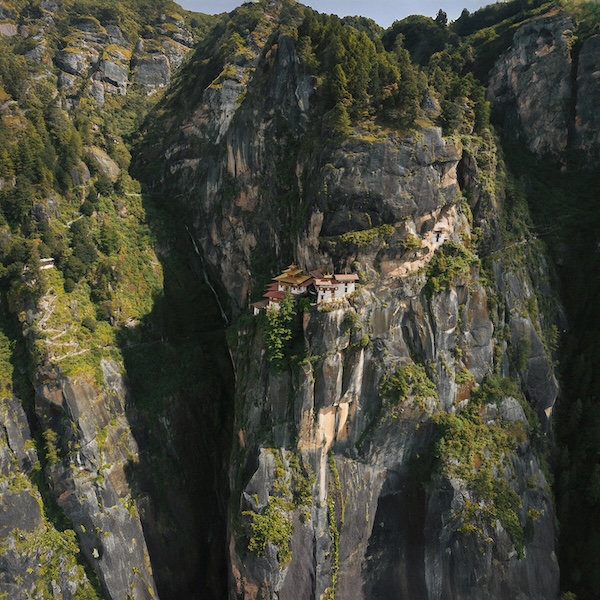
Drukair flies between Singapore and Bhutan three times a week. It takes about six hours to travel from Singapore Changi Airport to Paro International Airport in Bhutan (there's a brief technical stop in Guwahati, India). Paro Airport sits inside the Paro valley, surrounded by peaks that climb up to 4,900 metres or higher. There is no traditional straight-in runway. For this, pilots rely on manual visual navigation rather than the standard electronic instruments as they weave through ridges, while operating a series of banking turns seconds just before touching down on a short 2,265 metre runway. Due to the hazards, all Drukair flights occur in the daytime, and with good visibility.
Other than crossing the land borders connected to India, flying into Paro International Airport is the only way to enter the country. For now. Currently, Bhutan is building its second international airport, the Gelephu International Airport. Situated in the southern town of Gelephu near the Indian border, construction of the airport is led by Changi Airports International (CAI), a subsidiary of Changi Airport Group. Designed by the Bjarke Ingels Group, the airport is slated for completion in December 2029.
Gelephu International Airport serves as a capstone to Gelephu Mindfulness City, a large-scale urban development project that seeks to balance economic growth with Buddhist values, sustainability, and holistic well-being. It's an ambitious undertaking, where the city will be built from sustainable local materials like timber, stone, and bamboo.
This is where Gelephu Mindfulness City will be a hub for sustainable sectors that incorporate green tech, education, healthcare, finance, agri-tech, and spiritual tourism. As much as it is the city for its citizens, it will also be a city for visitors. Commerce is expected to soar when Bhutan fully opens its doors to the world; will what makes the country special be lost?
Let's put a pin on that. For now, let us consider the takin.
Lemme introduce to you Lama Drukpa Kuenley (he comes up often).
It is said that in the 15th century, Lama Kuenley arrived in Bhutan from Tibet to evangelise, but the people require him to perform a miracle before they would believe a single word from his lips. Lama Kuenley requested that he be fed. He required to feast on a cow and goat. The food was brought in, and the mad monk stripped the meat off the animals, leaving behind only the bones.
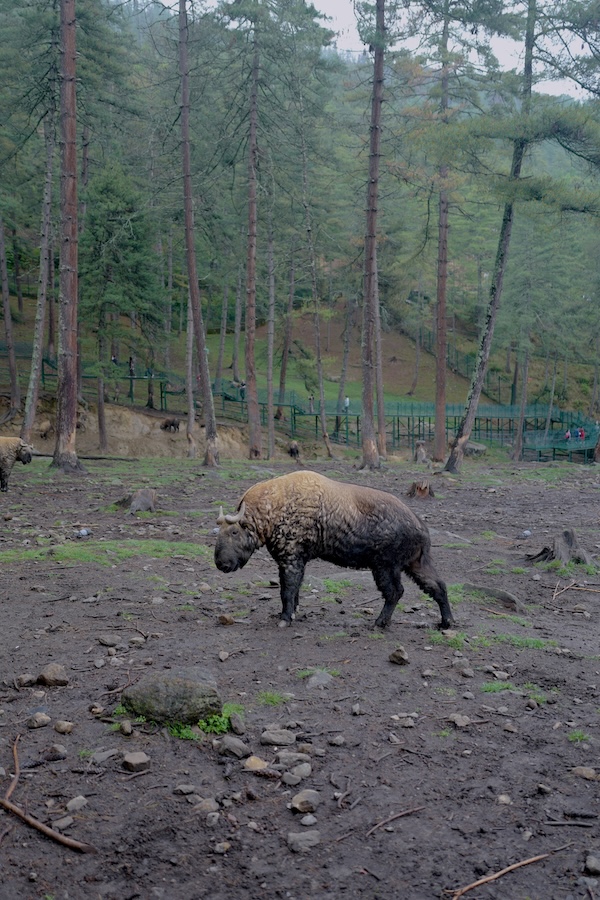
Uttering a mantra, Lama Kuenley joined the skull of the goat onto the skeletal body of the cow, and the beast came to life and wandered off to graze. And that was how the takin came to be explained our guide, Kuenley Dorjee when we were at the Royal Takin Preserve near Thimphu. Perhaps the legend has some merit of truth: the takin looks assembled rather than evolved. It looks like a buffalo that forgot leg day. Too stocky in the shoulders for its legs, a face that reminds one of a capybara, fur hangs off it in uneven clumps.
The truth is far more mundane.
Zoologists would tell you the takin is closer to a sheep than to either a goat or a cow, and has existed as a distinct genus for approximately 2 to 4 million years, and not just a recent 15th-century fabrication. But Bhutan doesn't let carbon dating get in the way of a good story, as the takin became Bhutan's national animal.
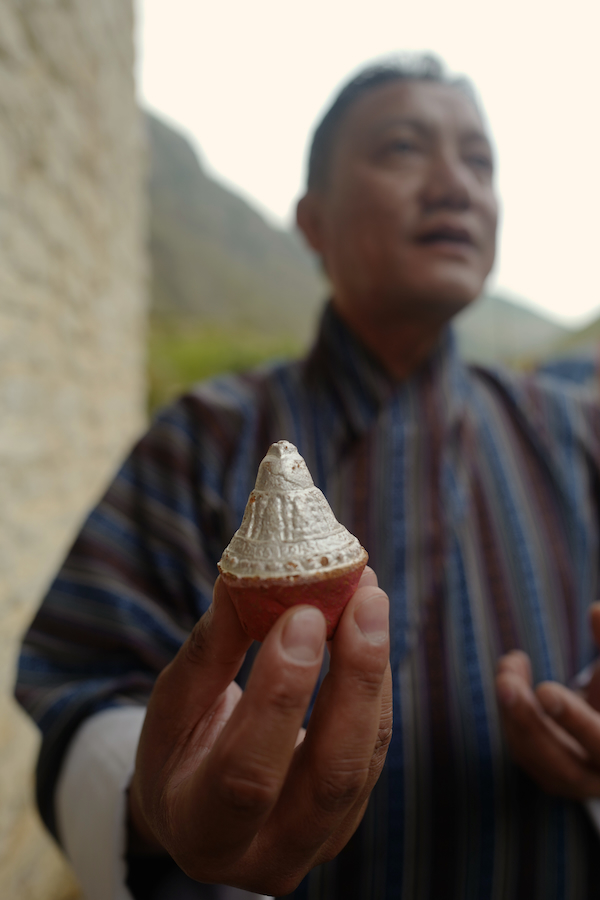
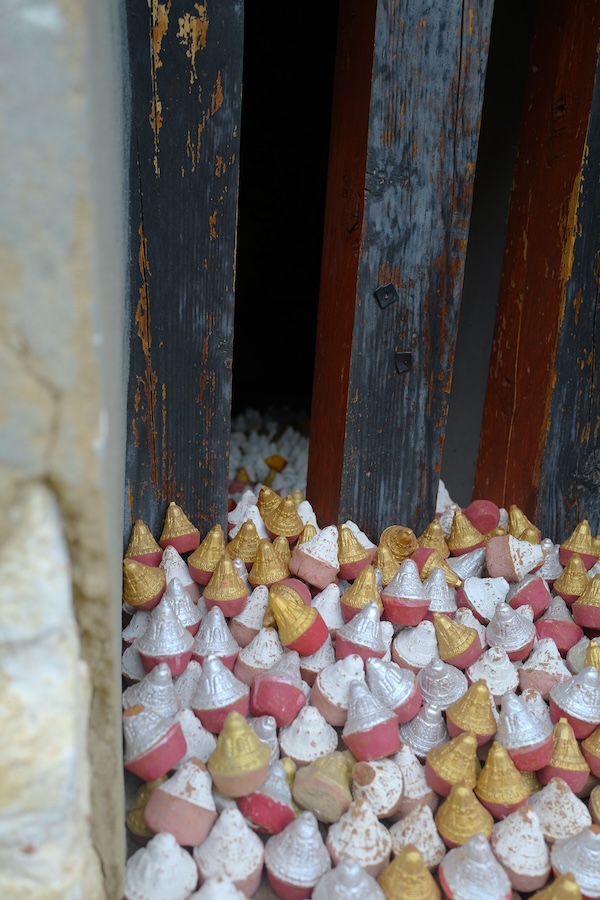
We attended a workshop where we made our own tsa-tsas. These are small clay votive images of the stupas—conical- or dome-shaped Buddhist monuments—that resembled the Buddha, crowned and seated in a meditative posture. Clay is pressed into a carved mould, and a tightly rolled paper containing mantras is shoved into the base before the exit is covered up by clay.
Thousands of tsa-tsas are made in this manner. I'd wager that the repetition can lull you into a meditative trance. An empty mind open to the universe's secrets. At some retreats, Lama Zopa Rinpoche would instruct practitioners to create 100,000 tsa-tsas, while uttering mantras. The repetition is broken into structured intentions, where each tsa-tsa made is dedicate to purifying the mind or to yourself and all sentient being, and so on.
Because I'm a pagan, I limit myself to two tsa-tsas. They are beautiful (in my eyes), but alas, they are not meant to be kept. Tsa-tsas are left in caves, tucked into the niches of chortens. You can find them placed at roadside shrines, trees. They appear in places that you never expect to see them at. Tsa-tsas are just conduits, something to be released into a shared field of merit, for someone who might glean something from it, mayhaps be inspired to write a story about it.
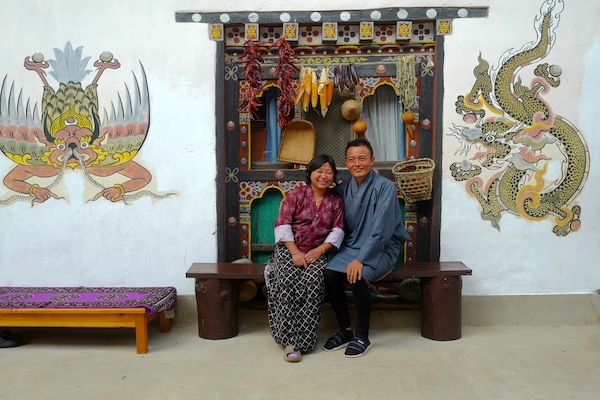
The average homestead in Bhutan is a multi-story structure built from compacted earth and sturdy timber farming. Standard residential construction do not exceed more than three storeys, while in denser urban areas, where there's a concentration of offices, newer design codes allow for the erection of buildings up to six storeys. The restriction of a building's height is to retain its cultural heritage and for safety; residential abodes need to conform to a traditional architectural style characterised by sloping roofs, painted lintels, and intricate woodwork, and because Bhutan sits in a high-risk earthquake zone, taller buildings would be more vulnerable to seismic activities.
We are headed to Punakha which is located at 1,200m above sea level. Punakha once served as the country's capital until 1955. It sits at the meeting point of the Pho Chhu and Mo Chhu rivers, which makes the area a fantastic area to grow rice. As far as the eye can see, Punakha is replete with terraced rice paddies along the river valleys.
But there is another booming trade that is driven by the country's national focus on regenerative and community-driven ecotourism: village homestays. It has become the cornerstone of Bhutan's tourism.
We travelled out to Punakha to visit the abode of Dago Zam, who runs a homestay with her husband Tshering Penjor. At a grassroots level, the Bhutanese family structure is matriarchal. In the family, Dago holds all the power: her land and ancestral home were passed down from her mother to her; Dago's husband, Tshering, moved in to help her with the homestay business. All business decisions and daily matters go through Dago.
We were served a healthy helping of food. Served in wooden bowls, there were vegetables, curries, rice. There's one dish that I gravitated towards: ema datshi. This is Bhutan's national dish, which consists of fiery chili peppers cooked in a cheese sauce. Pair that with a bowl of rice, and the average Bhutanese is golden.
Tshering hosted us while his wife prepared the meals in the kitchen. He told us about their lives before going into the homestay biz, and talked about the World Cup. After the meal, Tshering showed us the rooms that guests can stay in. It's humble, simple... but homely. It comes with the modern luxuries that we city slickers are so accustomed to, like WiFi and a flush-system toilet, but this down-to-earth hospitality is something that's lacking where I come from.
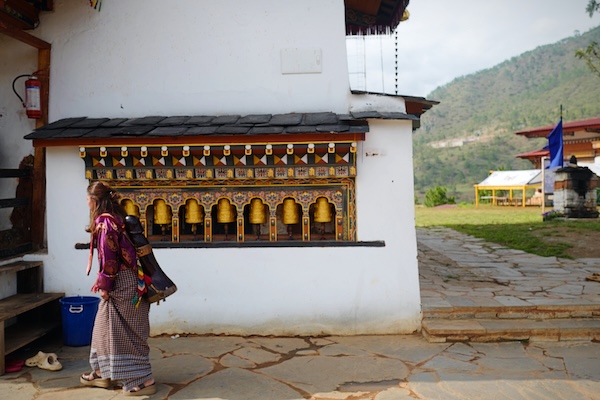
For the first time ever, Bhutan held its Fertility Festival at Chimi Lhakhang. Across two days in May, the grounds around the monastery are built around the legacy of Lama Drukpa Kuenley (toldja he'll be brought up again). The Divine Madman whose unorthodox teachings have shaped Bhutanese Buddhism for over five hundred years. (There's more to Lama Kuenley's life that might get the IMDA's goat, so we point you to Wikipedia for the goss.)
Chimi Lhakhang sits above the village Sopsokha. It is at this spot where Lama Kuenley was said to have trapped a demon before sealing it inside a black chorten. Couples wishing for a pregnancy or the safety of a pregnancy would trek up a hillock where the temple and its chorten stand, hoping for a monk to touch their heads with a wooden phallus. It is said that within the temple, a thick album filled with testimonials and photos of babies, from people who swore that the blessings worked. From Yowakha, the small hamlet at the base of the hamlet, prayer flags line the route. And the outer walls of most houses will bear painted phalluses, which wards off evil and envy.
There was some kvetching about when the Fertility Festival was held. "It's during the period when we reap the rice,"
Tsering said. "No one has time to attend this." According to a news report, more than 3,245 people showed up, Bhutanese and foreign alike. Stalls were set up to showcase rituals, performances, and woodcraft of, yes, you guess it, phalluses. Food stalls were erected as well, and weirdly, they did not sell hot dogs.
It's hard not to read into the festival as a government campaign to combat Bhutan's falling birth rate. Even if the event's date wasn't ideal, it will return next year. The Fertility Festival will be a reminder that birth outranks every other milestones in life. Watching women and men take pictures of themselves peering through a hole in a giant wooden phallus is just an added bonus.
Bhutan's isolation was a deliberate policy for most of the twentieth century, by the second king, Jigme Wangchuck, to preserve its independent cultural and political identity while neighbouring countries were being colonised by Britain. Bhutan managed its internal affairs autonomously while limiting British-controlled India with regard to external relations.
Its geographical location also made it hard to infiltrate the Land of the Thunder Dragon, as it's wedged in the eastern Himalayas between India and China. Mountains scaling over 7,000 metres surround it. Its isolation paid off when both World Wars passed by it. Until the 1960s, there were no paved roads connecting the country, no electricity to speak of, no cars.
After ascending the throne in 1952, the third king of Bhutan, Jigme Dorji Wangchuck ended the isolation and open Bhutan to the rest of the world. Modernisation began in earnest in 1960s and tourism was only permitted in 1974 under the reign of the fourth king, Jigme Singye Wangchuck.
TV and the Internet were illegal until June 1999, when King Singye announced for Bhutan's first broadcast for his own 25th anniversary celebrations. (That wasn't to say that some in Bhutan tried to illegally install satellite dishes to watch the World Cup.) Overnight, Bhutanese homes had a floor-to-ceiling window into the outside world.
Bhutan still keeps a tight grip on what is allowed into the country: a minimum daily tourist spend, strict dress codes in official buildings, bans on the sale of tobacco, gambling, and sex work... but these curtailment have landed Bhutan as the only country with a carbon-negative footprint, where its massive forest cover absorbs more greenhouse gases than it produces.
But there is a downside to this gatekeeping.
Bhutan's brain drain. As young, educated Bhutanese leave for opportunities abroad, Bhutan will collapse on its own in the years to come. Tourism can only do so much. Dorjee, my seatmate on my flight to Bhutan, was on track to immigrate to Australia (the exodus of young people to Australia is such a worry that it is an inside joke that Australia is Bhutan's 21st district), when she was called to take over the family business.
That's where the current king, Jigme Khesar Namgyel Wangchuck, comes in. If he can level up Bhutan's infrastructure and business, it can retain its people. But to do so, it needs to further open up to the world. Enter Gelephu Mindfulness City. This is a project to create a city that operates on its own laws, investment and governance framework; separate from the rest of Bhutan. Taking a page from China's constitutional principle with regard to Hong Kong and Macau, Bhutan's Gelephu Mindfulness City is a "one country, two systems" model. Strategically located on the border with India, the city will leverage regional connectivity between South and Southeast Asia. Covering 2,500 square kilometres, this will be three times the size of Singapore.
If I may be permitted, this all sounds similar to Singapore's own development. We went from, as our government proclaim, "third world to the first" in a matter of decades. What we are witnessing with Bhutan is the early stages of the country's leap into the future.
But if I may be permitted to return to my earlier query: if Bhutan fully opens its doors to the world, will it take away what's special about the country? There's a worry that the influx of tourists and outside influences might take away the country's carbon neutrality. Forests might be cleared to make way for industrialisation. Ema datshi might be replaced with a Happy Meal.
I posed this notion to the manager of the hotel we stayed at, and he was confident that King Jigme Khesar won't allow that to happen. "The king's vision won't allow for such a thing. It'll be business as usual."
It's enough of a reason. It's a story that comforts.
At the start of the journey, I remarked in an off-handed way that I may have to finish up an article to meet a deaadline. Kuenley, my guide, tells me about "Bhutan Stretchable Time" or BST. It's a half-joking term about the Bhutanese's relationship to time. It's malleable. Ten minutes can mean five. "I'm on my way now" is someone just getting out of bed. It's self-deprecating, but there's something deeper to it.
When taken within the context of Buddhism, time is treated as a construct rather than a fixed thing to be hoarded or spent efficiently. Bhutan's Gross National Happiness framework, which the government treats with the same seriousness other countries afford the GDP, actually tracks "time use" as one of its core measured domains. It's built on the idea that a person who is chronically rushed can't really be happy regardless of what else they have.
None of this means that Bhutan runs on chaos. Flights leave, ceremonies start, monks still wake for prayers at fixed hours. It's just that social contracts around casual appointments and meal times move in a way that you have to adjust your attitude to it. After all, Bhutan has been playing the long game, patiently waiting-and-seeing how the rest of us behave before they take that next step. We could use a little BST in our lives.
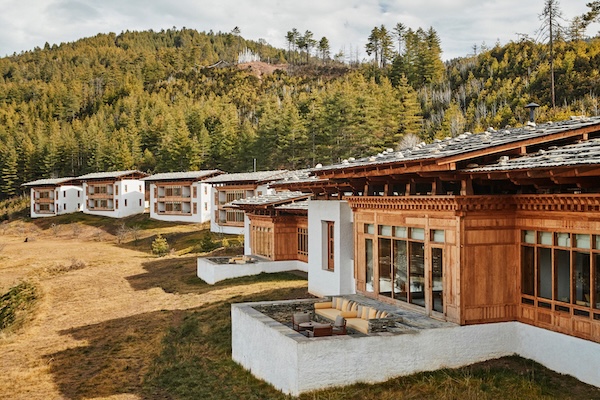
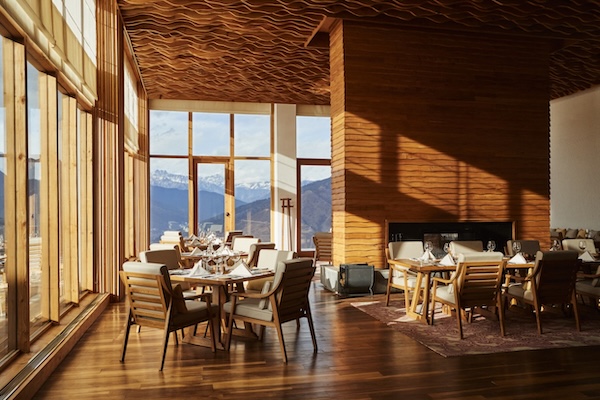
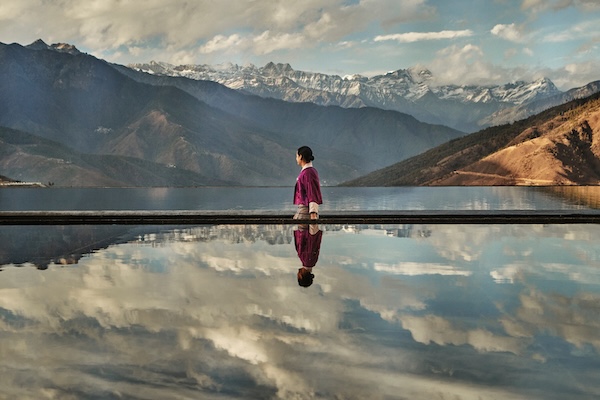
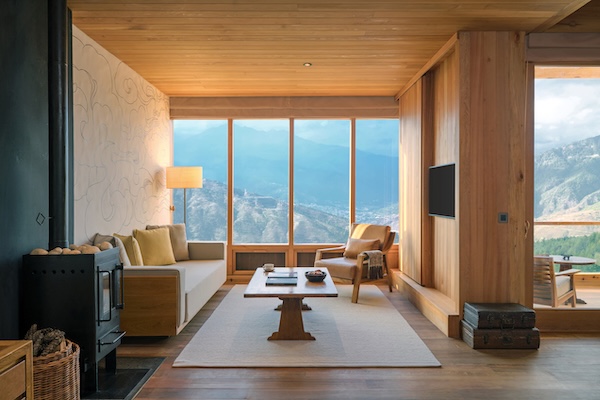
The largest and highest of the brand's five Bhutanese lodges, Six Senses Thimphu occupies 2,645–2,650 metres on a hillside south of the nation's capital. From the right window, you get the sprawl of Thimphu Valley and the 170-foot Buddha Dordenma statue watching over it from the opposite hillside.
There are 25 suites and villas, spread across five pavilions. Three of the villas have their own private spas with traditional Bhutanese hot-stone bathtubs. As you wait in the lobby for your room key, you can stare out at the reflecting pool by the lobby, which mirrored the sky. The property's pagoda-style roofs and whitewashed stone walls are built to look like they belong to the hillside rather than imported onto it.
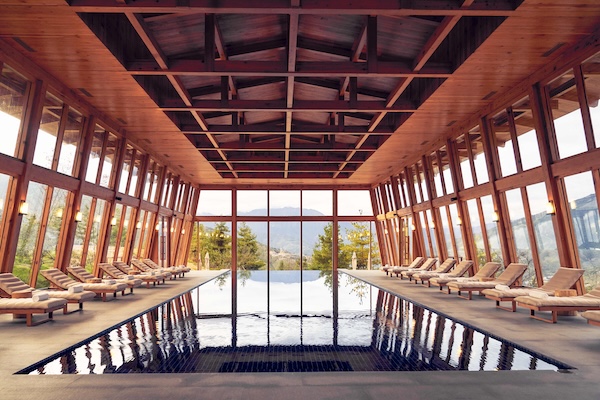
Namkha, the restaurant, sits on a sunken terrace and serves Bhutanese and international food built around foraged, just-caught and freshly grown ingredients. One can sit and eat your weight in food before you can swim (or just float) at the indoor swimming pool.
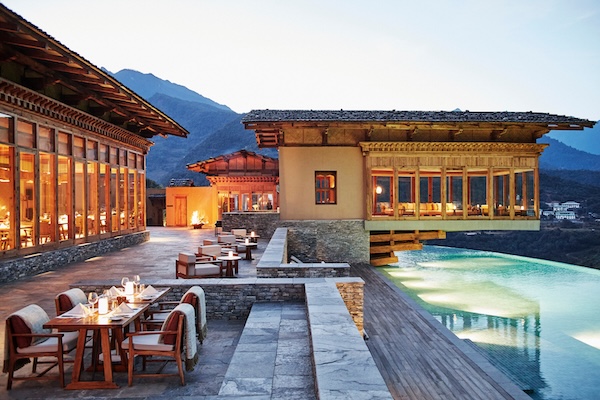
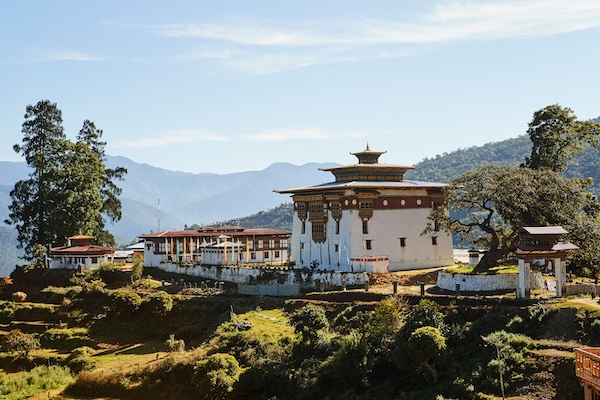
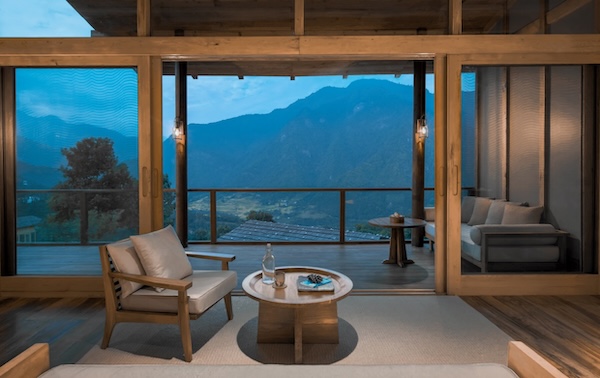
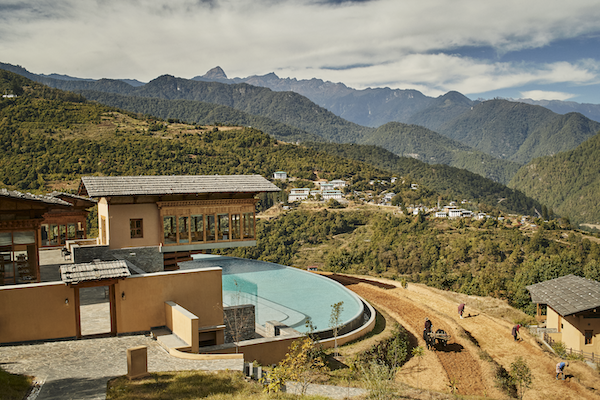
Six Senses Punakha sits low where Thimphu sits high, at around 1,400 metres on the floor of Punakha's warm, fertile valley. It looks out at the terraced rice fields and farmland, and a cantilevered, wooden room juts out, appearing to hover over the hillside, earning it the nickname the "Flying Farmhouse amidst the Rice Fields."
Each rooms and suites have floor-to-ceiling windows and local wood furnishings against clean, minimal lines. The pool, a standout feature, is an outdoor, crescent-shaped infinity pool that sits beneath the Flying Farmhouse. Like Namkha, there's an all-day restaurant, Ari, that serves Bhutanese and international dishes.
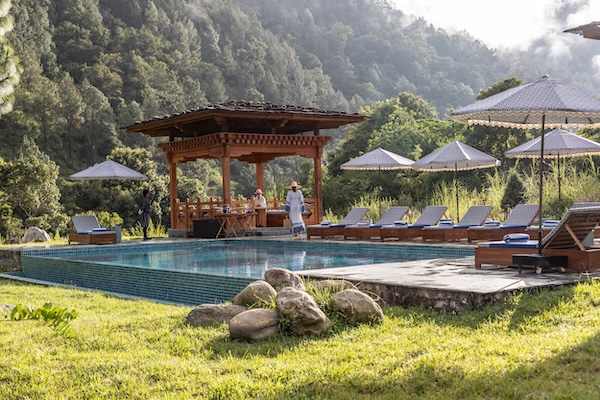
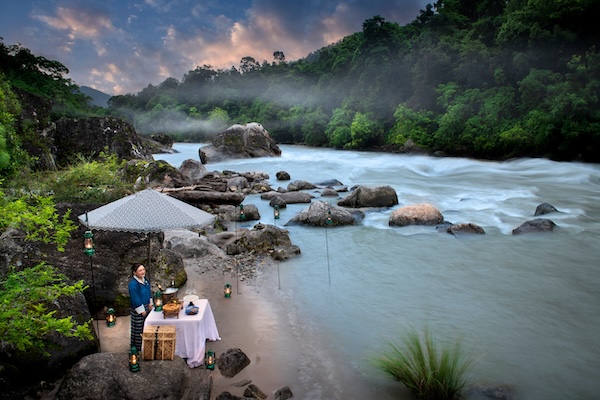
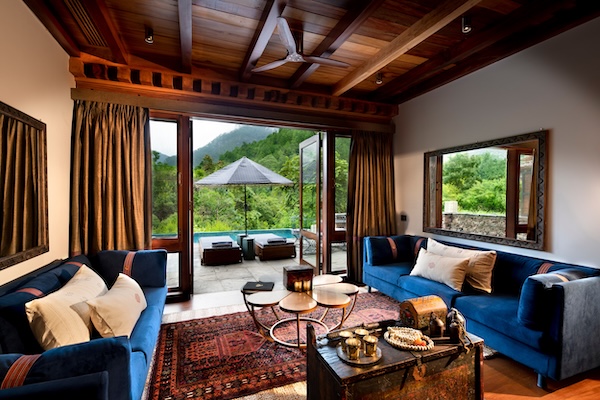
A safari-coded, and notably &Beyond's first fully owned lodge in Asia, &Beyond Punakha River Lodge is a different proposition entirely from the Six Senses properties. As the only villa-style property in the valley, it's set on the banks of the Mo Chu River; there are six tented suites that is framed by a traditional Bhutanese timber structure in a style that reads closer to an African safari camp than a conventional hotel. There's a one-bedroom River House, which is a duplex villa with its own heated plunge pool, and a two-bedroom Family Suite.
Because of its proximity to the river, there are tons of water activities to do: rafting on the Mo Chu and the Pho Chu, kayaking, fishing, meditation by the stream. There are even mountain biking, birding, and trekking, alongside the usual spa (set in an orange orchard, with traditional Bhutanese hot-stone baths). Dining draws on the valley's own produce and leans into a cuisine that leans towards Indian, Tibetan and Chinese influences.
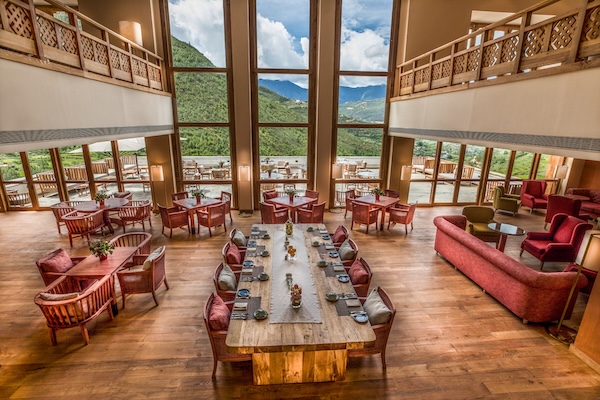
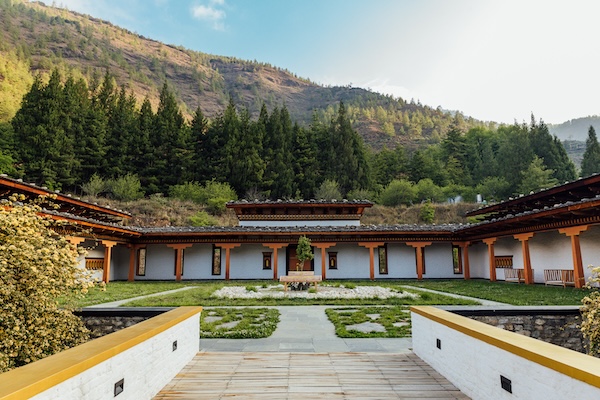
This is a lodge that is a category on its own, as it doesn't have a view, but it is built around wellness as the actual product. Described as Bhutan's first and only all-inclusive luxury wellness retreat, the place is perched in the Neyphu Valley above Paro, roughly 15 minutes from the airport. Pine forest surrounds the structure that's styled after the dzongs and monasteries scattered across the valley below. Each room comes with an apple tree, a bench and a book about wellness that you can take home.
There are two in-house doctors of Traditional Bhutanese Medicine that guests can consult with to build a personal wellness program from that. You'll have a plan that details your diet, treatment, the works. The spa runs 14 treatment beds, a heated indoor pool with underwater music, two private hot-stone baths, saunas, steam rooms, a yoga and meditation room complete with a gong, and a wooden-equipment gym. We didn't manage to partake in the holistic activities as we stayed there for a night before leaving early in the morning for our flight.