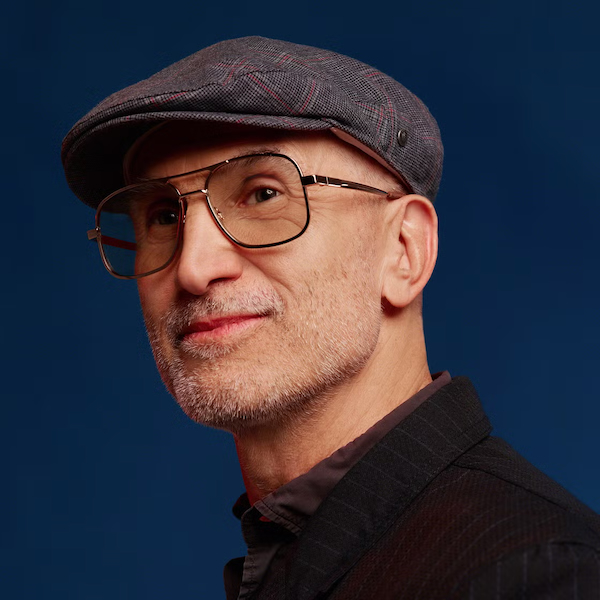
On Craig Gillespie's first movie, things didn't fly up, up, and away. In 2006, the Aussie-born filmmaker was already a powerhouse in the world of television commercials when he took on the crass R-rated comedy Mr Woodcock. But Gillespie's darkly ironic humour that characterised his 30-second ads—as in his award-winning "Don't Judge Too Quickly" series for Ameriquest—didn't translate to a prolonged 87-minute comedy about an author feuding with his former gym teacher. Following poor test screenings, Gillespie dropped out, leaving the movie to be rewritten and reshot by someone else. It bombed.
This is maybe the first time in years you've thought about the Billy Bob Thornton–starring Mr Woodcock, but Gillespie hasn't forgotten. "You learn more from your failures than you do from your successes," he tells me now in retrospect.
Even during filming, Gillespie knew the vibes were off. "In my heart, I knew it wasn't working, and I couldn't figure out why," he adds via Zoom. "As much as I was trying to put a positive spin on it, if it's not happening on the set, you can't fix it in post. That was one of the many things I learned on Mr Woodcock, and it set me on this path I've been on ever since."
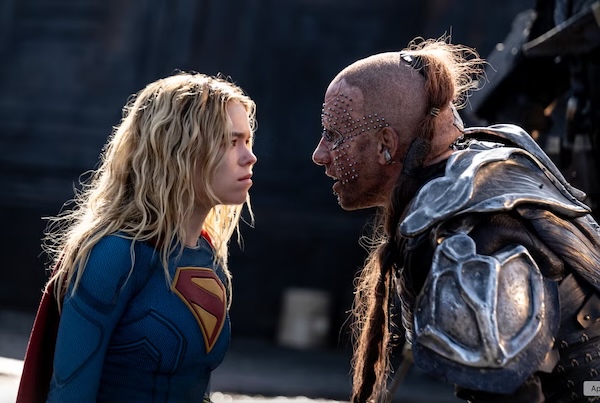
That journey has led to greater heights with Supergirl, in theaters June 26. A stand-alone spin-off of last year's hit Superman, directed by James Gunn, the film follows Kara Zor-El (Milly Alcock), the older cousin to David Corenswet's world-famous Man of Steel. Haunted by the annihilation of her home planet Krypton, this not-so-super girl wanders the stars with bloodshot eyes and a monster hangover. Supergirl kicks into high gear when Kara races against time to cure her beloved dog from a deadly poison. Along the way, she reluctantly helps a young alien girl exact revenge on a murderous pirate. The story takes after Tom King and Bilquis Evely's graphic novel Supergirl: Woman of Tomorrow, published in 2021.
In the glory days of comic-book blockbusters, there would be more hullabaloo about a female-led superhero tentpole—and maybe concern that a 59-year-old male director is telling the story. (Actress and playwright Ana Nogueira wrote the screenplay.) But in 2026, the game has changed. Superhero movies now look like underdogs versus low-budget indie horror films riding algorithm virality. As it was when Jon Favreau made Iron Man in 2008, filmmakers are steering big tentpoles back to their singular vision once again. Which is exactly how Gillespie got the job of directing Supergirl after pitching to DC Studios figureheads James Gunn and Peter Safran.
It's for this reason that Supergirl might be the biggest surprise of the summer. Absent of the majestic heroism of superhero flicks of yore and blatant girl-boss energy, Supergirl isn't hoisting any cultural or societal expectations on its leading lady's shoulders. The movie is no more, and no less, than a portrait of a messy person trying to make her way through a crowded space. "It started when I got the script that Ana Nogueira wrote," Gillespie says. "By the second scene, I was in. The range and tone that [Nogueira] was playing in, I was so excited."
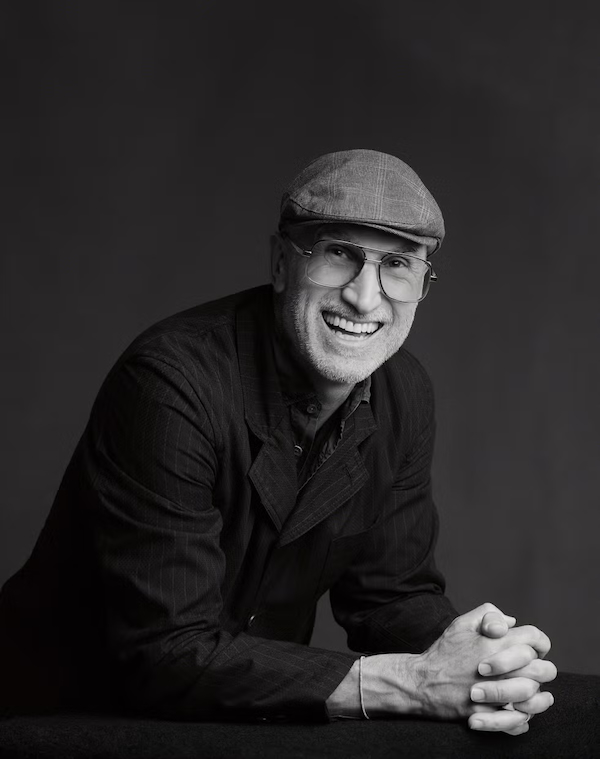
It was Supergirl herself that drew Gillespie in. "She's so unapologetic—coming from a place of trauma and feeling like an outsider, which we rarely get to see with a female superhero. She's not sexualised. It's gritty and dark, where you don't know where this movie's going and how it's gonna end. The ending surprises you. For all those reasons, I was excited about doing this film in a way that we could explore trauma and loss. I was craving for it in this universe."
To get the gig, Gillespie prepared a "very, very large" pitch deck for Gunn and Safran. It contained some 120 images that telegraphed the grimy science-fiction vibes he felt the screenplay called for. The plot was, in essence, an intergalactic road trip through the seedy cosmos. "There was a grit that reinforced where she was emotionally. I really wanted [everything] to feel lived-in and unpolished."
He also cooked up a critical angle that felt rebellious in a merchandise-oriented endeavour. "I don't want her to wear the superhero outfit until the end of the film," Gillespie remembers telling Gunn and Safran during the pitch. The beat wasn't in the script, but he felt it was what the movie needed. "I felt that you want to see her go through this emotional journey and get to a point where she can put that suit on. She lashes out in these fight sequences until she comes to peace with her role. In a superhero movie, that is a very interesting thing to happen."
It's a touch ironic that a filmmaker who came up in advertising had a commercially unfriendly angle to his million-dollar summer movie. But Gillespie has long felt as though he's from another universe. Born and raised in Sydney, Gillespie hardly paid mind to movies in his youth. He was a self-proclaimed beach bum who spent his days surfing instead of getting swept away in a dark theatre. Still, he had a few favourites. "I remember seeing The Shining at 15, which I absolutely loved," he recalls fondly. The Mad Max series was also "transformative" to his psyche. "But the idea that I could do that as a profession honestly didn't cross my mind until I got to New York."
[Milly Alcock] has that indecipherable thing when she's on the screen, that's who you want to look at. You can't manufacture that.
At 19, Gillespie was a Sydney University dropout, unable to keep up with the rigours of traditional academia. He was so unlike his identical twin brother, who today is a hedge-fund manager in their hometown. At his mother's behest to do anything other than surf his days away, Craig pursued an arts degree. It got him a scholarship to the School of Visual Arts in Manhattan. "Suddenly I'm in New York City, knowing no one," he remembers. It was the mid-'80s when Gillespie arrived, with "graffiti everywhere" and "trash cans on fire." Times Square was still overrun with porno theatres and drug deals around every corner. "It looked like The French Connection. You're like, Oh my God, this actually exists. But it was very exciting."
The birthplace of the Knicks toughened up Gillespie, who today identifies strongly as a New Yorker. When we met for this interview, he'd just spent the weekend in the Hamptons for his son's wedding. "There's a pride to being a New Yorker, being able to survive it," he says. "I had a friend who said living in LA feels like cheating. I feel more at home in New York than anywhere else."
While in New York, Gillespie found work in advertising. He interned at various agencies before working his way up to directing commercials. He met his soon-to-be wife at this time, and together they spent weekends guerrilla-filmmaking original shorts up and down the city. After 34 years of marriage, Gillespie credits his wife with his cinematic perspective on women; his stories coincidentally involve a lot of them, be they conspiring figure skaters or superheroes on a bender. "She's strong and has a strong point of view," the director says. "She's my toughest critic. She's the first person I want to show something to, to know if we're doing okay. She's not remotely like my characters, but there's a strength and confidence that has helped define my relationship with women."
After he signed to an agency at 28, Gillespie's ambitions grew to making movies. But Mr Woodcock didn't work. It would have been the end of his journey had he not had his next film to re-instill his confidence: Lars and the Real Girl, written by Nancy Oliver. A lo-fi dramedy about a recluse (played by Ryan Gosling, in an early demonstration of his versatility) who begins "dating" a hyperrealistic sex doll, the movie endures as a disarmingly touching ode to kindness. It's an understated character drama, set against a small town in the dead of winter, that warms the soul in its portrait of communal understanding and empathy. Gillespie is unfazed when I ask him about the movie's lasting appeal after all this time. "The idea of feeling like an outsider, and the loneliness and the inability to connect, is always relevant," he says. "It's something people yearn for and struggle with. It's an accepting, nurturing, and gentle film."
Since Lars, Gillespie found his groove across genres in increasingly bigger productions. He paid homage to B horror with his 2011 remake of Fright Night that starred Colin Farrell and the late Anton Yelchin. His sports dramas Million Dollar Arm (2014) and I, Tonya (2017)—the latter starring Margot Robbie in an Oscar-nominated performance as controversial Olympic skater Tonya Harding—allowed him to hone his Hollywood formalism in tales about outsiders challenged to step up in front of the world. In 2021, he helmed Cruella, a big, spectacular Disney blockbuster that chronicled the origin story of Cruella de Ville. Two years later came Dumb Money, an ensemble comedy about terminally online Reddit rebels who brought Wall Street to its knees during the Covid-19 pandemic.
Still, Gillespie made commercials, many of them in coveted Super Bowl time slots. The 2010 Snickers ad where Betty White plays football? He did that. The 2016 ad for Audi about the retired astronaut? He did that too. The one from earlier this year where Adrian Brody struggles to play a TurboTax agent? Yup. Not bad for a guy who just wanted to surf so many years ago.
Gillespie's career has put him in command of some of Hollywood's finest, and Supergirl is no different. Milly Alcock, whose profile shot to the heavens after her stint on House of the Dragon, dons the cape of Kara Zor-El. "She has that indecipherable thing when she's on the screen, that's who you want to look at," Gillespie says in praise. "You can't manufacture that. She's so accessible. She makes you want to lean in. What I love with Milly is what I love with a lot of actors—Margot, Emma, Ryan—they can dance in tone. They can go from something very funny to very emotional in almost the same sentence."
Alcock was one decision Gillespie didn't make on Supergirl; she was cast by James Gunn for a cameo in Superman. But Gillespie says his lead was a gift from the stars. "One of the big things I learned after Mr Woodcock was how to work with actors. The big step was collaboration, letting actors have ideas and not squashing them. It's tricky to do when you're on a schedule, but it's something I love and make space for."
One time on Mr Woodcock, Gillespie was advised by someone more experienced in the craft to sit as close to the actor as he could. "I've done it ever since. To be four feet from the actor and whisper or suggest things or have them be like, 'Can I have another one?' I set up the camera in a very economical way so we get to play with performance." Milly Alcock was a true superhero in this matter. "I had the inclination she would be [great] seeing her work, but to be that spontaneous and free, that's something I see in all these actors."
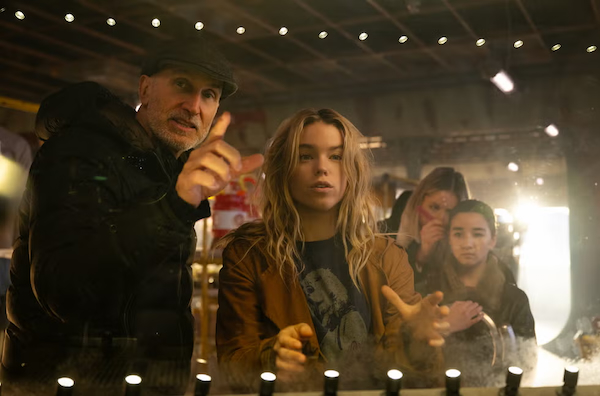
He continues: "To know that that was who was gonna carry this film, to know that's who I would get to play in the sandbox with, was incredibly exciting."
And no, he hasn't paid any attention to the Internet trolls criticising Milly Alcock's looks. "I haven't looked at any of it. I just stay away from it," he says plainly.
Unlike those difficult days with Mr Woodcock, Gillespie knew he had something special on day one of Supergirl. The first scene shot for the movie was Kara's landing on Earth in the Arctic, outside the icy Fortress of Solitude. When her now-grown cousin meets her, he's fully formed as Superman. Despite Clark Kent's best efforts to make her feel welcome, the traumatised Kara is too uneasy about her new surroundings, to say nothing of a major language barrier. The scene should feel familiar to anyone who's taken in their own family from the homeland.
Behind the scenes, Gillespie wasn't sure how the day would go. "David [Corenswet] knows his character; he's just done a whole film," the director observes. "But Milly is jumping into the scene, speaking in a different language I haven't heard her say yet. She's got to be spontaneous in this language."
Then magic happened. "Wildly, David started improvising. Like, Shall I get the bag for you? Do you like bowling? But it's wonderful. That's the stuff I'm talking about when actors surprise you. They bring extra flavour and magic when they really know their characters. I threw the line to Milly, Why is he wearing his underwear? There's a great script that Ana wrote, but letting [the actors] play outside those lines was beautiful. They fell into the tone of the movie immediately."
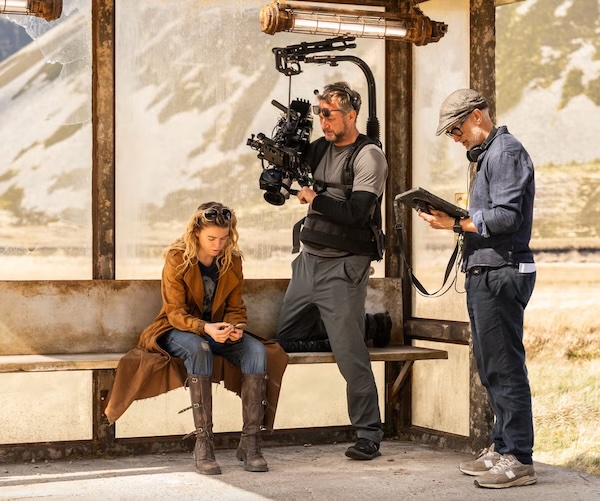
These days, superheroes have never looked more vulnerable. While there remain hits and critical darlings, the widespread enthusiasm for expanding universes has waned considerably in the face of daring, original fare. But where most see stacked odds, Gillespie sees opportunity. "Anytime there's anything original, it's good for the industry," he says. "I don't care where it comes from. If it's good and engaging, it doesn't matter if it's shot on iPhone."
Filmmakers don't have Gillespie's background anymore either. This year's crop of up-and-coming directors honed their craft on YouTube, not making commercials for car manufacturers and tax services. But this doesn't bother someone like Gillespie. After all, he came from "outside" the industry too. "There's no true trajectory," he says. "There are some who have gone through film school; there's more that haven't. You can learn this yourself. Go out and pick up a camera."
As for cinema's superheroes, he isn't worried about them either. "It's just about respecting the audience," he says. "As long as the material is strong, people turn up. It's an opportunity to create something that feels original and fresh. Look at last year with Sinners—that had a fresh take on things and people responded. That's exciting. In terms of the superhero genre, it's an opportunity to try something new. Because of the crossroads we're at and what's been happening, I'm more excited for that reason. Like, How do we make this interesting?"
Gillespie doesn't have all the answers. But he's ready to find out.