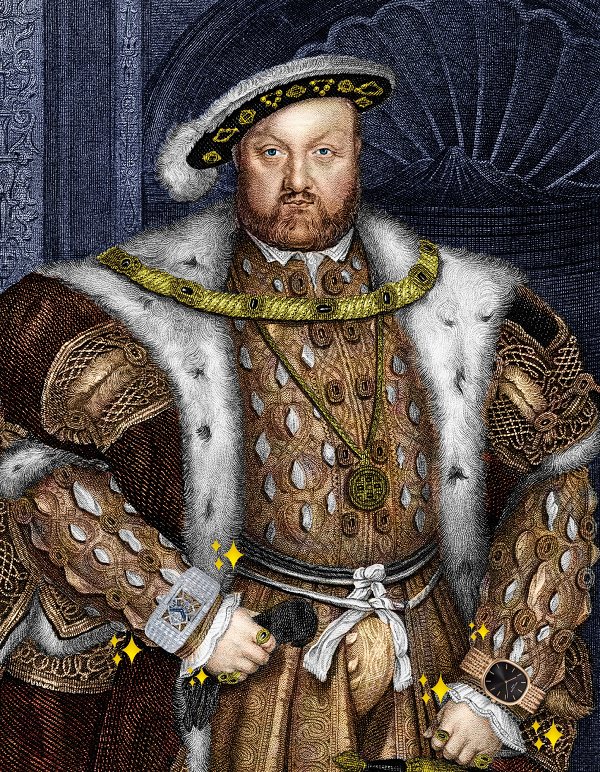
For decades, the age-old question, “Why do men love watches so much?” has flooded the stratosphere of internet forums and discussion boards. Bystanders peer through the observatory glass window, pointing at the time-telling machines on the wrists of men across the globe, utterly confounded. From a pure utilitarian standpoint, it’s easy to understand why someone would choose to wear a watch. Watches tell the time, and they make it really convenient to do so.
Confusion begins to corrode this rationale when people witness men spend thousands, if not tens or hundreds of thousands of dollars, on the most luxurious pieces on the market. From a value standpoint, it hardly makes sense why an SGD50 digital quartz watch should vary so greatly in price from an SGD15,000 mechanical watch. Is the addition of a date aperture, a chronograph complication, and a leather strap really worth the SGD14,950 difference?
A quick glance at the top Google search results will reveal testimonies from men themselves explaining this phenomenon. Watchmaking is an art form meant to be appreciated. The same reason why women like necklaces, bracelets, and rings—it’s essentially jewellery to me. I love how intricate its mechanics are.
You’ve likely heard these explanations before, and they probably made sense to you on the surface. But they have also probably left you wanting more. Not to invalidate the answers given by the men above, but what if there were more to it than meets the eye? What if the answers lay somewhere deeper within human nature, and that the place it resides is close to being primal?
No one will admit it, but the first reason is rather obvious. There aren’t many things a man can wear to immediately signify his footing in a social hierarchy more than a watch. There are those who will put on an expensive watch, precisely for that reason—peacocking. But for others, this operates on a far more subconscious level. One study on luxury brand labels found that conspicuous luxury displays elicited preferential treatment and benefits in social interactions, thereby producing tangible social advantages for the wearer. For the consumer, this pattern may manifest itself subconsciously with sufficient exposure to the phenomenon, reinforcing the desire to purchase more luxury goods, i.e. a watch.
Charisma, a willingness to take risks, grandiose aspirations, pride, self-confidence—these are qualities you’ll often find associated with those whom society deems “successful”, particularly when it comes to leadership and financial achievement. These are also qualities a person must possess to even entertain the possibility of dropping a million dollars on the latest Jacob & Co. tourbillon, set with hundreds of emerald-cut diamonds. In this sense, the watch becomes a mere exemplification of hubris, a byproduct of smothering success.

The prospect of overhauling one’s wardrobe is a daunting one. One must consider and choose between loafers and boots, knit sweaters and wool shirts, and determine how well one’s socks complement one’s top. Once decided, it then takes considerable effort and time to track down that pair of smoky grey bootcut jeans that sit just above the shoe in the exact right way, or to find a cardigan that frames the chest generously. An interesting watch is able to cut through all of that, providing a means of articulating the character or mood of the wearer in a way that feels safe, without the risk of losing much face at all. Not that it does—or even comes close—to doing a better job of conveying oneself than a well-developed wardrobe, but it is convenient. For a lot of men, that is enough.
And this is just for the weekends. For many, weekdays (which constitute 71 per cent of the week) are spent in offices or formal business settings, which considerably shrinks the room for self-expression. It’s hard to find space for wriggling here when the biggest decision each morning is which coloured shirt looks best with the same pair of black trousers worn last week, leaving that object on one’s wrist as the sole outlet for any sort of individual expression.
A mechanical watch is often completely transparent with its mechanics through a caseback. Each gear and balance spring works in perfect harmony to deliver the time. It’s tactile, particularly so with manual watches that require regular winding to function, allowing the user to serve as the direct source of power. Certain models even produce a soft ticking sound the closer you bring it to your ear, as though they were living, breathing machines.
The more expensive the watch, the more care and attention it demands. Keeping it dry, polishing it with a microfibre cloth, storing it somewhere safe and cool at home, and keeping it well away from hazards and shocks outside—all of it, at its core, is an exercise of control. Control is frequently linked to masculine norms and dominance, and a watch offers this in a deeply logical and orderly way. Take care of it, and its gears will continue grinding endlessly. Its predictability is comforting in the face of messy human relationships or ambiguous social situations.
Look at the maisons reigning at the top of mount horology, and what you’ll find is a common thread shared among them all: heritage. Most, if not all, have a story to tell. They’ve either had a part to play in the mass commercialisation of watches, invented a famous complication, or have a gripping founder’s story of struggle and perseverance.
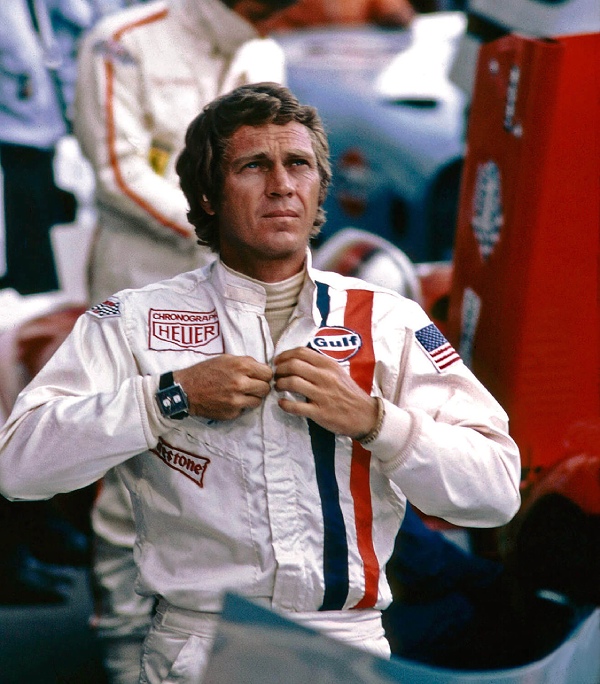
Beyond the brand, the watches themselves can carry compelling stories, too. Think Omega’s Speedmaster worn by Neil Armstrong and Buzz Aldrin during the 1969 Apollo 11 moon landing or the TAG Heuer Monaco, made famous by Steve McQueen when he wore it in the 1971 racing film, Le Mans.
Humanity’s deep-seated love for stories spans history, cultures, science and oceans. Storytelling has always been fundamental to human connection and memory, stimulating both sensory and emotional centres of the brain. The stories stored within these time-telling machines not only draw people in, serving as pieces of wearable history, but also function as conversation starters. The stories that these watches represent can then be shared by their owners with others, satiating something fundamental within the human soul.
Ultimately, what makes the watch so uniquely compelling to men is how it manages to satisfy several deep human needs simultaneously, whilst doing it beautifully. Hardly is a love for horology born simply from one’s appreciation of the craft, but from what people are truly seeking when they strap one to their wrist. It could be recognition, expression, order, identity or legacy—or all of those things. And for that alone, the fascination men have with watches is unlikely to wane any time soon.