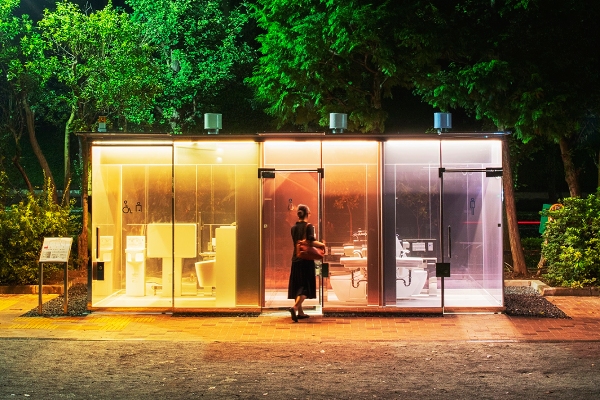
Perfect Days, the 2023 film directed by Wim Wenders, sits comfortably at the top of my list of favourite films ever. It’s a simple story told through the mundane routine of a toilet janitor in Tokyo, who spends his working days moving from district to district, cleaning public toilets that look so stunning you’d think they’ve been featured on Architectural Digest. The one that stands out the most is the coloured transparent glass cubicles set in the middle of a park, which flicker to become opaque when occupied. If you’ve seen the film, or even just the trailer, you’ll know exactly what I’m talking about.
The film itself is tender and mature. We watch as it documents its protagonist, Hirayama, savouring the small beauties of everyday life: the shadows of leaves dancing on concrete, his daily ritual of greeting the ramen vendor he frequents, the kaleidoscopic reflections of passing strangers on the reflective ceiling of a toilet he’s about to clean.
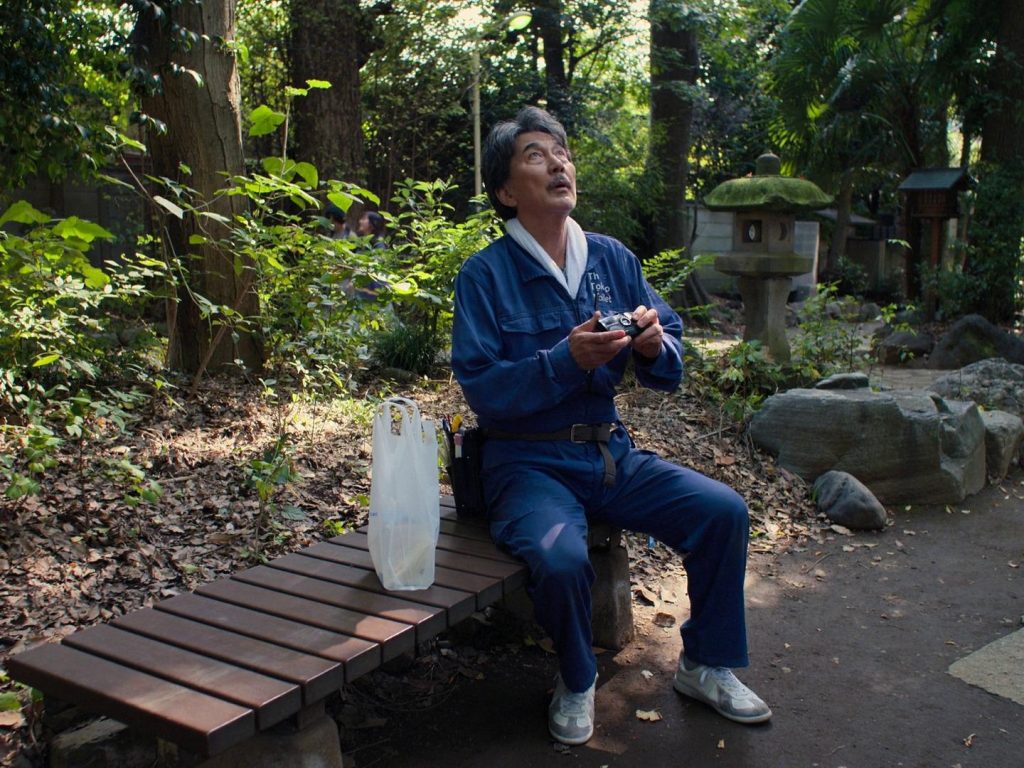
The toilets, I thought, were in many ways a metaphor for life as much as they were a setting. Much like public toilets, life can be crude, unfiltered, and at times, nauseating. Yet, Hirayama leans into all of it, stooping and thoughtfully scrubbing away the grime and stains that mirror the struggles we face as we navigate life. However, Hirayama approaches it with a sense of pride and joy you wouldn’t expect. He carries this outlook into his personal life after each shift. He may be a custodian, but he doesn’t let it define or diminish his happiness. He collects cassette tapes of Lou Reed in his free time and ends the day with a chapter of Faulkner before bed. In this sense, the toilets that inhabit the film became characters all on their own.
This is why, during a solo trip to Tokyo last July, the prospect of visiting these iconic toilets flashed briefly in my mind. I considered the validity of dedicating an entire day to tracking down every one under Hirayama’s purview. Unfortunately, that thought never materialised, and I spent the day cuddling piglets at a café instead.
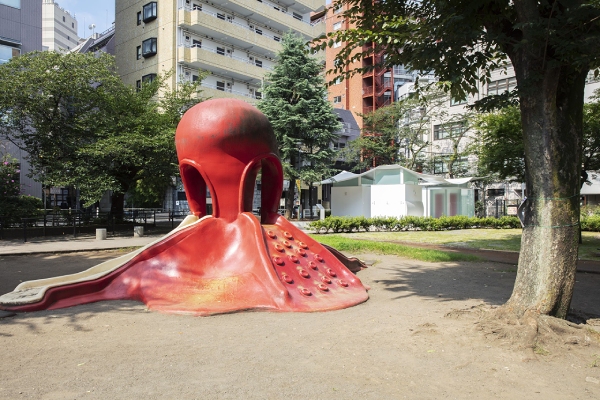
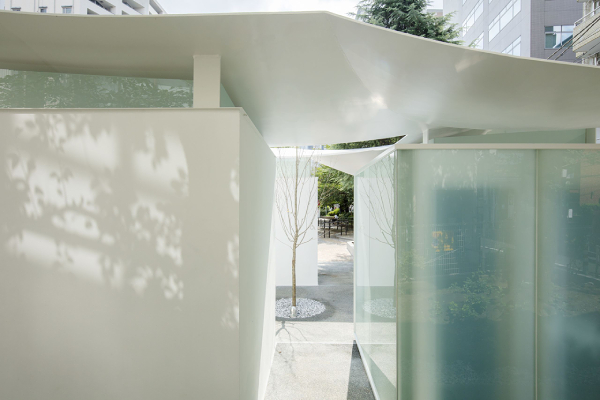
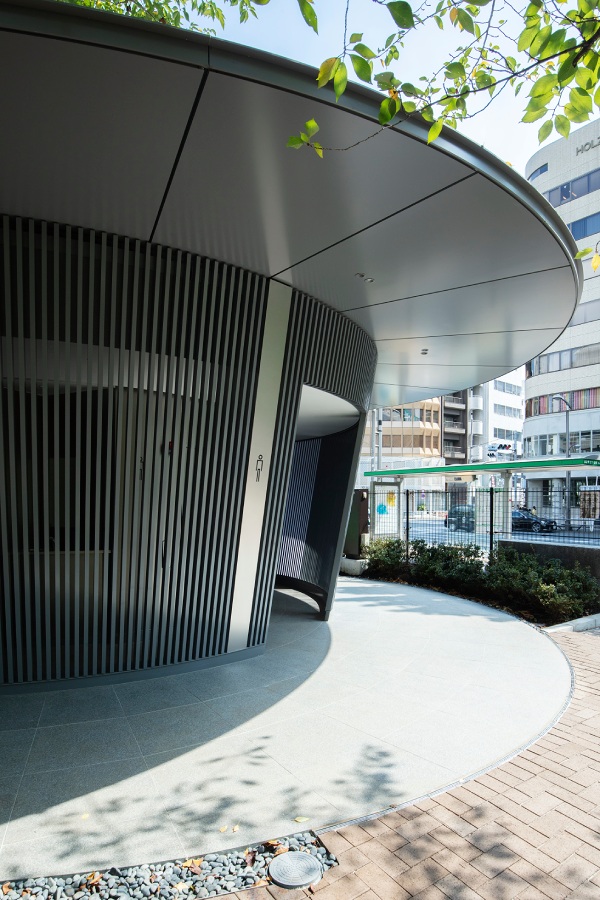
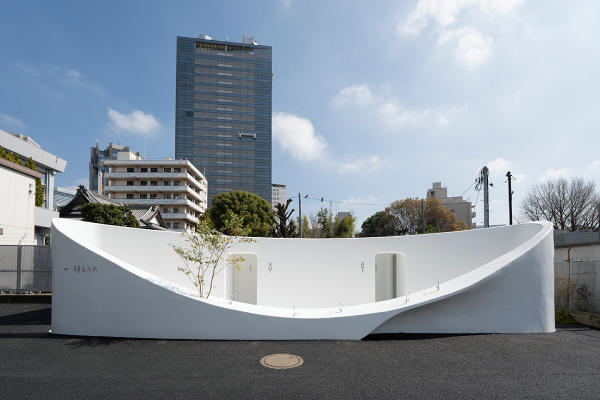
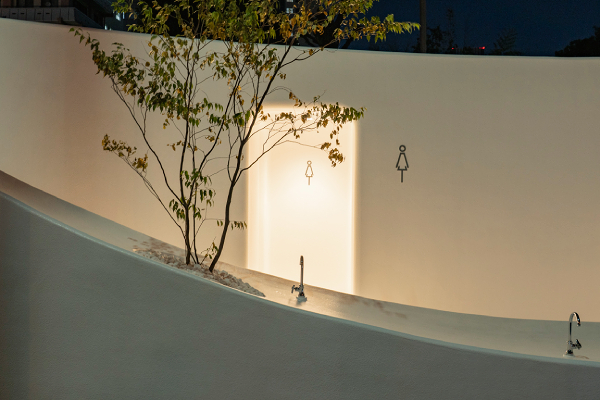
I did, however, stumble across a few interesting toilets during my travels. One of which was situated beside an empty field with nothing but an octopus playground plonked in the middle of it. It was an entirely white, four-volume structure that featured a mini courtyard in the middle where a scraggly tree stood alone. The space was well-ventilated and had no shortage of natural light, largely in part due to its most distinct element, the thin, curved roof, which stitched all four structures together.
It wasn’t until a couple of months later, after returning from my trip, that I realised the toilet I saw was part of the very same initiative behind the ones in Perfect Days. The TOKYO TOILET started as a passion project by Koji Yanai, the son of Tadashi Yanai, who just so happens to be the CEO of Uniqlo. In 2018, he commissioned 16 renowned architects and designers to each design a uniquely distinct public toilet of their own. Tadao Ando, Toyo Ito (who designed VivoCity, by the way), Fumihiko Maki, and even designers like Nigo offered their vision to 17 toilets scattered across Tokyo. And in case you needed more material to gauge where the project is at creatively, the uniforms of the janitors were designed under the supervision of NIGO—the same one Hirayama wears in the film.
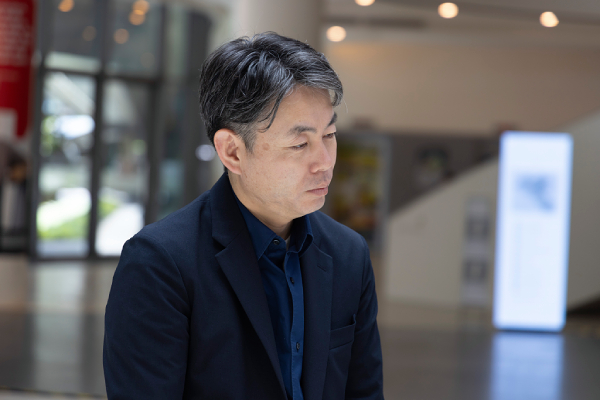
Speaking of which, the TOKYO TOILET project didn’t just inspire Perfect Days—it helped create it. Well, technically, Koji Yanai helped create it. It started when Yanai had the idea to promote the project through a series of short films centred around the toilets. Wim Wenders, however, had other plans. He had originally been invited and flown in to direct the short film, but after seeing the toilets in person, he pivoted. Inspiration overflowed, and he plotted to turn the project into a full-length feature film instead.
Which brings us to the present—a year or two removed from the film winning awards at Cannes, the Japan Academy and Asian Film Awards. We managed to secure a sit-down interview with Koji Yanai and Sou Fujimoto, one of the architects behind the project. Both were in Singapore for the Asia Architect Talk organised by TOTO, held at the Singapore University of Technology and Design (SUTD). That was where I had the privilege of speaking to them.
ESQUIRE SINGAPORE: What kind of effect did you hope the TOKYO TOILET would have on the public?
KOJI YANAI: Interestingly, the reaction overseas was much bigger than in Japan. That’s my honest feeling. Many non-Japanese people visit the public toilets in Tokyo as part of their sightseeing tour, which was quite unexpected. That’s one of the most interesting parts for me.
ESQ: Was there a particular commentary or message you were hoping to convey through your toilets?
KY: First of all, I think Japanese public toilets are much cleaner than in other countries—that’s something I’m very proud of. I wanted to convey that cleanliness is one of Japan’s most attractive qualities. It’s a good influence and benefit for the country.
ESQ: As the producer of Perfect Days—which is one of my favourite films, by the way—how did the TOKYO TOILET shape and serve the story the way you wanted it to?
KY: Originally, we thought it would be a short film to promote the TOKYO TOILET project. But after the vendors visited the actual toilet sites, their imagination expanded. The short film became a long short film—and eventually, he [Wim Wenders] decided to make it a feature film. That was an amazing moment for me.
ESQ: Do you actually profit from the TOKYO TOILET at all?
KY: From the TOKYO TOILET itself, there was no financial profit. But from Perfect Days, fortunately, we could make a profit. And more importantly, I got to meet so many people like Fujimoto-san and other creators in the film industry. That’s the real profit for my life, which is priceless.
ESQ: What’s one idea you hope city planners, architects, and the public will take away from this project?
KY: Of course, his [Sou Fujimoto] toilets! (laughing)
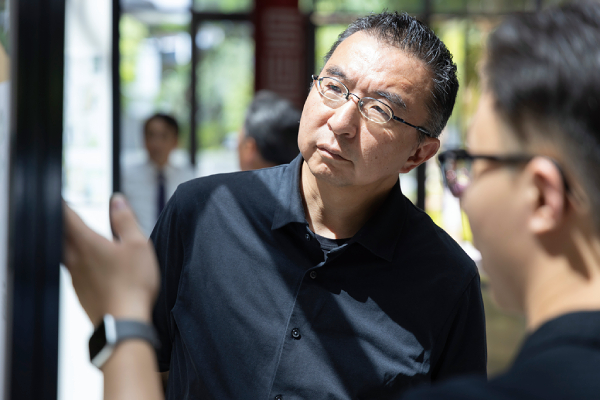
ESQUIRE SINGAPORE: Fujimoto-san, how did you approach your design knowing it would sit alongside works by other greats like Tadao Ando, Kengo Kuma, and even NIGO?
SOU FUJIMOTO: Of course, I respect Ando-san, Ito-san, and all the other architects and designers of the TOKYO TOILET project. So I was really happy and proud to be part of it.
I didn’t focus too much on differentiating my design from the rest, because each of us already has our own philosophy. I simply focused on my site and rethought what a public toilet could be.
ESQ: What kind of experiences do you hope your toilet design will create?
SF: In general, the TOKYO TOILET project really opened people’s eyes to see public toilets as something new. Of course, it's an essential facility, but it can also be something beyond that. The quality of the design and maintenance is also very important. Toilets are a very human space, so hosting all the people who come to this clean public toilet is something of a new concept—and it’s fantastic to see.
As for my project, the design of my toilet is like a large vessel or bowl, a common space where many different people can come together—not just to wash hands, but to chat, fill water bottles, or play with water. I wanted it to be a gathering place, and I’m happy it works that way.
ESQ: You’re often involved in large-scale projects. How is working on such a small, functional space like a toilet different?
SF: Small projects are very exciting because I have 100% control over them. A public toilet is the smallest kind of public building—it sits on the edge between public and private. Each experience is interactive and private, yet open to everyone. Even though it’s small, it’s open to the urban environment, so many people will use it. So I was really excited about that.
ESQ: What, in your opinion, makes a building or structure unforgettable?
SF: Of course, there are many different thoughts, but the most important thing is the experience. Not just visual shapes or colours, but the experience. Especially how people interact with the building—and with each other through it. That relationship between people and place is what makes architecture unforgettable.
ESQ: Apart from other architectures, where else do you draw inspiration from?
SF: Everything can be an inspiration. Architecture is about relating to people’s lives, which then relates to film, art, and daily experiences. Even a casual conversation like the one we’re having is part of our lives; people’s lives. So ideally, I like getting inspiration from everything. Even walking down the street can spark an inspiration.
ESQ: This one’s for both of you. Do you resonate with Hirayama’s character from Perfect Days?
KY: I can’t wake up every morning as smoothly as Hirayama-san—I struggle to get out of bed! But like him, I have a routine: from Monday to Friday, I work at Uniqlo as a marketer in the company. So in that sense, maybe there is some commonality I share with Hirayama. But his discipline is completely different from mine.
For me, I always lose concentration since I’m thinking about many different things at once. I respect his discipline and devotion to one job, one task and one mission. I could use that discipline in my professional life (laughing).
SF: Architects have two sides: on one hand, we have deep concentration on one thing, so I can resonate with Hirayama-san. But on the other hand, we have so many projects and programmes in different locations and countries to go to. I gain a lot of inspiration from the diverse surroundings, which is why I can survive. But then, there are always those two opposite things: concentrating on one thing and feeling scattered. Moving between those opposites—that, I think, is the life of an architect.
ESQ: How does a perfect day look for both of you?
KY: (Long pause, followed by laughter) Difficult question to answer, isn't it?
I think special days like birthdays or Christmas, or Valentine’s Day are very special for the moment, but I would like to treat every day as the most precious. A normal day is very special to me as well. So I‘m trying to be someone who treats a normal day as a special one.
SF: Recently, I’ve been travelling a lot, so there aren’t many days to visit home. My perfect day would be to return home and see my kids, because that’s a really beautiful moment for me.
ESQ: Ambition—or a lack thereof—was such a core theme in Perfect Days. As successful men, what are your thoughts on ambition?
KY: I don’t think I’ve achieved all my ambitions yet. But I’ve learned that contributing to society—through work or personal projects—is meaningful. As long as I keep that mindset of contribution, I can achieve something. My ambition is to never forget that.
SF: I recently finished the master plan for the Osaka World Expo, and it was a huge project. I realised my ambition there wasn’t personal—it was about making the world better. The concept was to make “a grand ring,” and bring in national faculties to deliver a message of unity and hope in a divided world, which was very important to me. It wasn’t a personal ambition per se, but it made me very happy now that it’s finished.
ESQ: Koji-san, do you see yourself producing more films in the future?
KY: If I have the chance, of course. Before Perfect Days, I might have hesitated—but not anymore.
Photography: Satoshi Nagare.
Courtesy: Shibuya City