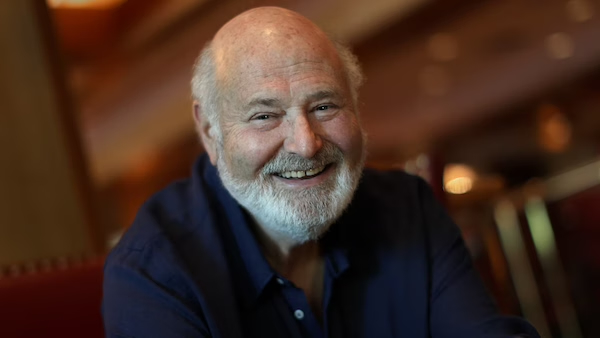
"As you wish." In 1987, Rob Reiner’s film The Princess Bride immortalised those words as a stand-in for the phrase “I love you.” Every time you hear that phrase in the movie, it really means this powerful other thing. It’s a code between two people who care deeply for each other—told through the tale of the swashbuckling Wesley and the princess Buttercup—but it’s also a secret way of expressing love in the everyday framing device that bookends the story.
Reiner thought this was the true point of the movie when he set out to adapt William Goldman’s 1973 novel of the same name. “When people say, ‘What is the film The Princess Bride about?’ I say, ‘It's about how a sick boy, who doesn't want to see his grandfather, is brought closer to his grandfather over the sharing of a book,’” Reiner told me in 2003. For the director, stories were a way of uniting people. Film was his way to say "As you wish," like a covert language for delivering comfort and reassurance. The Princess Bride hilariously featured six-fingered enemies, medieval poison-testers, and characters with names like Prince Humperdinck. But at the heart of every one of his films, Reiner sought to expose starker and harder truths that beg us to be kinder and more merciful to each other.
When someone passes away, stories of who they were aid us through the pain. We share them at the funeral, in eulogies, and in jokes told at the wake. We remember the lost person for who they were and all the good that they did during their time in the world. After the news broke on Monday morning that Reiner and his wife Michele were found dead in their California home, stories are the only way through the unspeakable sorrow.
Fortunately, there are many happy stories about Reiner to help stave back the bleak circumstances of his death. I met Rob many times over the years covering films, and he was absolutely the big, boisterous teddy-bear of a man that we saw on the screen. He was the bleeding-heart liberal Mike Stivic from All In The Family, forever dubbed “Meathead” by his surly father-in-law Archie. But Reiner was no dummy (and neither was Mike, for the record.)
Behind the camera, Reiner truly was the raconteur and wry wit who made us see ourselves in the comedic characters we laughed at from This Is Spinal Tap and When Harry Met Sally... He could break our hearts with Stand By Me, terrify us with Misery, and make us question the blurry areas of right and wrong in A Few Good Men. He forced us to think and to feel things deeply. He really was, in a sense, the kindly grandfather who keeps everyone entertained with larger than life tales.
That's why Reiner's death hit so hard. When I first read the news on Monday morning, it broke upon the world like an increasingly nightmarish cascade. For me, I first saw his face as the lead image in a Variety story, with the dates 1947-2025 printed at the bottom. I felt immediate sorrow. We lost Rob Reiner…
While heartbreaking, the death of a 78-year-old seemed at first as though it could have been a natural occurrence. Then I saw that his wife Michele had died too. My mind immediately flashed to Gene Hackman and his wife Betsy, and their lonesome deaths in their New Mexico home earlier this year. A pit opened up in me. This is unnatural, I thought. A car accident. A gas leak.
Only then did I see a story saying that they were found stabbed to death in their home. The pit became a free fall. Who could do something this horrible? Was it political violence, given his longtime outspokenness? Now we have word that his 32-year-old son, Nick, who has publicly struggled with addiction, was arrested by the Los Angeles Police Department on suspicion of murder.
The surviving family deserves space and respect as they grieve. The truth of what happened will eventually come out. The outcome doesn’t change. They are dealing with something no family should ever experience. The world that knew Rob through his stories is also grieving, because he meant something special to us. He was that grandfather, who shared his stories and told us, "As you wish." There’s nothing that can be done to repay him for that. Hopefully he knew how deeply appreciated he was.
In 2020, I spoke with Reiner again about the legacy of The Princess Bride. “What’s nice about it is that I made a film that’s lasted so long,” he said. “Now it’s over 33 years. That’s fun. And the biggest kick I get out of it is that kids who saw it when they were eight or nine years old have kids that age now, and they’re seeing it and liking it. It seems to have stood the test of time.”
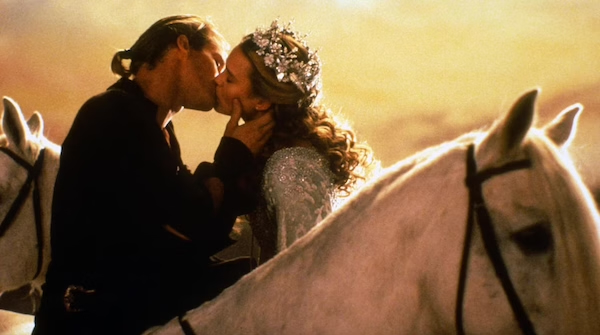
The occasion of my interview with Reiner was a home-made fan film version of The Princess Bride engineered by director Jason Reitman. He came up with the idea as a way of creating something fun during the pandemic lockdown, and a means of raising money for World Central Kitchen. Entertaining people when they needed a laugh—while also doing some actual good in the world—was exactly Reiner’s thing. He loved Reitman's tribute, and he even played a part in it himself.
Here’s how the project worked: the story was broken up into 10 to 15 minute sections. A range of different actors would take on the characters, each recording his or her scenes on a cellphone from wherever they were spending their Covid lock downs. Then, Reitman and his team stitched the footage together for a comical, do-it-yourself version of the classic 1986 film. The cast included… everyone.
Jack Black, Jennifer Garner, Common, Jenna Ortega, David Oyelowo, Pedro Pascal, Patton Oswalt, Hugh Jackman, Sophie Turner—the list is too long to recite. But they all shared fond memories of The Princess Bride, and their recreation was intended to be a reminder of a film that united nearly everyone on the planet. If The Princess Bride were not so universally loved, this playful reimagining wouldn’t have worked.
“It’s kind of funky,” Reiner told me. “I wouldn’t think this is the best way to introduce someone to the film. But if you already know the movie, that’s what makes it fun. The audience already knows every line.”
He admitted that he couldn’t actually picture what Reitman had in mind when he first proposed the project. Reiner just took a leap of faith. “It was for the pandemic and to get food into the food banks,” he said. “The purpose of it was so good, and anything that we can do to help, we want to do. So, I had no reservations. I was like, ‘Nah, let’s do it!’”
That meant getting the blessing of the person who actually controlled the rights to The Princess Bride: Norman Lear.
It’s fair to say that Lear is one of two father figures in Rob Reiner’s personal and professional life. The first was his actual father, the legendary director and writer Carl Reiner. Lear, the creator of All in the Family, cast Reiner as the hippy son-in-law on the 70's sitcom, but he had known Rob for ages before that. “Listen, I've known him since I'm like seven, eight years old,” Rob told me.
How Lear—who died in 2023—came to have the controlling interest of The Princess Bride is its own curious story. “He owns the movie rights. Absolutely,” Reiner said. As he recalled, “It was an odd thing to do with Stand By Me…"
Lear’s Embassy Pictures had acquired the rights to the Stephen King story “The Body,” and he had developed the project for years with Reiner as the director. Lear also helped produce This Is Spinal Tap, but the coming-of-age drama was a step up for Reiner. When Columbia Pictures purchased Embassy in 1985, Stand By Me was about to start shooting—but it stood out as too much of a risk. Executives decided to cancel it.
“They said, we don't want to do this. We're not going to fund this. And so here we were two days before shooting, and all the financing was taken away from us,” Reiner said. “Norman stepped up and financed the movie. He actually put his own money up. It was like, seven and a half million dollars. We made the movie and it became a big success. Then he said, ‘Well, what do you want to do next?’ And I said, The Princess Bride. He said, ‘Okay, let's go and do it.’ So that's how that happened.”
In a way, what Lear really said to him was: As you wish.
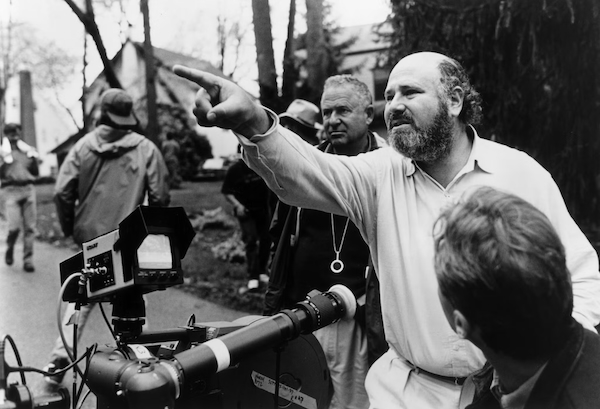
Both films became a windfall for Lear, classics that are still beloved today. His support was not only a gift to Reiner, but to moviegoers everywhere.
But The Princess Bride had one more life-changing gift for Reiner—and for us.
When Reitman started his home-made tribute, he asked Reiner to play the role of the grandfather (originated by Peter Falk), who reads the fairy tale to his flu-stricken grandson (played by a young Fred Savage in the movie). In the DIY version, the part of the little boy in the scenes with Reiner was played by grown-up Josh Gad.
Again, Reiner wasn’t one-hundred percent sure how Reitman was going to cut it all together. “I had no idea what he was going to do. All I knew is that he said, there's going to be different people playing the parts and you're going to play the grandfather with Josh Gad,” he recalled. “And he told me, ‘Sit on the side of a bed.’ And then Josh Gad was recording in another house. So everybody's in their own place.”
The special part came in the final scene. The grandfather concludes the story, says goodbye to his grandson, and is asked to return again to read him another story. Then, the old man says, “As you wish."
But since actors repeatedly swapped out for the different segments, it wasn’t Rob Reiner and Josh Gad performing that final scene. It was Rob Reiner and his father, Carl.
This time, Rob was not sitting on the edge of the bed, he was tucked up under the covers playing the part of the little boy. Carl, recording his segment from his own home, closed the book, said his farewell and donned a snappy fedora as he exited the room with that moving final line.
It was the last time Carl Reiner would appear on film. Three days after sending the footage to Reitman, he died from natural causes at the age of 98. But thanks to Reitman's home movie version of The Princess Bride, Carl the lifetime showman got one more curtain call: A scene shared with his son Rob in what is undoubtedly his most treasured film.
When I spoke with Reiner about the project, his father was still alive. He had yet to shoot his final sequence and he was looking forward to making this clip with his old man. We didn’t talk again after Carl’s death. Rob and his family were obviously grieving, but Reitman spoke to me about the moment they captured together.
“It’s a scene about storytelling. You can’t help but imagine Carl reading stories to Rob when he was a kid, and that this is what it looked like and what it felt like,” Reitman told me back in 2020, when I first wrote about this project. “I’m a dad myself,” Reitman said. “I can only imagine how thrilling it is to bring to life a scene from your child’s movie, no matter what age you are.”
Real life rarely culminates in a goodbye so powerful and comforting. It was a true fairy-tale ending, for father and son, and fans alike. Certainly, the deaths of Rob and Michele are the opposite—a grim and sorrowful way to go, defying meaning of any kind.
But it is for times like this that Rob Reiner made stories. Those creations are how we should remember him, not this tragic end. Rob was a romantic, but also a realist. He knew the world could be cold and unforgiving. “The Princess Bride is a story about true love conquering all,” he told me in 2003, “which is a fairy tale.”
Still, it’s a fairytale worth holding onto. A light against the dark. If you wish.