The DMC DeLorean screeched to a magical halt on movie screens in Back to the Future—a moment that, 40 years on, still sparks wonder.
Maverick scientist Dr Emmett Brown (played by Christopher Lloyd) built a time-travel machine that could fly and set the ground on fire, quite literally. It was the right mix of technology, fantasy and style.
“Wait a minute. Wait a minute, Doc. Are you telling me that you built a time machine... out of a DeLorean?” Michael J Fox’s character Marty McFly asked Brown in the movie, where McFly is accidentally sent 30 years into the past in the car.
To which Brown aptly responded: “The way I see it, if you're gonna build a time machine into a car, why not do it with some style?”
The time machine may be a work of fiction, but the car was very real. Designed by legendary automotive designer Giorgetto Giugiaro for the DeLorean Motor Company (DMC), the DMC-12 was a production sports car renowned for its wedgeshaped design, gull-wing doors (a feature first seen on the Mercedes-Benz 300 SL in the 1950s) and peculiar brushed stainless-steel finish on the outer body panels. The engine was in the rear—one of the many unusual details that defined the car.
If what was outside wowed car lovers, it’s what was inside that got sci-fi nerds hooked to the vehicle in the Back to the Future trilogy. In the movie, the DeLorean time machine was powered by a small nuclear reactor that ran on household waste and was capable of generating up to 1.21 gigawatts of power.

When the car hit 88mph (132 km/h) a flux capacitor would be triggered, creating a woosh of electricity and plasma around the car before it vanished into thin air. Funnily enough, the original car had a speedometer that could go up to only 85mph. The DeLorean was notorious for being underpowered.
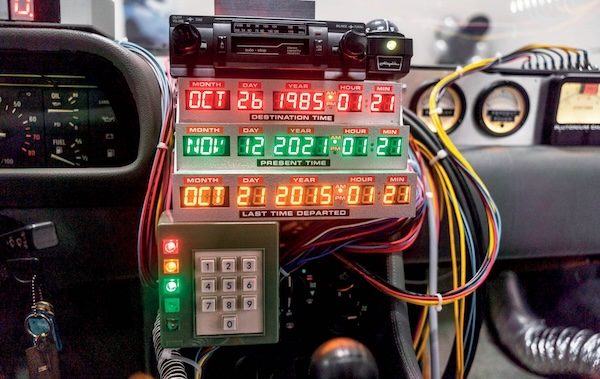
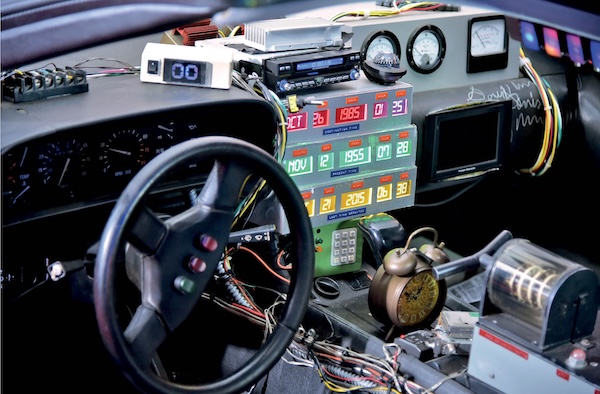
Other fascinating equipment inside the on-screen vehicle included a three-way time circuit that showed the destination time (in red), present time (in green), and last time departed (in yellow) and a plutonium chamber—the time machine’s original power source.
In real life, however, DMC made some questionable business decisions and wound up as a company in 1982, three years before the movie was released. While the DeLorean’s popularity rose after Back to the Future, it didn’t help the company’s fortunes. Only 8,500 DeLoreans were ever made. Estimates suggest that only 6,000 models exist on roads today.
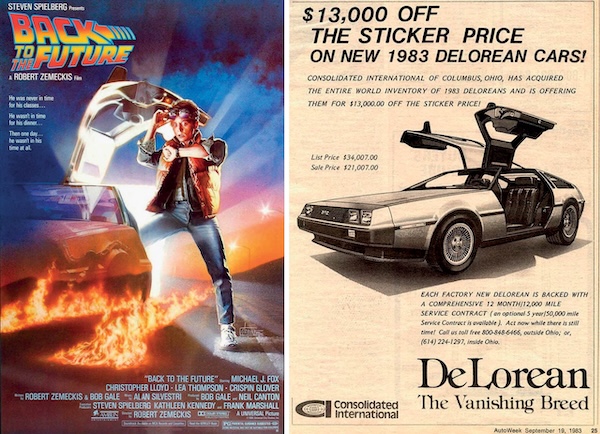
But the DeLorean’s on-screen magic, despite its ill-fated end, still made it a cult favourite.
It wasn’t a surprise that in 2021, the car was added to the US Library of Congress's National Historic Vehicle Register. The Hagerty Drivers Foundation, which manages the register, describes the DeLorean as “among the world’s most recognisable and beloved automobiles” which transcended borders and generations, and “appealed to an audience far beyond the car community.”
Coming back to the present in 2025, and the DeLorean is supposedly edging back to being on the road—this time as an exciting electric vehicle, the Alpha V. Designed by the DeLorean Motor Company, a new venture based in Texas, the Alpha V is envisioned as an electric sports car that will be capable of going from 0-60mph in 2.99 seconds and possess a top speed of 155mph. The new car retains the gull-wing doors from the original vehicle.
While the more futuristic looking version of the DeLorean was announced almost three years ago, critics have pointed to the lack of clarity from the new DeLorean Motor Company and the slow pace of car development.
The car went on pre-order earlier this year, but potential buyers can only reserve it using cryptocurrency on a DeLorean Marketplace website, which also mentions that the final design and specification of the Alpha V are still under development. It remains to be seen if the DeLorean Motor Company will deliver its promise on the Alpha V.
Thankfully, we will always have the original DMC12. Great Scott! What a lovely car.
Fictional rides that made the future feel real.
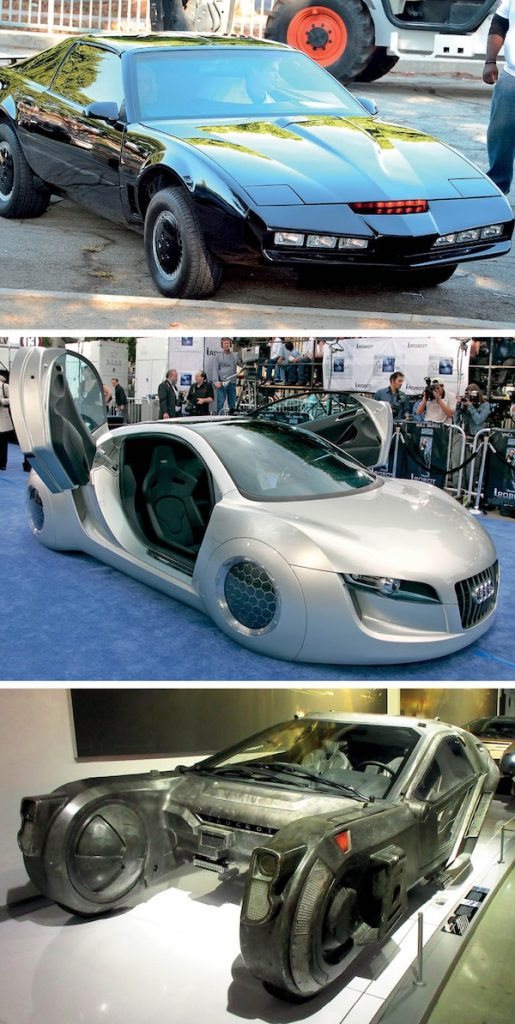
The star of the Knight Rider series, starring David Hasselhoff, was a modified and technologically advanced 1982 Pontiac Trans Am model that was nearly indestructible and self-aware, thanks to AI. KITT was short for Knight Industries Two Thousand.
Developed as a concept car by Audi, and featured prominently in the Will Smith-starrer I, Robot (2004), the two-door coupe shows a futuristic car from the year 2035. The car used spheres instead of conventional wheels and was capable of self-driving.
In Blade Runner 2049, the iconic flying vehicle returned with enhanced electrics and a built-in drone. The roadable vehicle was also designed to take off vertically.