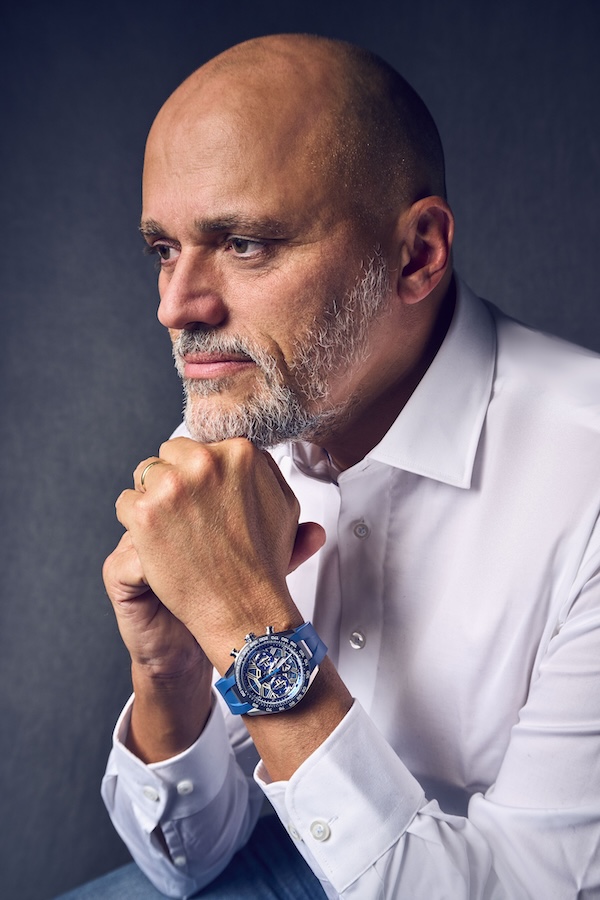
When Antoine Pin took the helm of TAG Heuer in 2024 it was well-earned. Pin returns to a brand he first served early in his career, but with two decades of senior leadership across LVMH’s watch houses behind him. His early sales and product roles at TAG Heuer and senior marketing and commercial posts across Zenith and BVLGARI give him credibility in his position as CEO.
With a particular strength in commercial pragmatism coupled with a respect for heritage, Pin looks like he’s focused on investing in movement technology and manufacturing where it matters, all while dipping into narrative partnerships that have proven cultural traction.
The timing of his appointment is significant. Along with the announcement of the brand returning as the official timekeeper for Formula One, at that moment, the wider Swiss watch industry was dealing with slower growth in traditional markets and a faster-moving, attention-fragmented luxury landscape. As an old hand, familiar with the intricate inner workings of TAG Heuer, Pin is looking to double down on technical credibility and make sure the brand’s message isn’t diluted by ubiquity.
We met Pin at their office during the hectic weekend of last year's Singapore Grand Prix.
ESQUIRE SINGAPORE: I know it was about a year ago, but I wanted to personally congratulate you on TAG Heuer returning to being the official timekeeper for F1.
ANTOINE PIN: Thank you very much.
ESQ: And congrats on the CEO appointment at TAG Heuer. It must feel like a homecoming for you.
AP: It’s the third time that I’m working for this company. I got married while I was a TAG Heuer employee; I moved overseas for TAG Heuer. It’s become a huge part of my life that it has moved beyond the [scope of a job].
ESQ: But now you’re a CEO at TAG Heuer, is it different now?
AP: The job is different. There’s a different perspective. When I first started here, I was the assistant to the marketing director... and, honestly, I was super scared of the [CEO] at the time. You see that position and you don’t imagine that would be the post you’d eventually fill... It’s just unfathomable. You don’t even think about it. And even when I returned to the company for the second time, that wasn’t necessarily on my agenda at the time.
My predecessors were really good at the role, so it’s a big responsibility for me to take on. I see this as a privilege to be TAG Heuer’s CEO. When I started as a marketing assistant, then a junior manager, then head of a subsidiary, you sorta see the company differently from all these positions. I don’t see the totality of the company; I see a chunk of it, but I see it from a totally different angle. And there’s a learning curve, which is good, because I’m still in the mood for learning.
ESQ: Did your predecessor leave you any words of wisdom when you took over?
AP: There’s a real continuity between Frédéric Arnault and me. We had long discussions about the shared vision. Many people have different ways of doing things, but we do share the same love for the brand and its philosophy.
ESQ: It’s like the passing of the flame.
AP: Absolutely. I like that analogy. It’s a relay. The brand, the Maison is bigger than any of us. The philosophy is stronger than us.
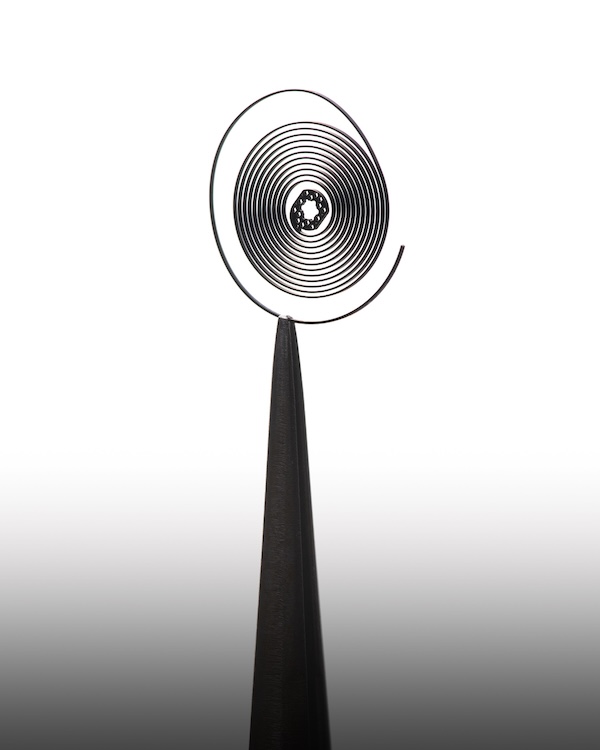
ESQ: One of the things that you inherited. Was the TH-carbon spring project-
AP: Yeah.
ESQ: -And you saw it to completion. Could you talk about that journey?
AP: It was not a quiet journey. Sometimes we want to make stories beautiful, but I think the most beautiful stories are the ones where you have a challenge to surpass. We didn’t shy away from the fact that we initially launched the product, and it didn’t work out. We wanted to highlight the story of those guys from the lab; those scientists who said, Okay, we messed up. It took five more years to identify and sort out the issue. We restructure the carbon spring so that it can be protected from the humidity, and now it’s working. I love those values of never giving up, y’know?
ESQ: That episode stood out because it grounded you guys as being human. That there are humans behind the cold, calculated mechanisms of a watch.
AP: Exactly! Sometimes we want things to be perfect, but mankind’s best trait isn’t about being perfect but overcoming obstacles. It’s like the athletes, who fall and then get up to try once more. Eventually, they succeed.
And it doesn’t have to be athletes. Sports is an amazing field, and it is very easy to picture the triumph of the athlete, but you can find this capacity to surpass limitations in other fields. As a cook, as a scientist, as a businessman.
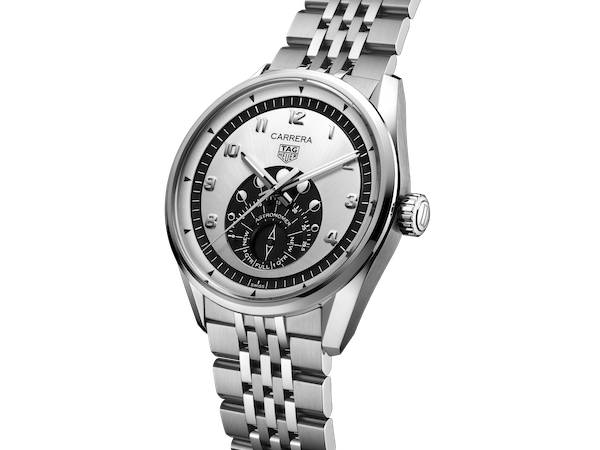
ESQ: Tell us about the Carrera Astronomer.
AP: People don’t know that, but TAG Heuer was the first [Swiss] watch in space. [Editor’s note: In 1962, astronaut John Glenn wore a modified Heuer 2915A stopwatch aboard NASA’s Friendship 7 spacecraft.] Again, there’s this idea of going above and beyond. That’s why we had this idea to show, not just timepieces related to motor racing, but also a part of our heritage that transcends to space as well. The Carrera Astronomer was an interesting way to reconsider the moon.
The way the functions are displayed should be functional. Usually, you’ve tiny displays of the moon phases that are not quite readable. Here we oversize the display to return to the real efficiency and user-friendliness of our products. Again, all watches were born as tools. They were tools before they were watches. They were tools for manufacturing. They were tools for and particularly for manufacturing operations in the very early beginning. So you had to count time for some specific manufacturing operations before they were associated with sports. So you needed very functional and very user-friendly tools, and that meant very, very exceptional readability of all the counters. And that’s how we reinvented this kind of moon phase approach with the very, very large display SEO.
ESQ: What sort of challenges do you see in the coming years?
AP: Too many. It’s crazy. [laughs] We are here to enchant the world. We’re not here to make people’s lives complicated; we want to brighten your daily life. When you enter a TAG Heuer shop, we want you to dream, and it’s somewhat scary and difficult to make people dream when they are concerned about tomorrow. That, to me, is probably the biggest challenge we still need to engage people in our communication.
When you purchase a luxury timepiece, you should connect with your product. We mean something more than just the functionality of it. That’s the reason why you sometimes pay a certain amount of money, because there’s an extra layer of comfort, to feel good, to have that emotional connection. In order to open potential clients’ minds to that, their minds need to be free from the heaviness of daily life, and that’s hard these days.
ESQ: What is it about TAG Heuer that still surprises you to this day?
AP: The exceptional mindset remains. I see the next generation joining TAG, and they possess the same mindset, same ambition as I did when I first joined the company. I can still feel this now.
ESQ: As the returning official timekeeper for F1, are you guys doing anything for its 75th anniversary?
AP: We’ve plenty of ideas, but we’ve 10 years to deliver them, so it’s fine... we’ve plenty of time. But I’m sorry, I’m not gonna tell you. [laughs]