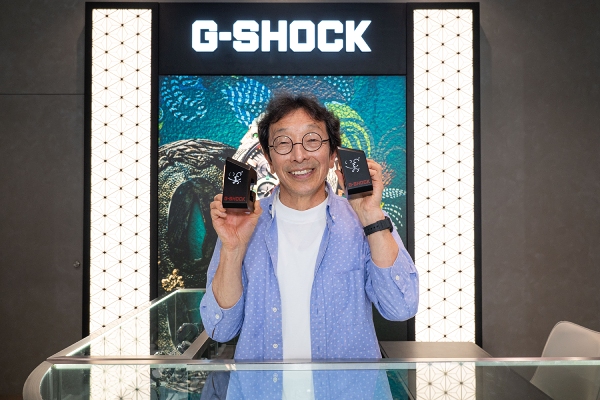
The first thing I notice about Mr Kikuo Ibe is his slight frame and wire-rimmed spectacles. At a glance, he looks every bit a 73-year-old should—wrinkles around the eyes, a delicate stature, a gauzy cardigan. Though you could've told me that he's 53 and I wouldn't have blinked an eye. We greet each other in a language the other can’t understand, shake hands, and exchange smiles. Only after we sit across from each other in a conference room do I notice the pin fastened to the left side of his purple cardigan. It’s a steel-plated, yellow-white sunflower with a face on it. It smiles at me, so I smile back.
Through the kind translation of the Casio team, I tell him how much I like his pin. To which, he replied, “Moomin,” with a toothy grin. You know, Moomin—the white hippo-like trolls known for their round bodies and large snouts. I presume the pin is based on the sun that appears in the show.
It’s difficult to fathom how a man this delicate could be responsible for creating some of the world’s toughest watches—timepieces built to withstand everything from abuse from children to the rigours of Marine training. Yet it’s precisely this contrast that pulls me closer to the father of the G-Shock.
Just a month ago, in December, G-Shock revealed its latest release, the limited edition MRG-B2000KT. Its name probably sounds like code to you, so let me break it down in English. MR-G is G-Shock’s collection of high-end watches that represents the pinnacle of the brand’s technology and design.
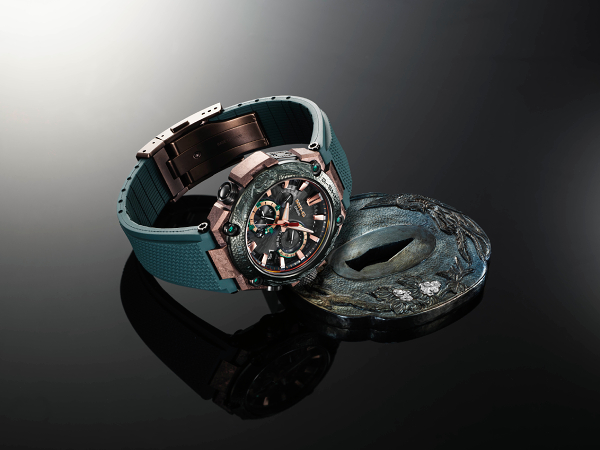
This particular release embodies the iron guard of the Japanese katana, featuring a hand-engraved bezel of a phoenix by a master craftsman. Details peppered throughout echo the sensibilities of a sword: the shimmering crystallised case, emerald-toned bezel screws, and hands shaped to resemble an arrow’s fletching. I’m only just scratching the surface here—there are only 800 pieces worldwide and 30 available in Singapore for good reason.
The watch became the starting point of my conversation with Ibe-san. From there, we drifted into his creative process—where inspiration comes from, vegetables, his favourite collaborations, and the what-ifs that still linger.
ESQUIRE SINGAPORE: Did you ever worry that using premium metal in the MR-G line might take away from the everyday, accessible spirit of G-Shock?
KIKUO IBE: No, not at all. I think it’s a very wonderful watch for everyday use, even when using premium metal. It’s very important to keep the original shape and spirit of the material.
ESQ: What original G-Shock features did you feel were most important to keep in the MR-G line?
KI: The most important characteristic of the original G-Shock is its toughness, and the spirit of always challenging new things.
Using metal instead of resin is one aspect, but another important essence is the attitude of taking on very difficult challenges. When I invented G-Shock, there were many obstacles. What MR-G inherits is that same attitude and spirit.
ESQ: What aspects of the new watch justify its near SGD10,000 price tag to skeptics?
KI: The biggest aspect is how well it expresses traditional Japanese craftsmanship. If people can feel that value, I would be very happy. Its titanium bezel is hand-engraved by a very renowned Japanese craftsman, so touching and feeling the watch is the most effective way to understand its value.
ESQ: What is your personal favourite detail of the watch?
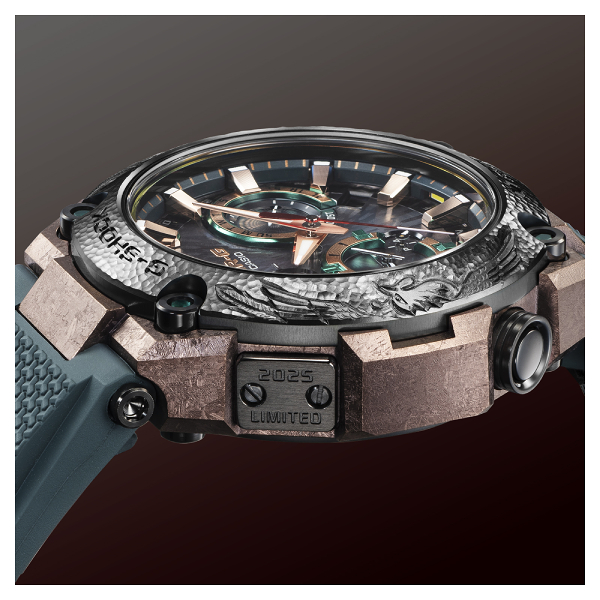
KI: The key point of this watch is conveying the handmade feel—literally. The material is titanium, which is far harder than what’s typically used for metal decoration, which takes a very long time to work with.
Also, a technique called shishiai-bori is used on the bezel of the watch, which enables a bold composition and depth, especially in the motif of the phoenix. The craftsmanship on the bezel is very beautiful, and that’s the most highlighted point of this product.
ESQ: What specific qualities or skills did you look for in the master craftsman behind the engravings?
KI: When we collaborate on craftsmanship like this, we first check whether the craftsman’s world fits the value proposition of MR-G. After a few conversations with the artist, Mr Kobayashi, we felt he could express his metalsmith work while maintaining a strong affinity with MR-G’s strength and luxury.
ESQ: You’re known for being very hands-on. Have you ever approved a design you personally didn’t like because your team believed in it?
KI: (Giggling) Of course, there are some designs that I think are not so good, but this is based on my personal subjectivity. Ultimately, I place my trust in the designer. What I value most is teamwork and materialising something together as a team.
ESQ: What’s the most unusual idea—shape, function, or material—that you experimented with but never followed through on?
KI: I once tried to make a watch as thin as possible—a digital watch. I actually made a sample of it with a total thickness of just 1.9mm. But after trying it on, I was afraid it might cut my skin (laughing). Of course, I had to take the user’s safety into consideration, not just my own. From this point of view, the 1.9mm watch was very beautiful, but it should not be on the market.
ESQ: Beauty or utility?
KI: Beauty. Without beauty, there is no appeal to the human spirit.
ESQ: Aside from studying watches, where do you draw inspiration from?
KI: Currently, my hobby is growing vegetables on my farm. It allows me to feel the energy and vitality of nature, so that’s where I’m getting inspiration and energy from.
ESQ: What do you like to grow?
KI: All kinds of vegetables, to grow and to eat. But when it comes to flowers, I prefer the rose. I’ve learnt from them that beautiful things always have thorns.
ESQ: You’ve done many collaborations—from Wu-Tang Clan to Evangelion to FC Barcelona to Maison Kitsuné. Which one stands out most?
KI: Every collaboration is outstanding from my perspective, but the one that stands out most from my memory is the collaboration with Nigo for the G-Shock 35th anniversary.
ESQ: Why does that collaboration stand out?
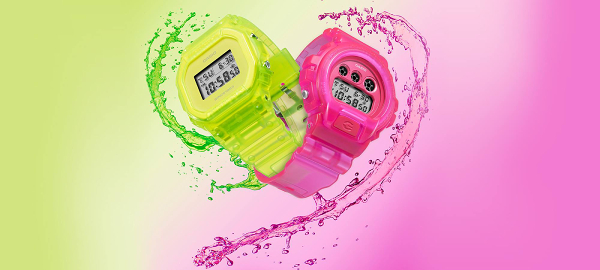
KI: The product has remained in my memory because it wasn’t about launching a collaboration using existing techniques or functions. To materialise our vision, we challenged a completely new colour scheme that we had never developed before. We had many discussions, and finally selected those colourways to express what we wanted to convey to the market.
ESQ: What’s one question about G-Shock you wish people would ask, but never do?
KI: If you could choose any historical figure to evaluate G-Shock, who would it be?
ESQ: So, who would it be?
KI: (Laughing) Leonardo da Vinci. I think he’s a genius, and I’d be very interested to know how a super-genius like him would evaluate G-Shock.
ESQ: Do you ever think about how your life might have turned out if the first watch you dropped down the stairwell hadn’t broken?
KI: Things would have changed dramatically.
I probably wouldn’t have been able to come to Singapore like this and meet G-Shock fans from other countries. So, if the watch hadn’t dropped down the stairwell, I think I’d be living a very lonely life (laughing).
What G-Shock has brought into my life is community, meeting new friends all over the world. That’s what I appreciate most about my “son,” G-Shock.