It feels somehow shifty and... dishonest, making a buck writing,” Anthony Bourdain wrote in his celebrated 2000 memoir, Kitchen Confidential. “Writing anything is a treason of sorts. Even the cold recitation of facts—which is hardly what I've been up to—is never the thing itself. And the events described are somehow diminished in the telling.”
Bourdain wrote this passage near the end of his book—worrying that he somehow sanitised his rise from dishwasher to master chef (he didn’t)—but he easily could’ve said this about his own biopic, Tony. Matt Johnson’s film about the early life of the chef-turned-TV-host, who died by suicide in 2018, enjoyed nearly widespread critical acclaim in its limited theatrical release earlier this month. It stars The Holdovers’s Dominic Sessa as a teenage Bourdain, along with Antonio Banderas as his chef-mentor and Emilia Jones as his love interest.
It’s easy to see why people love Tony: after years of controversial, frenzied biopic-making (Bohemian Rhapsody, King Richard, A Complete Unknown, and countless more), Johnson plates the unseasoned coming-of-age summer romance flick that you’ve seen twenty times already, but most people love anyway. Instead of exploring something, anything about one of the most complicated figures in recent memory, Tony tells a hybrid teen romance/workplace dramedy that craves immunity to criticism about its portrayal of Anthony Bourdain, because it’s hardly even about Anthony Bourdain to begin with. It’s a fitting endpoint to the biopic wars: a movie that is so afraid of capturing its titanic subject that it ceases to be about the man at all.
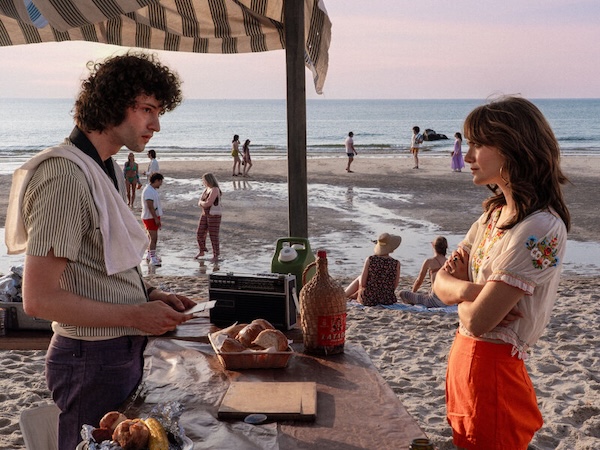
Tony had an embarrassment of material to choose from. There’s everything in Kitchen Confidential—his charmed yet uneasy childhood, his breathless journey through New York City’s grimiest kitchens, and a transcendent trip to Japan—and everything that came after in Parts Unknown and No Reservations. Instead, Johnson landed on Bourdain’s summer of 1975, which he spent washing dishes in Provincetown, Massachusetts. In what Bourdain’s estate claims is an “interpretation” of his life, whatever the hell that means, we see the young Bourdain fail as an aspiring writer, take up a dishwashing gig, learn to cook, and suffer a few figurative and literal bruises along the way. One of them comes when Biopic Bourdain accidentally burns down the restaurant, which is something that absolutely did not happen.
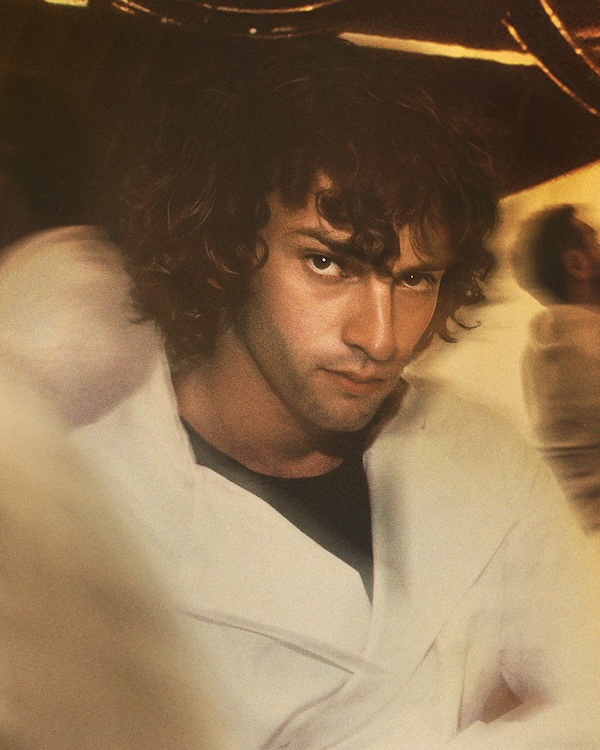
A title card quotes Kitchen Confidential at the beginning of the film: “I was—to be frank—a spoiled, miserable, narcissistic, self-destructive and thoughtless young lout, badly in need of a good ass-kicking.” It’s as if Tony is asking forgiveness off the bat: If you hate this insufferable moron who looks and acts nothing like Anthony Bourdain, well, even Anthony Bourdain hated him!
Tony somehow considers the basic beats of Kitchen Confidential and swerves to the saltine cracker version of it. Anthony Bourdain had several critical mentors and confidants as he navigated the culinary industry—and yet Tony casts the fictional “Chef” (Antonio Banderas) as the father figure. Bourdain enjoyed a litany of misadventures in the kitchen, yet Tony is so afraid of resembling The Bear that it cribs Bourdain’s story about a newlywed fucking a chef on her wedding night. Tony might be a passable late-summer distraction if it was an entirely fictional story about no one in particular—in the vein of Adventureland, The Way Way Back, or Licorice Pizza at best—but it’s not, as much as it wants to be.
Tony’s allergy to consuming anything complex about Anthony Bourdain makes more sense when you dig into interviews with the cast and creative team. It’s almost as if they were preemptively distancing themselves from Bourdain from the very onset. Johnson bragged to Grub Street that he has “no relationship” to Bourdain. “I could talk about him the same way I could talk about Mickey Mouse, a very famous person who people seem to like,” he said.
Mickey Mouse? I’ll get to work on the biopic of Roberto Clemente—the baseball legend who died in a plane crash while on a humanitarian aid trip—but make sure I talk about him the way I talk about Peppa Pig.
Body-swapping Anthony Bourdain with Wonder Bread Baby Bourdain is ridiculous.
While watching Sessa’s performance—which lands somewhere between the Fonz, Bart Simpson, and Joseph Gordon-Levitt’s insufferable wimp from 500 Days of Summer—did you wonder why he doesn’t strike any of the chef’s mannerisms? It was intentional. “It would have been ridiculous if I was having to walk and talk and try to mimic him as a character,” Sessa told Vanity Fair. “Not to say that’s a bad thing. I think those movies where actors are able to transform into another person are great. But for this guy in particular, it’s unnecessary.”
I mean, would it really have been ridiculous? Body-swapping Anthony Bourdain with Wonder Bread Baby Bourdain is ridiculous. Say what you want about the love-to-hate-’em man of the moment, Timothée Chalamet, but imagine the public backlash if he didn’t do his damnedest to pull off Bob Dylan’s drawl in A Complete Unknown. The team behind Tony clearly didn’t want to find out what would happen if everyone hated Sessa’s Bourdain, so it didn’t even try to give us even a faint resemblance of him.
Now’s a good time to say: Like Johnson and Sessa, I don’t really have a relationship to Bourdain either. I know his story, have seen my fair share of Parts Unknown and No Reservations reruns, but he’s no personal hero. I also don’t believe a biopic should mythologise its subject, nor shoot for some impossible journalistic ideal. But these films should, at the absolute least, seek to understand something elusive or even unknowable about their subject while still revering the truth.
That’s why you have to give the divisive Springsteen: Deliver Me From Nowhere its due. Scott Cooper’s film could’ve delivered a greatest-hits romp with Jeremy Allen White and the E Street Band, but it instead explored the intense turmoil that Springsteen felt during the making of Nebraska. Like Tony, Deliver Me From Nowhere hyperfocuses on a short period of time—but only one does it in service of trying to understand the humanity behind a legend, even if it was ugly.
Compare Johnson’s Mickey Mouse quip to what Scott Cooper, the director of Springsteen: Deliver Me From Nowhere, said about the goal of his take on the Boss. “I wasn’t interested in mythologising him,” he told The New York Times. “I wasn’t chasing the Boss. I’m chasing the man in a bedroom in Colts Neck with a four-track recorder, trying to make sense of his life, the trauma that he’s carried since he was a child.”
(What’s Deliver Me From Nowhere’s version of Tony’s kitchen fire? Springsteen decides to swim the length of the Delaware River to cure his existential torment?)
It’s no surprise that Tony’s best moments pay homage to the actual memories Bourdain recalled in Kitchen Confidential. The best scene in the film, by far, recreates the rush to catch the frenzy of striped bass near the Provincetown shore. It’s when Johnson finally just lets go and allows us to feel the town as Bourdain did in his youth. The climactic clambake, another scene Bourdain remembered fondly, is a sweet addition—even if it’s warped to fit the kitchen-fire storyline. But it doesn’t amount to anything more compelling than what Bourdain himself shares in Kitchen Confidential.
If everyone liked Tony so much, maybe more biopics should distance themselves from the famous name in their titles. Imagine an Ernest Hemingway biopic where Papa fishes for two hours, learns the power of the great outdoors, jots down the first few lines of The Old Man and the Sea, and responsibly enjoys a single daiquiri at the end of the film. Or, a Britney Spears movie, filmed in the style of a Limited Too ad, that begins and ends with the making of ..Baby One More Time. A Michael Jackson movie that ignores its subject’s sexual abuse allegations? That already exists.
This is what we have with Tony. It couldn’t care less about the thing itself.