
Since Singapore Art Week is upon us, here's some affordable art to take home. Swatch enters into its next chapter in its art journey with a collaboration with the Guggenheim. Distilling more than a century of art history into four watches, these timepieces feel less like reproductions and more like conversations between the wrist and the museum wall. Taking inspiration from four masterpieces—three from the New York museum and one from the Peggy Guggenheim Collection in Venice—the Swatch × Guggenheim Collection, these quartet of watches will draw attention, not only to the time, but, to its visuals.
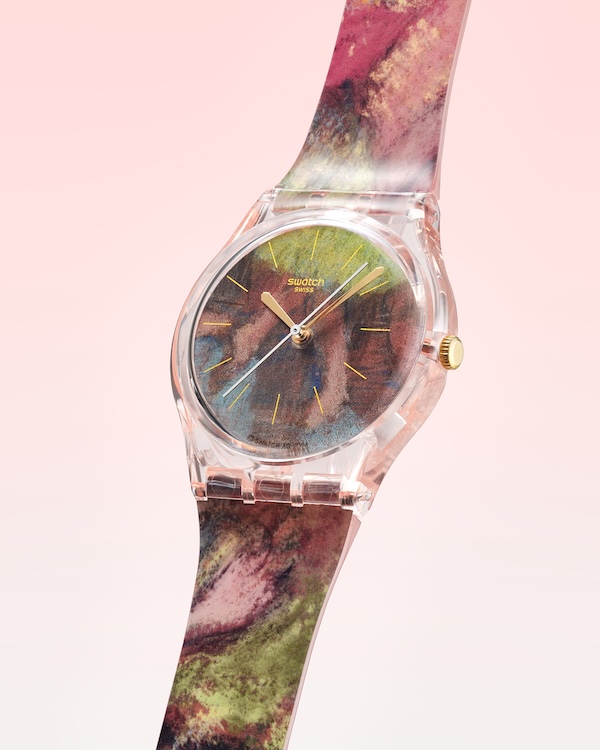
Cribbing from Edgar Degas’ Dancers in Green and Yellow (1903), the dancer's feet becomes a focal point on the dial, while the watch straps showcase the lithe forms of the ballerinas' forms. The gleaming greens and sun-washed yellows adds a sense of frenzied movement to the timepiece.
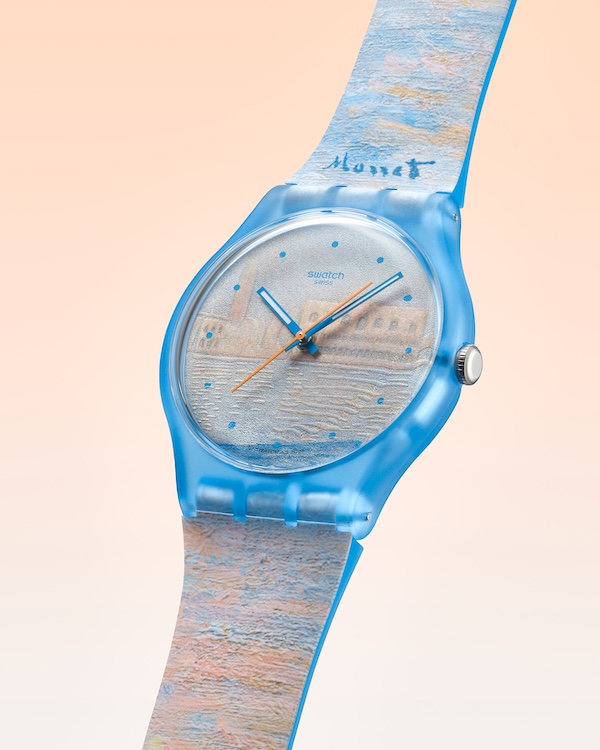
The Palazzo Ducale, Seen from San Giorgio Maggiore (1908) by Claude Monet is next. Here is a watch that draws a poetic line between New York and Venice; Monet’s luminous vision of the Doge’s Palace sits on the dial, while the straps shimmer with reflections drawn from the Venetian lagoon. And hark! After exposure to UV light, the dial glows bright orange, revealing a warmer, almost mythic Venice.

If you're not clued to to Don Giovani and how his womanising ways led to him be (spoiler alert) dragged to hell by the statue of a man he killed, Paul Klee may look at you with disdain. The artist profess an affection for the Mozart opera but he also identifies with Don Giovanni because... well, Klee, too, is engaged in his own amourous pursuits. The result is Klee’s The Bavarian Don Giovanni (1919), a veiled self-portrait. On the dial, the central figure ascends a ladder, while the names of the five women surround him in the painting wrap around the straps. Even the calendar wheel joins the story, switching up the colour daily (a nod to Klee’s own admission of his fleeting infatuations).
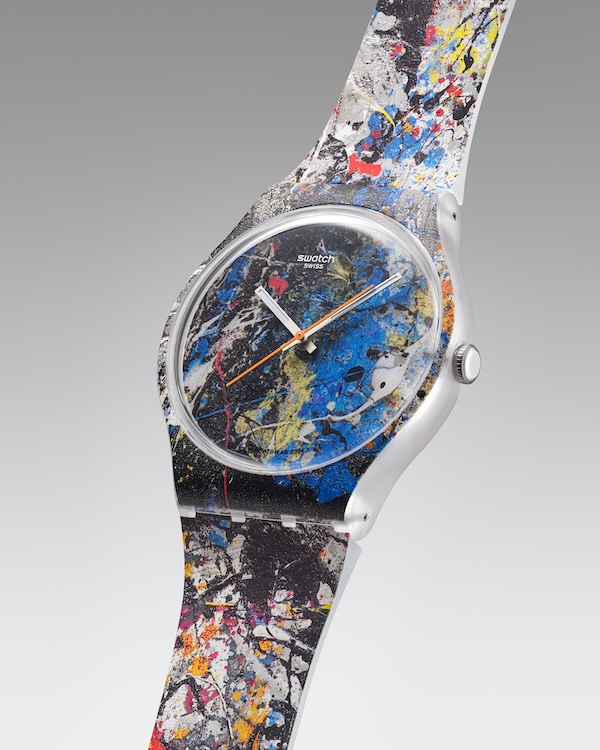
Then there is Pollock’s Alchemy, a watch that abandons representation in favour of manic energy. Drawing from Alchemy (1947), one of Jackson Pollock's defining works (and a cornerstone at the Peggy Guggenheim Collection), the design channels the physicality of Abstract Expressionism. Paint splatter adorn the dial and strap.
By supporting initiatives at the Guggenheim Museums and reimagining iconic works as Swiss-made timepieces, Swatch continues to blur the line between cultural institution and everyday object. That one can leave the gallery and still live with the artwork lodge in your mind and wrapped around the wrist.
The Swatch x Guggenheim Collection is now available online and in Swatch stores worldwide.