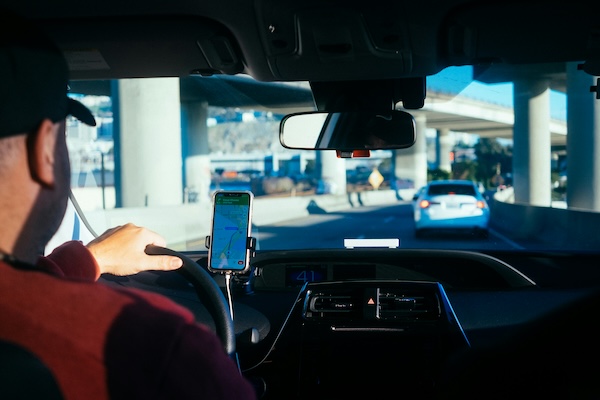
It was in the early hours of the morning that I landed at the airport, but this time, instead of a pre-booked transfer, I went rogue and ordered an Uber. What I didn’t know was that my driver and I had something in common that day. We both couldn’t keep our eyes open.
It wasn’t dramatic enough to justify outrage. No screeching tyres, no sudden braking. Just eyelids lingering closed a beat too long. I’d hoped to have a nap in the back seat on the one-and-a-half-hour journey, but noticing his drowsiness jolted me wide awake. I kept my eyes on the road the entire time, ready to jump forward for the wheel, knowing that even if I did, it would be too late.
Since it was so early, the roads were clear, but on the highway we were travelling at ultra-high speed. I made conversation to help keep the driver awake, and thankfully, the rest of the ride passed without incident. Since then? I haven’t booked an Uber.
Once you notice something like that, it becomes difficult to unsee the pattern. Friends tell stories like weather updates: the driver who speeds aggressively through empty streets, or one who scrolls at red lights, and of course, there’s mine, juggling exhaustion and GPS instructions in real time. None of these moments is particularly headline-worthy. They’re small, forgettable lapses that only matter because of what’s at stake.
I get it. Being an Uber or Grab driver is tough work, and trying to make ends meet requires long, tiring hours behind the wheel. However, if we all paid a little more for our airport transfers, we’d get a better, safer, and more streamlined experience. I’ve recently been taking Blacklane cars from the airport, mainly because they have a meet-and-greet service at arrivals (how fancy!), but also because the safety standards are much higher. In fact, their internal data notes that you’re 60 per cent less likely to be in an incident in a Blacklane than in a taxi. Safety is worth a few extra dollars.
There’s an intimacy to rideshares that we rarely acknowledge. You sit inches behind a stranger whose alertness, judgement, and physical stamina determine whether you arrive safely. And you agree to this arrangement not because you trust them personally, but because you trust the system that put them there.
Mainstream rideshare companies are quick to point out, correctly, that the overwhelming majority of trips end without incident. Millions of people get where they’re going every day. But safety isn’t just about outcomes, but about conditions. Many of their drivers work long, irregular hours. They chase surge pricing late at night. They stack rides because the math quietly encourages them to. Fatigue and distraction aren’t anomalies in that environment; they’re features.
Passengers, meanwhile, are given very little insight into any of this. We see a name, a photo, a star rating smoothed into something reassuringly precise. Five stars "feels" like a proxy for competence, alertness, and even character. We assume the platform is watching closely, stepping in when something feels off. Mostly, we assume that because the app knows where we are, it must also be keeping track of everything that matters.
And what about trusting the driverless car? Self-driving vehicles are often presented as the antidote to human error, but this replaces a familiar risk with a stranger one. When a human driver makes a mistake, the failure is legible. When an AI system fails, it’s an abstraction. Is fallible human judgment preferable to algorithmic malfunction? Rarer, maybe, but harder to anticipate and harder to argue with when it goes wrong?
I can’t see driverless cars working on some of the trickier-to-navigate roads. A couple of years ago, I booked a photo tour on GetYourGuide in Bali. The jungle, Ubud side. My photographer and tour guide was coincidentally also my driver. He zoomed us through insane road conditions, thinking quickly on routes and dodging dogs, motorbikes, and festival parades. He worked a tour per day and knew these streets inside out. I can’t see an algorithm negotiating getting through a flooded alleyway via a neighbour’s garden. In Bali, the locals in the know will get you around safely and smartly, as long as they’re alert, and in the instance of my tour, it was all about local intel.
This isn’t an argument against rideshares, or technology, or progress. I get that convenience and innovation have real value. I just think that blind faith, whether in overworked human drivers or impeccably marketed algorithms, feels a bit naïve. I’m avoiding Uber for now and being more intentional about who I place trust in, which is why I deem value is paying more. Where possible, I choose services that prioritise rested, professional drivers and clear safety standards. Because getting from A to B shouldn’t require hyper vigilance, and the increased price comes with prized peace of mind.