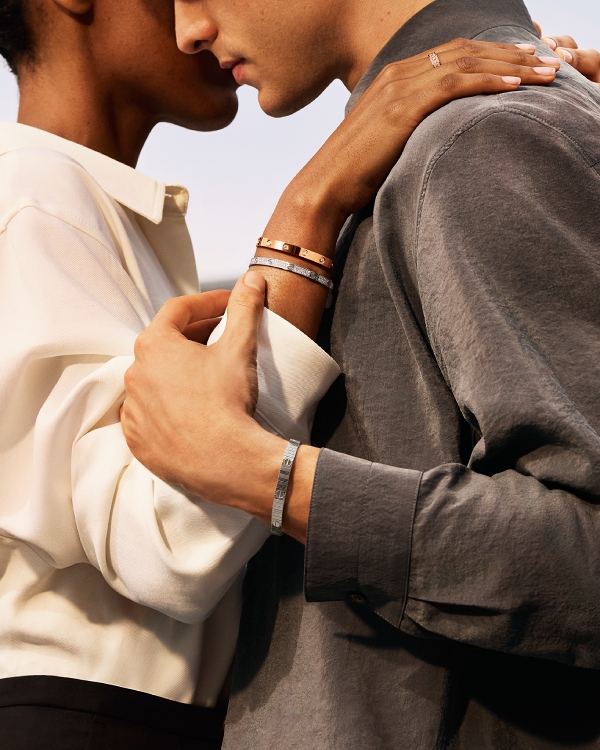
The last time Cartier updated its Love collection, a medium-sized bracelet was introduced, and for the first time, a hinge as well. This allowed for solo wear, making it easier for owners to put it on or take it off independently without help. This came as a convenience for many, but also a shock to purists. After all, the Love bracelet was conceived on this very intimate foundation of requiring assistance—preferably from a partner—to put on.
But as we wrote then during its release, we thought the move perfectly encapsulated the importance of self-love in relationships. You have to love yourself before you can love others, etcetera, etcetera. In fact, we argued that the elimination of obligation gives the act of your partner putting on the bracelet for you even greater significance, precisely because it isn’t necessary.
That was late last year, and Cartier’s already gone back to the drawing board, refreshing the Love collection once again. Enter the new Love Unlimited bracelets (and rings), and our interpretation of all the symbolic baggage they carry.
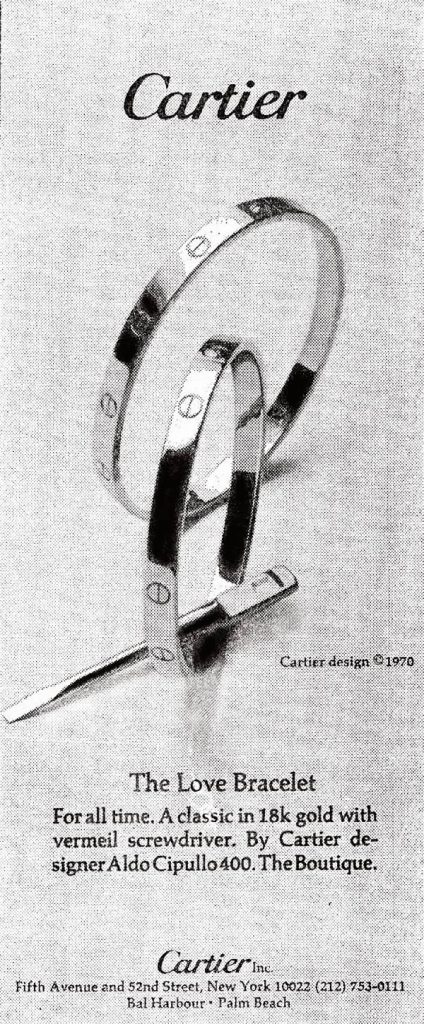
It took the Maison a hundred different trials and prototypes to finalise and settle on the final design. But Cartier enthusiasts will know that, really, this was built off the backs of decades of R&D, dating back to 1969. It was in New York that Aldo Cipullo first designed and materialised the first Love bracelet into existence. The man’s radical decision to leave the bracelet screws visible was an audacious one, but I suppose that’s what it takes to create an icon that endures generations.
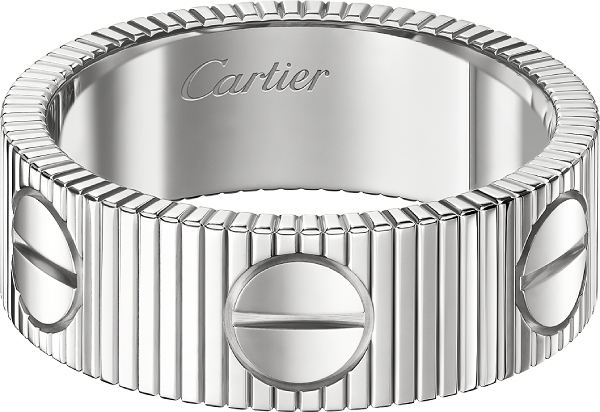
We’ll start with the obvious—there are ribbed grooves lining the bracelet now. Gone are the pristine, mirror-like surfaces of the classic. There’s a rugged elegance now in its place that veers slightly towards the masculine—a plus if you’ve ever felt the earlier iterations a tad too feminine.
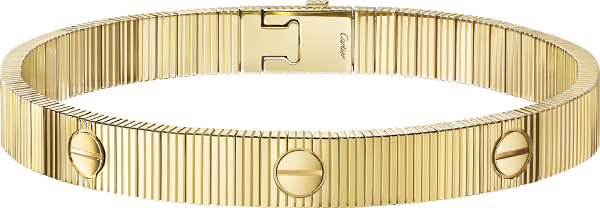
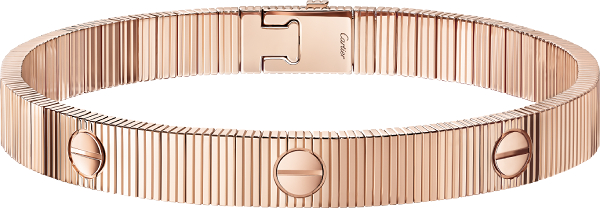
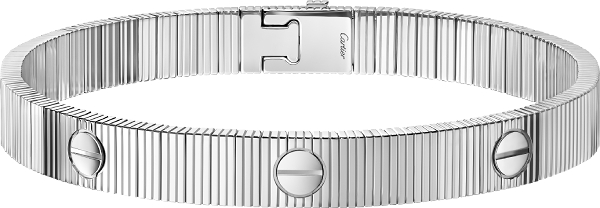
But this goes beyond aesthetics—the ribs are there to transform the bracelet into something pliable and flexible. Something that bends and sculpts itself to the shape of your wrist.
This drastic change in function leaves ample room for interpretation. We, for one, think that by doing away with the hardened, rigid surface of solid gold and opting for more fluidity, it speaks to the evolutionary nature of relationships. Love is not static; it’s a kinetic force that bounces from one person to another as a pendulum would. Partners may need more or less at different points of the relationship. It deepens, loosens, then reignites. The more we willingly let go of our rigid expectations of love, the more skillfully we can navigate it. Love should be fluid, and the Love Unlimited is a reminder of that.
Not unlike the Love hinge bracelet, this new Love iteration will not require a screw to operate it. Though it’s now paired with a new invisible clasp system that allows for easy donning and removal. You wear it by first ejecting the safety clasp, then clicking both ends together. You also remove it by ejecting the safety clasp first, followed by sliding back a compartmentalised screw, then dislodging both ends. It's a simple practice in theory, but ideally, you’d still have your partner there to help put it on for you because it'll take some time getting used to.
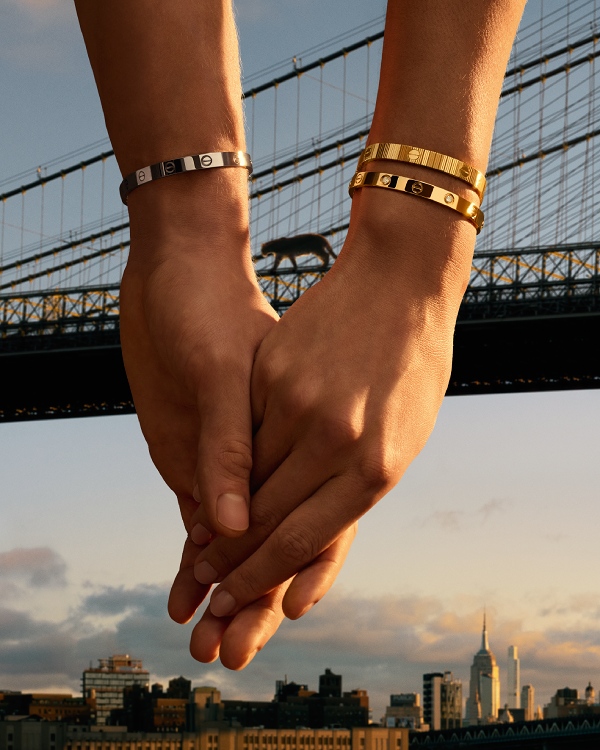
The new Love Unlimited bracelet lives up to its name by allowing one bracelet to connect to another, making a pair, or an endless amount. In theory, it’s limited only by your wallet, but let’s stay with pairs in the name of monogamy.
The invisible clasp works almost like a puzzle piece: one end slotting neatly into the other on your partner’s bracelet. This means that you can mix and match the other precious metals in the collection—white, rose, or yellow gold, to form a band that wraps twice over your wrist, melding into one long bracelet. Pretty romantic if you ask me.
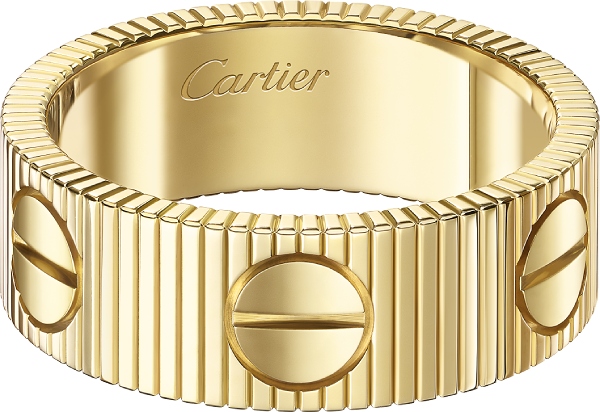
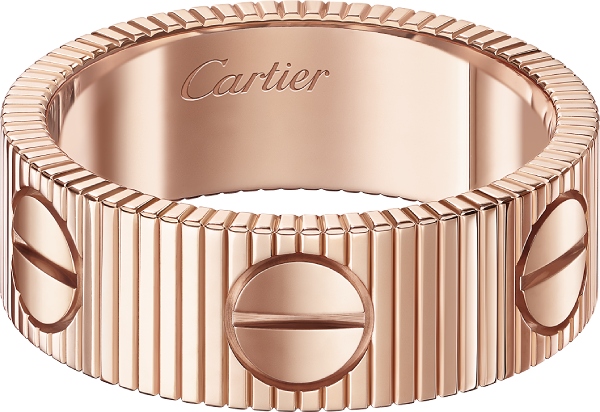
The rings releasing in the collection replicate the ribbed details of the bracelet on a smaller scale, and are also offered in either white, rose or yellow gold.
It’s fascinating to view the many iterations of the Cartier Love as a timestamp of how romance has evolved in our cultural zeitgeist since the '60s. How might the bracelet look like in another 50 years? Will it have six clasps instead of one? Or perhaps they’ll grow to have thorns like a rose. No one can say, but it’s fun to imagine. For now, we have our own generation’s version of modern love to chew on.