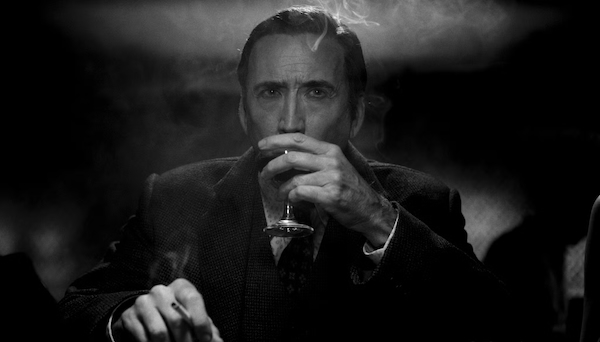
Being a fly on the wall should come naturally to your average private-eye. But being a literal wall-crawler? That’s something new. This is what distinguishes Nicolas Cage’s Spider-Noir hero from the other iconic gumshoes who populate our pop culture—but he’s also starkly different from any other Spider-Man who has swung across our paths.
Cage makes his TV debut in the series, which MGM+ will broadcast and Prime Video will stream later. He originally voiced the alt-universe anti-hero in 2018’s Into the Spider-Verse, but even that version of the gravel-voiced anti-hero is different from the one in the new show. Cage is playing Ben Reilly this time, not Peter Parker. In Marvel comics lore, Ben was a genetic clone of Parker’s; in Spider-Noir, Cage performed Ben more like a clone of Humphrey Bogart.
“For me, this character was 70 per cent Bogart, and 30 per cent Bugs Bunny,” Cage tells Esquire in this first of two separate Spider-Noir first looks. “I was basically Mel Blanc doing Bogart, with that sarcastic sense of humour. But it’s a hundred percent me.”
Below you will see an array of new images from the series, accompanied by our exclusive chat with the star. Over at this full-colour first look at the series, you can see how the images look in their alternate form, since the streaming service will give viewers the option of seeing it either way. In that article, the creators explain how they reworked the Marvel Comics universe of Spider-Man as a streetwise Depression-era mystery.
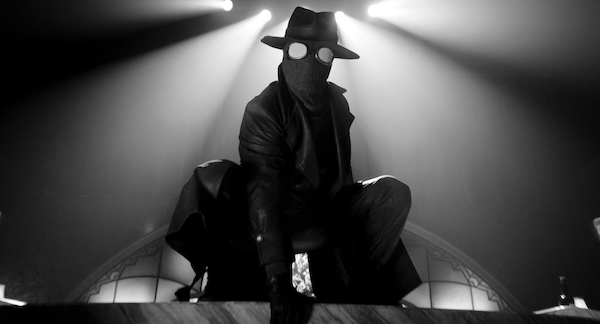
Esquire speaks to co-showrunner Oren Uziel, as well as producers Chris Miller and Phil Lord, who oversaw the Spider-Verse movies and are best known for directing The Lego Movie. They revealed the surprising detail Cage shared with them about his Spider-Noir performance. “His take on it was like, ‘I'm a spider trying to cosplay as a human,’” Lord says.
But first up, Cage himself gets to have his say about mimicking film noir, starring in his first-ever TV show, and the way the show feels different when seen in colour vs. black and white.
ESQUIRE: Thank you for getting on the line to chat about Spider-Noir.
NICOLAS CAGE: Happy to do it. I actually saw the eight episodes for the first time last week and I woke up the next day smiling quite a bit. I was very happy with it.
I’ve seen two episodes, but before watching them with my twelve-year-old, we put on The Big Sleep as a film-noir primer. I was glad we did, because the way you go undercover in Spider-Noir—where Ben flips up the brim of his hat, wears round glasses, and talks in a nasal voice—is precisely how Bogart disguises himself in that movie.
That’s 100 per cent exactly what was on my mind when we did that.
You voiced Spider-Noir in the animated Spider-Verse films, but take us back to the origin of how that led to this live-action show.
I first met on this project with Oren a couple years ago at a place called Bottega Louie in downtown L.A. I was explaining what I had hoped, what my dream with this concept would be. We could take a 1930s film-noir style—meaning that manner of speaking, the Howard Hawks quick dialogue—and mash it into another icon in the Marvel realm, which would be the spider element.
So, a fusion of genres…
It would be like a Roy Lichtenstein collision of art appreciation. Oren loved the idea. But it wasn't something that we knew right off the bat necessarily would work for both of us. It wasn't until we went to the first read-through that I could tell the powers that be were very intrigued by it. It really wasn't 100 per cent clear to me until I saw the eight episodes. I think we got there, as challenging as it felt at the time.
You mentioned Bogart, but were there other actors from that era you tried to conjure?
You'll see some other influences start to emerge as well. I did look at Cagney, and I looked at Edward G Robinson. But when you watch Bogart and you watch everybody around him, he almost seems like a cartoon character. The same thing happens here. But it's brilliant and you can't take your eyes off the guy. It's what makes him so compelling and charismatic. He just didn't sound like anybody else. It almost seemed larger than life.
Sounds like you put the things that you love into it. You took actors you love and Bugs Bunny, and you channel them through yourself.
Exactly. And it was interesting to me to do it for television. Comic books are by their nature episodic. As a child, I remember reading so enthusiastically but very impatiently for my next copy of whatever character I was reading. I was so immersed in that universe and wanted to know every bit of it, and I’d wait for the next one that would come out. Television lends itself to that, perhaps even more than movies. We wanted to invoke what it felt like to have it in your hand, the touch, the smell of the paper, the graphics, all of that.
It also calls to mind the radio serials from way back in the Depression era. Your hero goes by the nickname The Spider in this series. He reminded me a bit of The Shadow.
[Deepening his voice.] “Who knows what evil lurks in the hearts of men… The Shadow knows!” I loved all that. I even loved Radio Mystery Theater with EG Marshall as the narrator. I used to listen to those radio shows even though I had a television set. You rely on your own imagination, not unlike reading a book.
Absolutely. Do you have a preference for the colour or black and white versions, since Spider-Noir is presented in both?
I understand why they presented it in both, and I suggested it in the beginning. I remember when Amazon was first thinking about doing it, they were nervous about black and white. And I said, “You don't have to only do it in black and white. You could do it in colour as well because this is for all ages.” For people that haven't had a lot of experience with black and white, they can enjoy the colour. And the colour is beautiful. But the black and white is what I was drawn to.
Why?
It matches my concept of how to portray a film noir. But the truth is, they both work and they're beautiful for different reasons. The colour is super saturated and gorgeous. I think teenage viewers will appreciate the colour, but I also want them to have the option. If they want to experience the concept in black and white, maybe that would instil some interest in them to look at earlier movies and enjoy that as an art form as well.
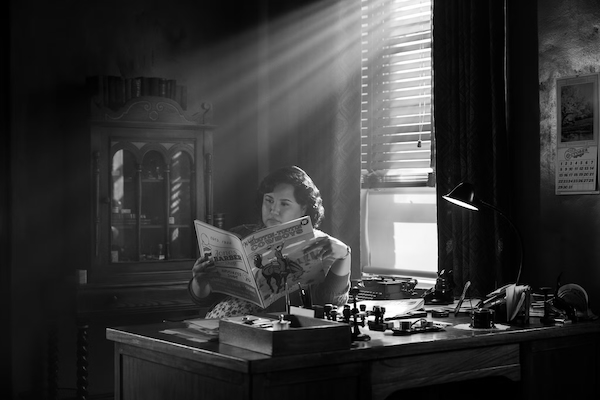
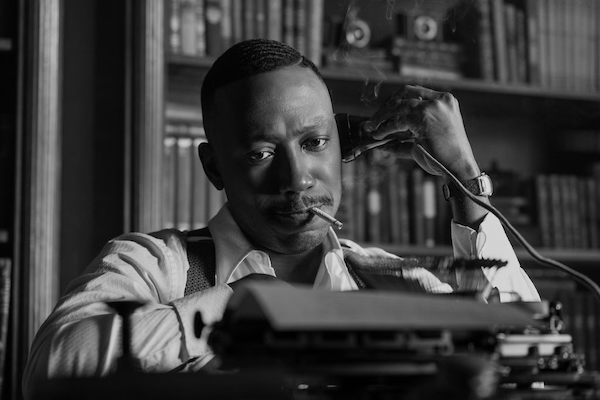
It's a compelling experiment because you get to see how that presentation affects your own perception of the story and the drama. I think of film noir being about murky morals. Black and white underscores that.
You're right, nobody's perfectly good in noir. Everything's a bit shady or in that grey area. Chiaroscuro. The different shades of each character in the story are reflected in the cinematography.
The vivid colours also have the comic book vibe, and it feels a little lighter and more playful. I like getting those different flavours, watching it separately. It's a fun experiment that you almost never get.
It's true what you say about the colours of comic books. I remember those incredibly vibrant costumes and drawings when I was a boy. This colour version of Spider-Noir lends itself to that. When [2023’s] Godzilla Minus One came out from Japan, I saw it in colour. I thought it was stunning. But it was even more stunning when they reissued it in black and white. It looked like an old Godzilla movie. I thought that was really beautiful that I could experience it both ways.
All of those 1930s and ‘40s movies have this veneer of the period now, but they’re sort of like Edward Hopper. You look at his paintings and they feel nostalgic. But he was just painting people at, essentially, a 7-Eleven. His “Nighthawks” is just about late at night in an ordinary location.
I couldn't agree more, and I'm glad you brought up Hopper because his diner painting is exactly the style of Spider-Noir, the colour version. That painting is like an old black and white movie, but there it is in colour. So that is a perfect correlation.
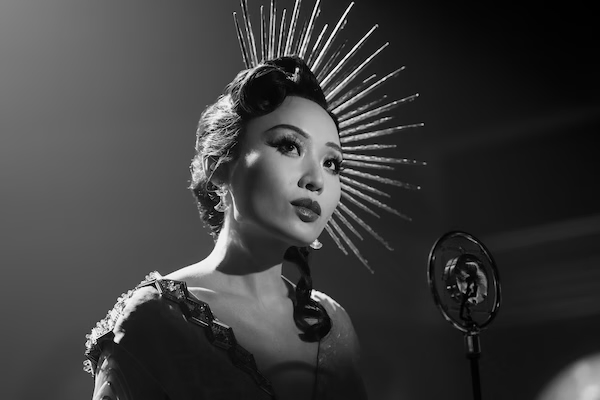
Tell me about playing opposite your co-stars in Spider-Noir. Who are the people that make up Ben Reilly’s world?
I was very lucky to work with a remarkable cast. Lamorne Morris, and Karen Rodriguez, and Brendan Gleeson. Li Jun Li. They bring so much to this. I know everybody cared so much to create something that is entertaining and nuanced. It has funny moments, but also emotional moments. And so that's why I woke up the next day after watching it, so happy.
I love the contrast between you and Lamorne. His optimism as reporter Robbie Robertson vs. your cynicism.
It starts to go down different paths and really evolves into some surprises. So I hope you enjoy.
He also feels like he stepped out of an old movie. You both capture the cadence of the time, at least as it was depicted onscreen.
There's a reason for it, believe it or not, above and beyond just mashing the flavours of 1930s film performance and Marvel iconography. There's an actual reason, an origin story, why Ben talks the way he talks. But you'll get to that in a later episode.