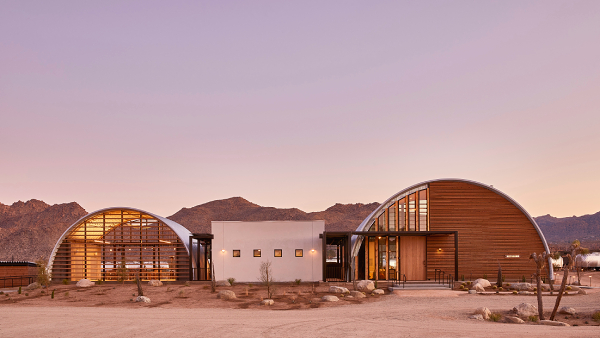
HKS is an award-winning architecture firm behind some of the world’s most visited structures. For over 80 years, they’ve been sketching, building, and breathing life into spaces—quietly expanding their reach until it became one of America’s largest architecture practices.
SoFi Stadium in Inglewood, California. Phoenix Hill Sports Park in Chengdu, China. The Ritz-Carlton in Portland, Oregon. These landmarks offer just a glimpse of HKS’s imprint on the world. In fact, their influence has already been embedded in local soils—you just haven’t noticed. HKS was responsible for the master plan of Resorts World Sentosa, and has even drawn early visions of what the upcoming Singapore Racecourse could one day look like.
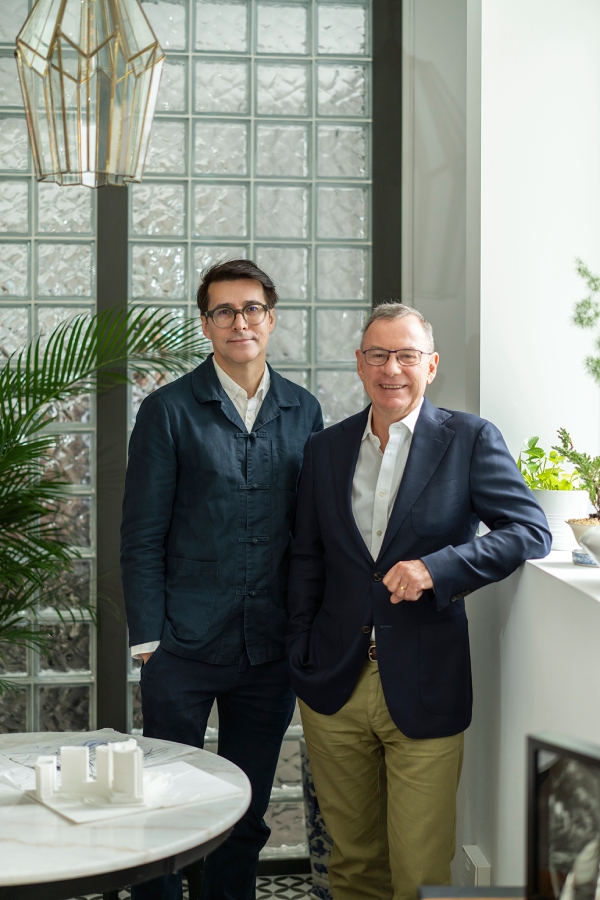
We met with two of the minds turning the gears behind HKS’s projects in Asia: Stéphane Lasserre, Studio Practice Leader for Hospitality, and Robert Day, Studio Practice Leader for Master Planning & Landscape. Inside the heritage-soaked Quadrant at Cecil—home to HKS’s Singapore office—we sat across from them to pick apart the secrets behind why our shoulders seem to soften and our thoughts dissolve whenever we step into a resort.
ESQUIRE SINGAPORE: How do you integrate wellness as a core experience rather than just an add-on spa facility?
STÉPHANE LASSERRE: We like to talk more about a holistic experience across the whole hotel. It starts with the sense of arrival—that already sets the stage. We embed principles into the design: the consideration of light, materials, and building orientation. These are elements guests may not consciously notice, but they promote well-being and wellness throughout the resort.
Natural wayfinding is also important. And something we value is allowing guests to curate their own experience—whether they want solitude, perhaps a quiet corner away from the noise, or to mingle in social spaces like the bar. We provide a variety of spaces for both. It’s all about personalisation and helping guests find their own sense of well-being.
Beyond the spa, wellness can actually be quantified. There are evidence-based solutions—for instance, touching natural materials like wood for just 30 seconds can lower stress levels. Natural light, circadian lighting that supports your sleep cycle, proper shading and ventilation—all of these can be scientifically measured and designed for.
In the morning, you want light that energises; in the evening, a dimmer ambience. Using digital tools, we can predict the amount of sunlight or ventilation entering a room. The result is an environment that helps you reset and regenerate—the whole resort becomes a wellness ecosystem.
ESQ: What biophilic (love of living things) design principles have proven most effective in improving the well-being of your guests?
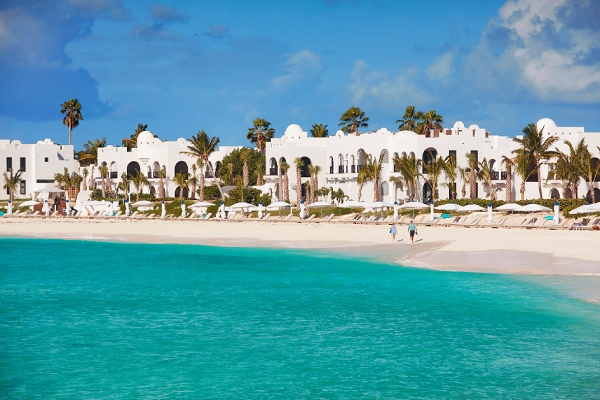
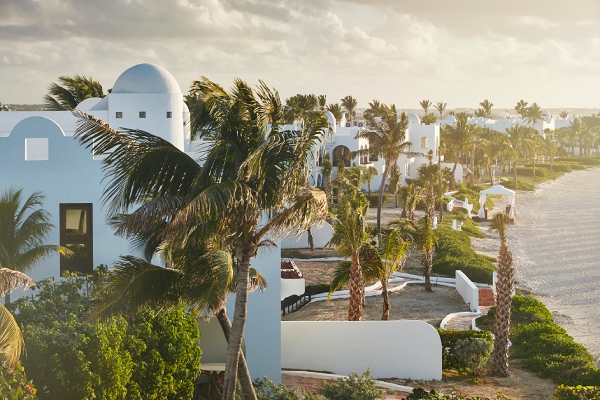
ROBERT DAY: We’re seeing more landscape integrated everywhere—internal courtyards, roof decks, green voids. It’s about naturalising things, moving away from the manicured lawns and palm trees of traditional hospitality. We bring in native species, which in turn brings back the bugs and beetles, the birds, and the butterflies.
Farm gardens are another growing trend—herb walls, edible plants, small patches that supply the kitchens. They don’t provide all the food, but they reconnect guests to nature. The Europeans coming out here, for example, have never seen how a mango grows, how a papaya grows [laughing]. These are things we take for granted, but it’s an authentic, local experience that feels alive.
ESQ: It feels less man-made, in a sense.
RD: Exactly—and it’s also about keeping what’s already there. In the past, people would clear entire sites and replant trees. Now, we work around existing trees to prevent erosion and preserve the site’s natural character. It’s about bringing nature back into the hotel.
ESQ: It sounds like the guests are being subtly cared for, even if they don’t realise it.
SL: That’s one thing guests probably don’t realise—the way they’re pampered through service. It completely disappears, happening quietly backstage. This is driven by the operator, of course, but there are also design guidelines from various brands that we have to comply with and integrate all these principles.
Take signage and wayfinding, for example. I think the best signage and wayfinding for a building is no signage at all. Intuitively, you should be able to find your way through the corridors, through the distributed components, and so on.
RD: There’s interesting research being done in this area—a group in London is studying how different hotel spaces evoke emotions. A lobby should make you feel “wow,” a restaurant should feel communal and warm, and a guest room should feel calm.
They’re identifying the stimuli—light, colour, shape, sound—that trigger these emotions. It’s about turning what designers instinctively know into something measurable and intentional.
ESQ: Do you consider feng shui in your landscaping and master planning?
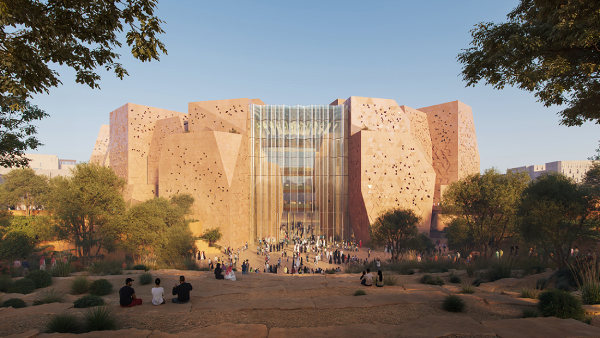
RD: Definitely, especially in master planning. It’s more common in residential projects. The shape of the plot, for example, you don’t want it to taper too sharply at one end, otherwise they just won’t sell.
What we have found in this area is that vastu—India’s equivalent of feng shui—is even more important. It dictates where things should go—the kitchen in the southeast, bedrooms in certain orientations—and they’re very particular about it, especially for apartments. Developers adhere way closer to vastu than here in Southeast Asia with feng shui. It's been a long time since I've had a plan poured over by a feng shui master, but it used to be very common.
ESQ: And in your experience, does feng shui actually work?
RD: I think a lot of it does; it is fundamentally just good design. For example, you don’t want a plot with a tiny backyard—it just feels wrong, right?
Yes, there are very specific rules where you can't have a beam here, you can't have a window there, which is really detailed. But on a macro level, it’s about balance: a hill behind, water in front. All of those things, good basic design.
SL: To add to that, feng shui is a cultural practice that’s been around for 5,000 years. So it's empirical, it's evidence-based on centuries of observation.
ESQ: How do you measure or define success when it comes to designing for health and wellness?
SL: One of the simplest, yet most telling measures of success is whether guests return, because that means the space has truly resonated with them and supported their well-being. An interesting, yet maybe unrealistic, metric would be to follow a guest to see if they have continued to feel good or implemented a change in their daily regimen after they have left.
RD: On a more technical level, there are internationally recognised accreditation bodies such as LEED (Leadership in Energy and Environmental Design) that set clear guidelines and industry benchmarks for health, wellness, and sustainability in design. While some of our clients may not pursue formal certification, HKS still aligns our design approach with these rigorous standards, which ensures our projects deliver a similar level of quality, environmental responsibility, and positive impact on the people who experience them.
ESQ: On combating overtourism, how does HKS ensure the well-being of the communities that live there?
SL: There’s a huge difference between tackling overtourism in existing destinations and foreseeing it in future ones. Managing it in places like Venice, Barcelona, or Bali is complex, involving many agencies and vested interests, often at the expense of local communities.
Our planning, architecture, and landscape solutions are just one part of a wider, multidisciplinary approach. For new destinations, the key lies in setting the right carrying capacity—topographical, environmental, community, infrastructure, and phasing. When any of these are off balance, overtourism follows, damaging the very place people live in or visit. A few busloads can ruin delicate flora; a few boats can destroy coral reefs. Long-term, phased planning helps ensure the right number of visitors—to everyone’s benefit.
RD: Additionally, we address the well-being of local communities through thoughtful master planning—not just by defining land uses like hotels, retail, and community spaces, but by ensuring they coexist in balance.
I always ensure there’s a generous allocation for public and community areas, so residents feel their needs come first. Equally important is engaging the community from the start. This means collaborating with local artisans, sourcing local materials, and spotlighting local talent through hiring, partnerships, and authentic cultural experiences.
ESQ: What are some emerging wellness design trends in landscape and master planning that excite you most right now?
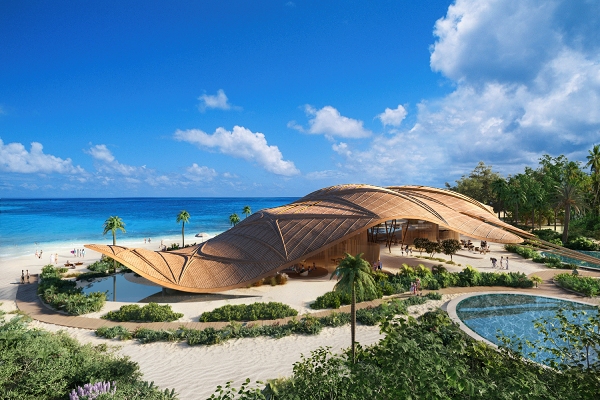
SL: What we are seeing is the call for an increase in natural and thoughtful landscapes within hotels and resorts. There has been a move away from the high-maintenance, high-water needs of manicured lawns and introduced plant species for a while now. Landscapes are heading toward more restorative approaches, which promote the wellness not only of the guests but also of the resort and environment. These restorative landscapes look to bring back diversity in local flora and fauna species to create a more diverse and ecologically richer setting.
Additional design elements include the use of sensory-specific species which stimulate the guests' visual, touch and olfactory senses. The interspersing of edible species not only adds interest but can also be used in the hotel’s kitchens.
RD: In master planning, we are witnessing the increased addition of combined walking, jogging, cycling, and sometimes equestrian paths and trails throughout a resort. This is part of a deliberate attempt to make people not only exercise but also walk from place to place during their stay. If the routes are direct, interesting, accessible to all and well-lit, guests will use them rather than call up the resort buggy. The other area is the gradual introduction of jogging and cycling paths around golf courses and the use of parts of the course for classes or events outside of playing times, promoting the multi-use of what is often a stunning man-made landscape.
SL: In architecture, we’re witnessing a clear shift from opulence to authenticity—developers are moving away from over-designed opulence for opulence's sake, but toward designs that celebrate a destination’s culture, heritage, and sense of place.
RD: Medical tourism is also rising, where wellness and healthcare are seamlessly woven into the travel experience. In Europe, wellness is often synonymous with “cure,” with retreats grounded in medical research and advanced procedures. This growing demand calls for environments that not only promote physical healing but also nurture emotional and mental well-being—a balance that thoughtful master planning can uniquely deliver.
This article was edited for clarity and length.