There are many things that distinguish a brand or a fashion house from another. A name in itself is a branding device, but beyond that, it is not unusual for one to be recognised from a multitude of other signifiers.
Dior is a fine example. You’d just as easily recognise Christian Dior by the founder’s last name, which has become synonymous with a refined sense of sartorial elegance. Even shortened to initials, CD calls to Dior in subtle ways. There’s also the Dior Oblique adorning everything from ready-to-wear to accessories as a distinct foundational recurring pattern.
The Dior Médaillon is unlike the House’s other signifiers. It wasn’t drawn from the Christian Dior name, but rather, inspired by the House’s very beginnings. The story goes that when Monsieur Dior first established his couture house at the historic 30 Avenue Montaigne address in Paris, the boutique was furnished with Louis XVI-style médaillon chairs. These were seating for the House’s clients during his early fashion presentations. The oval-shaped backs of these chairs was adopted as a Dior emblem in 1946, around the same time that 30 Avenue Montaigne came to be.
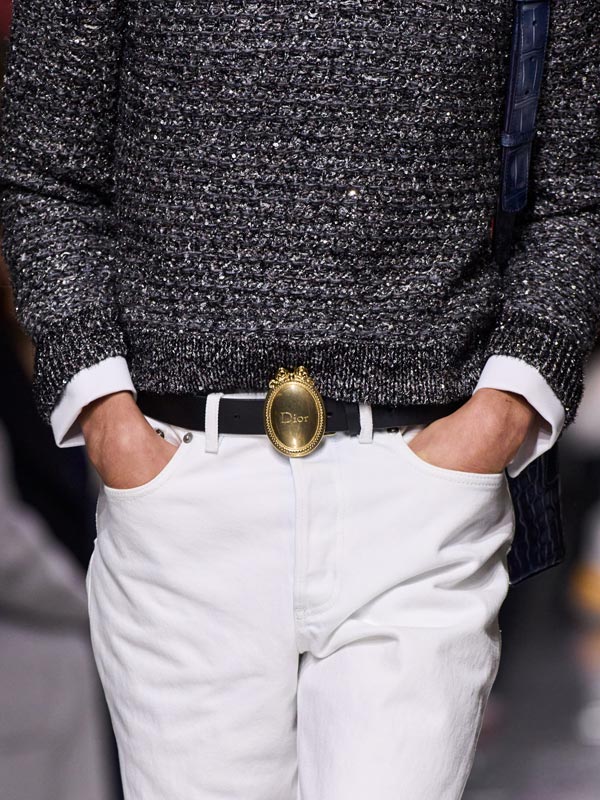
Eighty years later, creative director Jonathan Anderson is set to give the Médaillon its deserving spot as a House icon. Anderson’s love for the arts beyond fashion saw him leaning into the Médaillon from the very beginning of his debut; a Médaillon chair was pictured as one of his many teasers leading up to his first runway show. With the motif recalling the elegance of 18th-century French decorative arts, it’s little wonder that Anderson aims to emphasise its importance as a visual connection to the House.
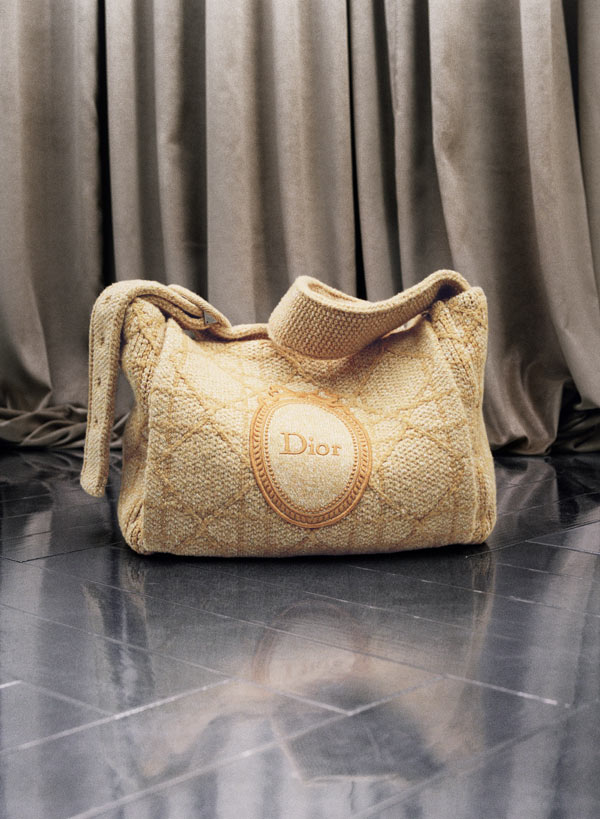
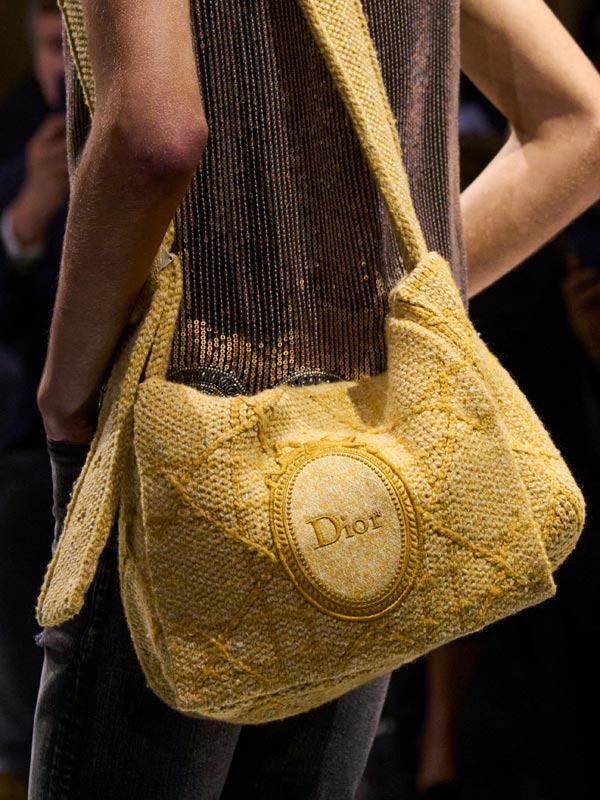
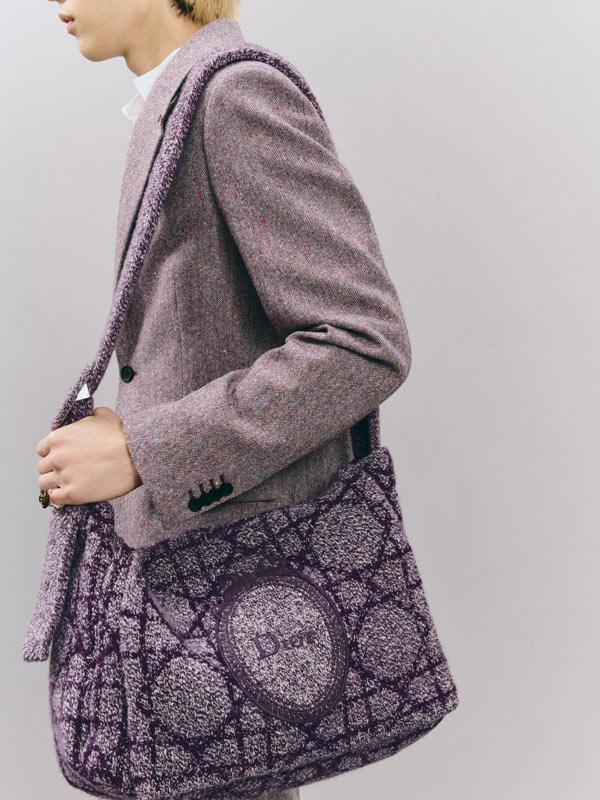
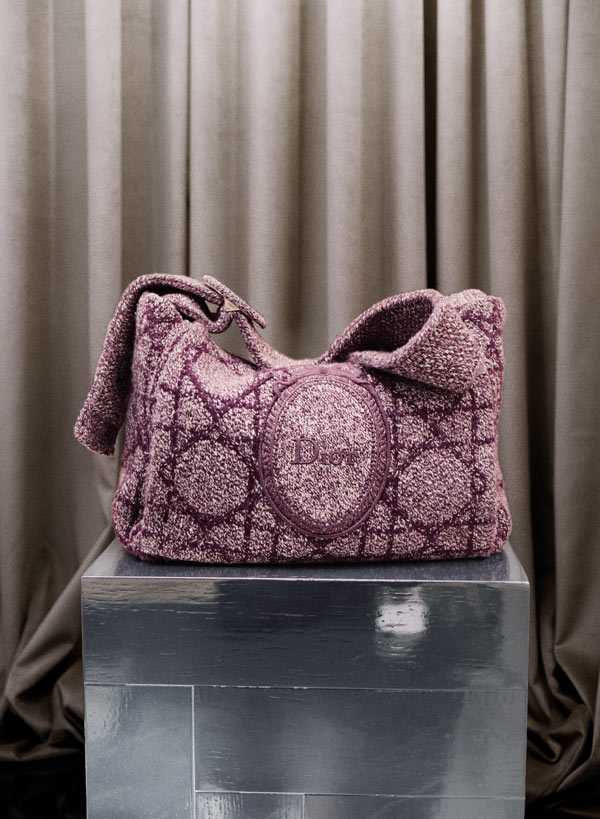
The Winter 2026 menswear collection was the perfect backdrop to reintroduce the Médaillon, especially in the menswear universe. The collection’s tension-filled narrative (an eclectic mix of seemingly opposing ideas) made the Médaillon a fitting element—itself a more feminine motif due to its smooth curves and the bow attached at the top. It appears as the central character on the Médaillon Knit bag the collection’s attention-grabbing accessory. The Médaillon Knit bag, as its name suggests, is knitted entirely from a blend of wool and cashmere. Coloured yarn is twisted with white yarn to create a textured mélange thread using the tweed mouliné technique. The base of the bag is produced using traditional maille-knitting before the House’s Cannage motif (yet another Dior signifier) is hand-embroidered right across the surface. This results in more depth as well as artisanal refinement to the Knit bag. The Médaillon motif is embroidered right at the centre front of the bag for an even more tactile element.
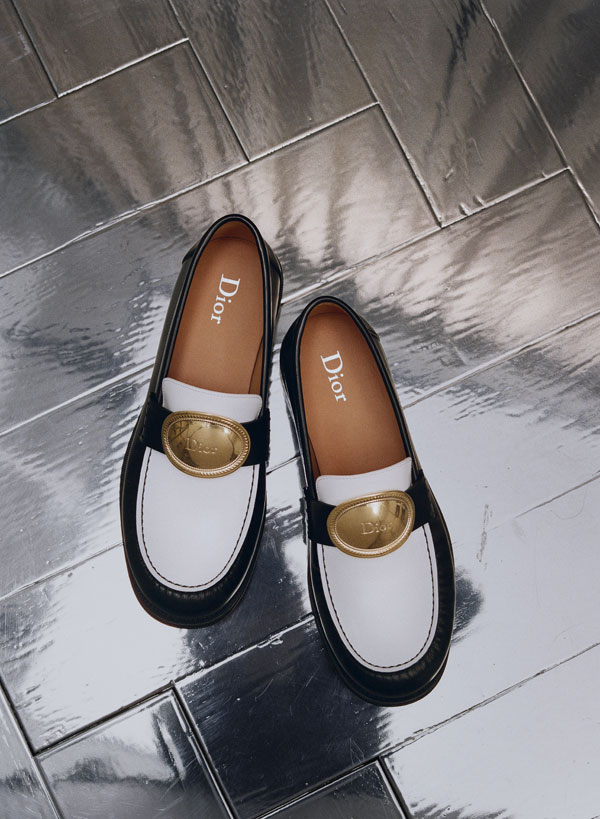
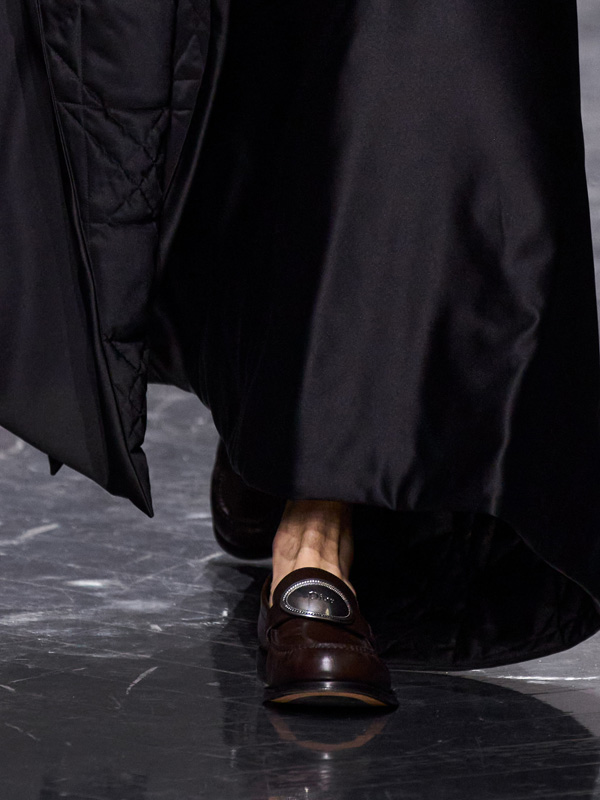
You could not miss the Médaillon Knit bag on the runway even if you tried. But another more subtle application of the motif might have gone unnoticed. The Médaillon loafers offer a contemporary take on the motif. Crafted from smooth calfskin on the outside with a natural lambskin lining, the loafers are designed with a softly rounded toe and a slightly pinched seam. And while it may give off a streamlined, almost formal profile, the Black construction ensures that you would be comfortable in them.
The Dior Médaillon tops off each shoe—a refined metallic buckle smoothened around the edges without the bow element typically found on the motif. And yet, it is still unmistakably Dior.
Having spent decades within the House’s visual vocabulary, the Dior Médaillon isn’t new. But with Anderson’s penchant for digging through the archives and reinforcing the House’s codes, it’s very likely that you would be seeing more of the motif. And that, in our books, is a gold-medal effort on branding.