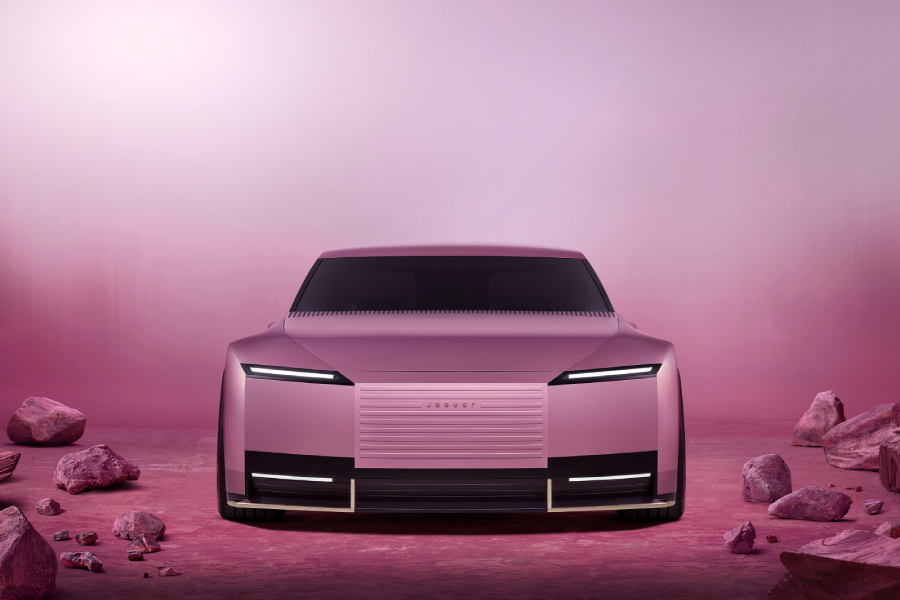
When, at the end of last year, Jaguar unveiled its big, angular, electric GT, the Type 00—the troubled British car maker’s template for its future designs—there was a hullabaloo, and not just among petrolheads. This wasn’t the Jaguar of English country lanes, golfing and gentlemen’s clubs. Some suggested the design—unveiled, tellingly, at Art Basel in Miami—was completely at odds with the brand’s heritage, not to say its customer base. But not all...
“It was an incredible statement, and totally necessary to reach a new generation of Jaguar owners,” says Aysar Ghassan, who heads the post-graduate course in automotive and transport design at Coventry University, UK, one of the world’s leading institutions for budding car designers. “I mean, ‘wow!’ As controversial as it was—the marketing too—it’s saying ‘we’re starting afresh here’.”
It was also, Ghassan adds, something of a nod to the past—in being a throwback to what many see as a golden era of boldness and creativity in automotive design, to one-off concept cars of the 1960s the likes of the wedge-shaped Alfa Romeo Carabo, the Ford Cougar 406—with its gull-wing doors—or the outrageous Buick Century Cruiser, which suggested the then fantastical idea of a car that would use radar to drive itself.
The kicker? None of these cars—or the many others that wouldn’t just be a critical part of the deeply secret internal design process for any car company, but which, like works of art, like visions of tomorrow, would be actually built and put on public display year after year well into the 1990s, drawing slack-jawed crowds to their stands—would ever actually turned into production models.
“The whole point of a concept car is to push at the limits and not worry about whether the car can feasibly be made. In fact, if you don’t push at the limits, there’s no point in doing it,” reckons Frank Stephenson, at one time the first director of Ferrari-Maserati Concept Design, design director of McLaren and now creative director of his own eponymous design studio. “Often I think concept cars are not typically pushing enough now. They shouldn’t be cartoony, but they should be almost sci-fi [in their proposals]”.
Of course, concept cars keep coming, even as the long decline of the international motor show (finished off by Covid) leaves fewer places in which to show them: this summer saw, for example, Bentley reveal its EXP15, a hint at its first all-electric car, and one with a seating area for your dog; or Mercedes with its AMG GT XX, with—it is proposed—a battery than can get a 250 mile-range charge in five minutes. We can hope.
Yet, according to Ghassan, we need more and bolder concept cars— fewer of those he dubs “spiritual successors” maybe, with heritage brands tapping nostalgia by reworking their archive hits, and more of what he calls “the total disruptors”. That is the kind, perhaps, that readily available AI design tools now mean social media is awash with amateur in origin, but it’s been said, not so amateur that car companies don’t take inspiration from them.
Isn’t the 21st-century concept car just so much visual clutter? Not from the inside of the business. According to the car designer Ian Callum, ex-director of design for Jaguar and Land Rover, now running his own product design company, it’s more to do with the relationship between design departments and management.
“The design department wants to show off a little bit without the tethers of the real-world design inputs [the likes of safety regulations] and to show management what it’s capable of,” says the man who designed the likes of the Ford Escort Cosworth and the Nissan R390.
“Yes [then as now] it possibly upsets a few customers that the car is never made. But then you can still enjoy a painting without owning it”. Yet why, if it’s a matter of inspiration for the design team, then show that concept design to the public at all? And especially since building a full-sized physical concept car—rather than, as tech now allows, just creating an immersive 360-degree computer animation—costs maybe SGD3.5m?
From a designer’s perspective, it’s because “nothing in the world, not even with all the AI and VR, can beat being physically there with a car, touching it, seeing how it looks in different light,” argues Stephenson. “Sure, building a concept car costs a lot of money. But you need the stimulation it gives. And I’ll tell you what—bad design costs a lot more than good design”.
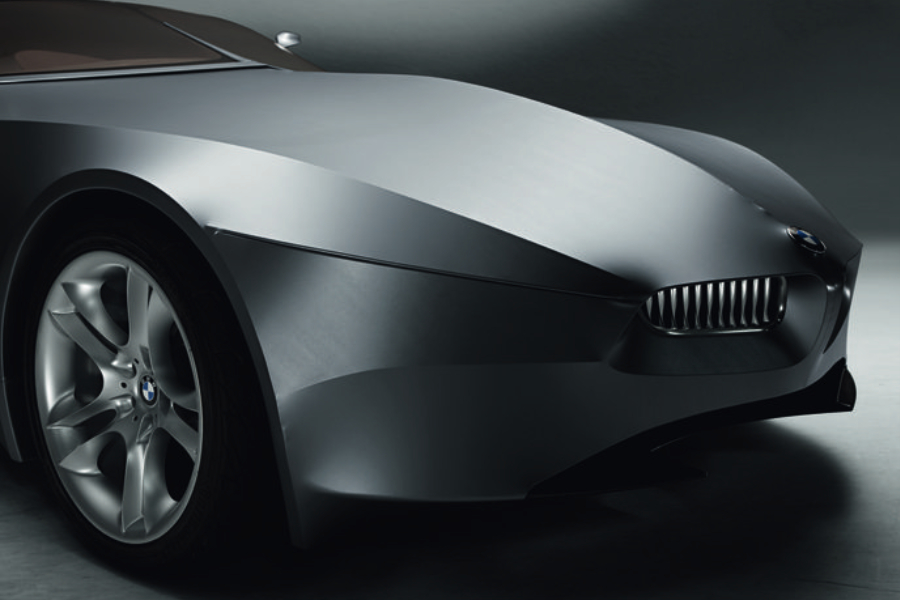
And from management’s perspective? Because concept cars are also, despite the grumblings, very good PR—”look we’re ahead of the game!”—generating column inches and countless social media posts. As notes Chris Bangle—the first American chief of design at BMW, now head of his own design firm, Chris Bangle Associates, and author of new book Reading Between the Lines of Car Design—management isn’t always ready to scare the horses: BMW only made public his 2001 Gina concept—in which the car’s frame is wrapped in a shape-shifting fabric skin—seven years later.
But managers acknowledge in principle that concept cars do keep waning interest in car brands alive, and all the more so since, like fashion, cars are one of these few product categories that consumers like to refresh regularly. The car industry needs to give us something to refresh to.
“If the goal has long been to emulate the fashion industry and produce a new car every year, the fact is that the timeline[from sketch to production car] is around our years,” explains Callum. “So you have to do something in the meantime to keep the conversation moving forward. You fill the gaps with new ideas, with concept cars”.
And then you gauge the reaction, not just in the specialist car press, but by scraping social media sentiment, for example, or, in the case of smaller, very high-end car makers, by meeting actual customers one-to-one.
“That tends to be more valuable than hearing online feedback from 14-year-olds in their bedrooms,” laughs Marek Reichman, chief creative officer of Aston Martin, which has dialled back its concept car reveals. When it does make one, an ardent fan tends to try to buy it, thus creating the not-always-agreeable challenge of making it road legal.
“If you want to gather opinions, a few million spent building a concept car is a minimal risk relative to the £100m cost of a production project,” Reichman adds.“ The general feedback is useful: either ‘that’s amazing!’ or ‘I’m really not ready for that’. It’s a way to take a barometer of the market—is this approach too much or not enough?”
You might imagine that knowing this is critical, especially given that the bigger picture reveals just what seismic challenges the car business is now facing and how that is changing attitudes to concept car creation for public consumption. “The industry is in a state of flux, and to create new concepts under these conditions is especially difficult and complex,” concedes Callum.
There’s confusion around the future of the combustion engine and legislation around electric cars. With less disposable income, small or no families and living in congested cities, younger generations are much less interested in car ownership. With greater competition, there’s greater secrecy too.
Indeed, while “car companies that stop making concept show little faith in their future—it’s like a person without a pension,” suggests Frank Stephenson, more of them see concept cars for exhibition less as a necessity and more as an inessential luxury.
Long dominated by a handful of global companies that can trace their roots back to the 1930s or before, the last 20 years have seen that paradigm seriously shifted through the advent of start-up carmakers out of the US and, especially, China. With their mature supply chains, strong technological underpinning and the sheer scale of their domestic market alone, Chinese makers, in particular, the likes of BYD, Leapmotor, Omoda and NIO, are getting new cars onto the streets in two years.
What’s more, argues industrial designer Ross Lovegrove—who worked on projects for Ferrari and Renault, and is now collaborating with an unnamed supercar company for a launch in October—they’re unburdened by the history of what cars mean. They might see cars more as mobility gadgets than as, say, status symbols or extensions of the self.
”The downside of concept cars has long been that they seduce the public with the incredible things, and the reality is that what you get to buy is nothing like them,” says Lovegrove. “But now we’re seeing concepts created that are breaking free of the baggage carried by the legacy brands. The start-ups have an ethos that means their production cars are much closer to being concept cars [as they’ve long been conceived]. That’s tremendously exciting”.
Established a decade ago, NIO, for instance, has only ever created one concept car, the NIO Eve—a self-driving EV with swappable batteries and an in-car companion AI—which served as the new brand’s calling card. “But now we’re moving at such a pace that concept cars don’t really make any sense, and even the traditional carmakers are trying to shorten their production times, even if they are sometimes locked into production platforms and huge parts inventory[that make change harder],” notes Kris Tomasson, NIO’s vice-president for design.
He explains that even if concept cars in toto have rarely made it into production—the Tesla Cybertruck maybe a recent exception—many of the ideas they embody have done, eventually at least. He cites how lighting has changed, for example: 20 years ago, concept carswere showing lights that were smaller, more integrated, more animated, more high-tech, all of which define automotive lighting today.
But, increasingly, we’re dealing with a different dynamic. “If concept cars grew out of the 50s and 60s and served an important marketing role—before the Internet—that world is changing now,” Tomasson says. “These days, new cars are launched monthly, and to stand out, they all have to be more adventurous and make a statement”.
It’s why, when concept cars are now shown, often they’re more likely to be just a slightly exaggerated and over-stylised version of a production car that’s already in the pipeline. They’re less visionary and more preparatory—teasing rather than astounding. This doesn’t mean it’s goodbye to the radical concept car as it’s been known for more than half a century—Tony Roma, head of engineering for Corvette, for one, reckons there will always be a place for it, at least as long as the freedom for designers to come up with them is baked into car brands’ budgets.

But we are, perhaps, seeing the end of an era with, as Chris Bangle suggests, “the right new model for concept cars to play a part in public consciousness again has yet to evolve. With so many car companies cowed into so many corners right now, they’re terrified of making a misstep. And people aren’t seeing a way to drive their love affair with cars forward”.
“Even back in the 80s every year General Motors, Ford, all the big players would show four or five concept cars at the likes of the Detroit Motor Show, then display them around the world, and draw big crowds to see them, even if the vast majority of those concepts went nowhere,” says Derek Jenkins, senior vice-president of design at the 18-year-old US car maker Lucid.
“But now it makes more sense to put money and energies into projects that do have a direct impact on production cars”. He admits to a certain sadness in this. “Concept cars—or ‘dream cars’ as they were sometimes called—did and do capture the public imagination,” he says. “As a 13-year-old, seeing these concept cars on their stands at the big auto shows—the likes of Geneva, Frankfurt, Tokyo—was awesome, and it was awesome for me even as a professional”.
Jenkins fondly remembers the Buick Wildcat of 1985—“if that was driving around now people would be flipping out!” he enthuses—or the boxy, cutesy, digital Ford 24.7 of 2000, “which people thought was terrible at the time but which prefigured so much of what has come since.
"I really miss that [craziness],”he laments, “but I think all that has basically gone”.