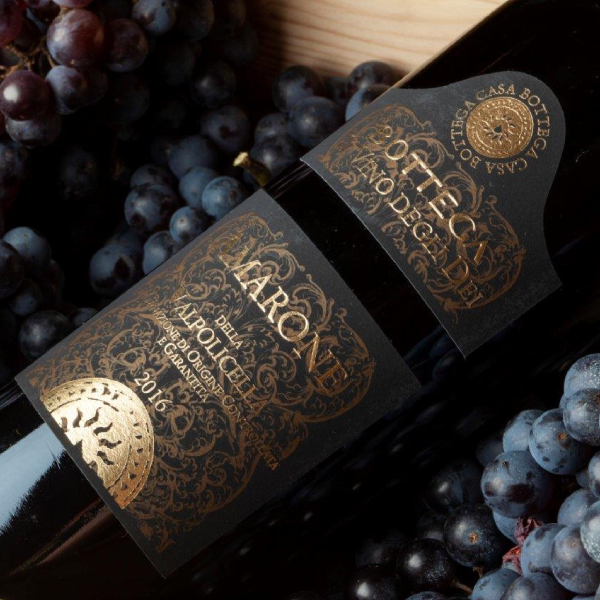
Italian wine is inseparable from geography—and Bottega’s story begins in Veneto, just north of Venice, in the heartland of Prosecco. It was there, among the rolling hills around Bibano, that the family built its identity through craftsmanship, precision and a deep respect for the land. Over time, that expertise expanded naturally beyond sparkling wines, leading Bottega towards one of Italy’s most historic red wine territories: Valpolicella Classica.
In Valgatara, at the centre of this renowned appellation, Bottega took over a long-established winery whose roots date back to the early twentieth century. Rather than reshaping it, the company chose continuity—preserving its identity while strengthening it with decades of winemaking experience developed across Veneto. Today, the cellar is entrusted to Leonardo, heir of the founding family, ensuring that the transition remains faithful to its origins.
Valpolicella Classica is not simply a place of production, but a landscape that actively shapes the character of its wines. Located at around 320 metres above sea level and close to Lake Garda, the area benefits from a surprisingly mild, temperate climate—one that supports not only vines, but also olive trees, cherry orchards and even apricot groves.
This balance of altitude, airflow and soil diversity—limestone, volcanic and fluvial deposits—creates the conditions for Amarone to develop its distinctive depth and structure. It is a wine born from patience, where time plays as important a role as terroir itself.
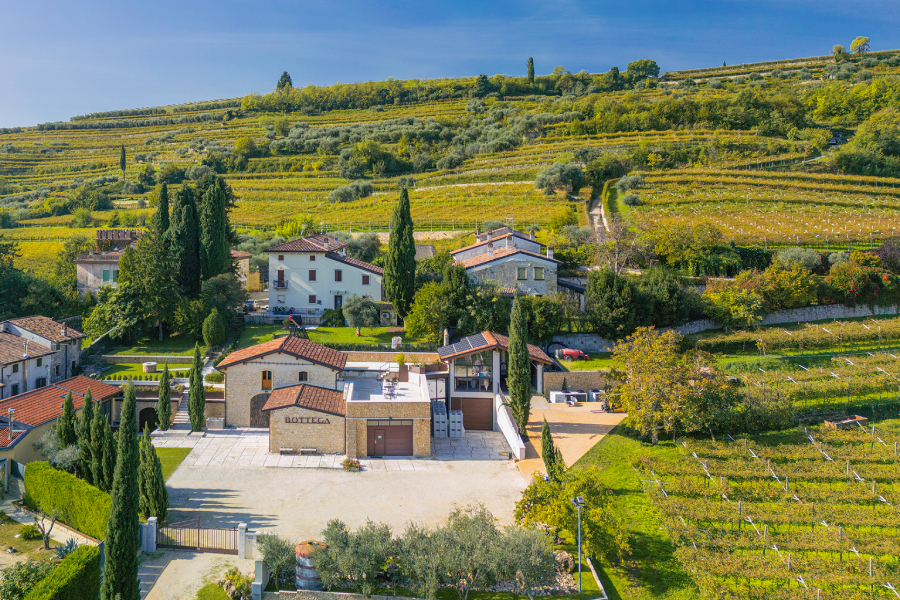
The history of the Valgatara estate reflects a broader philosophy that defines Bottega’s approach. Founded in the early 1900s, the winery evolved gradually through generations—from Luigi Boscaini’s small-scale production to a more structured operation under his son Danilo, and later Enzo Franco.
When Bottega acquired the estate, the intention was not to impose a new identity, but to preserve and elevate what was already there. Today, expertise developed in the Prosecco hills coexists with the traditions of Valpolicella, creating a seamless dialogue between territories.
This same philosophy extends to production: a coordinated winemaking team oversees all estates, ensuring consistency while allowing each wine to fully express its origin.
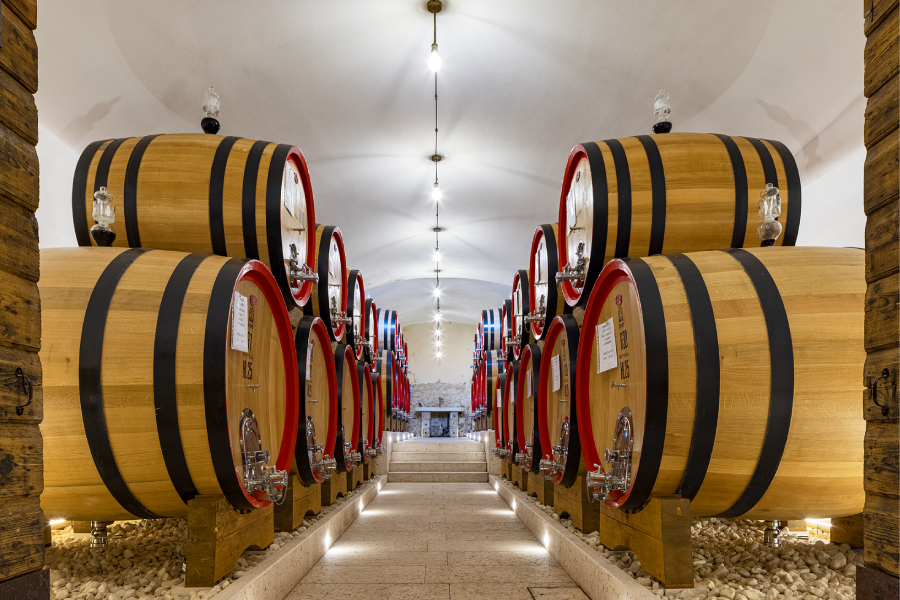
Produced and matured entirely in Valpolicella Classica, Amarone della Valpolicella DOCG remains one of Italy’s most recognisable and respected red wines. At Bottega, it is approached with restraint—not as a statement of power, but as a measured expression of quality.
In the glass, it reveals a deep ruby colour with garnet reflections. Aromas unfold gradually: marasca cherry, plum and blackcurrant layered with darker notes of cocoa, spice and dried fruit. On the palate, it is full-bodied yet composed, with structure and warmth balanced by freshness and finely integrated tannins.
This is not a wine designed to impress immediately. It rewards time, attention and a slower pace—an increasingly rare quality that resonates strongly with a modern, international audience.
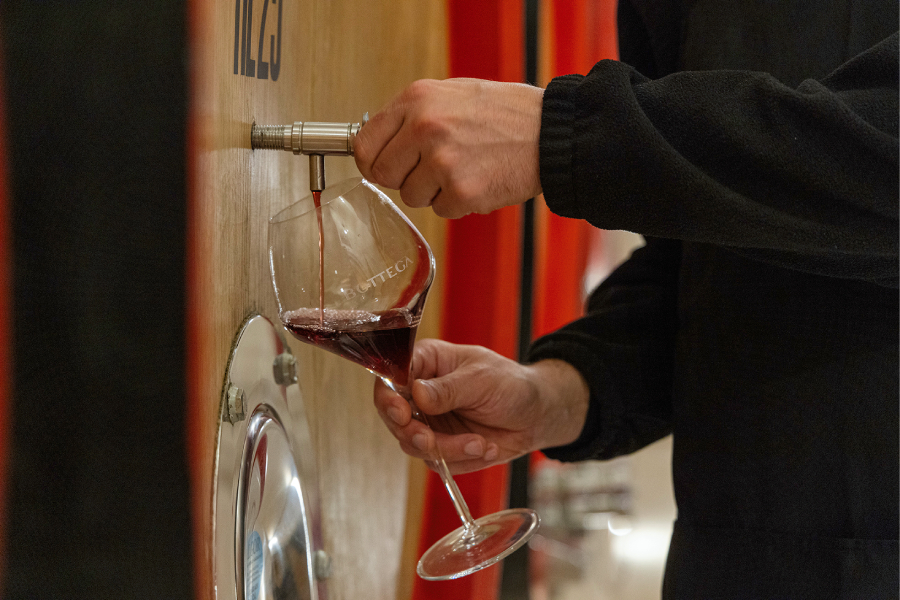
Alongside its commitment to quality, Bottega has invested in production models that reduce environmental impact across its operations. The geothermal system, combined with the use of alternative renewable sources for electricity generation, enables an annual reduction of 756 tonnes of CO₂. Overall energy efficiency is further supported by photovoltaic installations and the exclusive use of energy from renewable sources.
These initiatives remain in the background of the story, but reflect a consistent philosophy: working with the land requires preserving it.
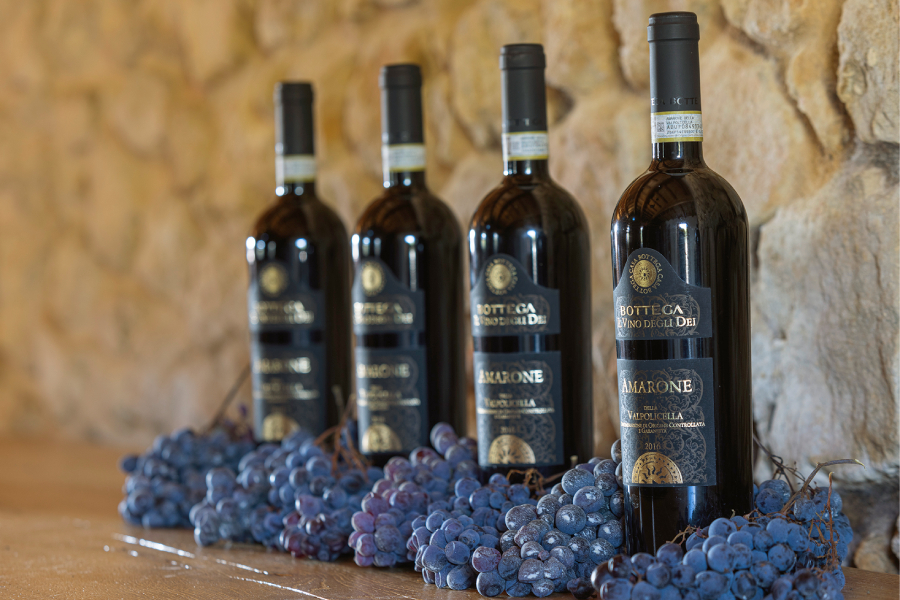
Amarone della Valpolicella DOCG is best served between 18–20°C, in a generous balloon glass that allows its aromas to fully open. It pairs naturally with braised meats, stews, roasts and game, as well as aged cheeses.
Yet its most fitting role may be at the end of a meal—when the pace slows, and the wine has the space to fully express itself.
From its origins in the Prosecco hills to its presence in Valpolicella Classica, Bottega’s journey reflects a clear direction: expanding not by diversification alone, but through a deeper exploration of Italy’s most expressive wine territories.
Amarone represents that evolution at its most refined—a wine shaped by place, guided by continuity, and defined by quality.