I have a theory that cuisine appreciation is largely about exoticism. Think about the first time you tried food from a culture outside your own. Novelty alone was enough to create a decisive impression; one that either sparked greater curiosity, or curbed further enthusiasm.
So, how does “Progressive Asian Cuisine” translate in the context of Singapore? It’s not molecular gastronomy (thank God); yet neither is it entirely fair to call it fancy Asian food. It’s certainly elevated. The degustation-style menu does make you rethink perceptions you’ve held about some familiar dishes.
Chef Ace Tan’s early exposure to Traditional Chinese Medication, which he integrated into his previous restaurant ASU, continues to shape the ethos here. Nutrition, as a form of nourishment, evolved by layering centuries-old practices such as preservation and fermentation. His training under notable names then instils the significanceof seasonality in ingredients and appetite.
It also means “salt” in Tagalog; “salty” in Bahasa Indonesia; and reads phonetically as ‘Ace-In’. As you choose your lore on which is the origin story, I’ll run down the course highlights.
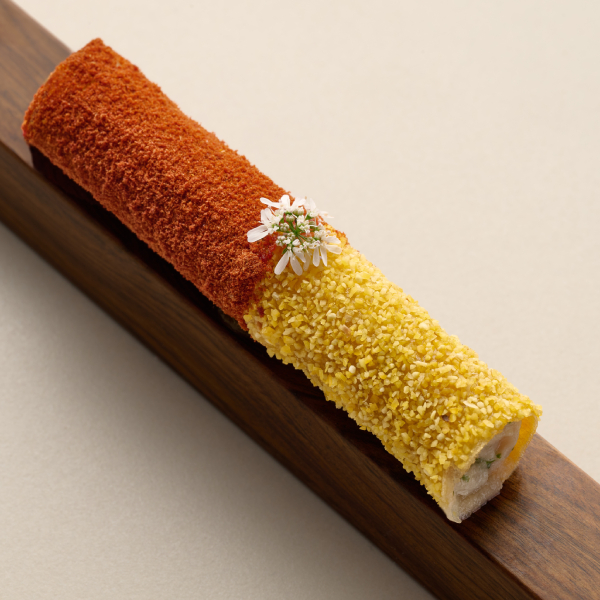
I hate to use the word “reimagined”, but it gets the point across when Oyster Omelette is an amuse bouche. It looks nothing like the hawker classic shelled in a crisp, crystalline sphere, yet the tongue recognises key flavours. Lightly grilled baby oysters pair with egg and Thai basil chilli, while the Chinese egg floss and garlic chive flowers serve as elements for both taste and presentation.
Similarly, the Assam Tomato Hamo carries that sweet-sour tinge in its tamarind sauce, and the Chinese wine in the pike conger eel marinate is hardly foreign. Yet the elaborate preparation of the amela tomatoes—with its pulp treated with kombu into a clear jelly, then replaced back into the hollow—reminds you not to take what you know for granted.
Supplements like the FTQ Dumpling transform the beloved soup with the strange name (Fo Tiao Qiang, i.e. Buddha Jumps Over the Wall) into an appetiser in its own right. You’ll find the hearty aroma perfectly matched with the braised brine of spiny sea cucumbers, scallops, fish maw and Korean abalone.
Summer Roll 2.0 and Ngoh Hiang 6.0 tell of the evolution of crowd favourites. It’s easy to see how they retain their respective spots via their careful assemblage. Techniques include dehydrating and blitzing tomato peels into a powder coating for the former; and blanching in a Cantonese bai zhuo method before butterflying and wrapping in the latter.
Once again, near-unnecessary meticulousness in the highly intricate deboning of a Black emperor fish, alongside a vivid green moroheiya and clam jus. A clarified consommé of duck bones with a drizzle of watercress stems blended into an oil; the meat centrepiece that has undergone a seven-day dry-ageing and subsequent slow-roasting.
The prize grilled Korean beef offers a rare spectrum of choices. Seared crust-side over binchotan charcoal on one side, while the original half lets you adorn each bite with four accompaniments. It was honestly difficult to pick between the bokbunja-enriched pepper jus, caramelised black garlic paste, kumquat kosho and a confit grilled leek.
The ending stays faithful to the theme. Distinctly Asian essences like glutinous rice, wild bird’s nest and braised tapioca come together with chrysanthemum-poached loquat for a fairly complex dessert.
The sweet-toothed don’t have to fret, though, because that’s followed by a sweet and smoky sherbet of gula apong. Its embellishing combination of sour plum-steeped Japanese cherries, decaf coffee jelly, dehydrated shoyu crumbs and coconut tuile effectively touches every taste bud.
Those who can recall that the postal code used to house Wine RVLT will be amazed by the utter overhaul of the shopfront. The space is almost theatrical as it is centred around a 10-seater curved counter that stages the open kitchen.
Harnessing light and shadow, its minimalist look commands a presence. As does the focal wall artwork commissioned to change with each new seasonal menu. You will find the same aesthetic on art cards that accompany every single dish with illustrations of its components. The effort is discernible and the narrative consistent—signals to jolt the memory while leaving room for intrigue.
ASIN is located at 38 Carpenter Street, Singapore 059917.