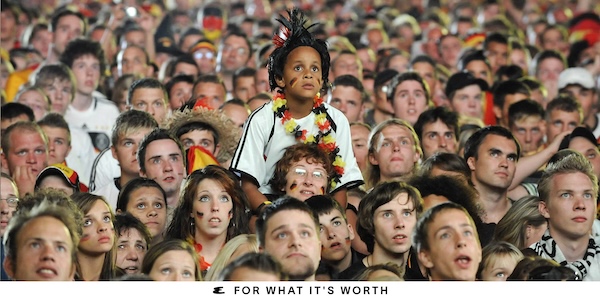
More than a billion people watched the World Cup final this month and will forever remember the drama that unfolded at New York New Jersey Stadium—except, wait a second, that’s not the actual name of the venue. As every NFL fan knows, the stadium is, in fact, named after an insurance company: MetLife.
What the hell is going on here?
Nearly all major sporting venues in the US are named after companies, including... Smoothie King! Home of the NBA’s New Orleans Pelicans. For the World Cup, however, FIFA required all 11 host stadiums in the US to temporarily rename themselves. This wasn’t to retain the purity of the beautiful game. Far from it. FIFA sought to avoid a conflict between the name of a stadium and a sponsor of the tournament. Kind of awkward to broadcast the Argentina-England semifinal from Mercedes-Benz Stadium, brought to you by Kia. So they gave the venue a new name for the tournament: Atlanta Stadium.
Selling private companies the right to put their name on a stadium is of course big business. MetLife, for instance, paid a reported USD400 million for its naming rights. FIFA’s rebranding of World Cup stadiums, called out in broadcasts all over the world, drew timely attention to the point, and to the even bigger and more complicated business of stadium economics in general.
Timely because, as it happens, we’re in a new golden age of stadium building in the US. Virtually every major sports league in America has multiple multi-billion-dollar projects under way or in the planning stage. It is an unprecedented moment of development, and the money and ambition are spilling into other regions of the world. I wanted to know why—why is this happening now, who’s paying for these massive projects, and, ultimately, is the investment that’s often required of taxpayers worth the outlay. So I spoke with an expert on the topic: Ben Munguia, an analyst at Fitch Ratings.
“It’s an exciting time in stadium development,” an enthusiastic Munguia told me.
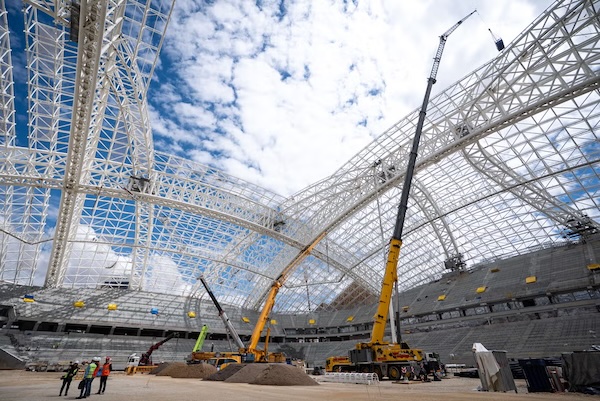
According to Munguia, there are two major factors in this building boom. First, cord cutting. Fewer people are subscribing to cable networks, which means teams have lost a major source of revenue: regional sports networks on TV. As a result, they’re building or renovating stadiums to attract ticket buyers and charge more for, well, everything.
The second factor: Building a stadium is no longer about simply giving a team a place to play. It’s also about real estate development, which is why many owners are moving their teams outside city limits and into the suburbs. “You need to be thinking about how much land around [the stadium] is available to develop and diversify revenue streams,” Munguia says. And it’s about year-round programming. Munguia says there’s an uptick in investment in so-called non-anchored tenant facilities, venues that aren’t home to a specific team. The next Madison Square Garden, for instance, won’t need the Knicks or the Rangers as long as they’ve got Taylor Swift concerts and WWE fights.
And it’s about luxury hospitality experiences.
To understand this last point, let’s start with a steak. A few months ago, I was in a stadium suite at Citi Field, home of the New York Mets, surrounded by an orgy of cheese and meat. The stadium was showing off its food offerings for the season, like Adam Richman’s quadruple-decker “Home Run” hamburger. Next door was Pat LaFrieda’s Chop House, a high-end restaurant serving aged, bone-in tomahawk ribeye. It is available to certain ticket holders only. At the moment, this steak, more than anything, shows the direction in which stadiums are going.
The owners are “realising that some money is being left on the table by not offering premium seating experiences, which are in high demand right now,” Munguia says. “They’re starting to renovate their stadiums, create more concession areas that are designated just for certain ticket holders and lounges.”
It mirrors what’s happening with airlines: You can make more money selling a bigger seat and better food to one wealthy person than squishing everyday tourists into five more seats.
This American-born concept is invading European soccer stadiums. “They’re starting to move more towards that US-centric model of prioritising those higher-yielding seats,” says Munguia. The days of it being cost-efficient for Americans to fly to Europe to catch a premium concert (as many did with Taylor Swift’s Eras tour instead of paying thousands for domestic tickets) are numbered.
Ultimately, owners want new or renovated stadiums because they want to satisfy demand for premium experiences and develop new revenue opportunities beyond simply selling tickets to sporting events.
The more complicated question is how they pay for them.
The owners of these teams raise money from a variety of sources, including a cadre of private investors, grants, and—as in the case of the USD5.5 billion SoFi Stadium, where the NFL’s Los Angeles Chargers and LA Rams play—with loans from the league itself.
Before a single kickoff or pitch, the owners start earning money from naming rights, pour rights, and something called PSLs, or Personal Seat Licenses, according to Munguia. “You’re purchasing your right to buy that seat in the future,” he says. “That’s a large upfront payment that can really help on the construction side early on to raise funds.”
The other major source of funding is public money, which comes from taxpayers, and has always created the thorniest conundrums. AT&T Stadium in Arlington, Texas, home of the Dallas Cowboys, is considered a success story of public-private financing. The project cost USD1.2 billion. Cowboys owner Jerry Jones—with a little help from the NFL—paid for roughly 70 percent of the stadium. The city of Arlington took out a loan to cover the rest, or USD325 million, which it would pay back by taxing hotels, tickets, and rental cars. In 2025, the Cowboys hauled in an estimated USD1.2 billion in revenue, which helped Arlington pay back its loan a decade earlier than expected.
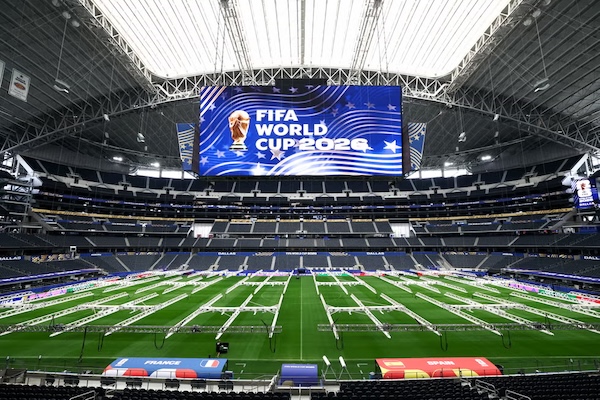
The billionaire owners of the Buffalo Bills, Terry and Kim Pegula, got a much sweeter deal from the state of New York. In 2022, the state and county legislatures voted to give a total of USD850 million in subsidies for a new Bills stadium, which amounted to 40 per cent of the total cost. The state gets to share in exactly zero of the revenues and can only hope to recoup their investment through indirect taxation.
How did the Pegulas nab these funds? By promising to relocate the team—just as the NFL’s Chicago Bears are threatening to do now—if they don’t get the taxpayer money. Politicians in New York weren’t eager to face the wrath of the state’s second largest city upon losing a storied franchise, so they executed the deal (with minimal transparency).
Building a new stadium or arena seems like a win-win for everyone, right? Tax revenue. Development opportunities. Employment. Communities. The circus. Happy Romans everywhere. In theory, yes. Over the past 30 years, however, dozens of studies have shown extremely limited benefits, both economically and socially, to the communities in which these stadiums are built. In terms of pure economics, the owners might be the only ones benefitting.
So why do local governments continue to fund these projects? It’s a question that will only grow more urgent as the stadium-building boom continues. The answer can best be described by... Peter Pan. “If you believe,” the storybook character says, trying to save the life of his loyal sidekick, a fairy named Tinker Bell, “clap your hands.”
Call it fairienomics.
We need to believe that sports and events are good for cities and communities. We need to believe that a stadium will add value for miles around: to businesses, traffic patterns, and home prices. We need to believe that the energy, joy, vibes, and sense of pride that subsumed New York City in June with the Knicks title win is worth something—something that, although ineffable, is very real indeed. We need to believe that people coming together to cheer for men and women in garish uniforms performing extraordinary feats of athleticism is worth hundreds of millions of those people’s tax dollars, on which they may never see a concrete return. In other words—whether it’s OG Anunoby’s Game Four tip-in, the Norwegians row-row-rowing their boats, or Taylor Swift’s rapturous Swifties—the crowds must go wild. We need everyone to clap. Because that’s the difference between stadiums making sense for cities and a taxpayer funded boondoggle that would make Charles Ponzi blush.
You gotta believe.