The thing about a destiny is that it presumes you have no choice. Somewhere along the romantic mythology we’ve constructed around February—Valentine’s Day bleeding into Lunar New Year, the entire month basically asking you to surrender to destiny—we’ve forgotten that the horse was never yours to begin with.
I’m being asked this month to explore what it means to “bet” on something you didn’t choose. Let me start with a confession: I spent years believing choice and fate were opponents. One was supposedly the domain of the empowered, the other the refuge of the passive. What a clean, useless distinction that proved to be.
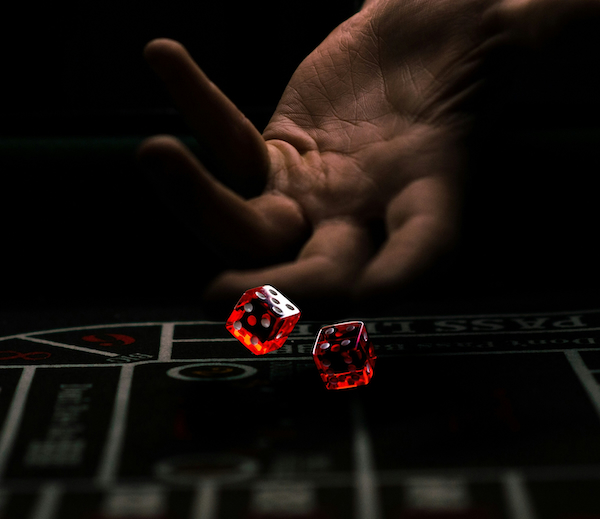
Consider the etymology of “bet.” It emerges from the old phrase “to set,” with roots in wagers and risk. To bet is to stake something—your money, your pride, your time—on an outcome you cannot control. And here’s where the paradox of the human animal reveals itself: we are constantly making bets on precisely the things we didn’t choose. Our families. Our bodies. The city we were born in. The year we turned 18 and thought we’d begun making independent decisions.
The horse, in any good metaphor, represents the thing that carries you forward despite your intentions. You board it believing you’re the rider. Turns out, you’re mostly a passenger, holding the reins of something with its own momentum, its own will to move in specific directions, whether you’ve approved the itinerary or not. And February—this collision of romantic obligation and cultural fortune-telling—is precisely when we’re supposed to reconcile ourselves to this.
I know a woman who spent three years resisting a relationship she’d accidentally fallen into. Met the person at a work function, texted to decline a second meeting, somehow ended up at coffee anyway, then dinner, then the whole ungraceful accumulation of shared space that masquerades as love. She kept waiting for the moment when it would feel chosen. It never did. What it felt like instead was momentum—the horse moving forward, and her discovering, mid-ride, that she’d somehow become invested in where it was going.
This troubles our narrative. We want romance to be an active declaration: I choose you. But actual human connection mostly comes as an accident; you gradually decide to stop resisting. It’s less “I will ride this horse” and more “I’m already on the horse, now what?”
The cruelty of February is that it demands this reconciliation happen precisely when the entire culture is screaming about intention and destiny. Valentine’s Day insists that your love is a choice you make deliberately, a gift you wrap and present. Lunar New Year whispers that fate has already decided your fortune, that you’re simply finding out what was written. And you’re supposed to feel both things simultaneously—entirely free and entirely bound, author of your love story and character in someone else’s narrative.
What’s fascinating is how often the people who seem most certain about their choices are actually the ones most in denial about the horse. The entrepreneur who believes she self-made her way to success (luck, timing, being born into resources, having a mentor appear at precisely the right moment). The person in the relationship who insists he made a deliberate decision to marry her (after the accidental meeting, the unplanned pregnancy, the series of practical compromises that calcified into commitment).
The real bet isn’t whether you’ll choose the horse. You won’t. The real bet is whether you’ll bet on it anyway—whether you’ll accept that you did not design some of the most important trajectories of your life, but only inhabited by you, ridden by you, eventually loved by you.
There’s a Japanese concept, meiji, that translates roughly as “the will of heaven.” It’s not fatalism exactly—it’s more sophisticated than that. It’s the recognition that some things arrive unbidden, and the measure of a person isn’t whether they managed to arrange their own destiny (spoiler: nobody does), but whether they could recognise a gift when it landed on them, even if it wasn’t wrapped the way they’d imagined.
Consider the etymology of “bet.” It emerges from the old phrase “to set,” with roots in wagers and risk. To bet is to stake something—your money, your pride, your time—on an outcome you cannot control. And here’s where the paradox of the human animal reveals itself: we are constantly making bets on precisely the things we didn’t choose.
I think of this when I observe people in February. The ones anxiously assessing whether their relationship is “right,” as if rightness were something you could verify beforehand. The ones making resolutions about fate, as if they could negotiate with the cosmic machinery. The ones insisting they’re in control, when what they’re actually doing is deciding which unbidden trajectory they’ll commit to.
Here’s what I’ve noticed: the people who seem most at peace aren’t the ones who orchestrated their lives perfectly. They’re the ones who got on the horse they didn’t choose and decided to become excellent riders anyway. Who looked back at the accident of their education, their love, their circumstance, and said: Ok, I bet on this. Not “I chose this,” but “I choose to ride it well.”
The horse metaphor has another edge, though. Sometimes the horse is running toward a cliff. Sometimes it’s pulling you in a clearly destructive direction. The wisdom of being unbowed—of remaining standing when everything suggests you should break—includes this: you can get off. You can choose to fall, to leave, or to walk in the opposite direction. That’s also a bet, and often it’s the more courageous one.
But most of us aren’t on runaway horses. We’re on horses that are going broadly in a defensible direction, and we’re still waiting to feel like we chose to get on. We’re still waiting for the moment when it will feel intentional instead of accidental, decided instead of drifting into.
Here’s the uncomfortable truth February is asking us to sit with: that moment might never come. What comes instead is the slow realisation that the trajectory you didn’t choose has become the life you’re actually living. That the person you fell in love with has become essential. That the bet you never consciously made has become the only bet that matters.
The romance industry wants to sell you the fantasy of the deliberate choice. But the more honest story—the one February is actually whispering beneath the music and the algorithms—is that most of us are riding horses that found us. The question isn’t how to regain control. The question is whether we can become the kind of person who bets on the unbidden, who says yes to the accident, who finds dignity and even joy in discovering that the path was never ours to choose but only ours to walk.
So here’s to the horses we didn’t pick. To the relationships that arrived as accidents and became as essential as breath. To the understanding that some of our best bets are the ones we never consciously made.
Fate and fortune are real, it turns out. Not because the universe is written. But because we’re willing to read what’s already in motion and say: yes, I’ll ride this.