The Manifattura Berluti is a consistent hum of focus. I'm in the Maison's manufacturing facility a couple of days after Paris Fashion Week, where the fashion capital was experiencing an unprecedented heatwave. It seemed to have followed us to Ferrara, Italy, but thankfully, we're in a protective air-conditioned bubble of sorts as Berluti artisans employ their skilled hands in crafting the Maison's many creations.
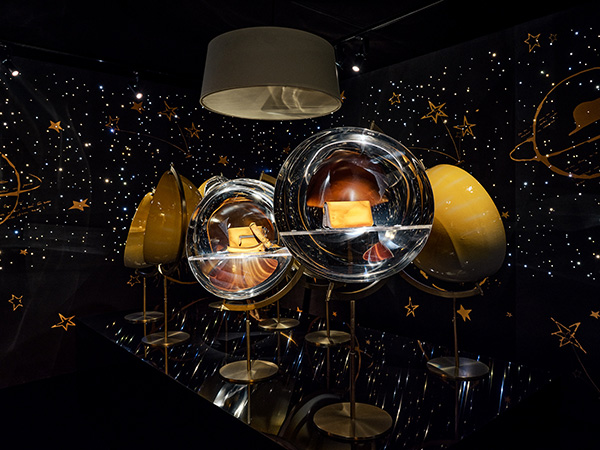
Days before in Paris, I witnessed Berluti's upcoming pieces for the Spring/Summer 2027 season. In a quiet section of the Fondation Simone et Cino Del Duca, editors and guests had the opportunity to preview a truly special collection of leather goods that expands the beloved story of Antoine de Saint-Exupéry's classic, Le Petit Prince (or The Little Prince).
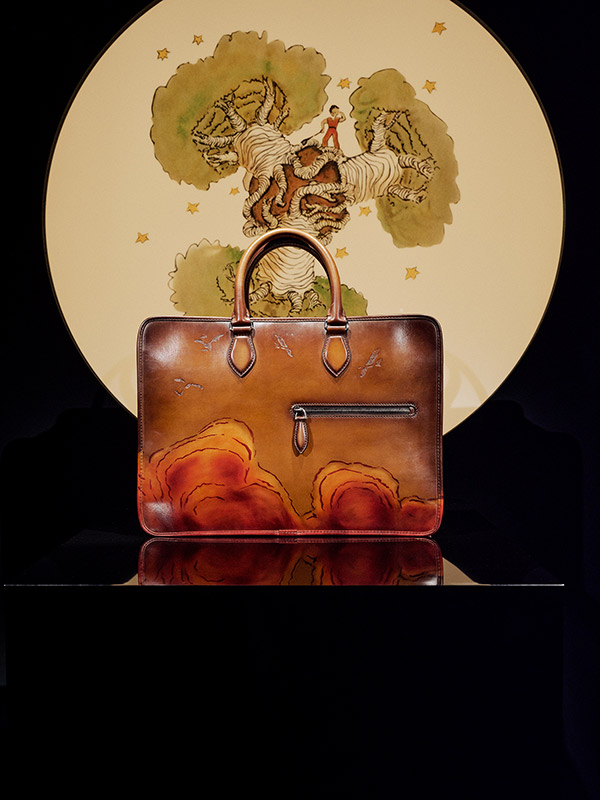
"It's no mean feat because a lot of other brands have interpreted Le Petit Prince," I tell Marcello, head of the embellishment workshop at Manifattura Berluti, "But you're obviously doing it differently." He thanks me for the praise; I certainly wasn't being facetious. Le Petit Prince has grown to be an international franchise beyond its original literary work. While the book is available in almost 700 languages and dialects, it's been licensed to hundreds of brands across almost every product category imaginable. 2026 marks the work's 80th anniversary.
It's easy then to relegate Berluti's effort to one that's timely with the property. But in actuality, this is no mere collaboration. There's a certain alignment, a resonance, if you will, between Berluti and Le Petit Prince. Firstly, (and most obvious of all) they're both French. And lastly, there is a shared belief between the two that a man's elegance isn't dictated by his outward appearance or status, but by his convictions—integrity, loyalty to his commitments, and the meaningful bonds that he cherishes. Saint-Exupéry conveys this through the journey of the Prince in the story; Berluti's ethos of the connection between the hand of the artisan and the crafted object, and then between said object and its user, taps into the same belief, but through its savoir-faire. In a way, this collection by Berluti could be considered another translation of Le Petit Prince.
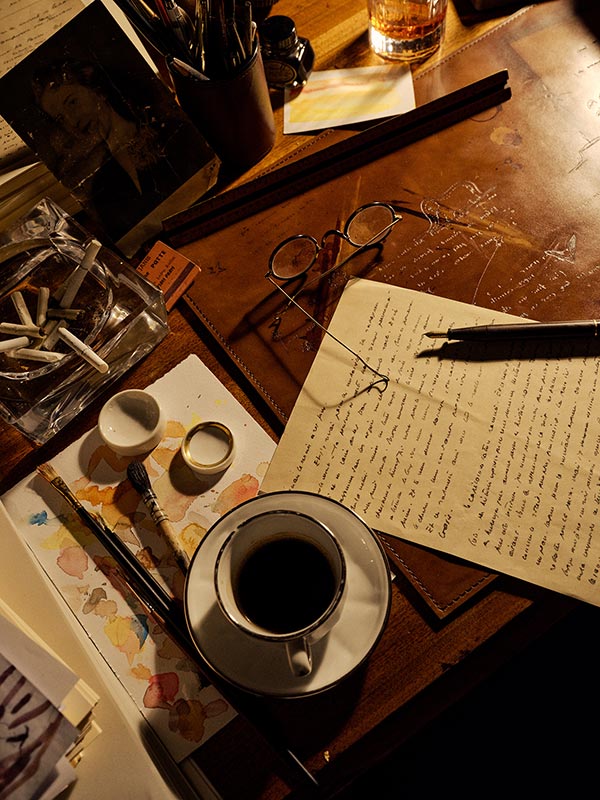
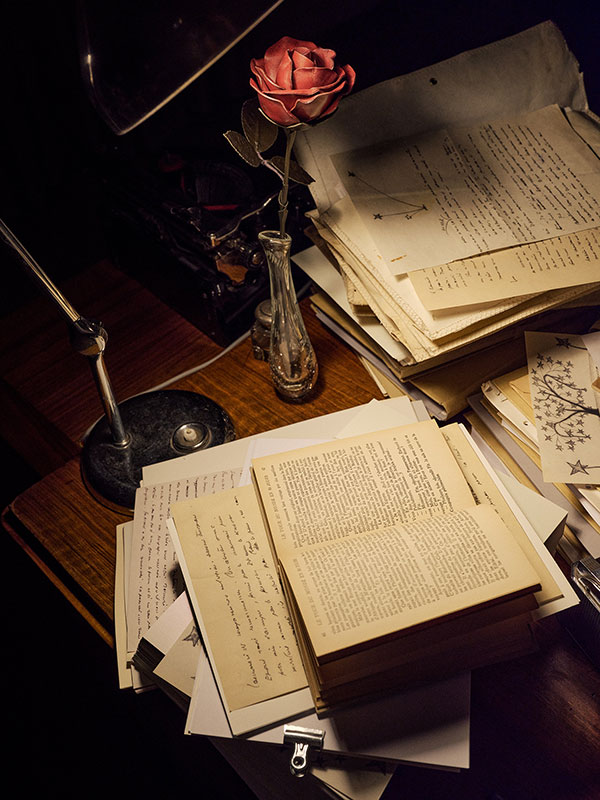
For Berluti, it was important to be privy to the very beginnings of the conception of Le Petit Prince, before it was even being written. Saint-Exupéry's sketchbooks became the starting point as the Maison took inspiration from the sketches as well as the scrawled words and notes that accompanied them. Translating the story in the Berluti way then began with the material. It felt natural for the Maison to centre the collection around its signature Venezia leather. Not only is the medium one that the Maison is already familiar with and thus an expert in, it also allows for creative experimentation that challenges the imagination and skills of the Maison's artisans. And it is only with such a creative playground that the world of Le Petit Prince could be done justice.
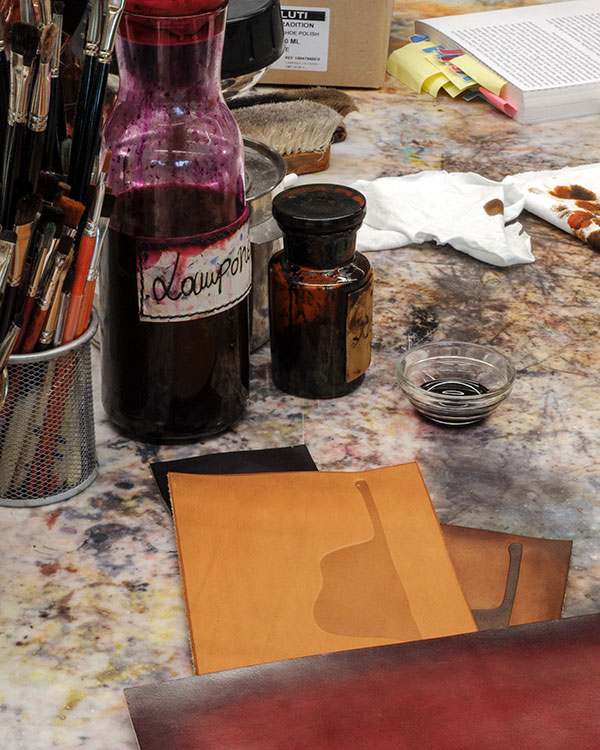
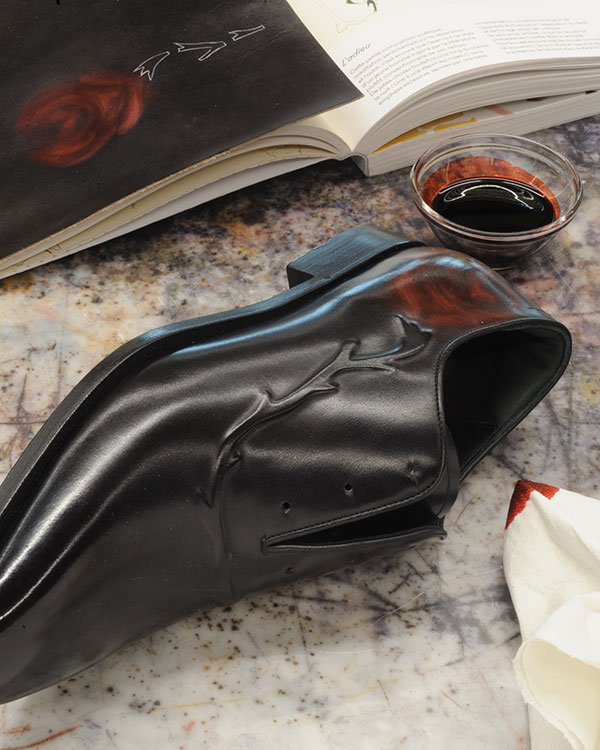
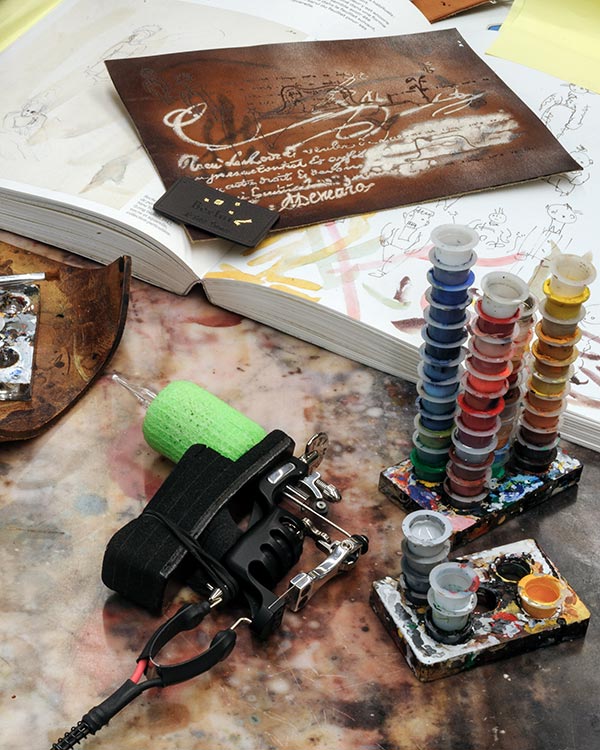
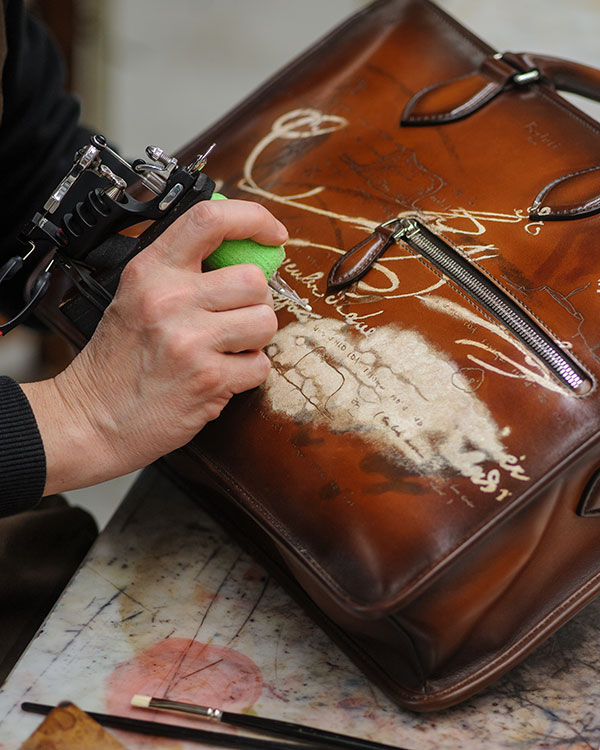
Making use of lasering is how Berluti achieves its Scritto technique, the calligraphic pattern inspired by an 18th-century French manuscript that decorates everything from footwear to leather goods to even ready-to-wear. The Scritto technique is employed, but in a more contemporary form rather than as a tool to create a repetitive pattern. The laser is adjusted to create effects of shadow and depth on the Venezia leather, replicating even more closely the nuances of putting pen to paper, or in this case, leather. Not only does this effect create visual gradations, they also offers a more tactile experience, with the different strengths of the laser resulting in varying textures.
It was impressed upon me that intensive experimentation was done before arriving at the final techniques—and in most cases, a combination of them—required for each piece in the collection. Marcello shows me a number of these trials executed on small pieces of Venezia leather. To the untrained, uncritical eye, they look exceptional; placed side by side the final pieces, the differences are noticeable. For example, on the Espace long wallet, the sketches are lasered with a light touch before being refined and finished by hand. A patina—in the Cacao Intenso hue that is largely the choice for the collection—is then brushed on to give emphasis to the lines, heighten smoky effects, and infuse a subtle sense of movement and depth to the laser etchings. On the bifold Makore slim wallet, reproducing the snake that swallowed the elephant (another defining image in Le Petit Prince) is achieved through hollowing out the intended image on leather to create a subtle tonal difference in the material. A Grenat-shade patina is then evenly applied to give a unified finish with the etched relief becoming more prominent in the process.
"I don't want to say that they're the same because a really important part of the process is also the patina. But the idea is the same," Marcello says. It's these kinds of very calculated tweaks in how the techniques are applied and combined together that make each piece in the collection somewhat bespoke. And thus, truly works of art in their own right.
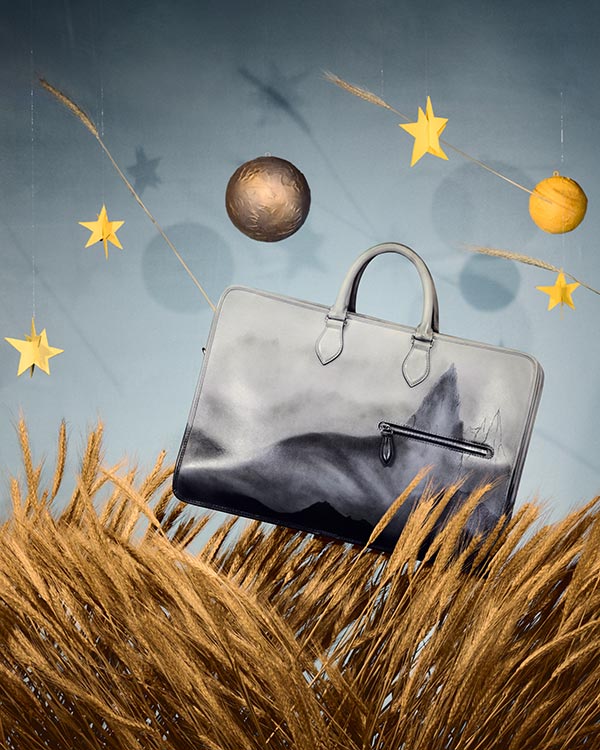
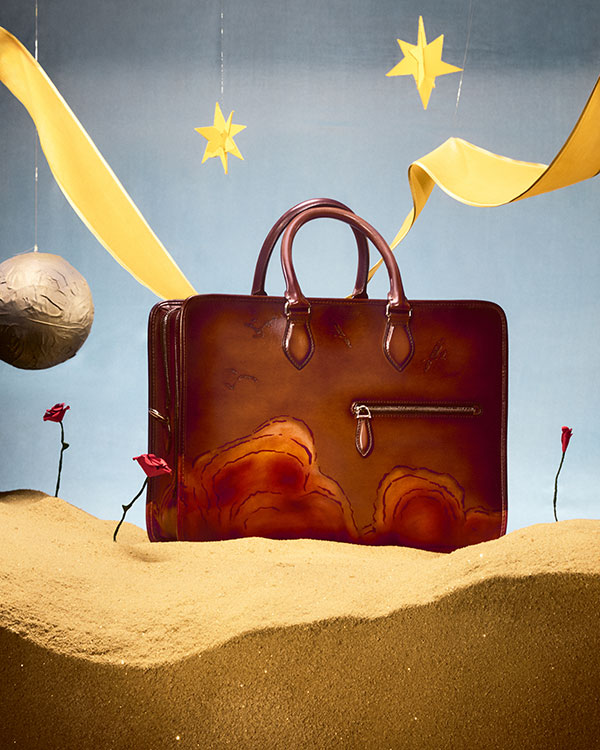
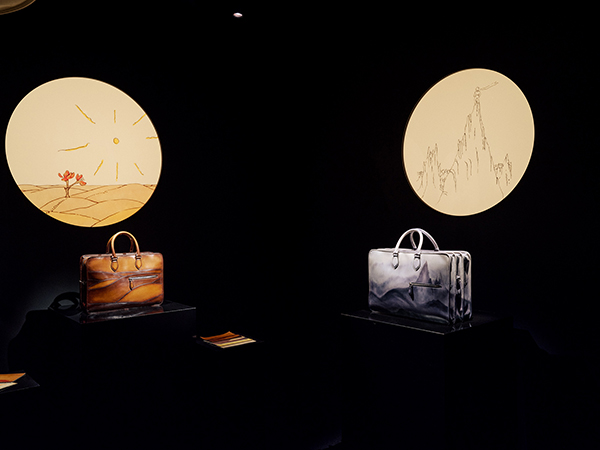
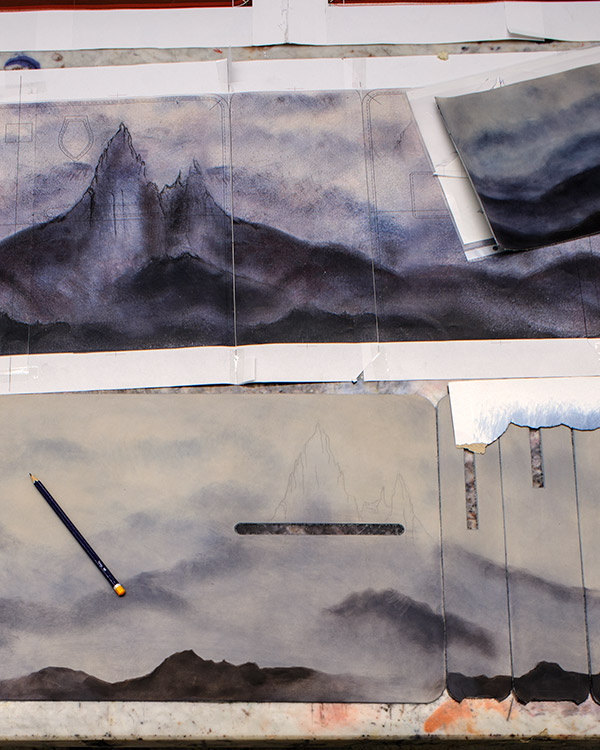
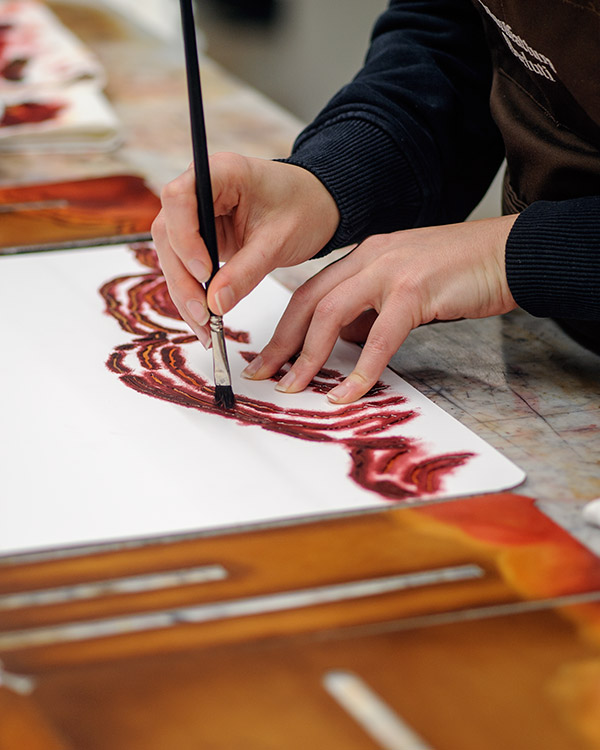
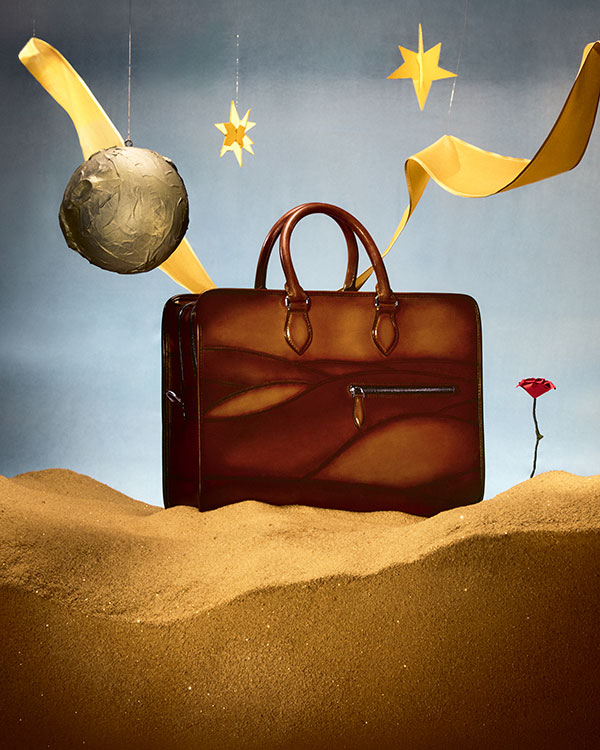
Even in the way that patina-painting is done on a number of pieces, it requires an approach that's hardly seen in a typical Berluti creation. To reflect the invasiveness of the baobabs found on the Prince's home planet, patina is treated like watercolour, applied delicately using transparent layers in order to allow the colours to mix and bleed into each other. The technique is most visible on the collection's Deux Jours bag that features said baobabs, as well as the visually arresting Trois Nuits bag where the iconic scene of the mountain range is meticulously painted sans the Prince—the omission of the character an artistic choice that lends a more ethereal interpretation.
If you were to ask me, the Trois Nuits bag is the collection's most exceptional masterpiece, just by how it stands out from the rest of the pieces alone. At the point of our visit, Marcello tells me that only two artisans have been trained to work on the illustration for the bag, and thus far, 12 such bags have to be produced.
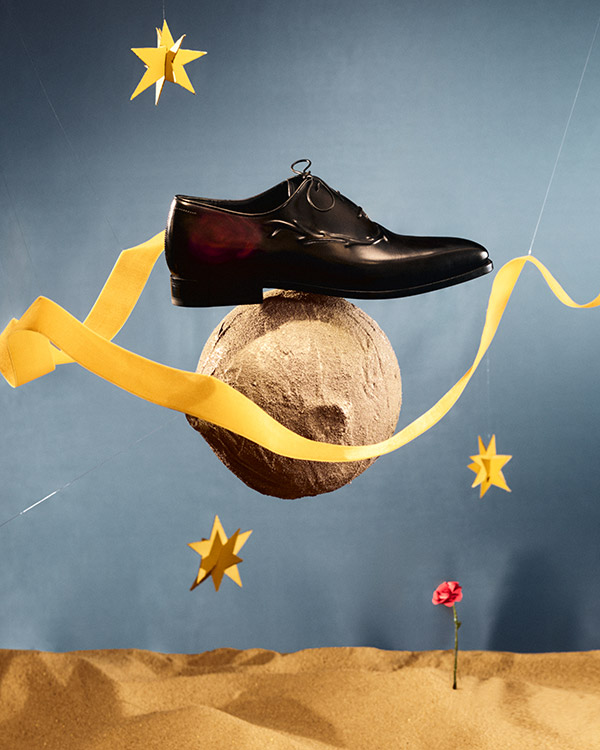
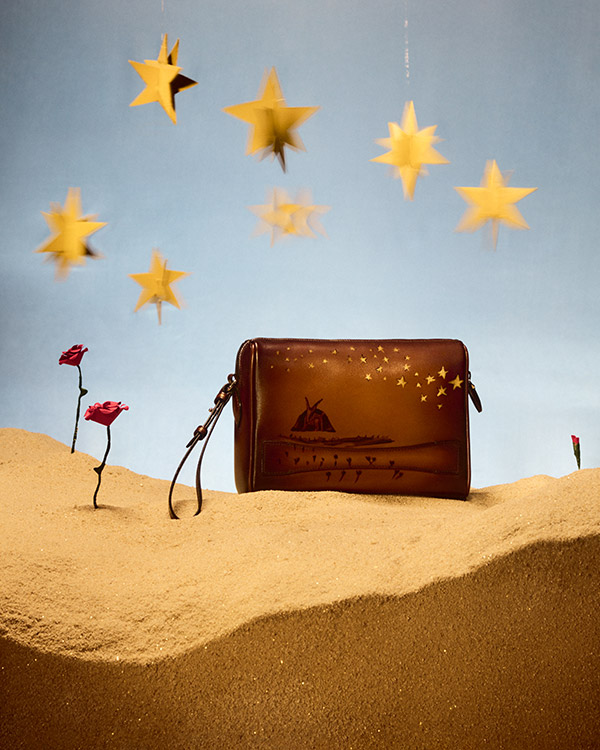
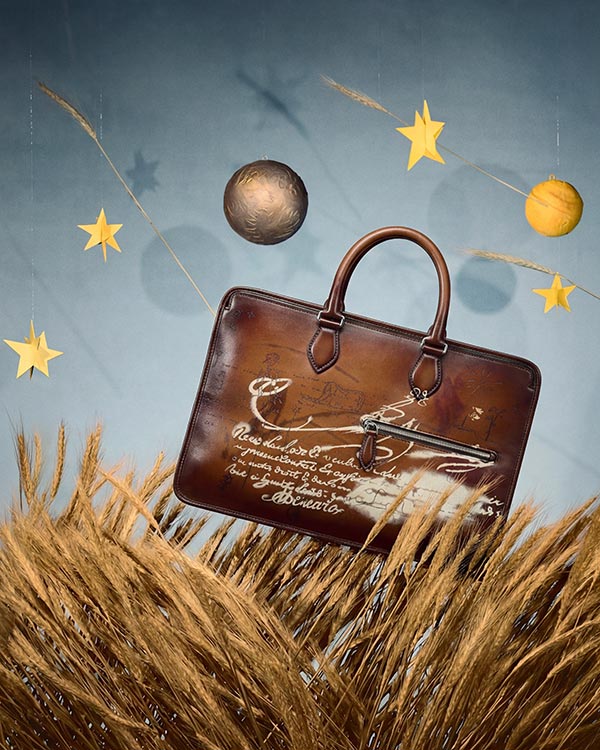
With such a level of artisanship needed to complete a single piece, it's only normal that a number of the pieces in the collection are made available only in limited quantities. The aforementioned Deux Jours and Trois Nuit bags, a Rosewood clutch bag featuring gold stars, a pair of Alessandro lace-ups adorned with a rose motif, and an Un Jour bag are all limited-edition pieces. The Un Jour, in particular, involves tattooing onto the Cacao Intenso-patinated leather in white. It's a complex task, especially to ensure the purity of the white tattoo, and requires layers upon layers of skilled application—definitely not a piece that could be reproduced in great scale.
The 14 other pieces in the collection aren't any less impressive. Each remains to be a handcrafted result of multiple experimentation and the stretching of the capabilities of Berluti's artisans. Another variation of the Deux Jour bag portrays a desert landscape interpreted through the use of leather marquetry as well as patination, creating depth and a sense of movement that seems to never end. The collection's beautiful assortment of bags and small leather goods is complemented by a quartet of scarves featuring distinct Le Petit Prince elements.
To round off the collection and bring it home, so to speak, Berluti has gathered all of Saint-Exupéry's writings as part of a Bibliothèque de la Pléiade collection—a collection of works by classic authors in a pocket-sized format—published by Gallimard. The exclusive set is separated into two volumes, each featuring a bespoke book cover, and stored in a case. The covers and case were designed by Berluti and crafted from patinated Venezia leather as well. But unlike the fashion collection, the Saint-Exupéry special edition of the Bibliothèque de la Pléiade is published in a limited edition of 99 numbered copes and isn't for sale. They're intended to be gifted by Berluti to its select friends of the Maison; one copy is dedicated to be auctioned off in support of the Antoine de Saint-Exupéry Foundation.
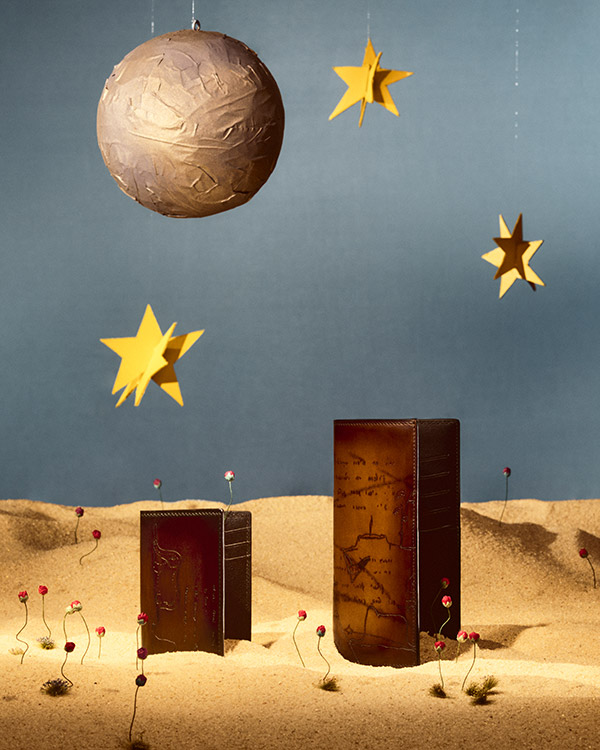
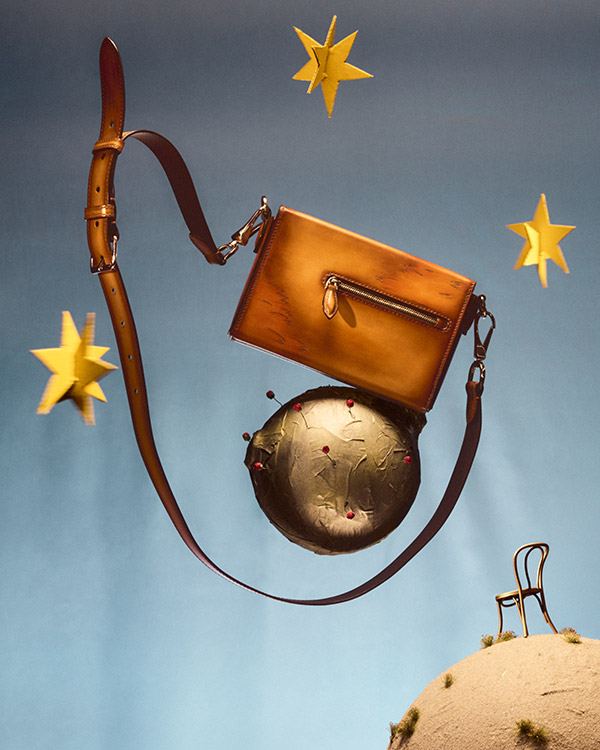
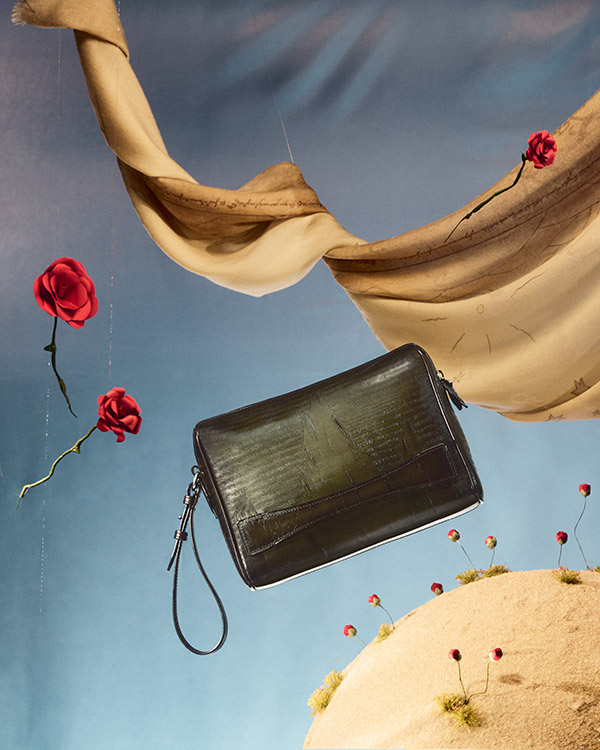
And there goes this latest translation of Le Petit Prince. It might not necessarily be told in as much words, yet Berluti's translation of the beloved story that has lived on for decades carries with it the same level of care and artistry. And what is essential is invisible to the eye—it is felt, touched, experienced, and most importantly, understood.
The Berluti and Le Petit Prince collection is now available in boutiques and online.