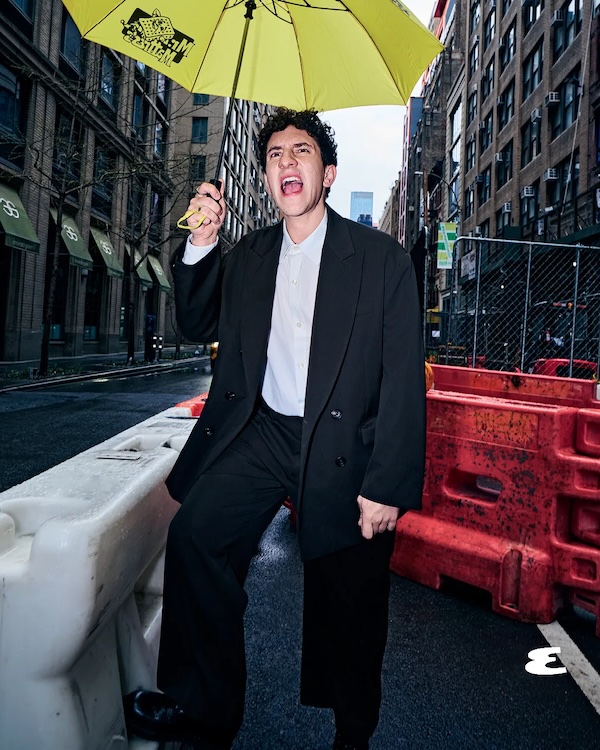
Navigating the messy, often hilarious uncertainty of your mid-twenties is a universal rite of passage— but few capture its specific anxieties quite like Malik Elassal.
As FX’s hit series Adults returns for a second season, the Lebanese-Canadian comedian steps back into the shoes of Samir, the show’s endearingly emotional mama’s boy who is still trying to figure it all out.
We caught up with Malik Elassal to discuss the evolution of the show, the complexities of modern Arab identity, and why the best punchlines are always the most personal.
ESQUIRE: Adults Season 1 captured the chaos of figuring out adulthood. What changes for Samir in Season 2?
MALIK ELASSAL: To me, the first season was about not having your shit together, and Season 2 is about trying to keep your shit together. He’s going through something I think a lot of people experience in their mid-20s, when you think you’ve started your life and need to become the person you’re going to be, while you’re still going through so many changes. The difference between 24 and 30 is insane. You really don’t know anything, but maybe that was just me and Samir.
ESQ: Samir became one of the show’s emotional anchors. Was that always the intention, or did it evolve while filming?
ME: I’m a very emotional person, so I think about everything I do and how that could come through. I also really enjoy playing Samir. When I first read the script, it reminded me of me and my friends at that age, so while filming, I was always casting little nostalgia spells on myself by listening to songs from that time in my life. The creators, Ben and Rebecca, are also great at writing for our strengths, so they may have seen me being a huge crybaby and thought, “This is how we can get this guy to come alive.”
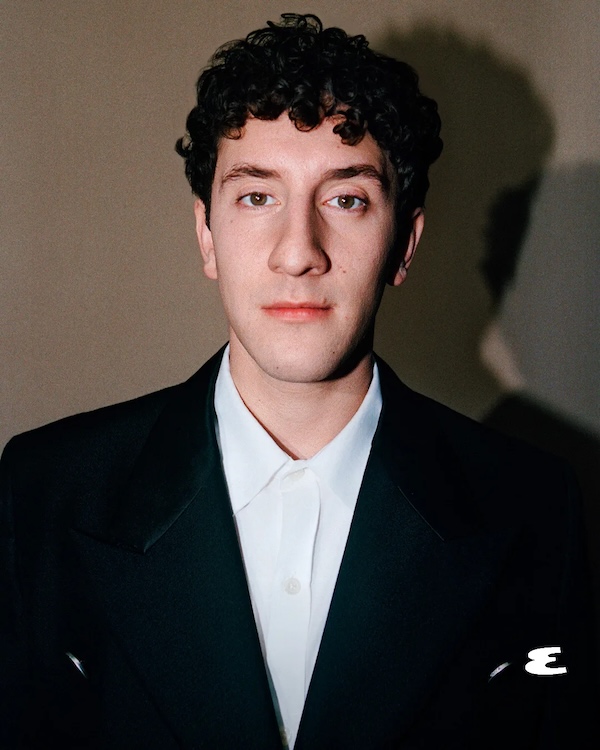
ESQ: What surprised you most about audiences’ reaction to Samir?
ME: I love how often a fan of the show tells me that they have someone in their life who Samir reminds them of. I’m surprised at how universal the characters feel to people because they are so specific to us. It’s also really sweet when people tell me that they watch it with their friends, or that they told their friends about it because something in the show reminds them of their life. That, and I’m also surprised that the audience wants to “slut Samir out,” which I’m still trying to learn what that means exactly.
ESQ: The show has been compared to Friends for Gen Z. Do you think that’s an accurate comparison, or is Adults saying something very different about growing up today?
ME: I think we’re making a show in the same genre but at a very different time in history, where growing up doesn’t look the same and there’s a completely new set of challenges for young people. To me, Friends did it best, so I hope we can capture some of that magic because these shows are important to me. I remember watching Friends and thinking, “I can’t wait till I’m at that stage of my life.”
ESQ: You’re unapologetically Lebanese in your comedy, but your material resonates far beyond Arab audiences. Was that always the goal?
ME: My only goal from early on was not to reinforce negative stereotypes for a cheap laugh. I’m definitely still guilty of that sometimes. I don’t think anyone in stand-up only wants to make a specific group of people laugh. You talk about who you are, and I grew up very unapologetic about that. I was in Islamic school and was lucky to have a big Lebanese community around me. I also spent years performing in small towns across Canada, where I may have been the first Arab some people had ever met, so you find a way to make things universal.
ESQ: Arab representation has changed dramatically over the last decade. Do you think mainstream audiences are more open to stories rooted in Arab culture?
ME: Definitely! It’s amazing to see so many people doing things and for audiences to see that being Arab is not any one thing. It’ll be nice to get to a point where it’s less about representation and more about presentation, but there’s still a lot of negativity out there. There’s a movie coming out called Run Hide Fight Infidels, which seems to be purely Islamophobic propaganda. I don’t think people will ever stop being bigoted. There’ll be flying cars with Confederate flags on them someday, so we just have to keep doing what we’re doing.
ESQ: What hasn’t changed about you despite all the success?
ME: I’m in a lot of group chats with my cousins and also comedians, so that really makes you think twice about what you’re doing. In the back of my head, answering these questions, I’m like, “What would the group chat say about this?”
ESQ: If someone watches Adults and leaves thinking differently about Arab men, what would you hope that difference is?
ME: No two people are the same, but Samir is an emotional mama’s boy, and that is what people already say about us, so I don’t know if we’re really breaking any stereotypes with that.