If the name Josiah Chua rings a bell, it's probably because you've come across his work in some way. Operating as an independent fashion creative and stylist, Chua's work has reached a broad audience and achieved a number of significant accolades. But it wasn't until a purely creative endeavour in 2021 that Chua went viral internationally— transforming the highly sought after McDonald's BTS Meal packaging into a custom pair of sneakers. The piece is a reflection of his creative mark, blending together his love for pop culture and fashion. Additionally, Chua is also an avid collector of works by Singaporean designers, especially of those no longer actively in practice. Part of his collection were included in a curation for a clothing archive installation titled, Capsule 2009, held in 2022.
Chua slowly transitioned back to runway design with 2025's Retrograde Runway Remix launched in conjunction with Singapore Design Week. The collection featured 30 upcycled Y2K-inspired looks with streetwear and sportswear influences. Chua even collaborated with Nike, incorporating sneakers such as Air Max Muse and Superfly into the looks, and exhibiting select looks at the Nike Orchard Road store post-show. For this year's second edition, Chua has conceptualised a bigger runway event to showcase the work of creatives based in Singapore as well as around Asia, alongside his own.
We meet Chua at a studio where he's in the middle of model fittings. He takes a break from preparing the looks for the show to give us a breakdown of what's to come for this year's edition. Last year's first showcase of the runway reimagined what wearable art would look like in a Cyberpunk-esque world, the collection encapsulating the Y2K spirit combined with futuristic, chromatic elements. And in the process, we take a peek into Chua's creative mind on the look, feel, and sound of Retrograde Runway Remix 2026: Resurgence.
ESQUIRE SINGAPORE: Retrograde Runway Remix 2026: Resurgence is being described as, "radical, chromatic streets of a make-believe Y3K future". What first inspired this year's theme?
JOSIAH CHUA: Firstly, it's a runway, that's why that's in the name. "Retrograde" means going back and being stuck in a time loop, which fashion always does—you come, you go, you retrograde, and then you move forward again. "Remix" is akin to the enjoyment of a classic pop song reinterpreted with a fresh new beat. And I think that these three words encapsulate the shows I would want to create.
Last year's theme was Y2K, a play on nostalgia and the re-emergence of the 2000s. All that just brings back very fond memories for me as a designer because there were so many things that I grew up enjoying that are coming back again. Why "Y3K"? It's because I want to take this even further and see how this theme can—almost in an uncanny, humorous way—be continued into the second version of this. And because of the film we created before, I wanted to keep that storytelling ongoing. It's a continuation.
Maybe for next year, it would be "Y4K". Hopefully not! But I think what's nice is to have that continuation. It feels like watching a Marvel movie where there's a little snippet at the end that prompts what's to come, and people can anticipate the future. I always look forward to that end-credit scene as a movie-goer. That's the reason why there's this inspiration.
ESQ: With there being so many micro-trends in fashion these days, which are basically based on subcultures, why is now the right moment for this idea of resurgence?
JC: There's no "right time" in setting the right trends. If a particular trend is very in now, I'm sure that it's probably just a wave of hype, right? As a designer, I just feel things in the air. Let's say I've been consuming a lot of online content or I've been looking at a lot of runway shows, and maybe I feel the need for feathers or camo prints in my collection. It's not so much consciously looking for trendy items, but more of what I've been consuming visually. That's when I realise everybody's reacting to each other. Which is why sometimes, there's like a lot of camo print in various depictions.
The existence of microtrends is to see what reflects or bounces off one another in the now. I would think that I'm just reacting to what is existing and in my environment. I resonate with what feels personal to me and react to my environment.
ESQ: You blend fantasy and reality, drawing inspiration from fictional stories, characters and anime. You also embrace experimentation. What worlds, stories or characters influenced this particular collection?
JC: Last year, I was reviewing anime that I've watched before like Paradise Kiss, and Nana, where the illustrations are heavily influenced by style and fashion. As a designer, going to school and growing up, there was a lot of consumption of character designs and their outfits. It's always been a thing for me where I look at fashion as character building, like I'm choosing a game avatar. Whenever I create or put looks together, I always have this character in mind. Does she shoot fireballs? Maybe that's why there's a bit of red somewhere. Maybe she's a dark magic assassin, so I introduce black leather. These are just cues to help me concoct a look. That's where I play between character- and world-building.
ESQ: Is it a way to differentiate the different looks?
JC: I like that there's a lot of room to play. If today I want to go minimal, then I'll just have to think of a character that's very sleek, clean, and wields ice magic. How would that look like on a model—that gives me freedom to dream a look.
ESQ: Your process is very much character-driven then.
JC: Yes, very much character-driven. Like who is this character that I'm creating? I find that at different stages of my life, I want to create different characters.
ESQ: Through your work in fashion styling and archiving, you've engaged with Singapore's fashion heritage. How has that informed this collection or has it informed it in any way?
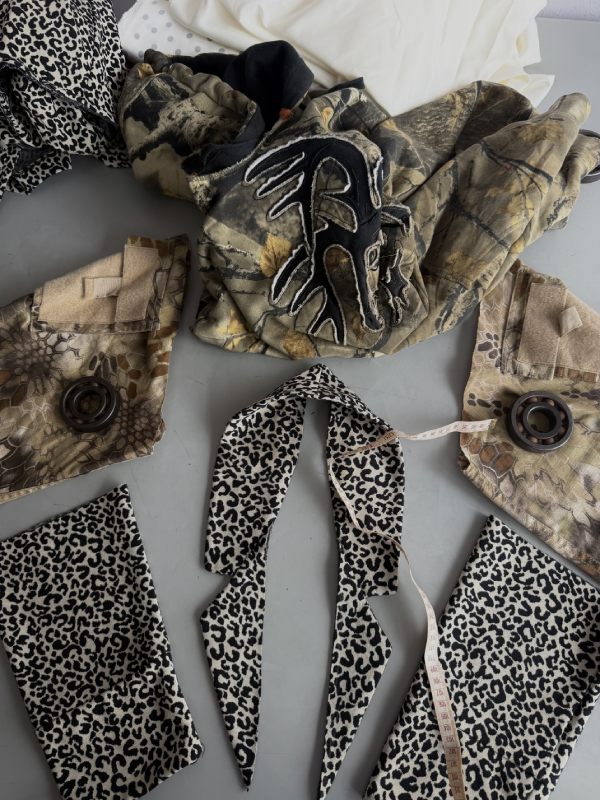
JC: It has definitely inspired me to stay on track to create. My archives consist of garments collected from designers from my time, and most are labels by my designer classmates. However, when they created this body of work, the business wasn't sustainable and they stopped designing and moved on to the next stage of their lives. It's such a pity because the designs and pieces are great. Even if I were to pull them out today, some of the pieces are very competitive in terms of the design standards. So I just feel that there's a lot of value in the play of material, texture, and paneling—quintessential key design components of that time. Fast forward to now, I'm still inspired by that time where paneling was very in, slicing and cutting were very in, a play on textures and how we were not really afraid of colours.
The runway collection that I'll be showcasing really relies on a lot of styling as well, and it's not just about putting clothes together. It's about dreaming up a hair or makeup look; the accessorising that will pair to complete the character, down to even the footwear. I feel that every component has styling, and every design element that I've incorporated are part of my past.
ESQ: That was one of the questions I wanted to ask, about the techniques you wanted to see be used again in this process. You've mentioned paneling and such...
JC: Yeah, paneling. And also a bit of DIY, where we can burn something, take a pin and distress a certain area with pin work. There's that energy to customise something, or make your mark.
ESQ: What should people expect from this year's collection?
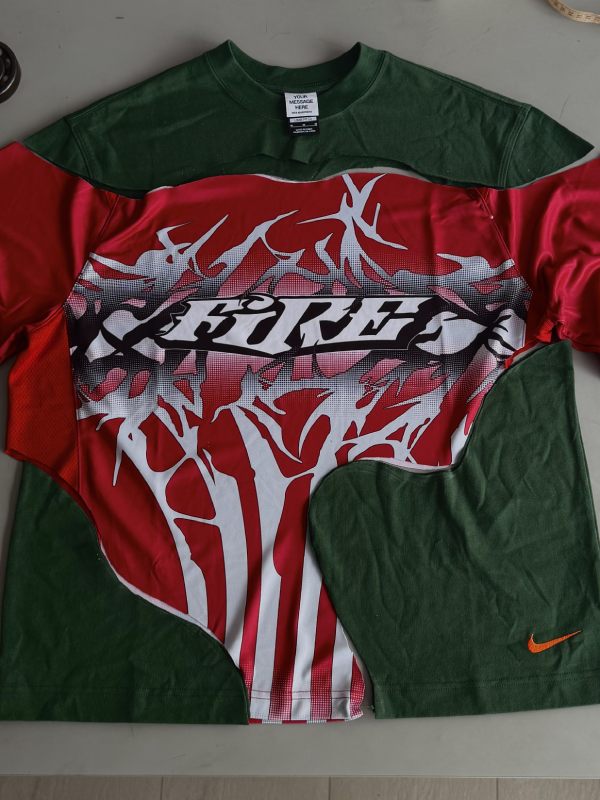
JC: This is the second time and people will imagine, or have certain expectations. I don't want to be pressured to create for the audience, but rather, I just want to live in the moment and see what fun I can create. What I'm thinking is a lot of furry, feathery textures, almost animalistic, with camo... I'm imagining a group of people living in a "Glamazon", but this place is futuristic, in a forest. They're just a bunch of cool people who'd probably listen to tribal house techno.
I don't know if this matters, but when I was very young I really liked Pokémon. And I still do, but not to that same intensity. There are different designs that reflect the elements the creatures are in. I find that very fascinating—how a look, or colour, or texture on a creature can suggest certain things.
ESQ: Like a certain power?
JC: A certain power, a certain aesthetic. It's the same with fashion. I believe fashion is a communicative tool that doesn't require words to describe, and therefore, designers should be able to communicate visually. The audience should be able to pick up on cues about what a collection or a look is trying to express. That's where the power of fashion lies. It's a non-communicative weapon. If you want to show authority, you dress with authority; if you want to show vulnerability, you dress vulnerable. It's an expression reflective in character-building, or in creature design. This is something I feel very close to. It's so child-like.
ESQ: Fashion is a visual language.
JC: Yes!
ESQ: You talk about creating these different characters for each look. How do you ensure individual characters remain cohesive on the runway?
JC: I still struggle with that. What really helps is the story. Let's say if I keep going back to the group of tribal people within this space, it helps me go back to that world. When you create with no story, you create and execute silhouettes, SKUs or styles of specific skirts or jackets. But then, they're not tied to a story and you tend to create something that's not within a narrative. The narrative really helps. For this collection, these are people who live in a certain tribe—what elements need to be included in this character that will be relevant in another one? On the runway, you will be able to pick up similarities here and there. I think that's the beauty in this particular collection.
What's also beautiful is that the spliced up sleeves or top of the garments will end up somewhere else. Or the sleeves will end up on another look. It feels like a community of people sharing a pool of materials. There are these shared elements that will go into the collection. That's how I ensure the cohesiveness of the storytelling. Of course, the hair, makeup, and gender of the models will give the looks a different edge when you look at them.
ESQ: I'm looking at the outfits on the racks and some of them look reworked. Do you specifically acquire materials from older clothes for the collection?
JC: That's a good question. I thrift a lot and it's almost like hunting. Sometimes I'm looking for that piece that makes me go, "Ah! Found you! Yes this is what I need in the collection." But at the same time, I'm also a stylist, and across the year of doing different commercial work or shoots, I have a lot of pieces that were used only once, and they're just there and I won't be able to use them again. I feel that they're worth giving a second life on the runway, so they're cut up, reimagined, and remixed into the collection.
ESQ: Which goes back to the whole theme of the runway.
JC: Yeah, which goes back to the theme. That's where the cut and sew will come in. Of course, there are new pieces to really bring in the freshness of what's current, but almost more than 50 per cent of the pieces were already owned or thrifted. Be it old military garments, some pieces from my past projects that a singer has worn before but we're unable to use again, they'll go into the runway, as new looks.
ESQ: Apart from styling, how important is music, casting, and set design in communicating the collection's story?
JC: Last year, music was a key factor. Not that it isn't this year. Because the show is half the duration, I'm still in the midst of curating the music. I'm inspired by throwback tracks and I like the old-school vibe because they bring back to a certain capsule. That's the power of music.
Regarding the casting and selection of models, there will be some faces from last year's collection resurfacing in this year's runway. As much as possible, I want to introduce freshness. I do want to incorporate a little surprise at the end. Just a little surprise that the audience will enjoy. That's the point of runway—to have that wow factor, a bit of that drama.
Alexander McQueen was such a pivotal figure in my formative years as a designer. I was so sad about his passing. He's important because he really knew how to enjoy the runway and make it enjoyable for us. When he creates a collection, the clothes are only alive because of the narrative—it makes me want to own the collection, not only because it's beautifully made and executed, but he sells the clothes through the storytelling.
ESQ: The storytelling gives it meaning, right?
JC: It gives it meaning. It gives it that setting or story of that season or year—like a time capsule. And that's why runway is beautiful. Because we have so little fashion runways in Singapore, we don't have that privilege to tell a story in that capacity. Why I love fashion and will continue to love it, is because it's the only art form that's lived and worn on a human body. You go through life with it; it's a very beautiful thing. To have it worn on a human walking on the runway, performing with music, the live audience, and a film accompanying the narrative, with collaborators like hair stylists and makeup artists putting on a show together, is an accumulation of so many things in that few minutes. And for what? It's just the beauty of life. It's fleeting—you enjoy it and it's gone. Like sakura blossoms.
ESQ: What does this collection reveal about where you're heading next creatively?
JC: I'm hoping that when I'm creating this collection, it will amount to something bigger. Hopefully one day, it'll be part of a bigger festival. Or perhaps, be able to stage this on a bigger scale and incorporate Southeast Asian designers within the same space. I want it to almost be like a Marvel collaboration for example. Let's say I'm X-Men, right? Then X-Men is trying to get to Spiderman, and into different other franchises.
My hope is to have this narrative with other neighbouring Southeast Asian countries, because I really resonate with their influence. Singapore is still a very young country with very little original culture that we truly own because everything is borrowed from Malaysian, Indonesian, Chinese, and Indian culture, right? We need to have this conversation regionally because everything is influenced. As a Singaporean, I want to be part of this storytelling, but on a more collaborative state of mind than just, "This is Singapore". I think it should be collective and it should be considered.
ESQ: Is that also a reason why you're including four other designers for this edition?
JC: Yeah, it's really to set the stage for It's not only my story to tell. Or rather, it's not a one-person responsibility. In my headspace, any designer that locally makes it, or does something, is a win for everybody. I just want to put Singapore on the map, and we need to move in this direction collectively. Like the Thais for example: Blackpink's Lisa becomes big and the whole country celebrates her wins. I wish we can be like that. Singapore is already small, so if we don't celebrate our wins, we're just going to have less opportunities to spotlight our own people.
ESQ: That's a huge plan. I think it's possible, especially with a lot of emerging creatives in Singapore.
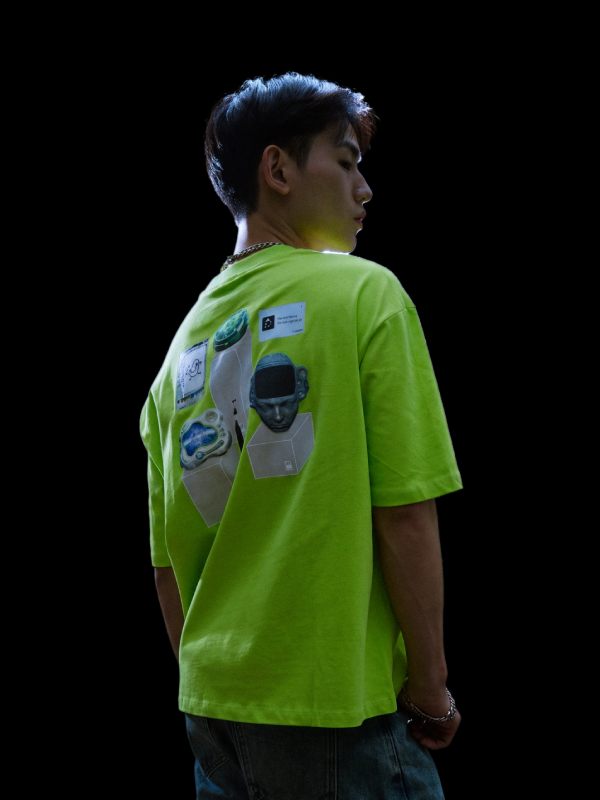
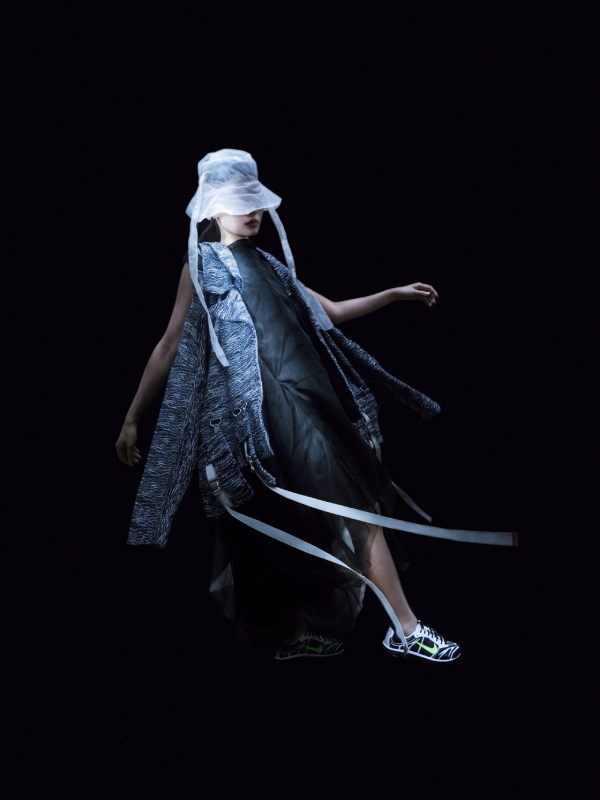
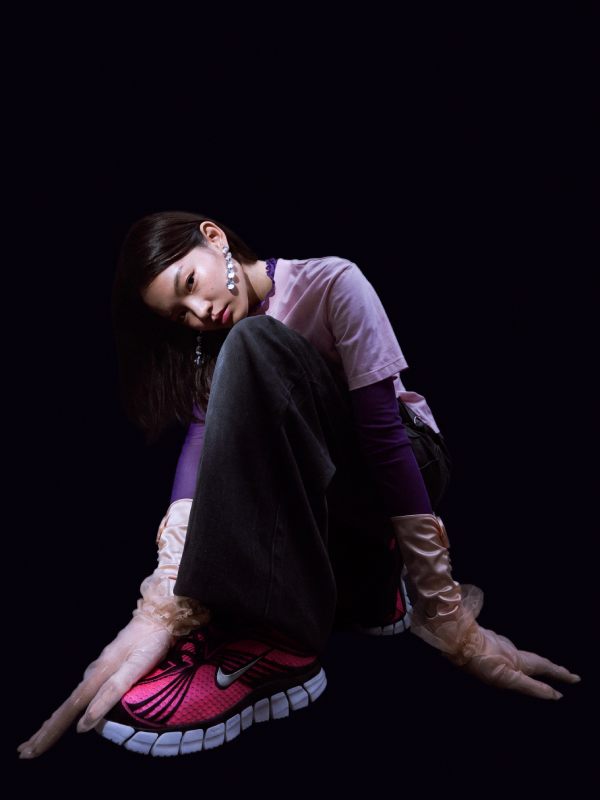
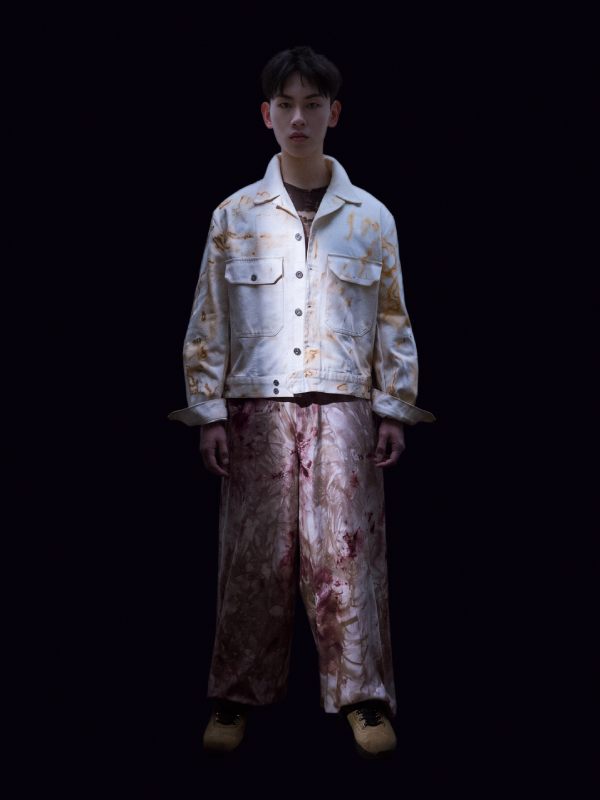
JC: It's crazy! There are a lot of new designers I've never heard of, and they're doing great work. I think that's amazing. Truly, I feel they should continue with what they're doing.
ESQ: In your opinion, what is overdue for resurgence or revival in the fashion scene?
JC: What I really wish for a revival... Everything's so digital now, right? Everybody's just living in their own digital safe space. I really miss having humans in the same space. It could be like in the past, where we would hang out at a certain spot or go to a particular place, or dress up for a reason. I wish that the physical aspect of human connection can happen. That's also the reason why the runway must happen. I didn't want to do it digitally. The space is truly a ground where everybody can come together.
I hope I can invite as many varied people within the industry to come together. I don't have every single one's contact, but whenever possible, anyone who has crossed paths with me in my line of work, I would like to see them in the same space with the those who have been contributing to the industry. Otherwise, there won't be any other reason to see them there. I hope that people can use this opportunity to network, chat, and just connect like humans in the same ecosystem. It's like The Lion King, where everyone comes for the coronation of Simba. I hope people can come and chill. That's also the reason why it's not ticketed, and by-invite-only, because there's a very specific crowd that I'd like to target first before opening it up to the wider public.
ESQ: It feels like, with how we're increasingly losing third spaces, your show is giving one for this generation.
JC: I wouldn't say that this fashion show would be a third space, but you're right. We are lacking that reason to hang out at a space that we can truly call ours. Now you wanna hangout at a certain space? You need a permit, or a function; you'll be shut down if you're rowdy or too loud. In that sentiment, the third space is similar to this, like a reason to hangout. But I think I want this space to be geared towards people who enjoy fashion and style—people who express themselves. This is where the community needs to start. Of course, community extends to the public and it slowly expands.